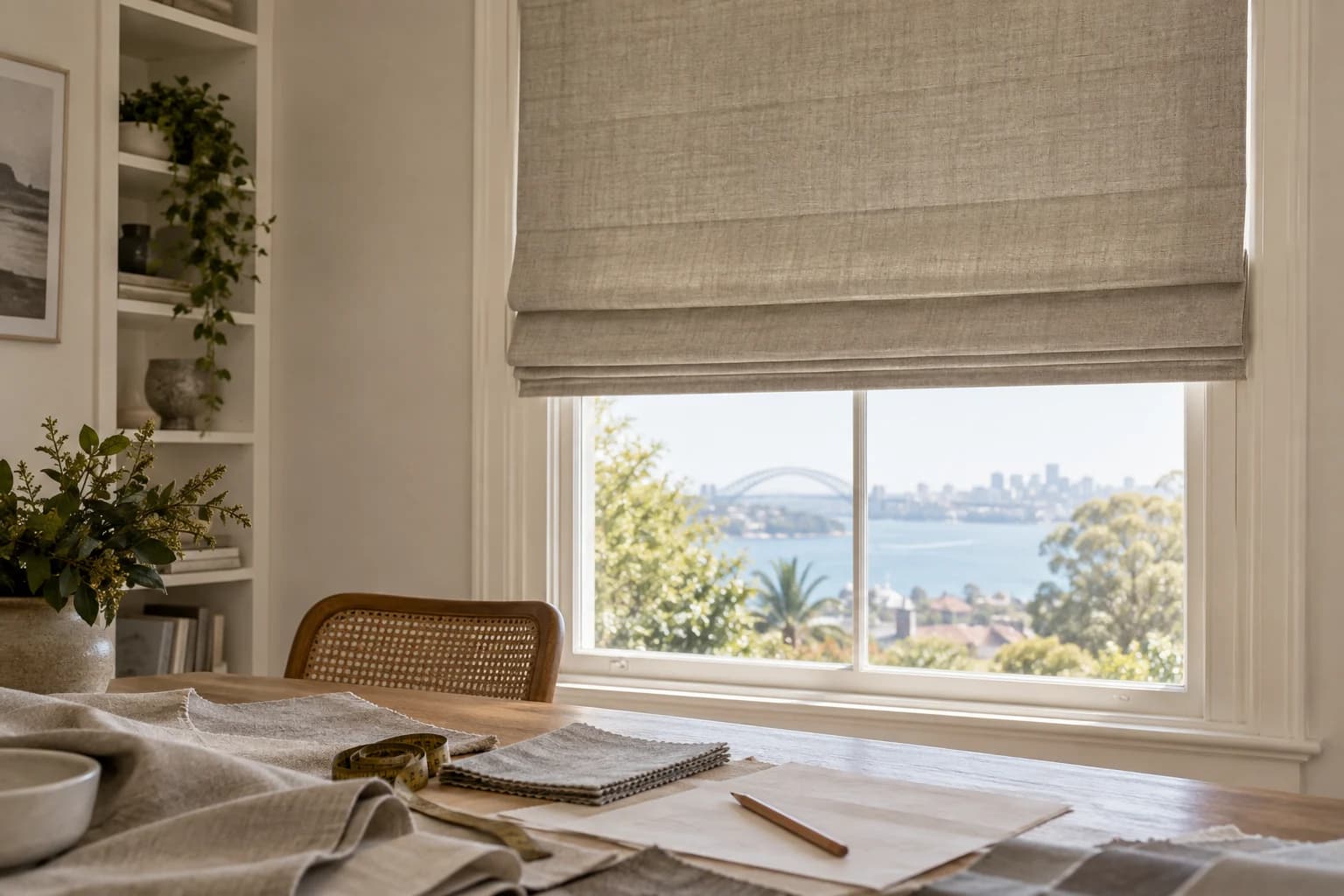
Complete technical guide
The Complete Guide to Roman Blinds
A detailed guide to fabric, lining, construction, fitting, light control, motorisation and the decisions that make a Roman work properly.
Read articleROMAN BLINDS KNOWLEDGE & ADVICE · CCBD SYDNEY
A practical library about fabric, lining, proportion, construction, operation and the way a Roman blind belongs in a room.
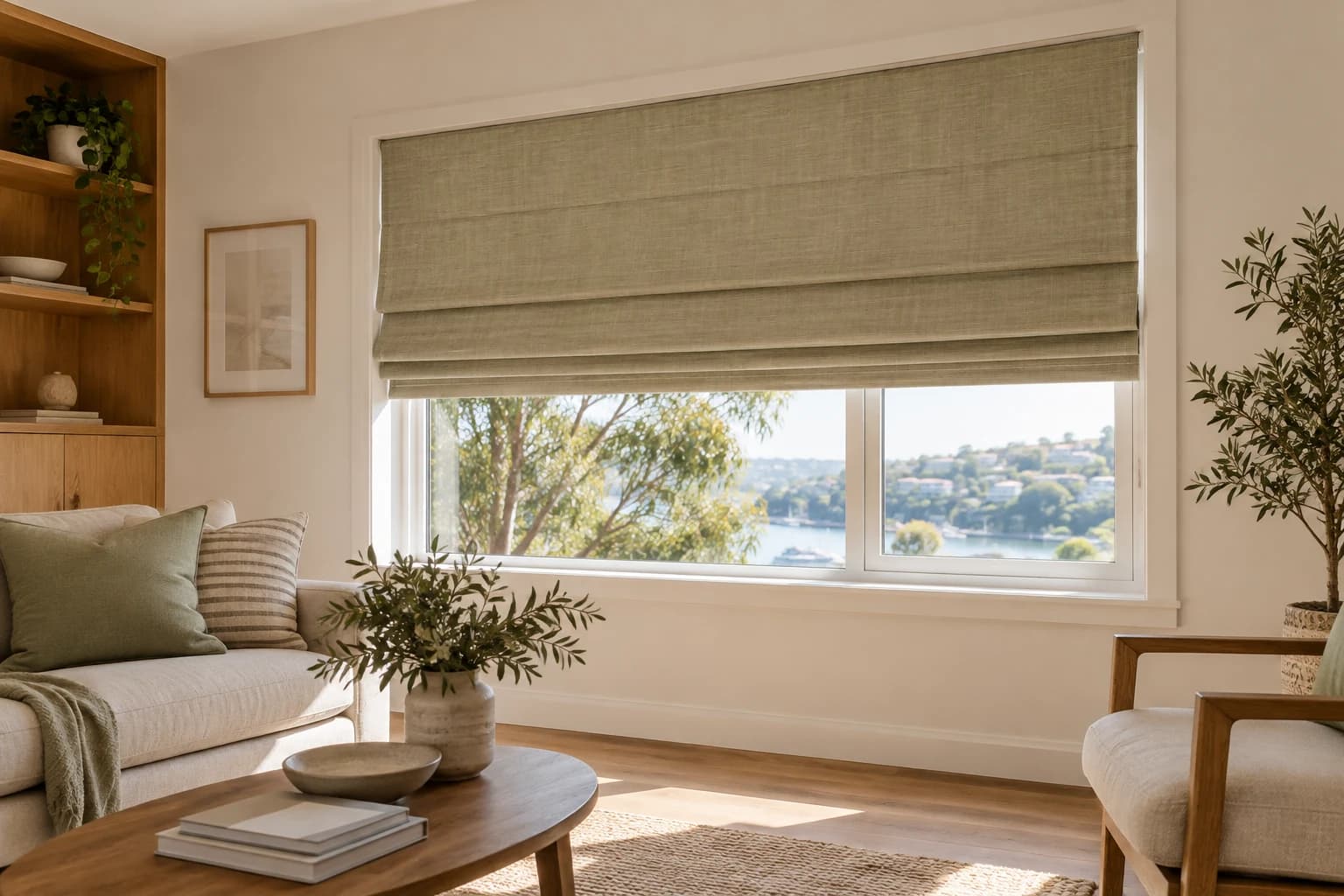
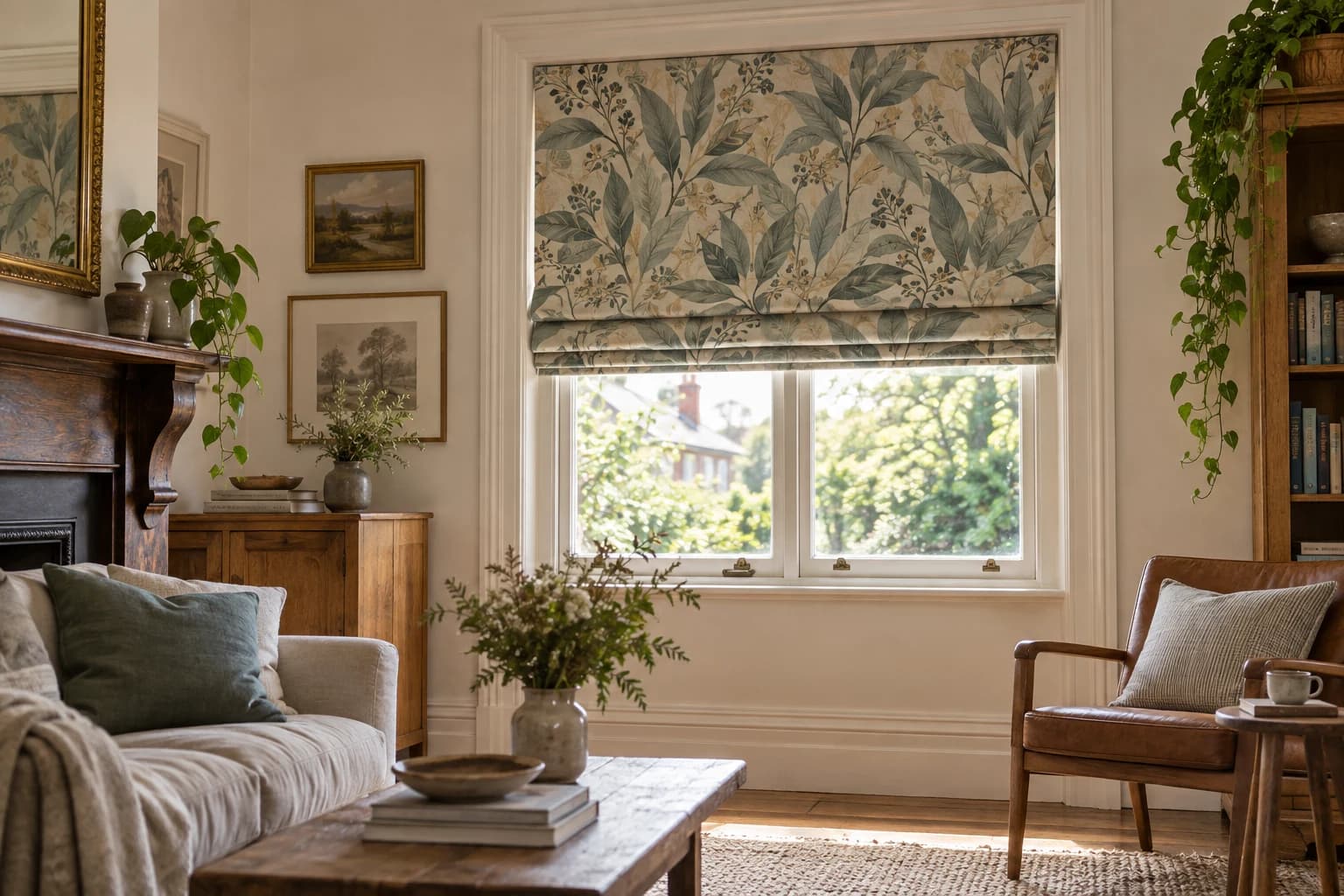
Flagship designer guide
Michelle’s designer guide to window type, architecture, bay and corner conditions, cost, fabric, performance and the situations where another treatment is better.
Read Michelle’s designer guideTHE LIBRARY
Choose the technical, historical or interior question that matters now.
Complete technical guide
A detailed guide to fabric, lining, construction, fitting, light control, motorisation and the decisions that make a Roman work properly.
Read article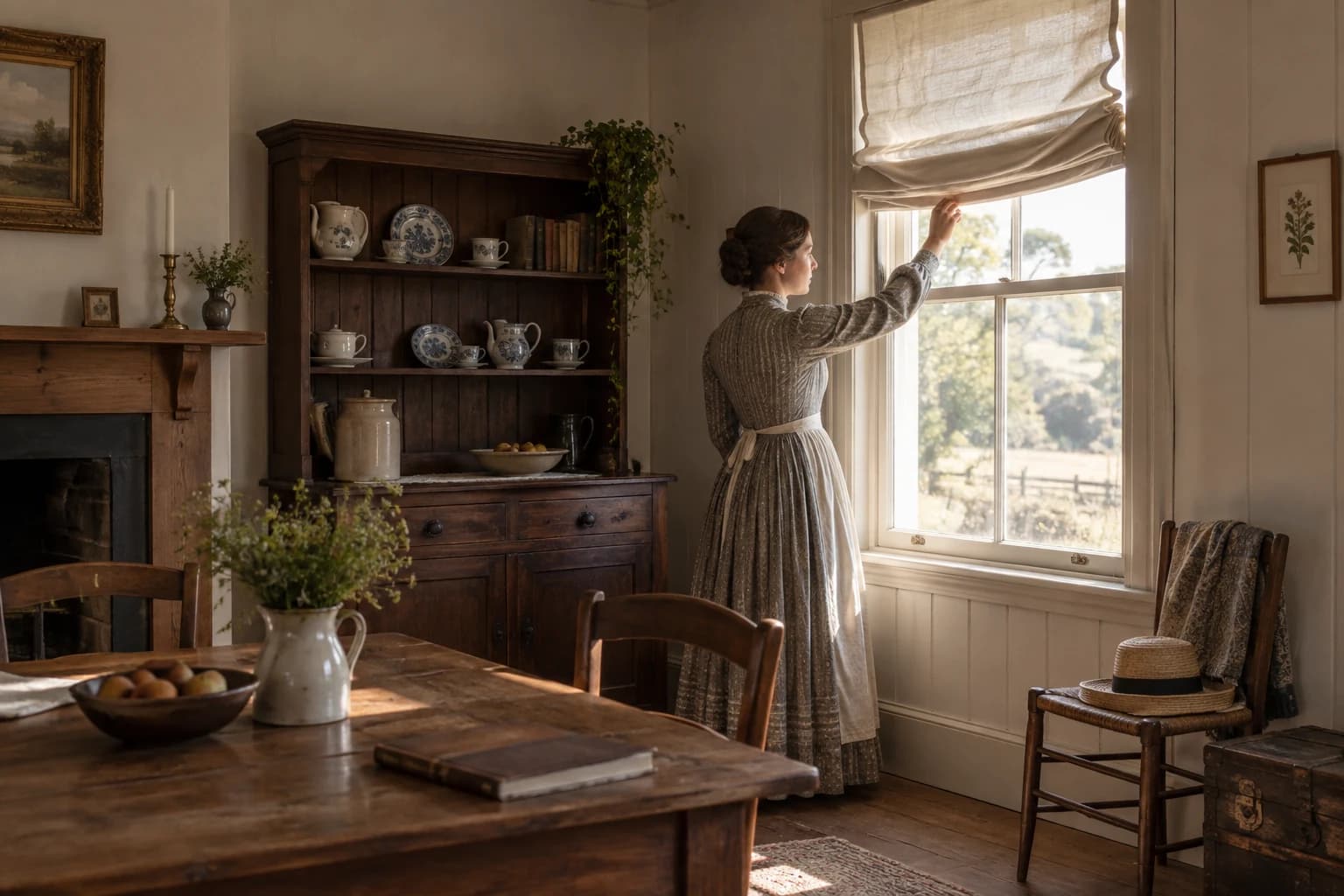
History
A sourced account of textile window treatments and the modern Roman—without turning an uncertain origin story into fact.
Read article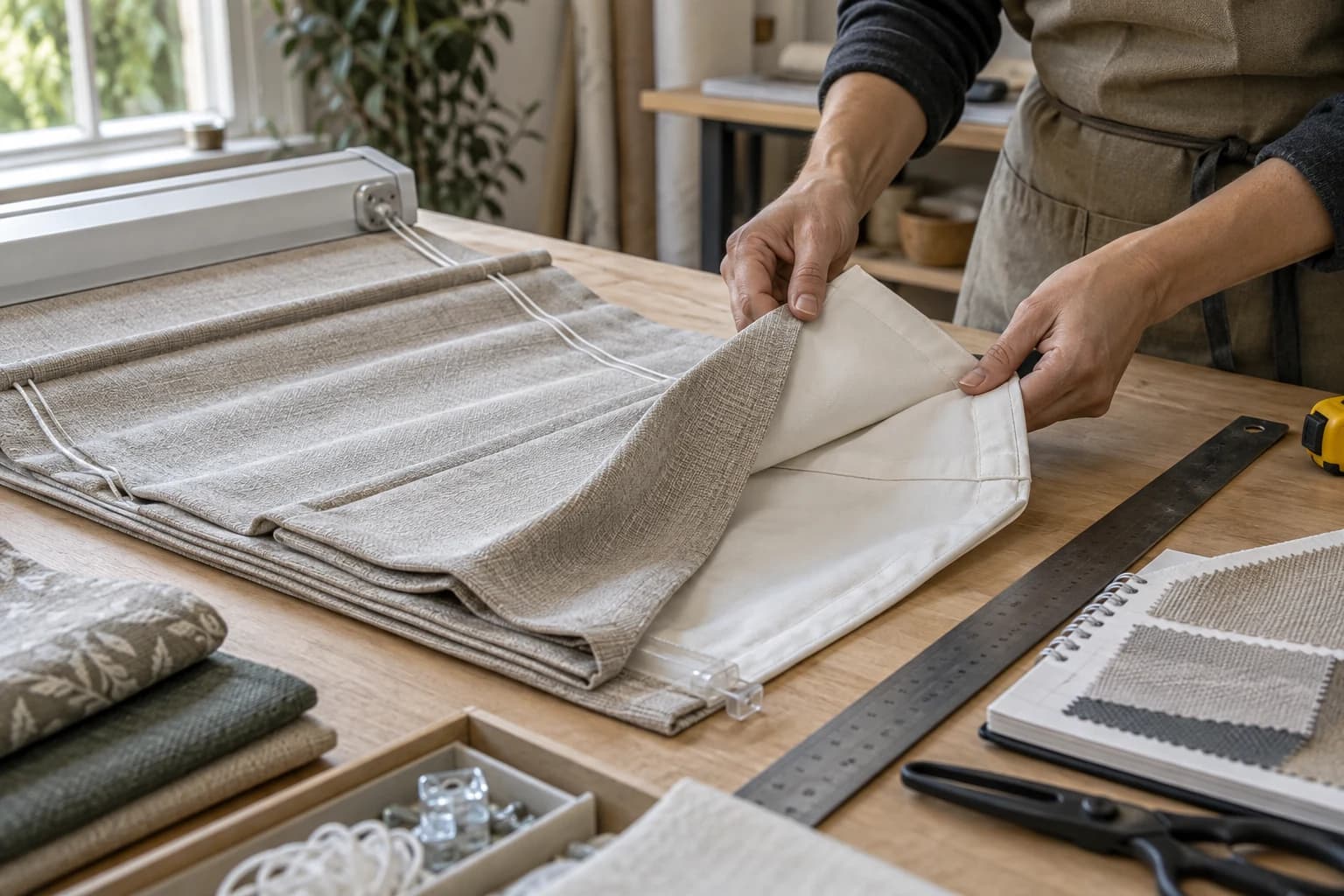
Making & specification
What an experienced maker resolves before cutting: suitability, measurement, proportion, pattern, stack, hardware and installation.
Read article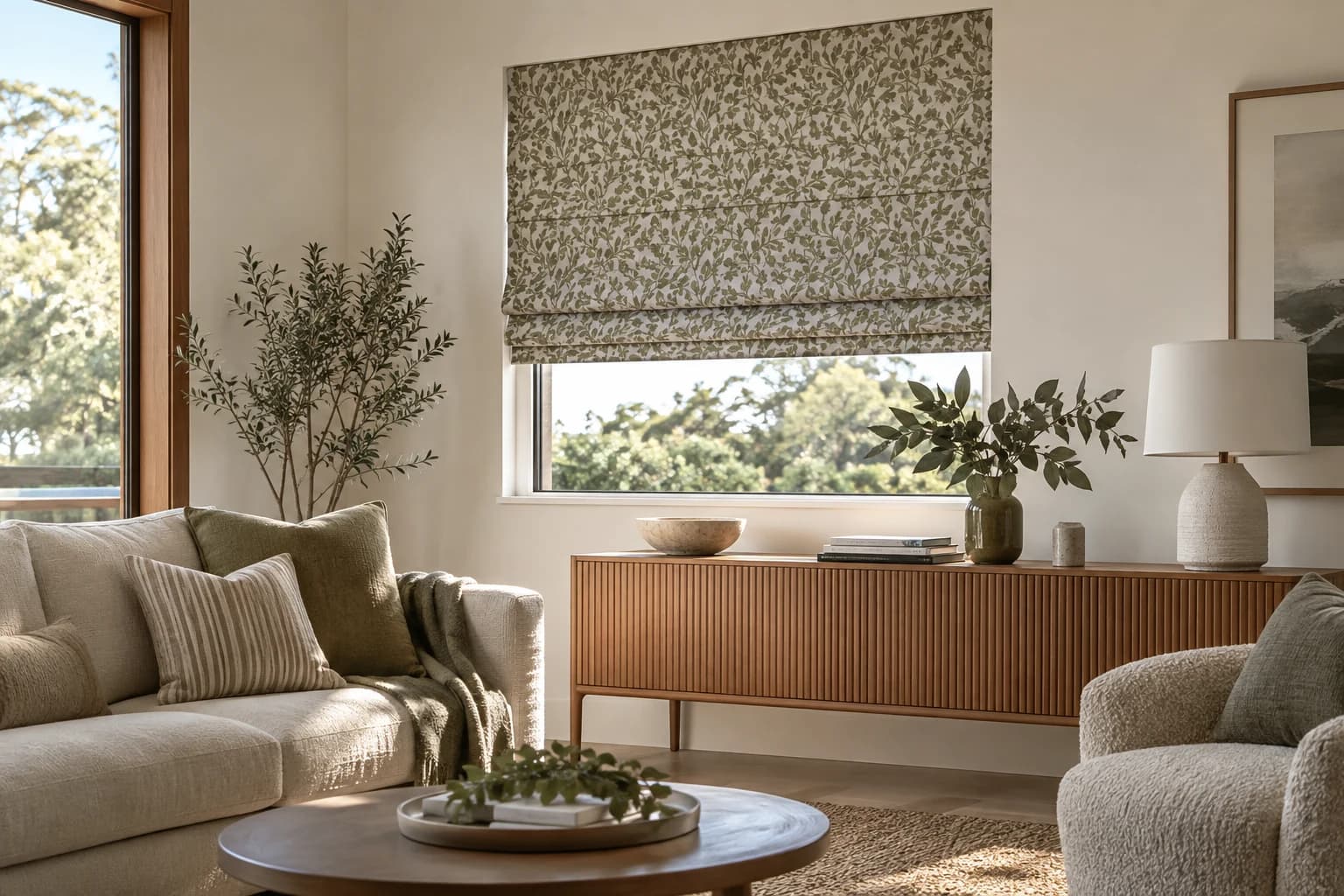
Interior design
How Romans earn their place in bedrooms, living rooms and studies through fabric, proportion and coordination with the wider room.
Read articleFROM IDEA TO DECISION
A Roman earns its place only when the textile, window, operation and room agree.
See what fabric at the window contributes before discussing mechanisms.
Explore inspiration →Test the idea against the actual opening, furniture, architecture and daily use.
Explore suitability →Understand when a roller, curtain or layered treatment is the stronger answer.
Explore comparison →Resolve textile stability, lining, pattern, proportion and the visible stack.
Explore fabric & design →Separate fabric opacity from room darkness, comfort and acoustic expectations.
Explore performance →See where fabric, stack, hardware, pattern or installation can undermine the result.
Explore problems →Understand where labour, scale, operation and installation change the finished price.
Explore cost →Plan cleaning, care and service access before a hard-working blind is ordered.
Explore ownership →Look for one specification that connects design, measuring, making and installation.
Explore supplier →Bring the opening, room and performance brief into one practical conversation.
Explore consultation →PRACTICAL ANSWERS
CUSTOMER DECISION QUESTIONS
Direct answers first, followed by the condition that can change the recommendation.
They can be when textile character, pattern and a furnished appearance matter. A roller is usually the more compact and economical answer when the treatment should recede, so the value depends on the room rather than the product name.
The quotes may not describe the same completed treatment. Fabric allowance, pattern matching, lining, construction, headrail, operation, mounting conditions and installation should be compared before treating the difference as margin alone.
Several aligned Romans are often more practical where the glazing has clear mullion divisions. Finished weight, seams, stack, operating force and pattern alignment determine whether one large blind remains a sensible choice.
Yes, but the geometry must be resolved before manufacture. Separate headrails, corner gaps, handles, opening sashes and stack positions need to be designed as one composition even when several blinds are made.
A blockout lining can stop light passing through the textile, but light may still enter around the top, sides and bottom. Mounting overlap, window geometry and layering determine whether a Roman alone meets the room-darkening brief.
A textile Roman may contribute to reducing reflected sound inside a room, but road-noise transmission through glazing, frames, seals and gaps is different. An absorptive Roman alone should not be treated as soundproofing for the window.
Linen has natural texture and movement, and it should not be expected to behave like a rigid synthetic panel. The exact weave, stability, lining, exposure and supplier guidance decide whether a linen or linen blend is suitable.
They can be, provided the supplied operating system and installation meet current Australian safety requirements and furniture is positioned appropriately. Light control, cleaning and daily access should be resolved before choosing the decorative fabric.
Motorisation is useful for high, heavy, difficult-to-reach or frequently operated blinds, and where several Romans should move together. The motor, power and controls must be selected around the finished blind and future service access.
Routine care should follow the face-fabric and lining instructions, beginning with gentle dust removal rather than moisture or strong spot-cleaning products. Stains, creases or uneven travel should be assessed early because treatment depends on the textile, construction and operating system.
Sometimes, but retrofit should not be assumed. Headrail compatibility, finished weight, space, power, fabric condition and access determine whether conversion is sensible or whether a new complete system will be more reliable and serviceable.
Strong sun, UV exposure, heat, humidity, ventilation and condensation make fabric and lining suitability more important. Ordinary furnishing fabric should not be described as marine-grade or salt-resistant unless its manufacturer documents that performance for the intended use.
Some components can be serviced or replaced, depending on the headrail, control, age and availability of compatible parts. Damage to the face fabric, lining or pattern may be less straightforward, so access and future servicing are worth discussing at specification stage.
We would reconsider one where the opening is excessively wide, the stack blocks too much glass, window hardware conflicts, moisture is extreme or very tight edge light control is required. Sometimes a roller, curtain or layered treatment is the better use of the budget.
EDITORIAL APPROACH
Written by Michelle and CCBD Editorial for Australian homeowners, designers and specifiers. We separate product guidance from universal claims, identify historical uncertainty and confirm final fabric and hardware choices against the actual window.
ROMAN BLINDS BY CCBD
Bring us the window, the room and what you want it to do. We’ll help determine whether a Roman blind—or another treatment—is the better solution.