INSIDE MOUNT
A contained architectural result
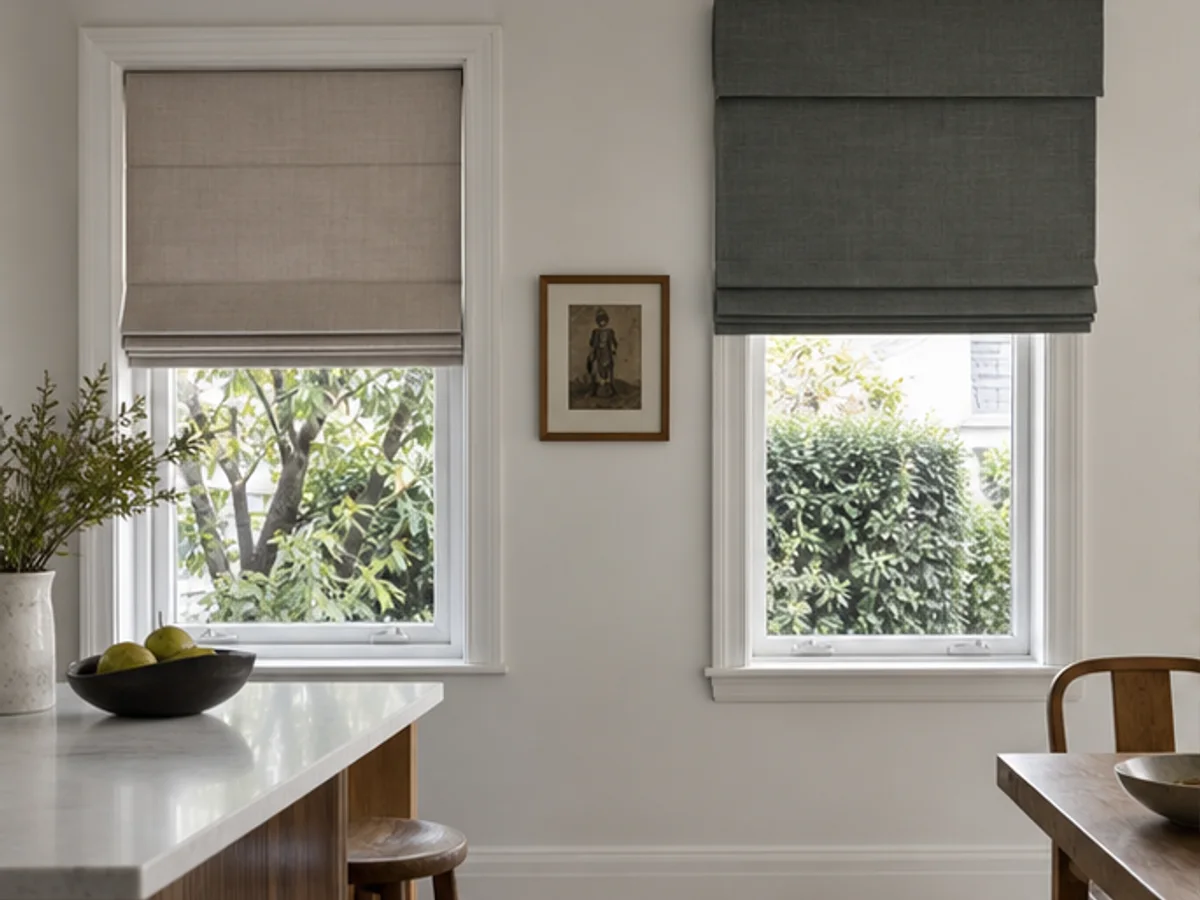
A recess-fit Roman sits within the window reveal and leaves the architrave visible. It can feel clean and integrated, particularly where the reveal is deep, square and free of obstructions. The fabric and stack remain visually contained within the opening.
The recess needs enough usable depth for the selected headrail and folded blind. Handles, locks, opening sashes, flyscreens and a projecting sill can reduce that space. A moving blind also requires clearance; measuring only the front edge of the reveal is not enough.
OUTSIDE MOUNT
More coverage and a stronger presence
A face-fit Roman is mounted over the wall or architrave. The blind can extend beyond the opening, which may improve coverage and allow the raised stack to sit higher relative to the glass. It can also change the apparent proportions of a small or awkward window.
Extra width and height should be designed rather than applied as a standard allowance. The blind needs a convincing relationship with architraves, nearby walls, cornices, joinery and other windows. A face fit that is technically possible can still look poorly proportioned.
LIGHT & PRIVACY
Fabric opacity does not remove perimeter gaps
Every operable blind needs space to move. Recess installations normally reveal narrow side gaps, while a considered face fit can cover more of the opening. Light may still travel below the blind, above the headrail or across an uneven wall. These conditions matter in bedrooms and media rooms.
Where stronger darkness is needed, the mounting position, overlap and any layered treatment should be considered together. A blockout lining controls light through the cloth; it does not by itself create total room darkness.
SITE REVIEW
Technical fit is not the same as good visual proportion
The final decision should be made with the actual window, not from a generic diagram alone. Check the opening at several points, identify the mounting substrate and record every obstruction. Then view the proposed blind as part of the elevation, including the stack when raised.
Where several Romans share a room, consistent top lines and aligned fold rhythms may matter more than forcing each blind into its individual recess. A professional measure should resolve both the manufacturing dimensions and the visual relationship between openings.