There are windows where curtains complete the architecture, and others where they overwhelm it. A good Roman blind sits somewhere between furnishing and architecture: it brings fabric, colour, pattern and softness to a window without necessarily asking for wall space or fabric to fall to the floor.
That distinction matters in Sydney. I might be looking at a narrow sash window in a Federation house one morning and broad apartment glazing that afternoon. Terraces, California bungalows, Art Deco apartments, mid-century houses, coastal homes and new architectural residences do not ask the same thing of a Roman. The correct decision starts with the actual window and room—not the name of the product.
Why do people choose Roman blinds?
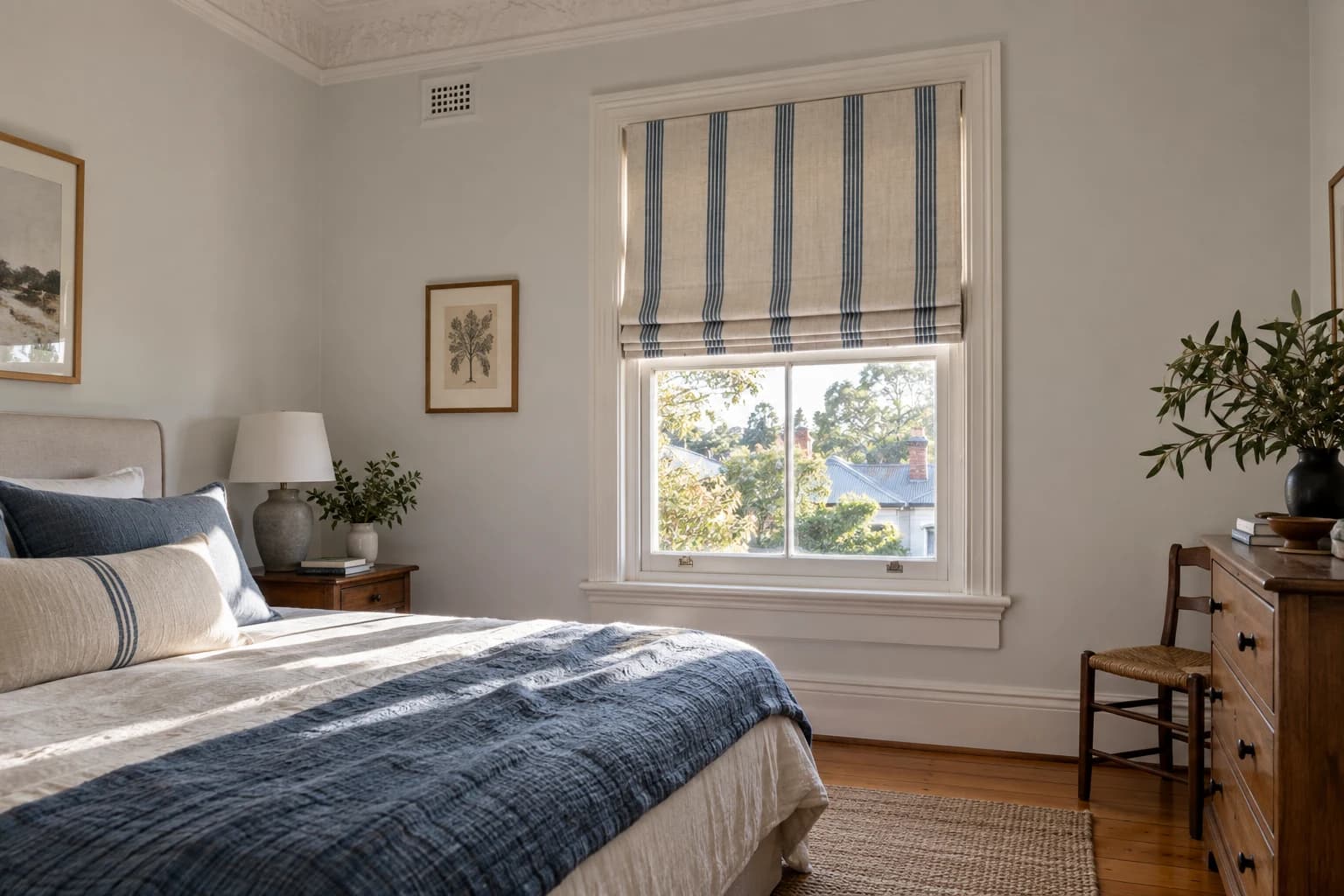
People choose Romans because they want fabric to remain part of the room. A roller largely disappears into its tube when raised. A Roman retains a folded stack, so the textile is still visible. That can be the reason to choose it—or the reason not to.
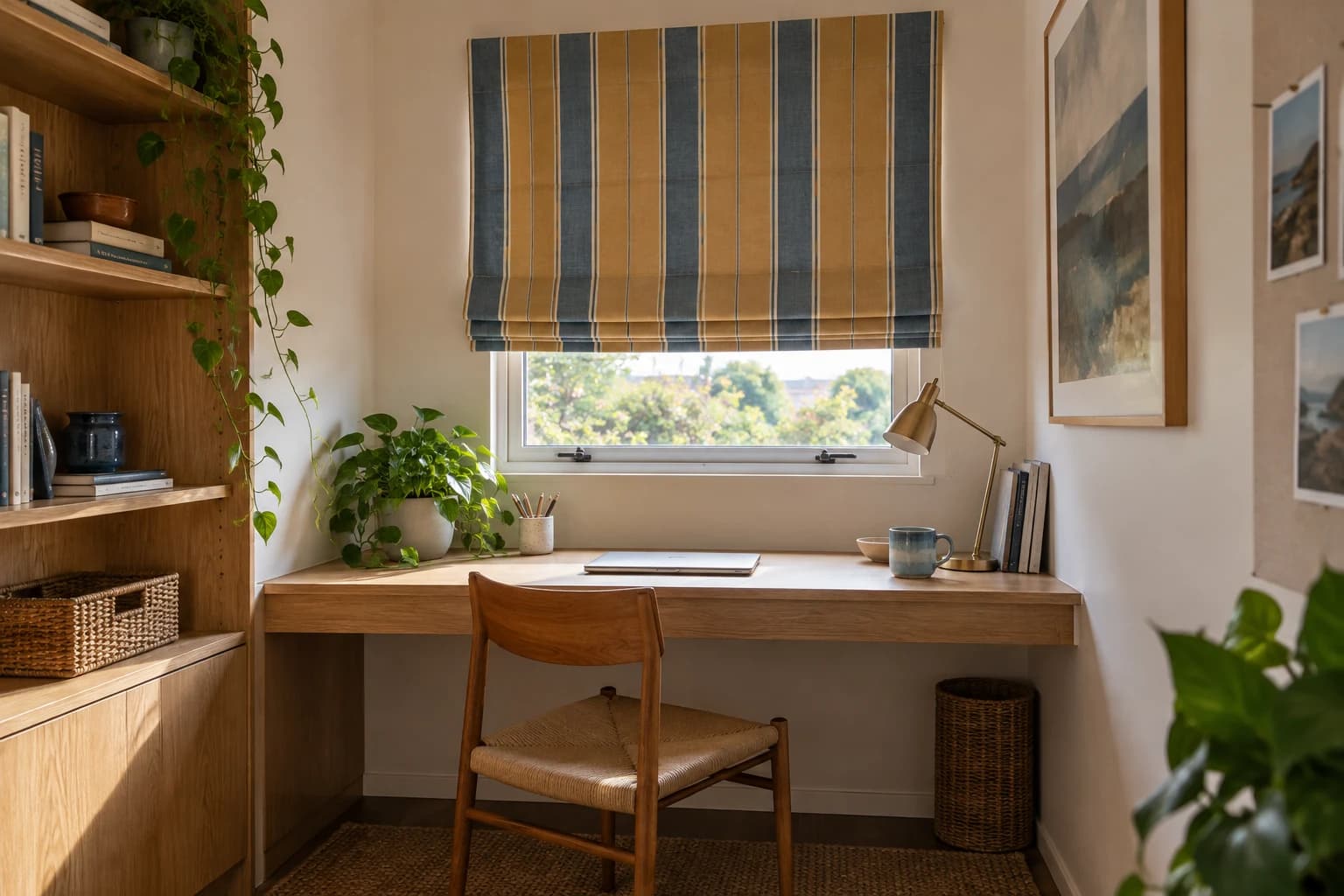
A Roman can sit above a desk, bed, banquette or console where curtain stack-back would conflict with furniture. It can hold a stripe, floral, botanical or border within a deliberate rectangle. It can also soften a hard contemporary elevation without hiding the window behind floor-length fabric.
One of the smallest furnishings in a room can have disproportionate design impact. In a powder room, child’s bedroom, stair landing, study or kitchen, a single Roman may be the element that connects paint, timber, cushions and upholstery.
How should a Roman respond to Sydney architecture?
In a Federation or period-influenced room, I look first at the joinery, reveal, stained glass and wall proportion. A patterned Roman can introduce textile character without overwhelming an individual window. An outside mount may visually extend the opening; a recess fit may preserve more architrave. If important glass or original joinery would be hidden, the treatment or mounting position needs reconsideration.
In a contemporary apartment, Romans can soften glass, stone, plaster and timber while keeping the wall beside the window available. Limited wall space and furniture close to glazing often favour vertical operation. Balcony doors, strong glare, privacy and the raised stack may favour a curtain, roller or a combination instead.
Can Roman blinds work on bay and corner windows?
Roman blinds can work very effectively on a bay window, provided the geometry is resolved before manufacture. Each section is usually a separate blind, but the bay must be designed as one composition. Headrails, corner gaps, handles, opening sashes, stack positions and pattern continuity all influence the result.
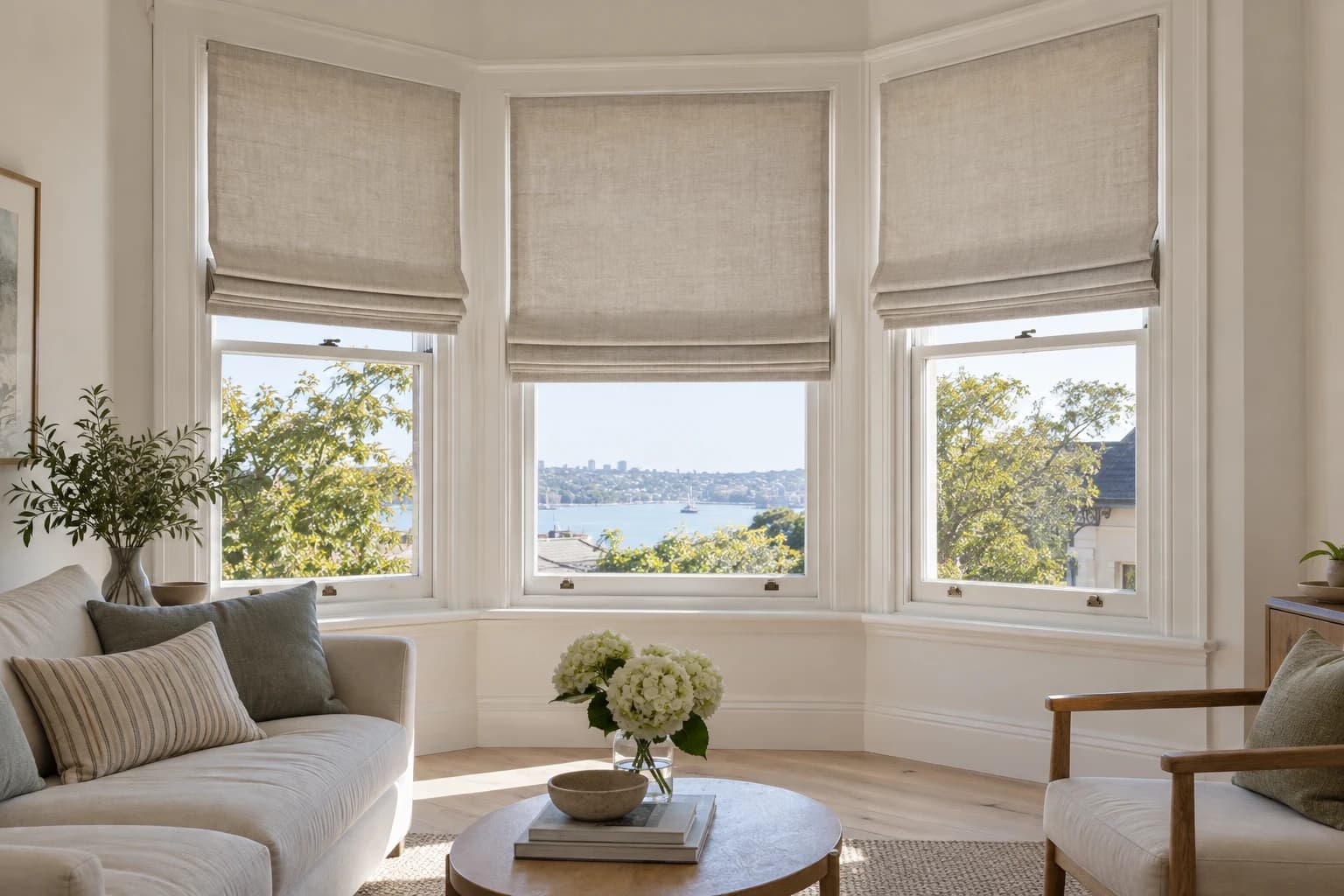
At a corner, two blinds cannot occupy the same physical space. We decide which headrail terminates first and what gap is needed for fabric thickness, hardware and operation. A neat drawing can hide this conflict; the finished window cannot.
What changes on a large window?
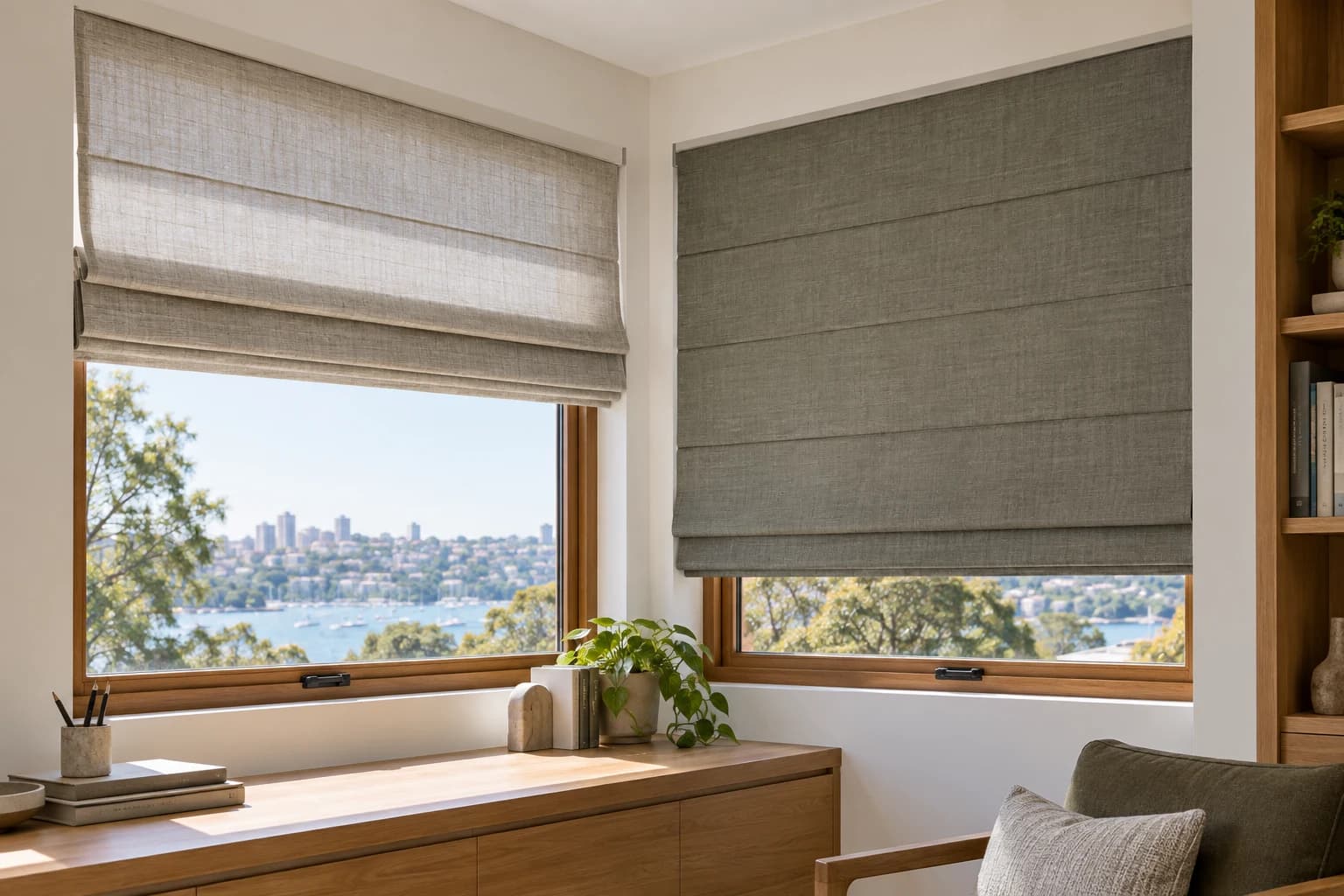
Width and drop increase fabric area, finished weight, operating demand and stack depth. They can also introduce seams and make a small variation in lift more visible. One enormous Roman is not automatically the most refined answer.
Multiple Romans aligned with the glazing divisions can be easier to operate and more convincing architecturally. On a frequently used door or a very broad opening, curtains or rollers may be more rational. Being able to manufacture the shape is not the same as recommending it.
Why do custom Roman blinds cost more than expected?
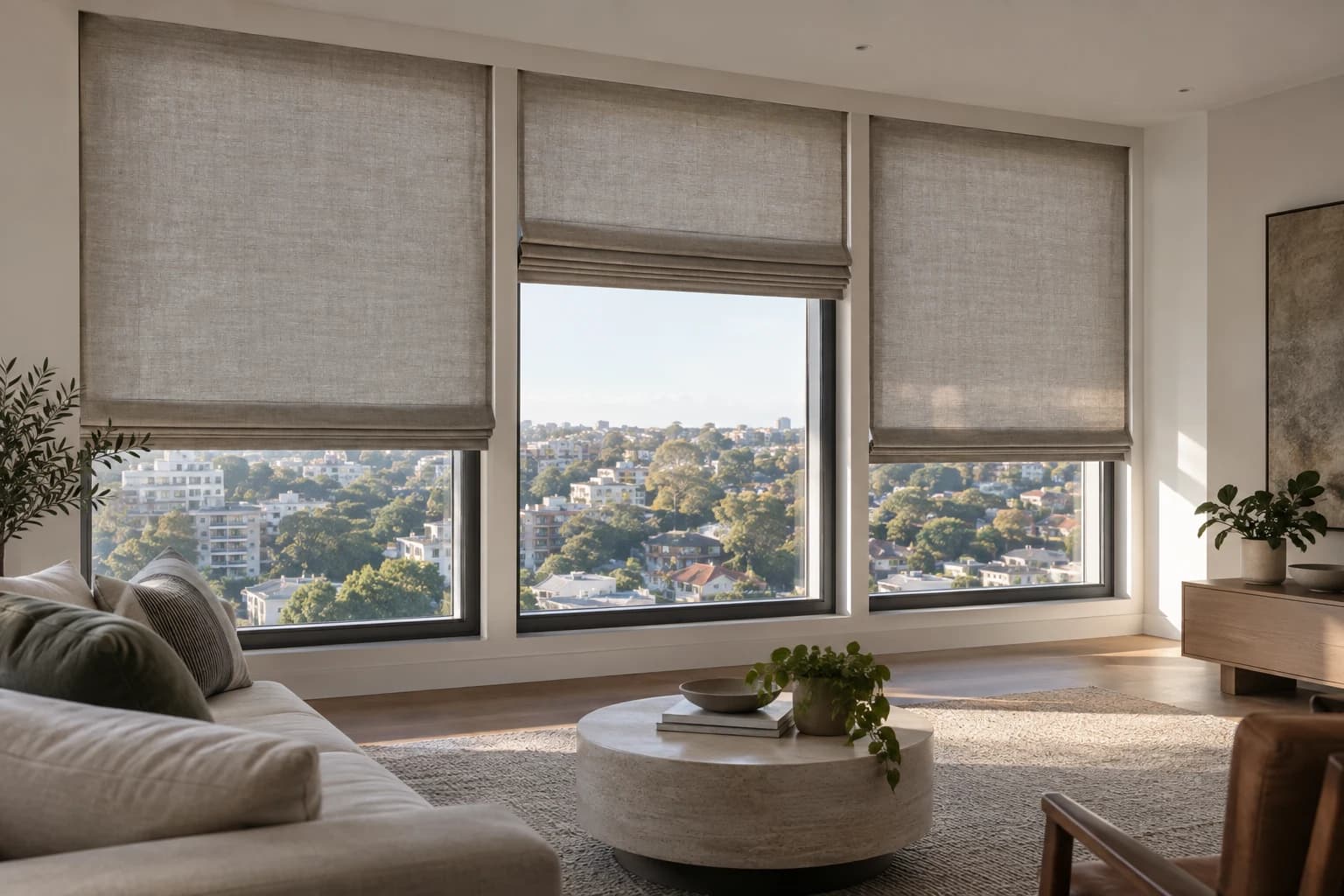
A Roman blind can be material-efficient but labour-intensive. It may use less face fabric than a full-length curtain, but it still requires careful measuring, fabric inspection, squaring, pattern placement, cutting, lining, side finishing, horizontal alignment, bottom finishing, headrail selection, dressing and installation.
Stripes, checks and large repeats expose small errors. A lower quote may assume a different fabric allowance, lining, operating system, seam position, mounting condition or level of installation work. The useful comparison is the completed specification, not fabric price alone.
How much does the fabric matter?
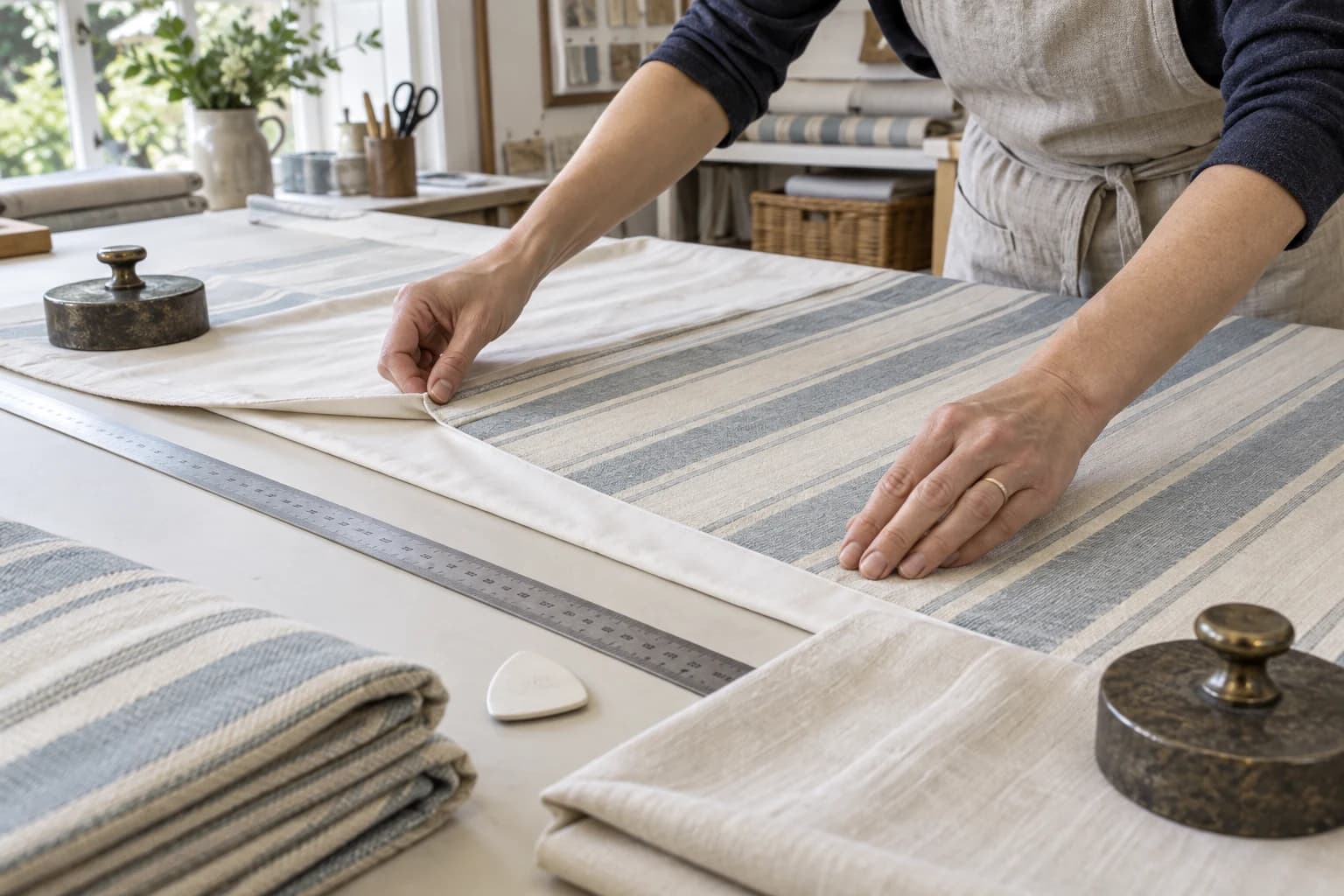
Not every beautiful curtain fabric makes a good Roman. Weight, weave stability, thickness, drape, repeat, surface texture, seams, lining compatibility and sun exposure all change the way it folds.
Linen has movement and visible character; that is part of its appeal. It should not be promised to behave like a rigid synthetic panel. Sometimes an approved linen blend gives the appearance and stability the treatment needs. Sometimes a beautiful loose weave belongs on a curtain rather than a moving blind.
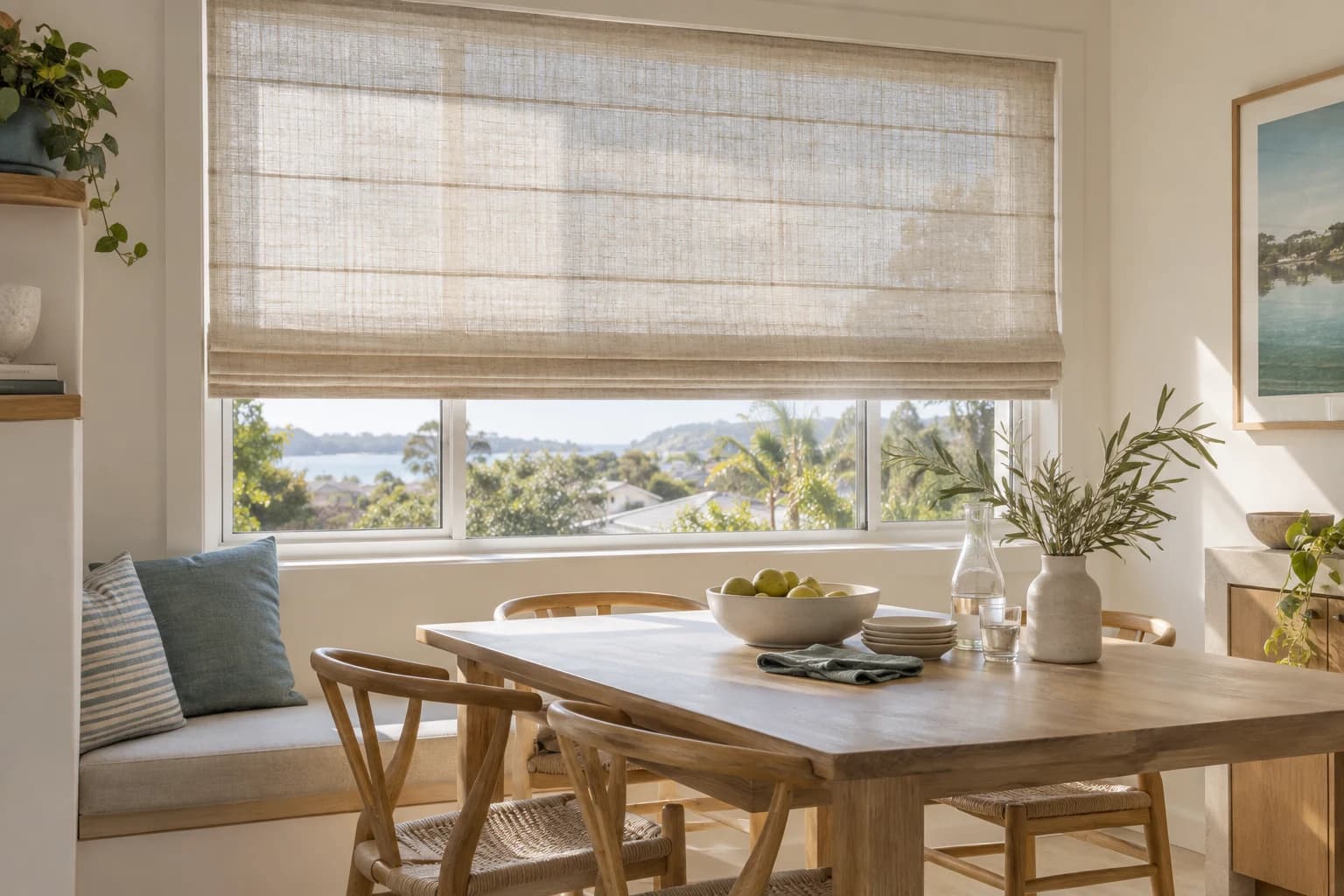
Sheer and translucent Romans can feel light rather than heavy. They filter daylight and reveal texture, but daytime view-through does not guarantee night privacy when the room is illuminated.
Can a Roman provide blockout, thermal or acoustic performance?
A blockout-lined Roman can provide strong room darkening, but opaque fabric and a completely dark room are not the same thing. Light can enter at the top, sides and bottom. Mounting outside the opening with suitable overlap may reduce peripheral light, while a layered treatment or another system may be better where darkness is critical.
Lining, fit and reduced air movement can contribute to comfort at the glass. Australian Government guidance notes that window furnishings can improve the overall thermal performance of a window, while also emphasising glazing, orientation and gaps.1 A Roman does not turn poor glazing into high-performance glazing.
For acoustics, separate reverberation from external noise. An appropriately absorptive textile surface may help reduce reflected sound inside a hard room, depending on material, area and installation. Road noise coming through glazing, frames, seals and ventilation paths is a different building problem. An absorptive Roman alone should not be described as soundproofing the window.
Should a child’s room or difficult window be motorised?
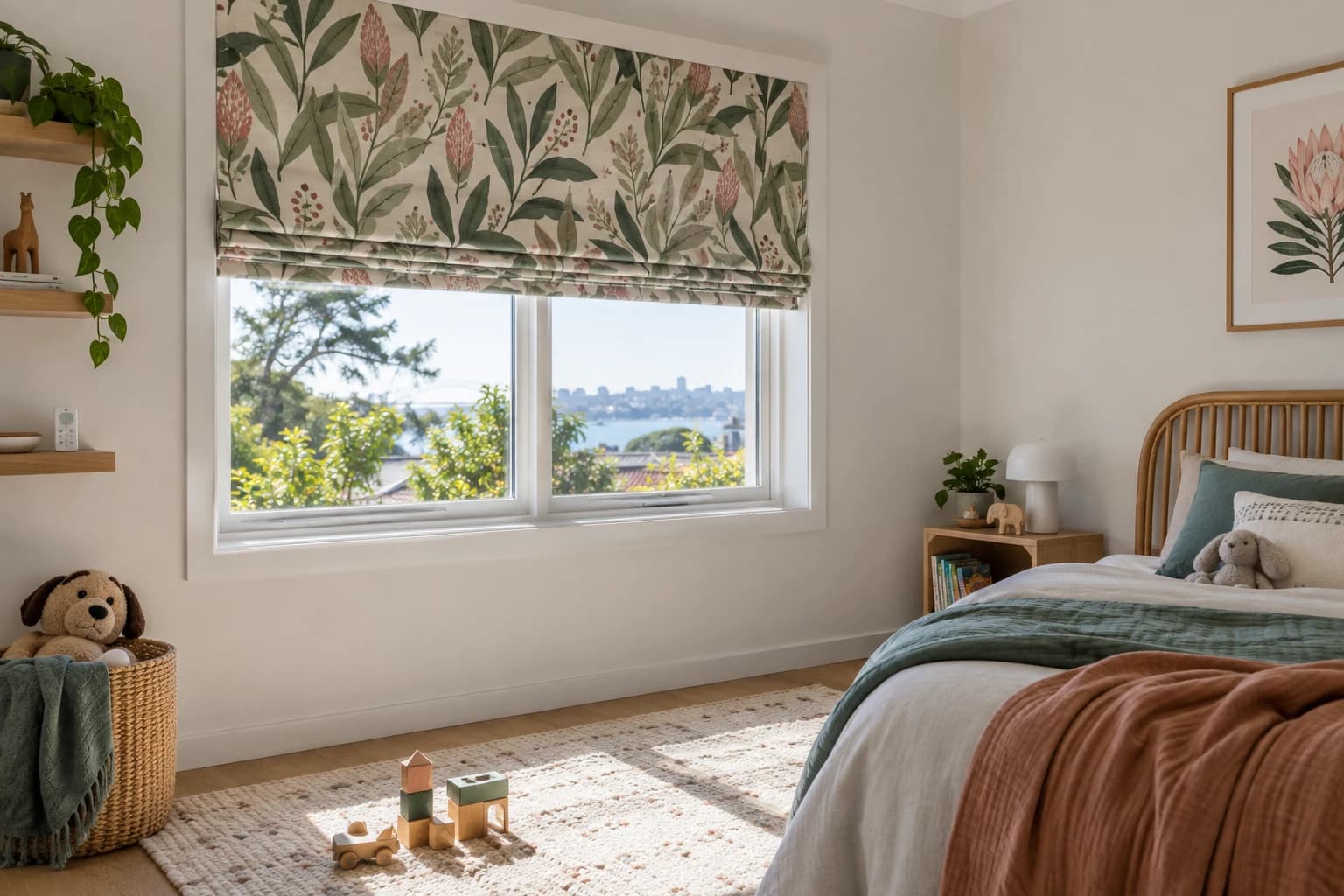
Safety comes before decoration. Australian mandatory standards apply to the supply and installation of corded internal window coverings, and furniture and beds should remain away from accessible cords or chains.2 A correctly specified motorised system removes the daily pull from the operating experience and may suit high, heavy or frequently used Romans.
Motor selection still follows the finished blind: dimensions, weight, headrail, fabric, lining, frequency of use, power and service access. Somfy Australia likewise identifies carrier type, blind weight and headrail size as motor-selection factors.3 Compatibility is confirmed for the system actually supplied, not assumed from the word “smart”.
When is a Roman blind the wrong answer?
I would reconsider a Roman where the opening is excessively wide, the stack would obstruct too much glass, the window hardware conflicts with the treatment, moisture is extreme, mounting support is inadequate or the client wants the furnishing to almost disappear when open. A very tight edge-light brief may need another system.
Sometimes a roller is more rational. Sometimes curtains are better. Sometimes a Roman and curtains create the right composition. Professional design is not finding a way to place a Roman on every window; it is recognising where the textile, mechanism and architecture agree.
CCBD has provided custom window furnishings in Sydney since 2003, supported by earlier industry experience. The team designs and specifies Romans, measures the openings, coordinates custom making and installs the finished treatments. Romans can be considered with curtains, sheers, cushions, upholstery and whole-home schemes, with highly competitive custom-made pricing based on the actual specification.
Continue exploring
- The Complete Guide to Roman Blinds
- Designing a Roman Blind Properly
- Linen Roman Blinds
- Motorised Roman Blinds
- Roman Blinds vs Roller Blinds
- Roman Blinds vs Curtains
- Free Design Consultation
Sources
- Australian Government, YourHome, Glazing, including the relationship between window furnishings, air gaps, glazing, orientation and thermal performance.
- ACCC Product Safety, Blinds, curtains and window fittings mandatory standard and consumer guide.
- Somfy Australia, Motor selection is easier than you think.