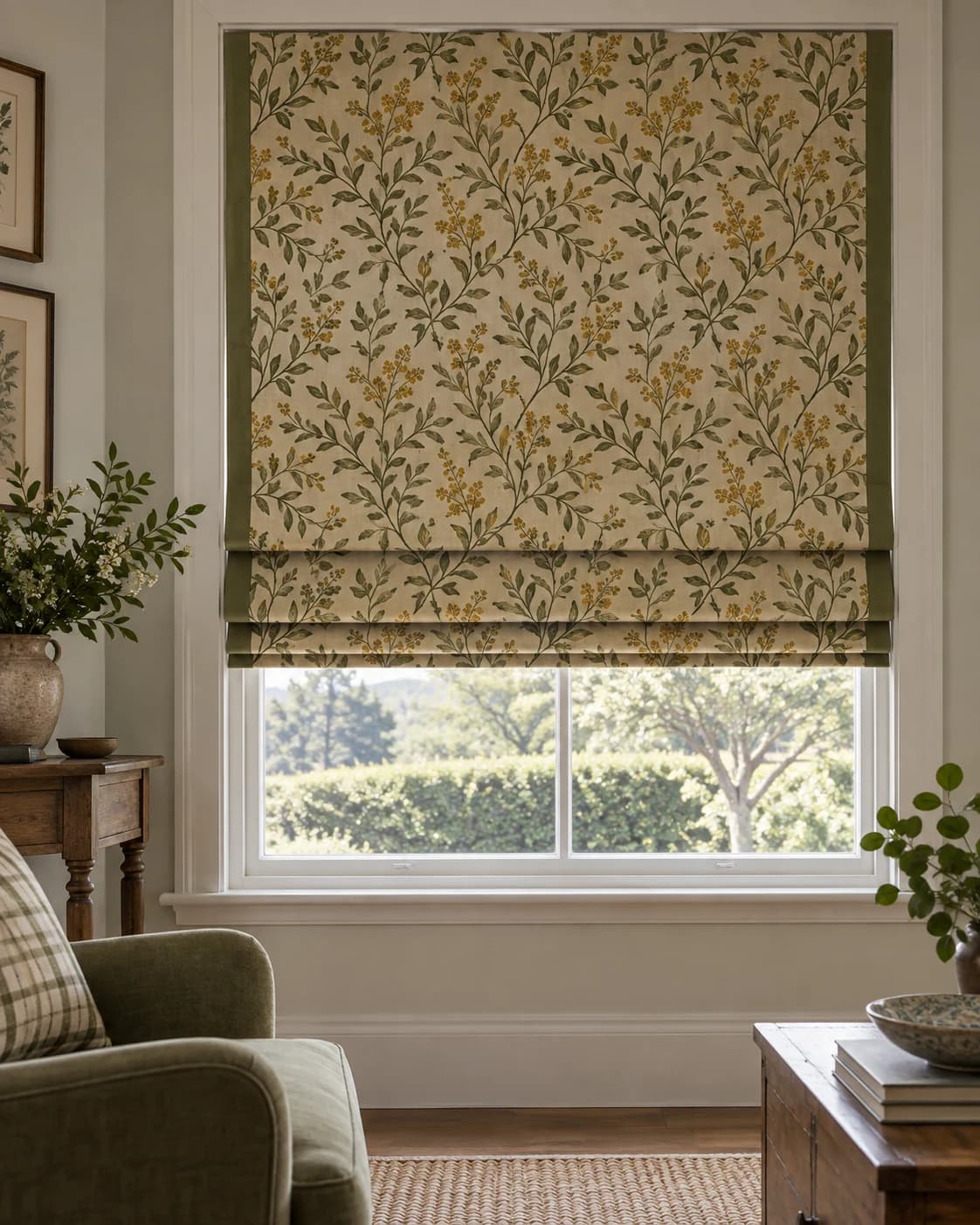
Roman Blind
Choose it when fabric, texture, pattern and the relationship with the interior matter.
Explore Roman Blind →WHY ROMAN BLINDS? · SYDNEY
Roman blinds bring the softness, texture and pattern of furnishing fabric into a more contained window treatment.
They can work particularly well where furniture sits below the window, where curtains would take up too much space, or where the room calls for something more tailored than a roller blind. But a good Roman depends on more than choosing a beautiful fabric.
Explore Roman Blinds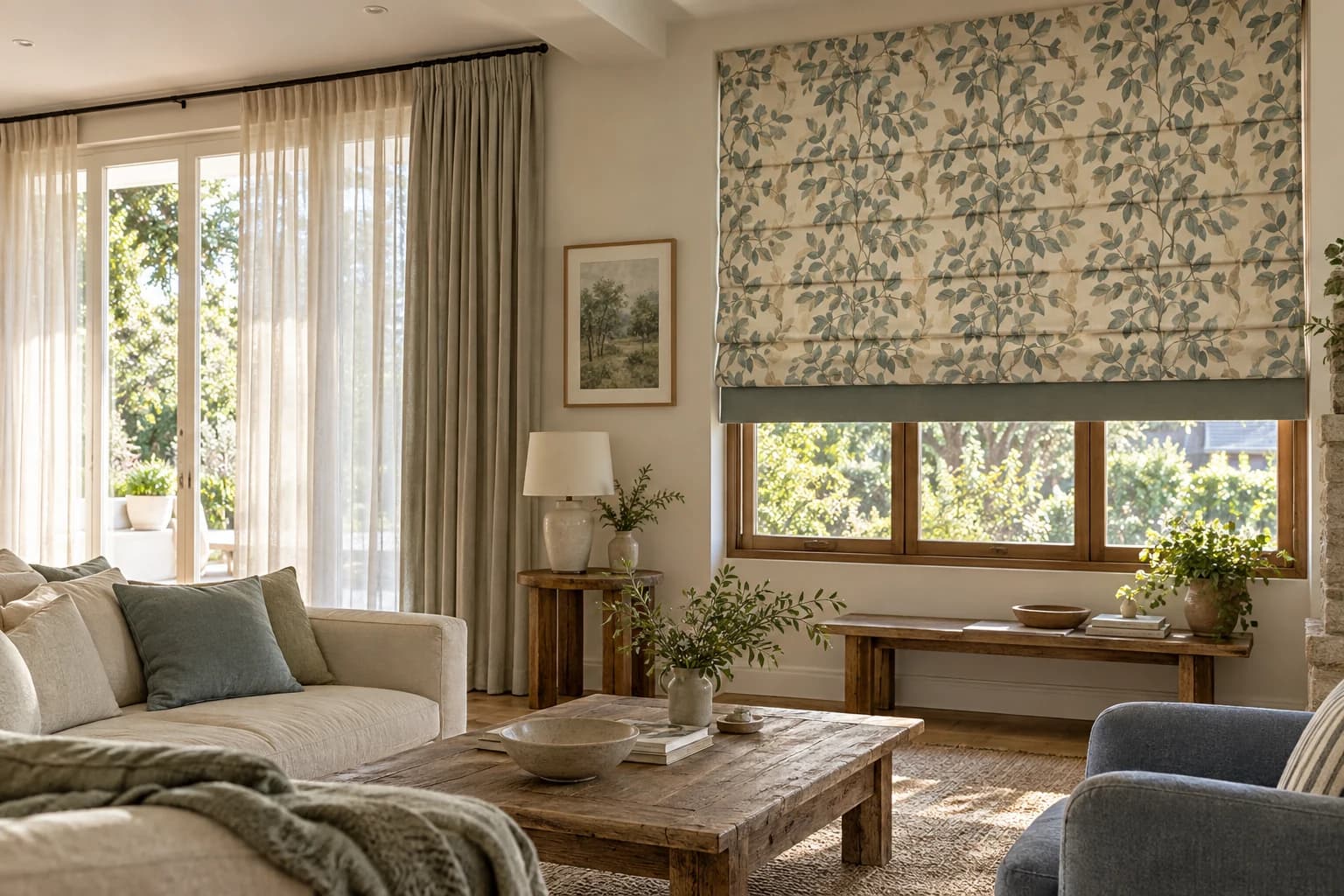
CHOOSING THE TREATMENT
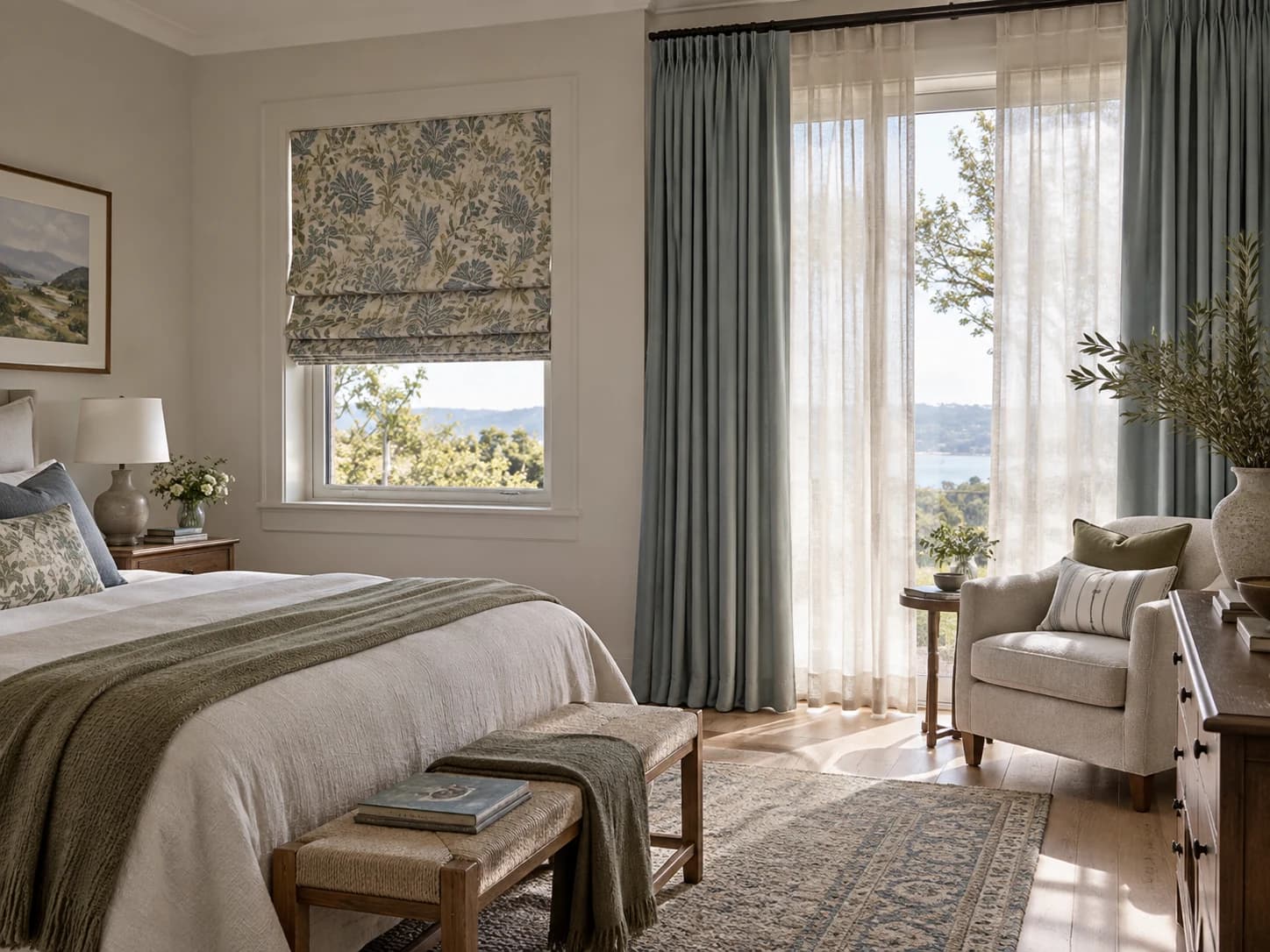
Different windows in the same home do not need the same treatment. A Roman above a desk or bed may make sense while full-height sheers and curtains are used across the living-room glazing.
Choose it when fabric, texture, pattern and the relationship with the interior matter.
Explore Roman Blind →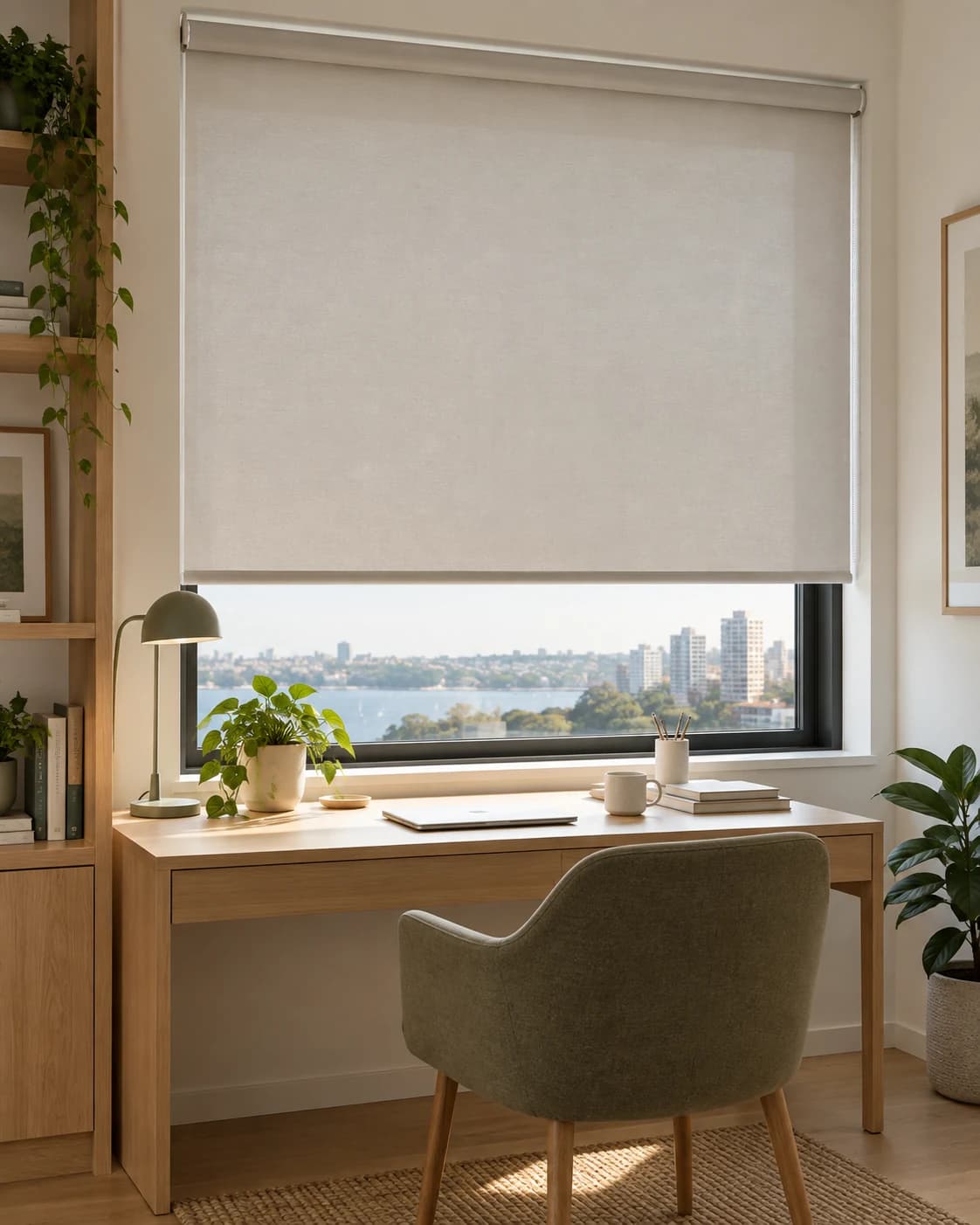
Choose it when compact operation, simplicity and functional light control are the priority.
Explore Roller Blind →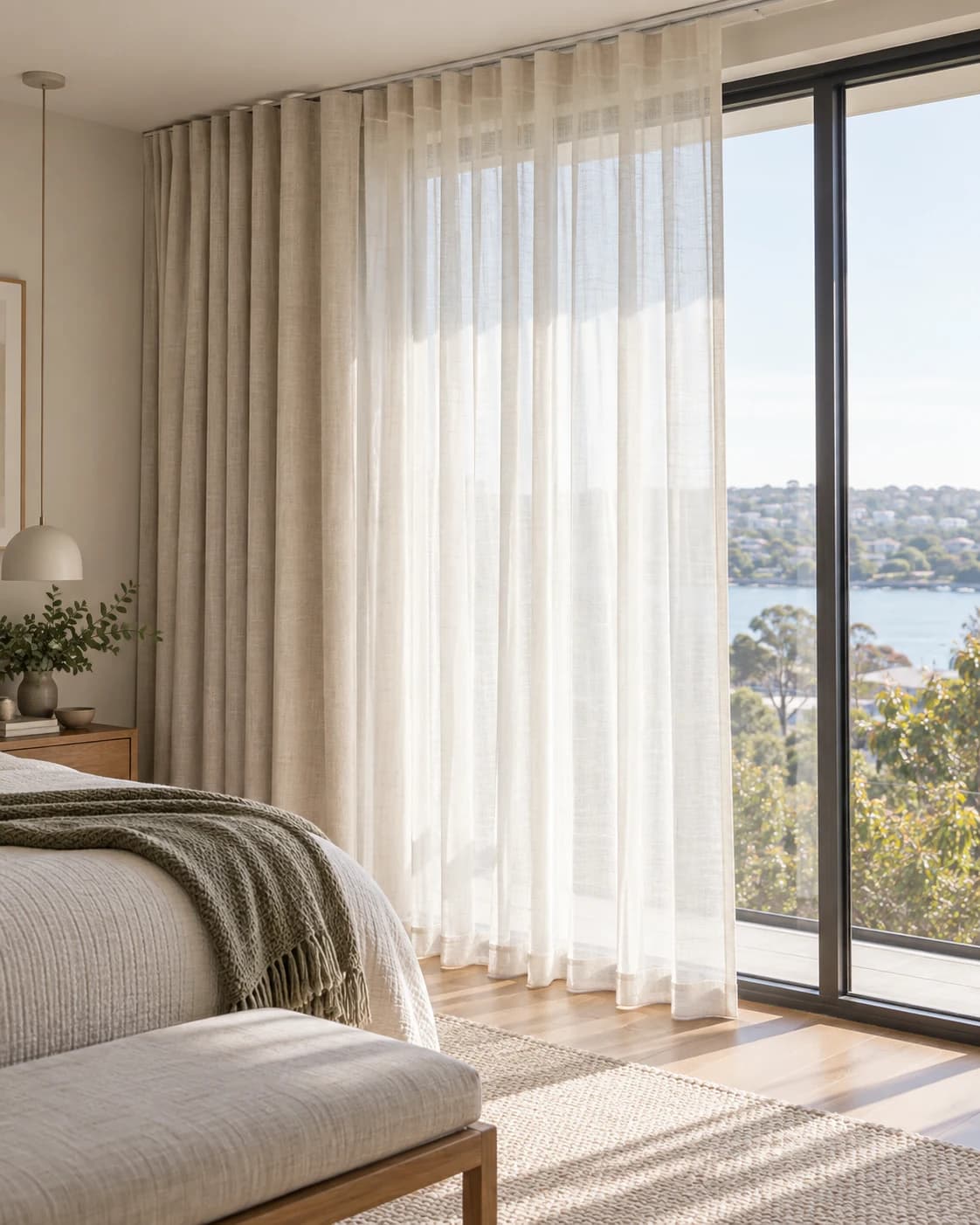
Choose it where softness, fullness, larger glazing coverage and a floor-to-ceiling treatment suit the room.
Explore Curtain →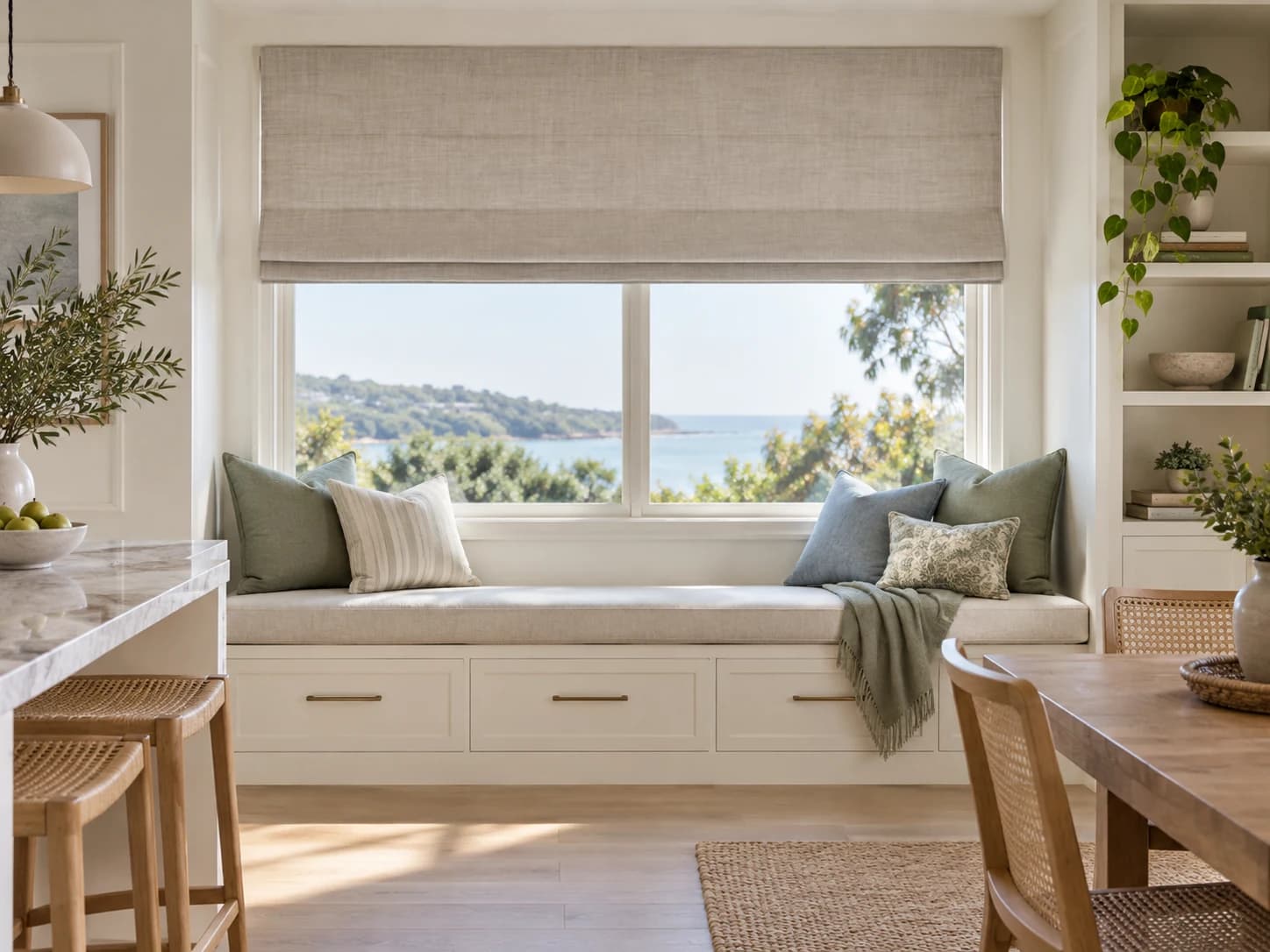
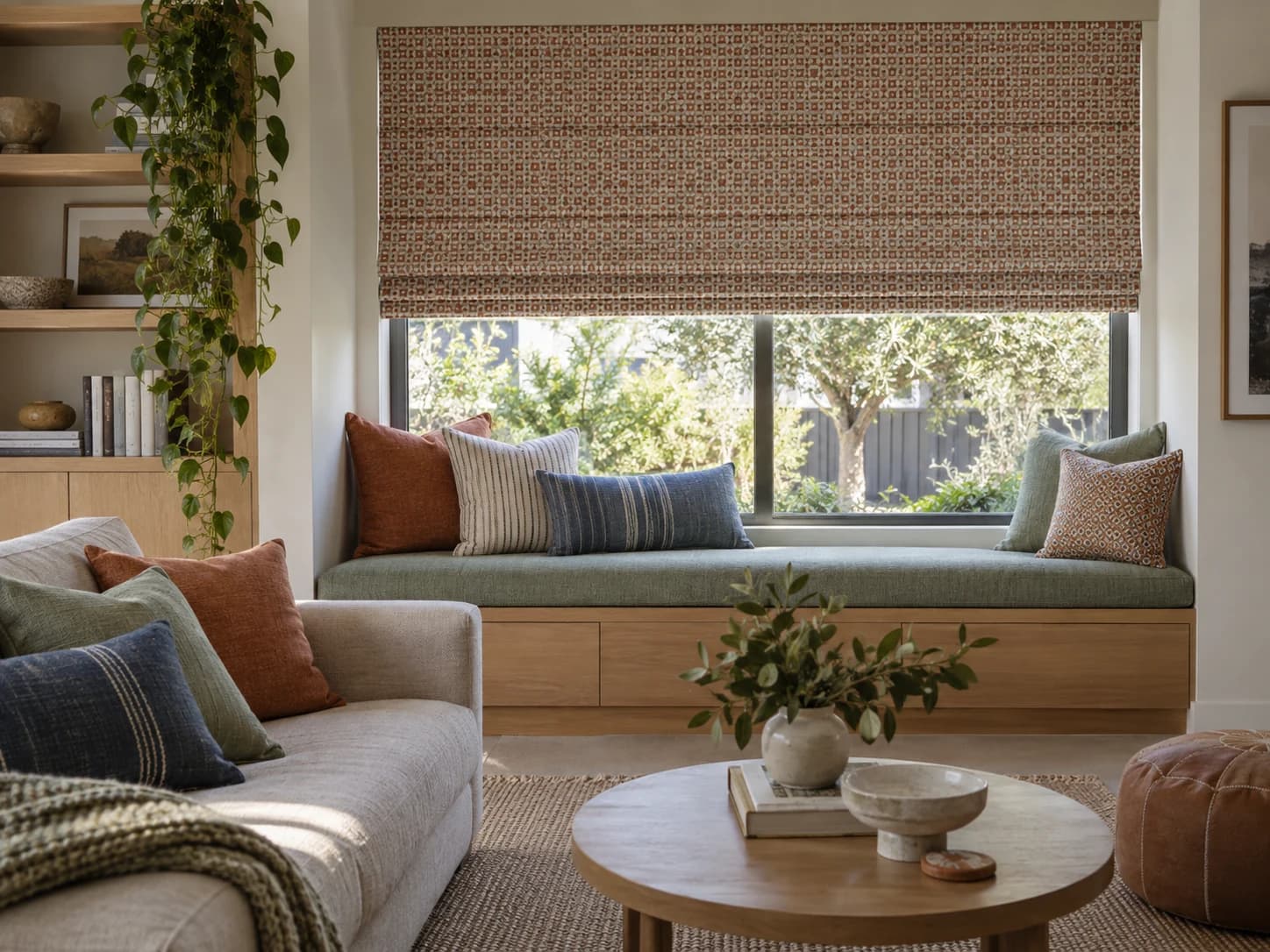
A contained treatment can sit above a desk, console, sofa or fitted joinery without fabric falling into the working area.
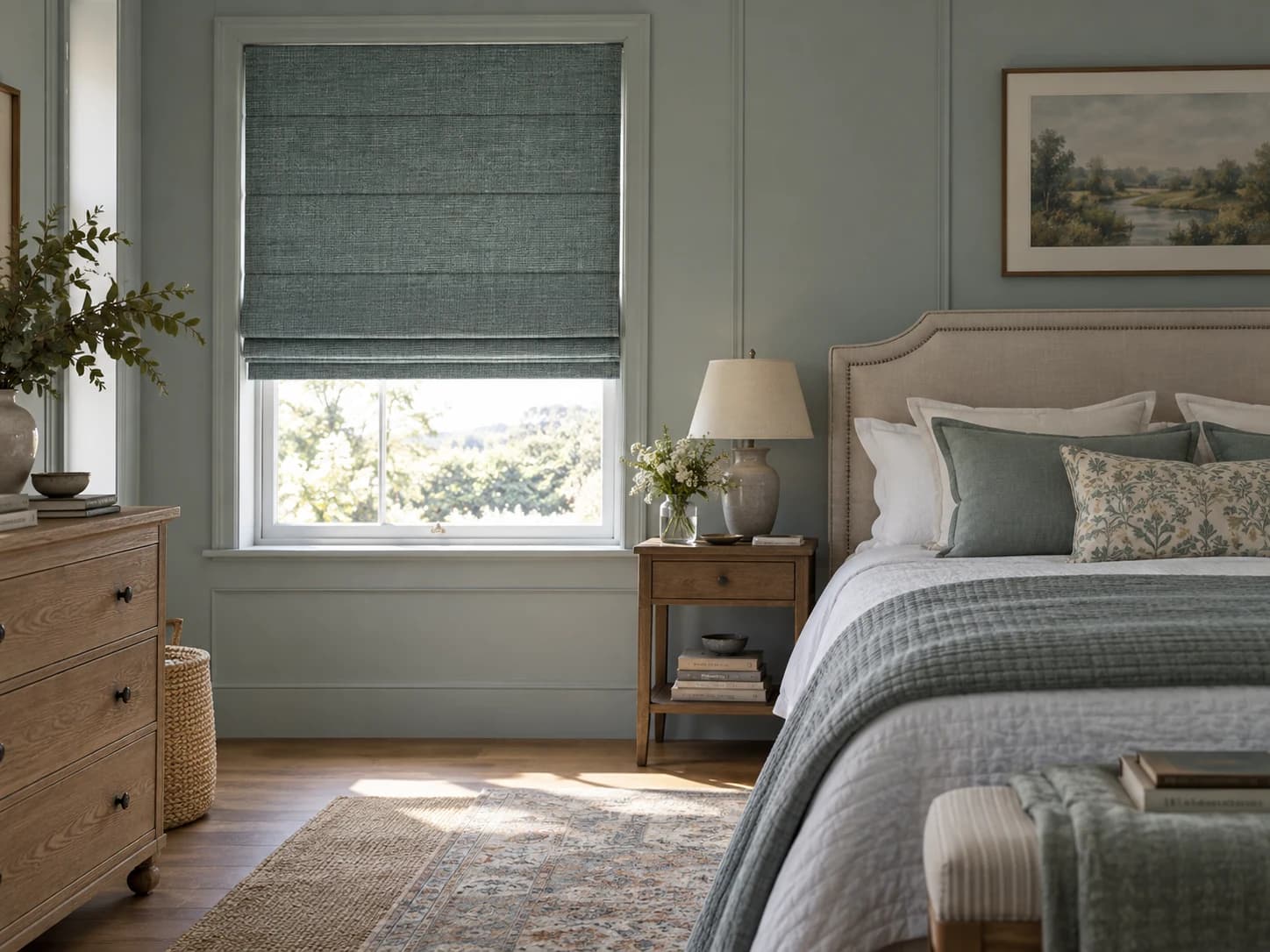
A Roman brings a softer textile presence when privacy, lining and perimeter light are resolved for the opening.
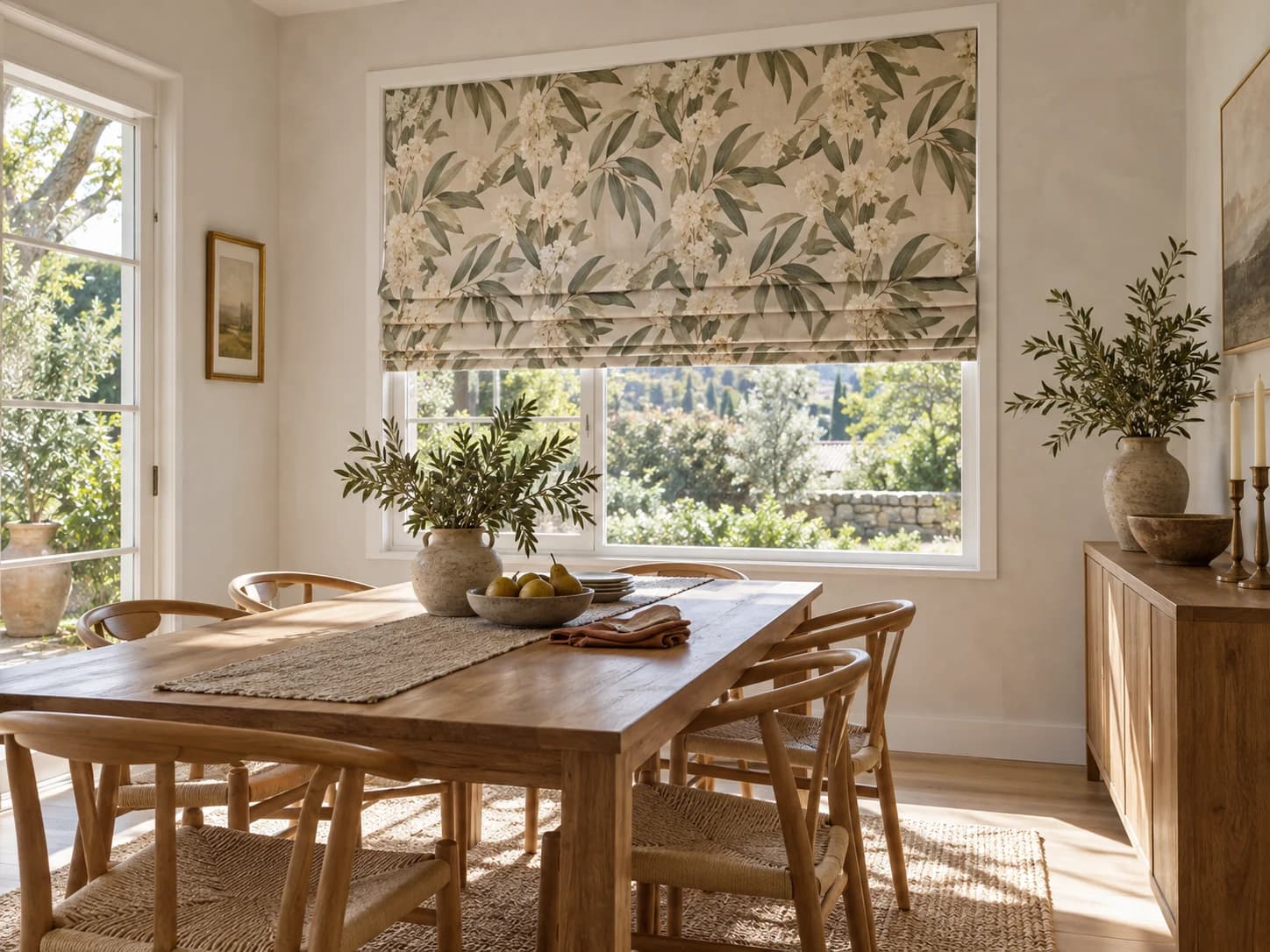
Pattern and texture can become part of the room rather than disappearing into a compact roller tube.
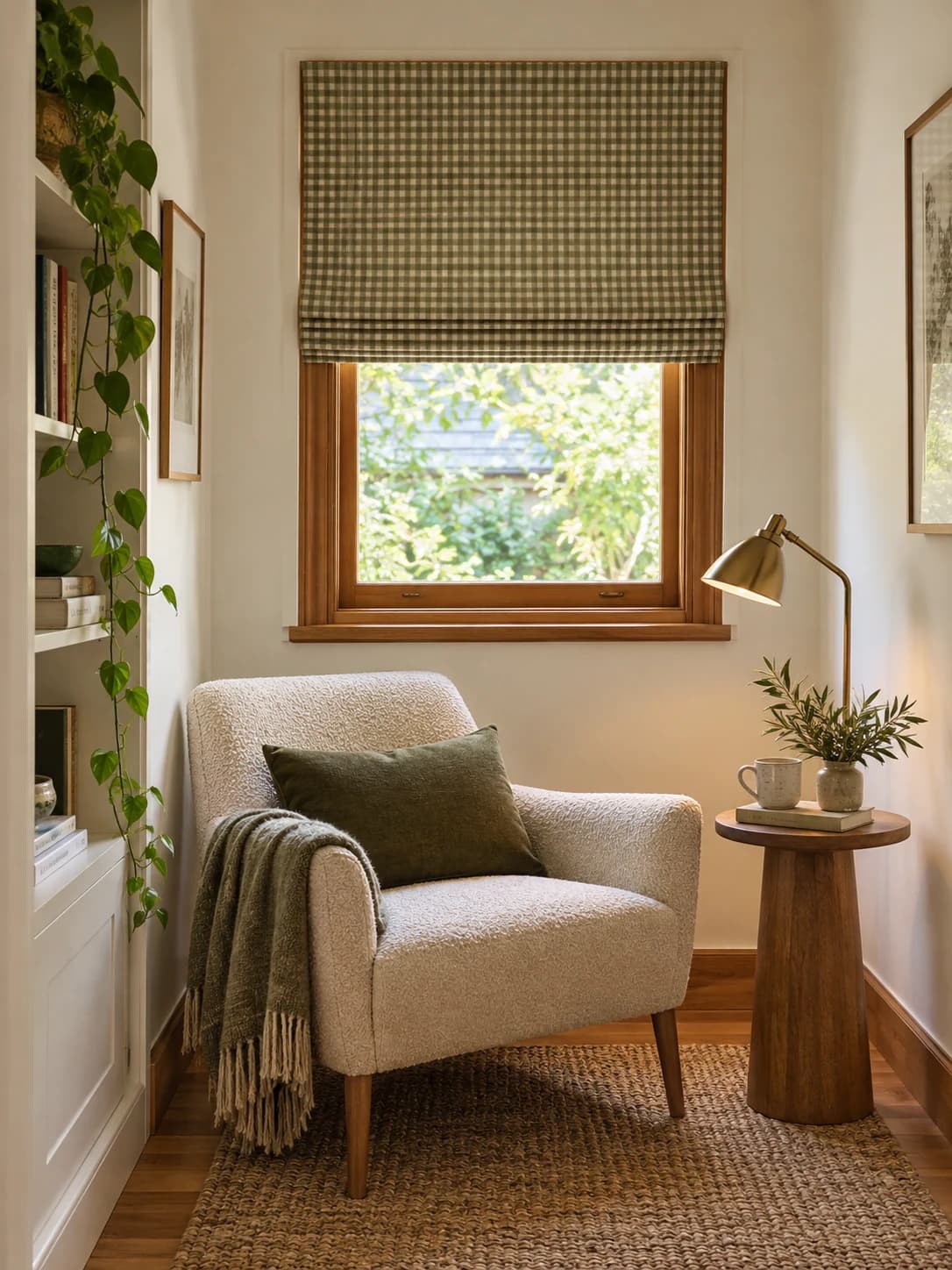
A Roman can give a smaller opening fabric character without the visual volume of full curtains.
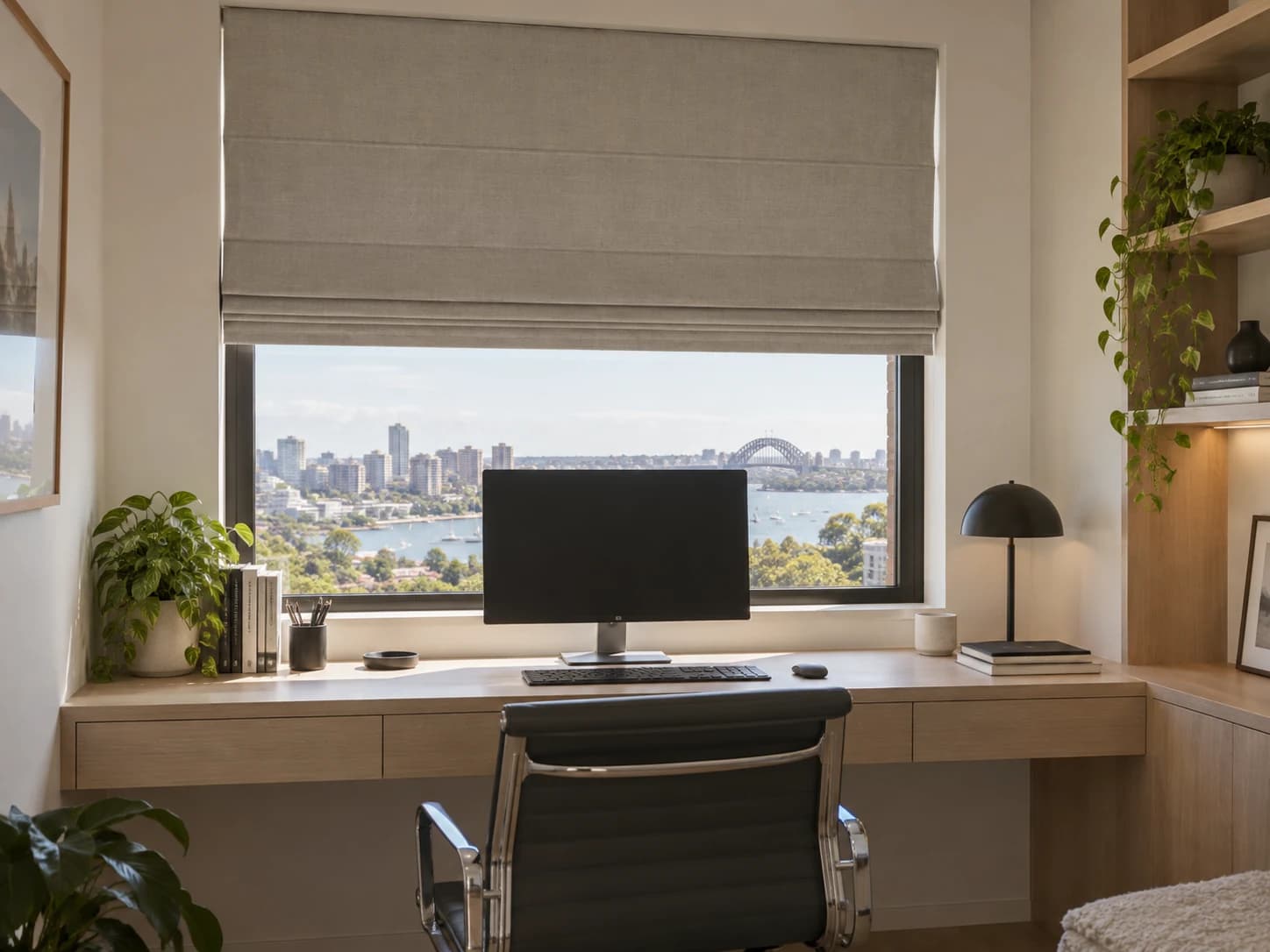
The treatment remains within the window area, keeping working space and nearby furniture clear.
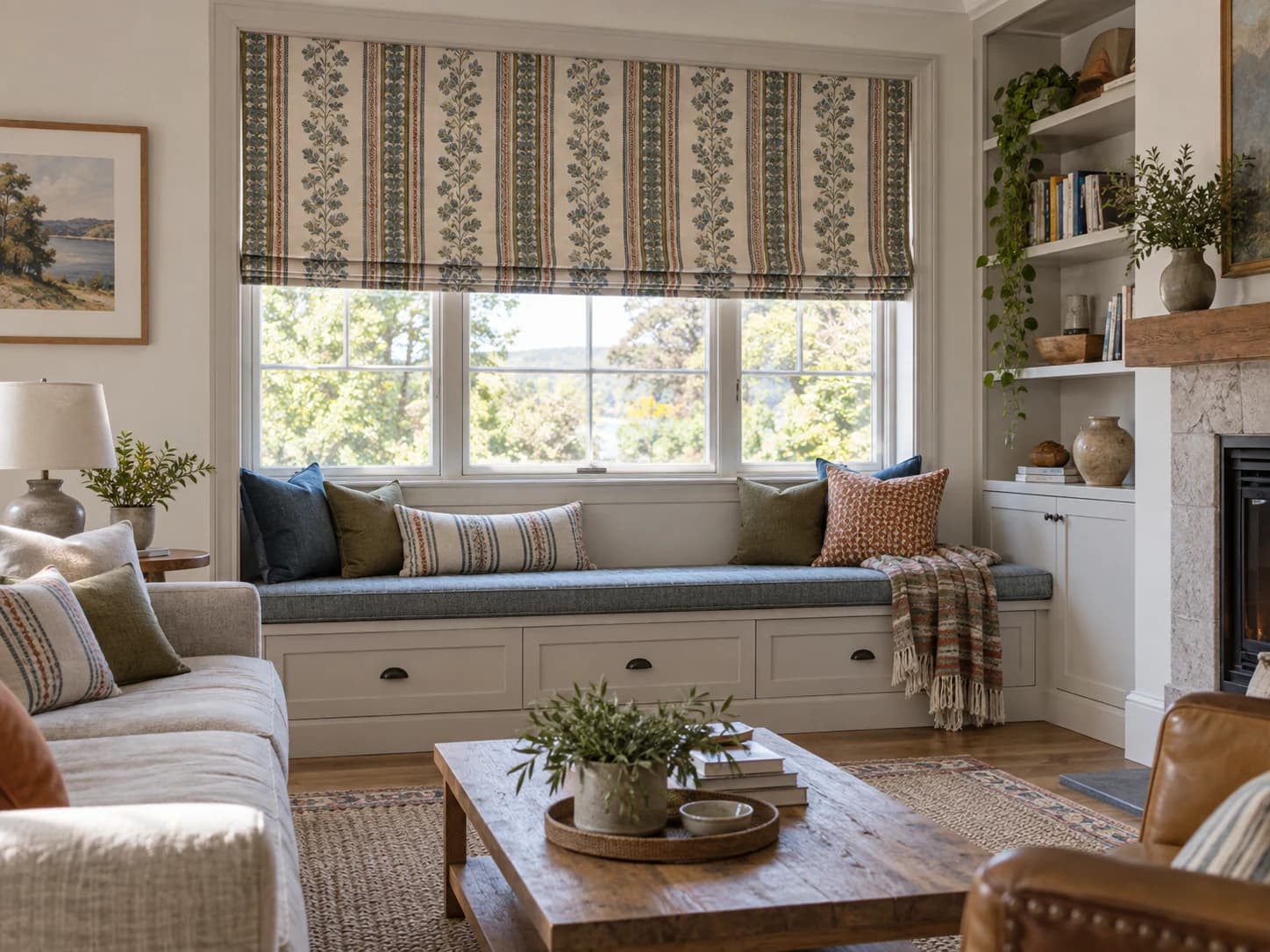
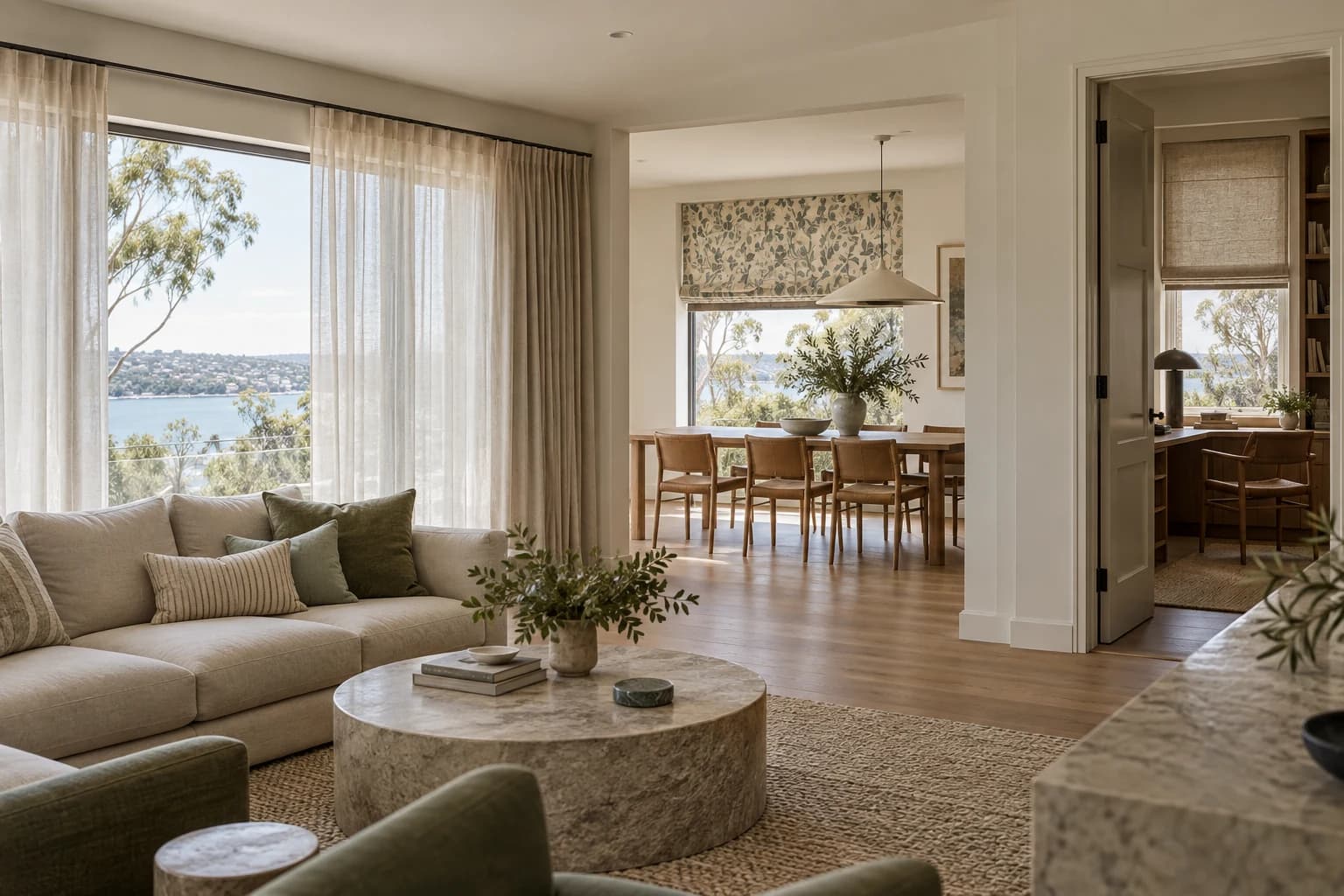
The cloth can relate to curtains, upholstery and cushions elsewhere without every window using the same treatment.
START WITH THE FABRIC
Fabric weight, thickness, stability, weave, stretch, usable width and pattern all affect how a Roman hangs down, folds, stacks and operates over time. On wider blinds, fabric width and possible joins also need to be resolved before manufacture.
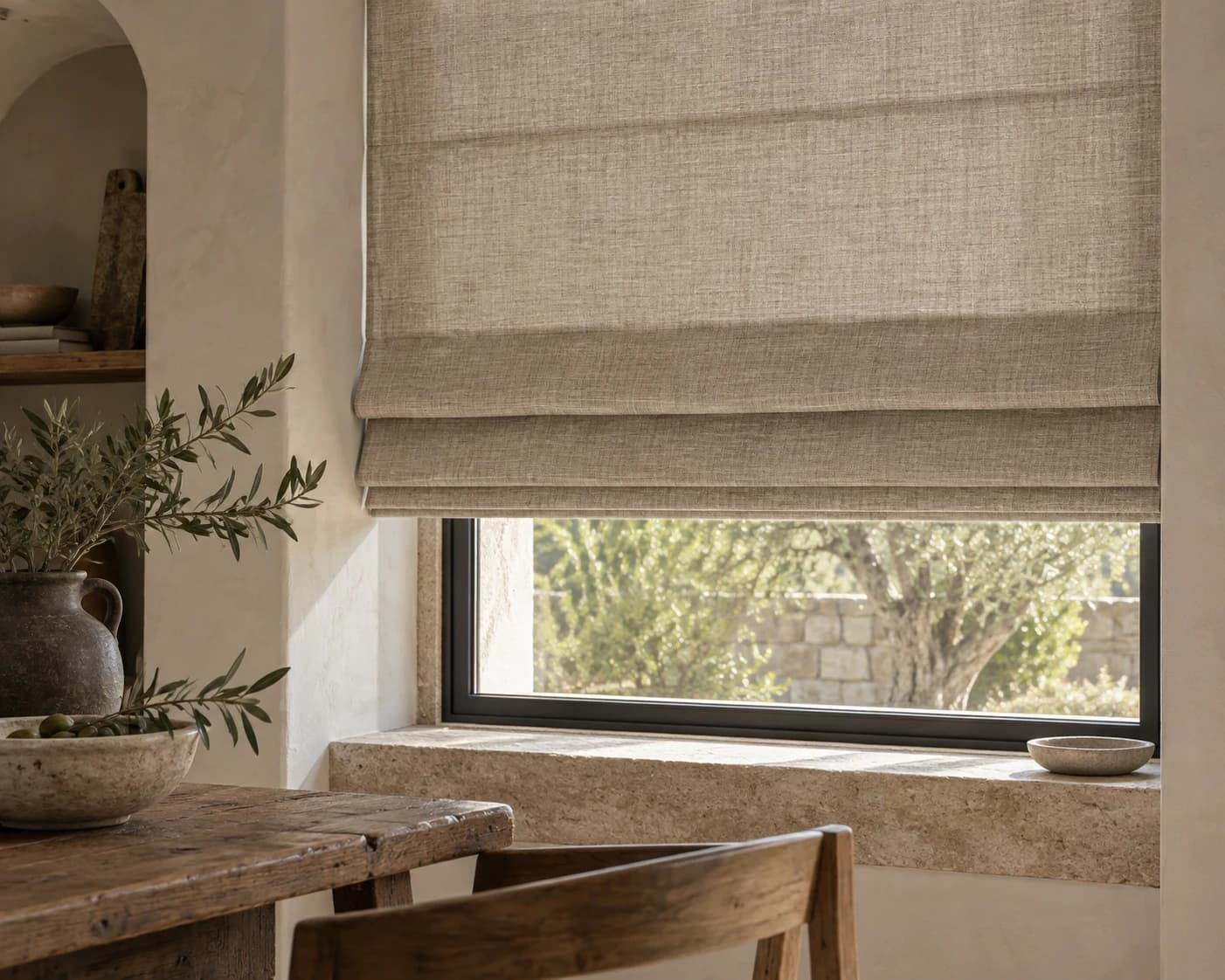
Natural movement and small variations are part of their character. A blend can provide more stability where a cleaner line is preferred.
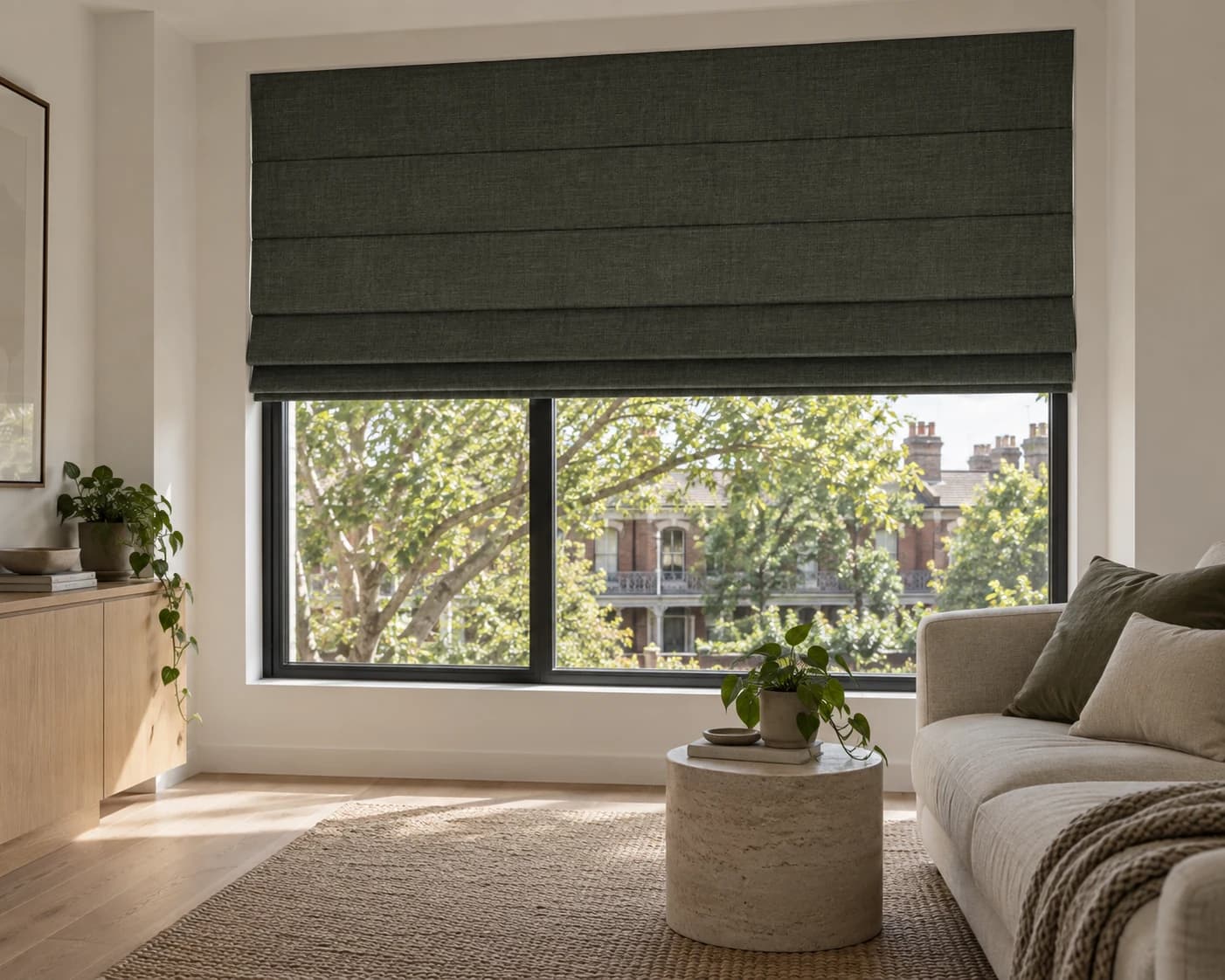
Weight, thickness, weave and stretch determine whether the face remains calm and the folds return consistently.
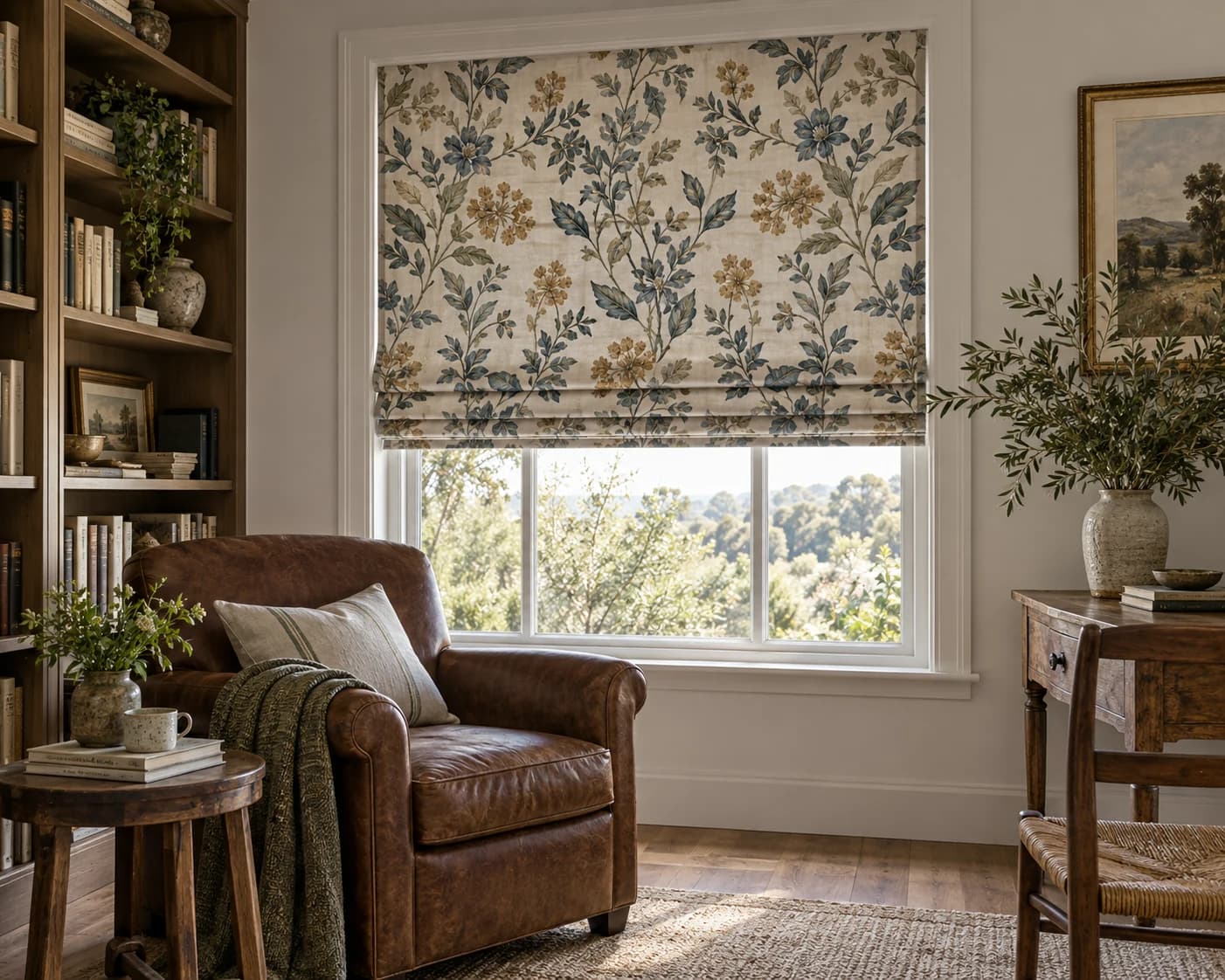
Stripes, checks and large repeats need a centre line and fold plan before the first cut is made.
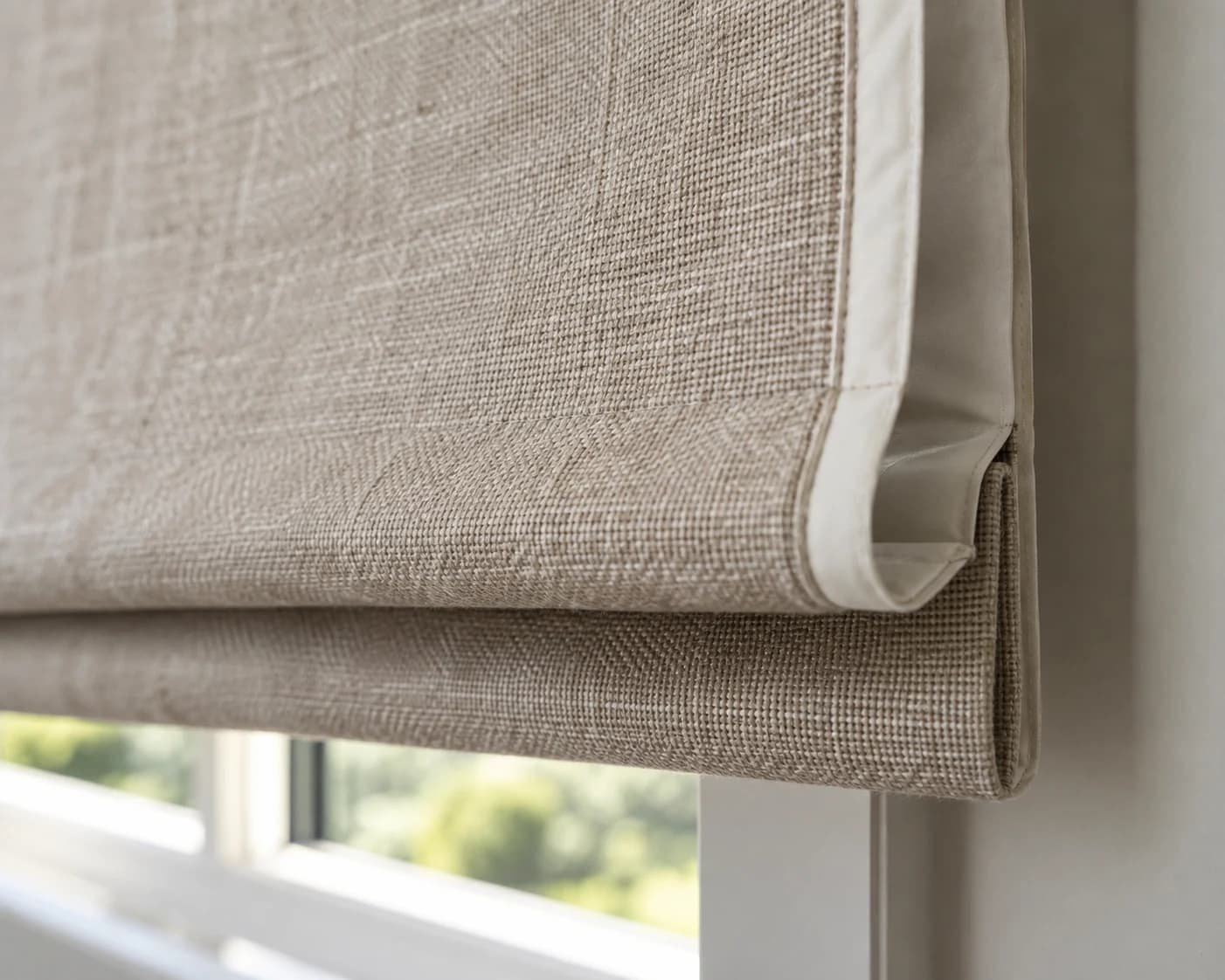
The face fabric, lining, seams and supports have to fold and travel together rather than being considered separately.
LINING & LIGHT CONTROL
Lining influences privacy, light control, body, presentation of the face fabric and how the finished Roman hangs. An opaque lining can block light through the cloth, but it does not automatically make the whole window blackout.
Light can still enter around the perimeter depending on the mounting position, overlap and window.
Explore fabric and lining →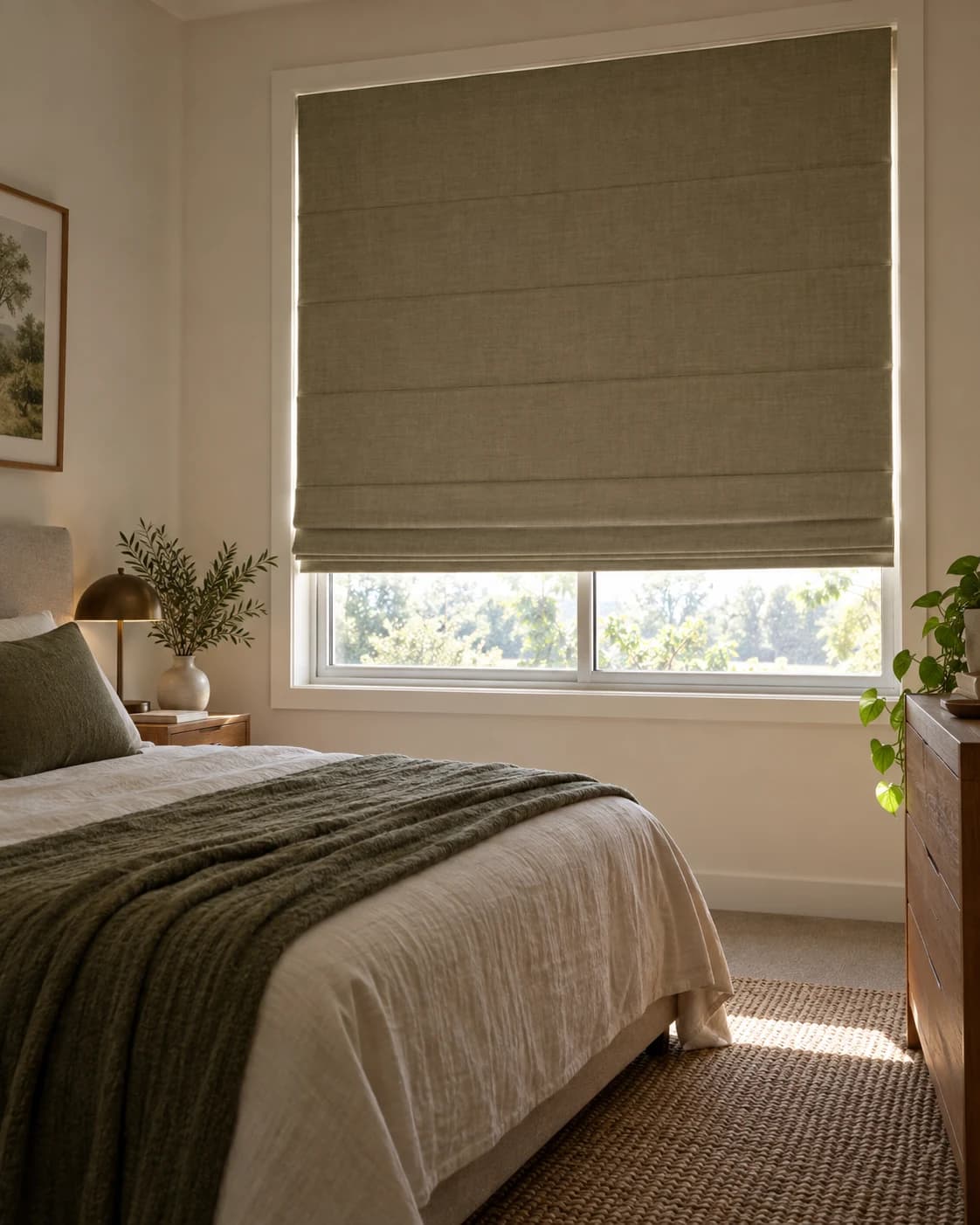
POSITION MATTERS
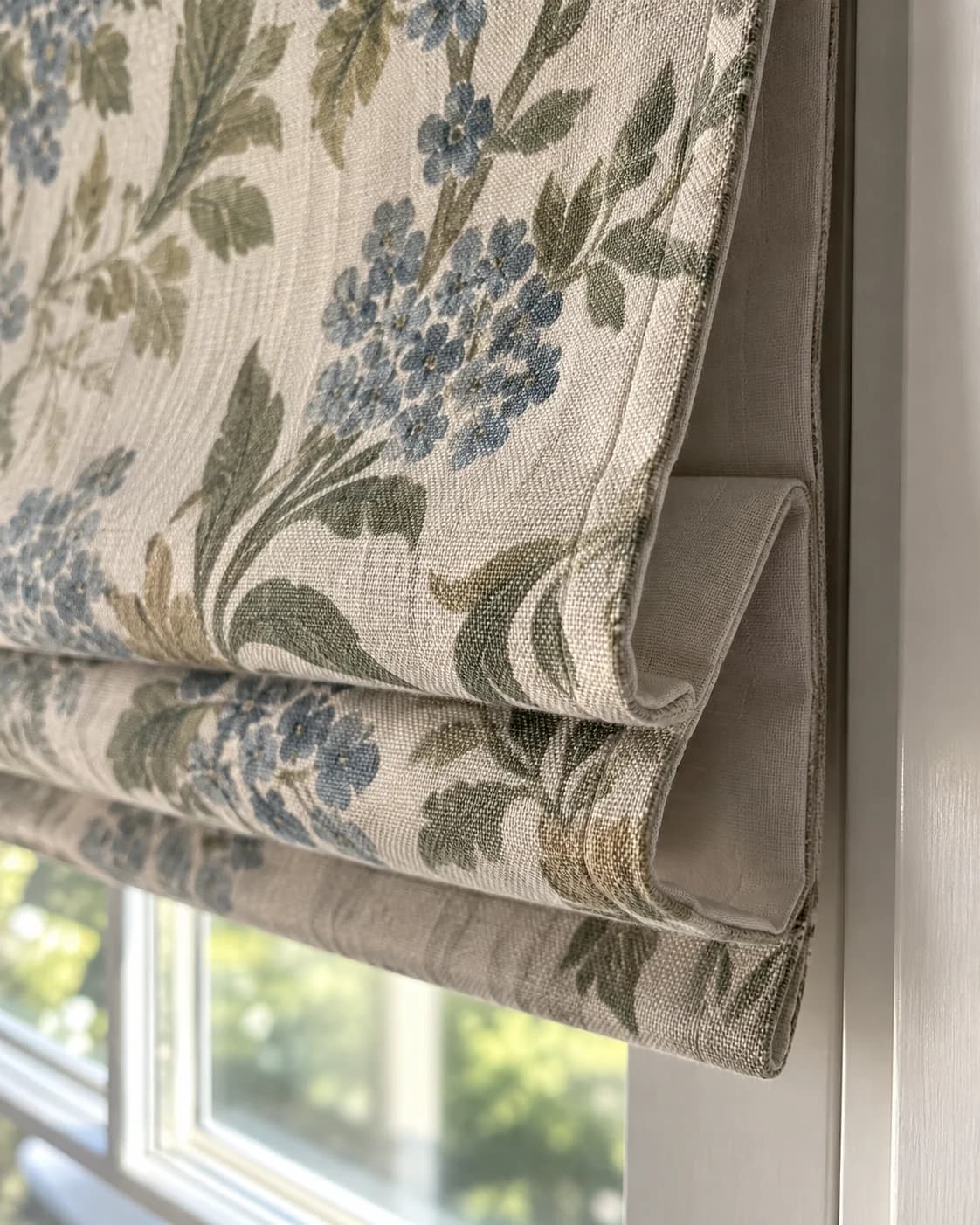
Before deciding, consider reveal depth, architraves, handles, opening direction, fixing substrate, surrounding furniture, desired coverage and the finished stack.
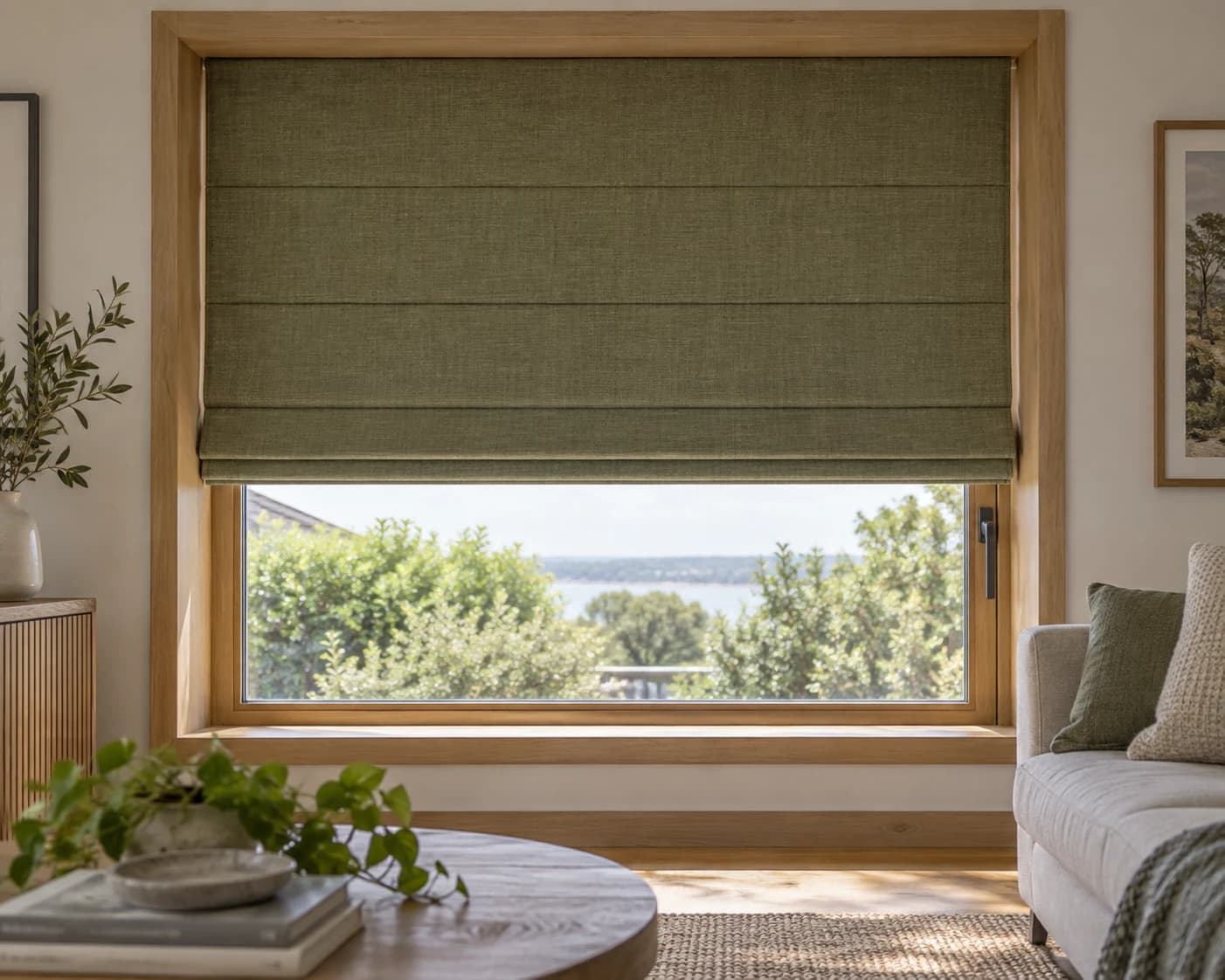
Cleaner and more contained where the reveal has enough depth, suitable fixing and clearance from handles or other obstructions.
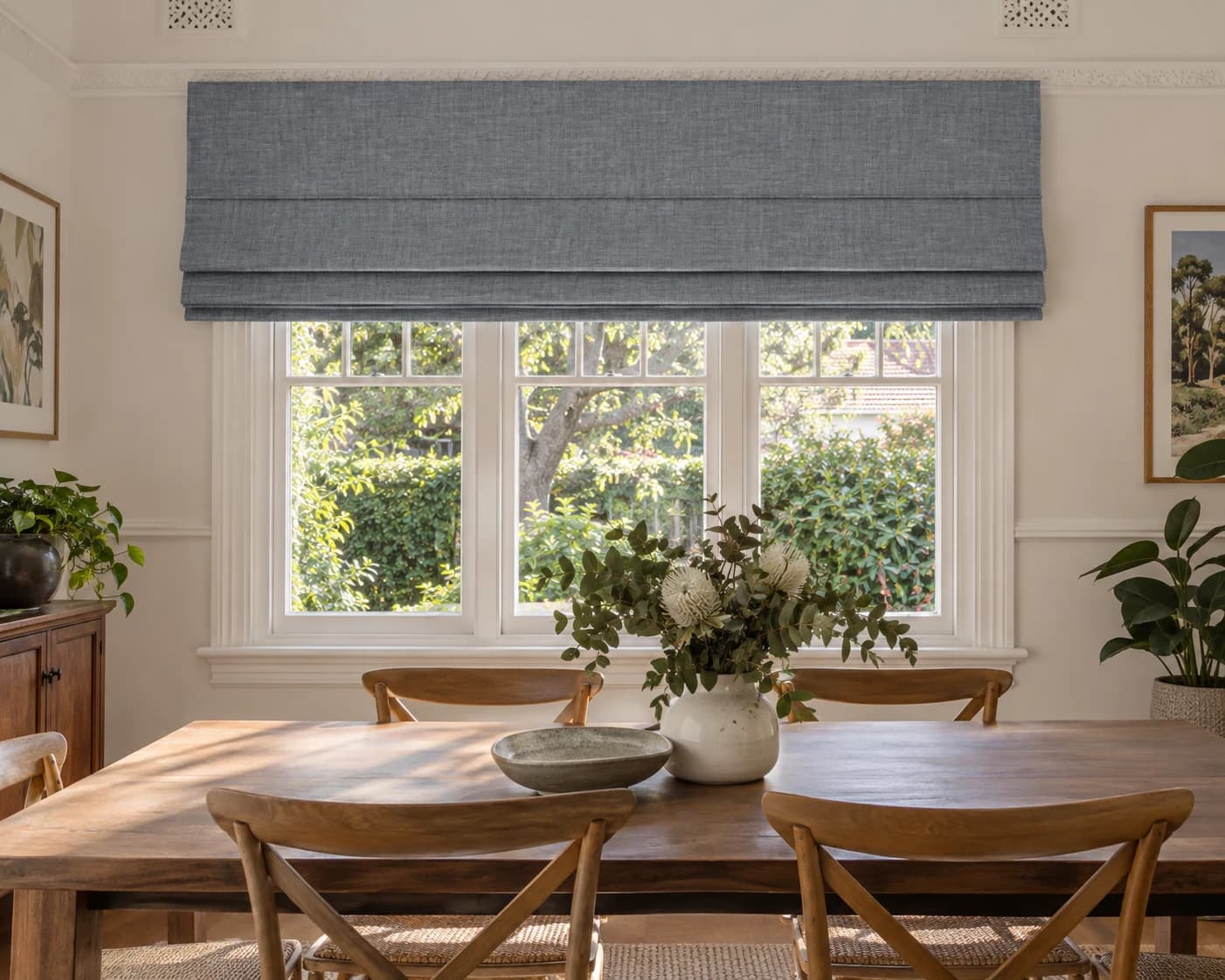
Greater coverage around the opening and a different relationship between the raised stack, frame and glazing.
WHEN THE BLIND IS OPEN
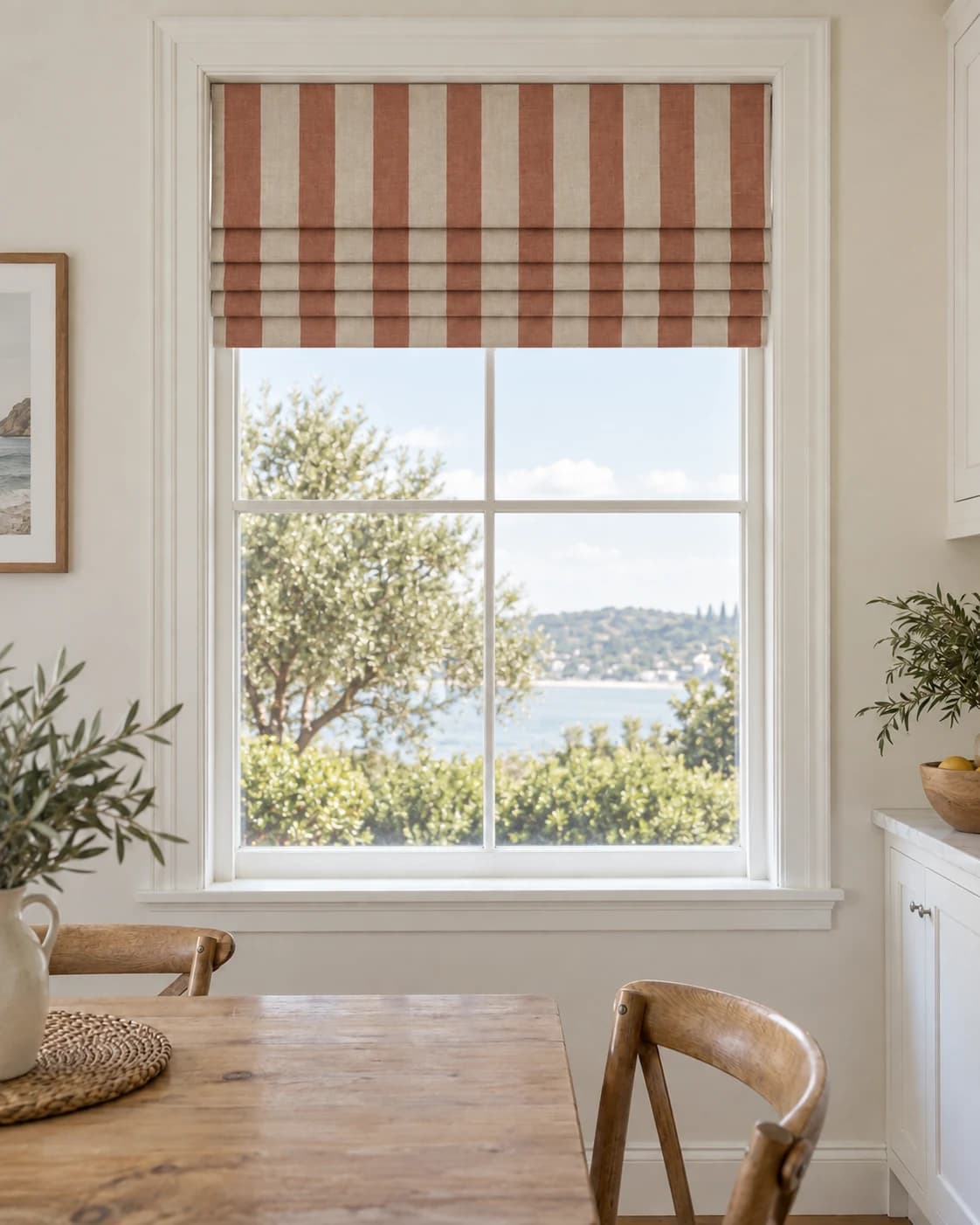
The finished stack depends on blind dimensions, fabric, lining, construction and the operating system. We consider two views: how it looks down, and where it sits up.
Understand folds and stack →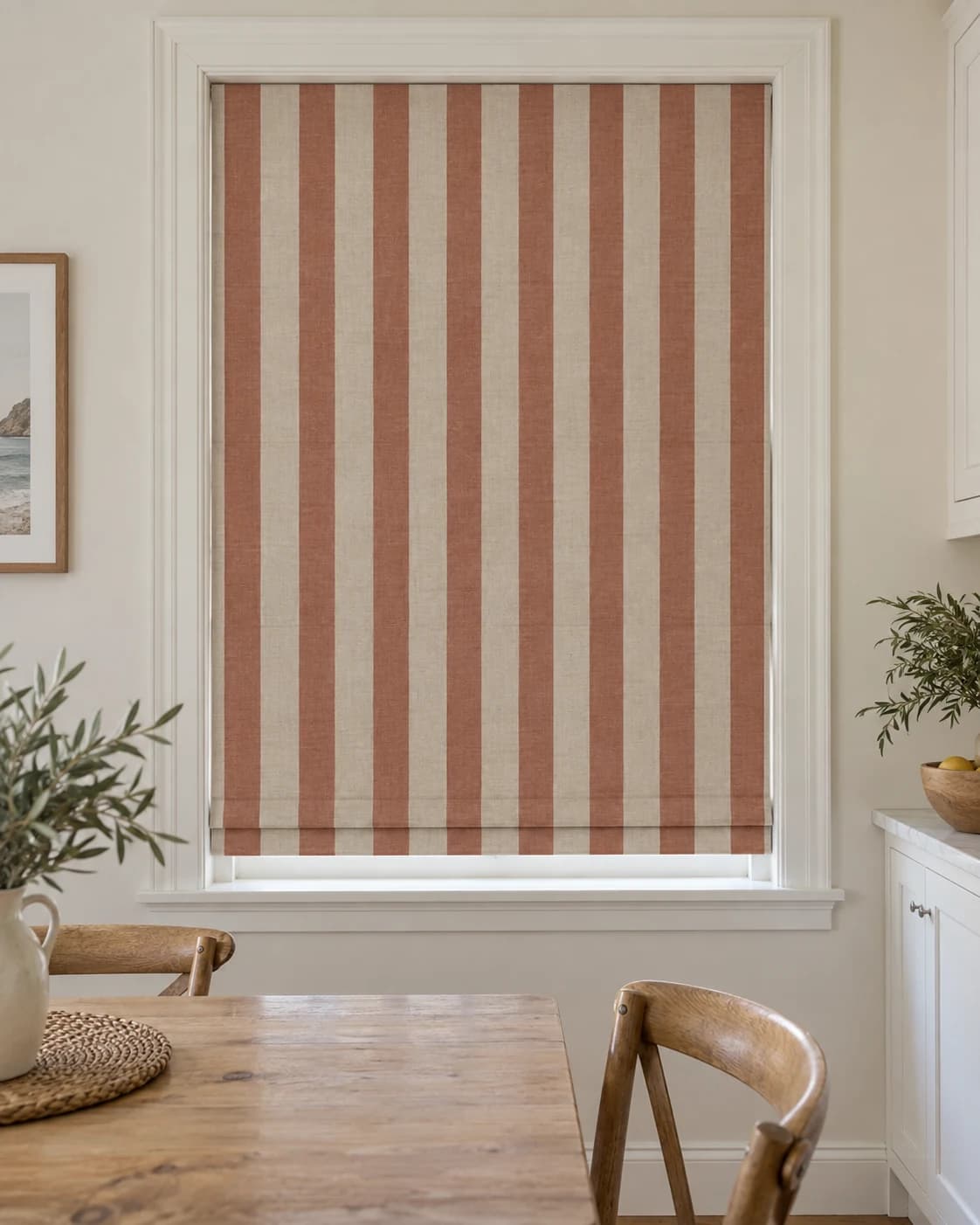
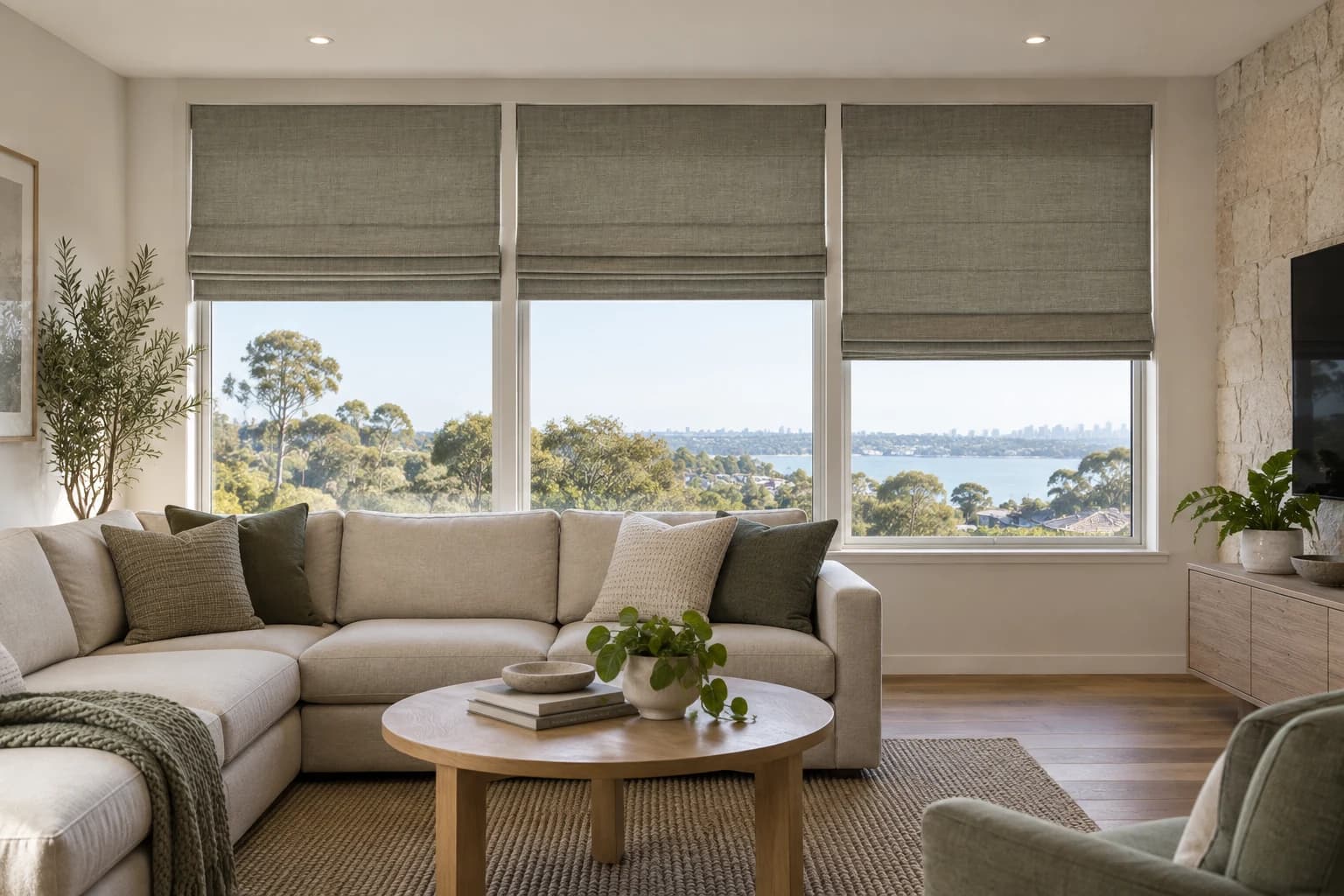
Yes—or, more accurately, there are windows where simply making the Roman larger is not the best specification. As width and drop increase, so do fabric area, finished weight and the demands placed on the headrail and lifting system.
The better answer may be multiple Romans, a different fabric, motorisation, another mounting position, a roller blind or curtains.
The fact that a Roman can be made does not always mean it should be.
MOTORISATION
Blind dimensions, finished fabric and lining weight, headrail, lifting system, motor capacity, power or battery arrangement and controls need to be considered together.
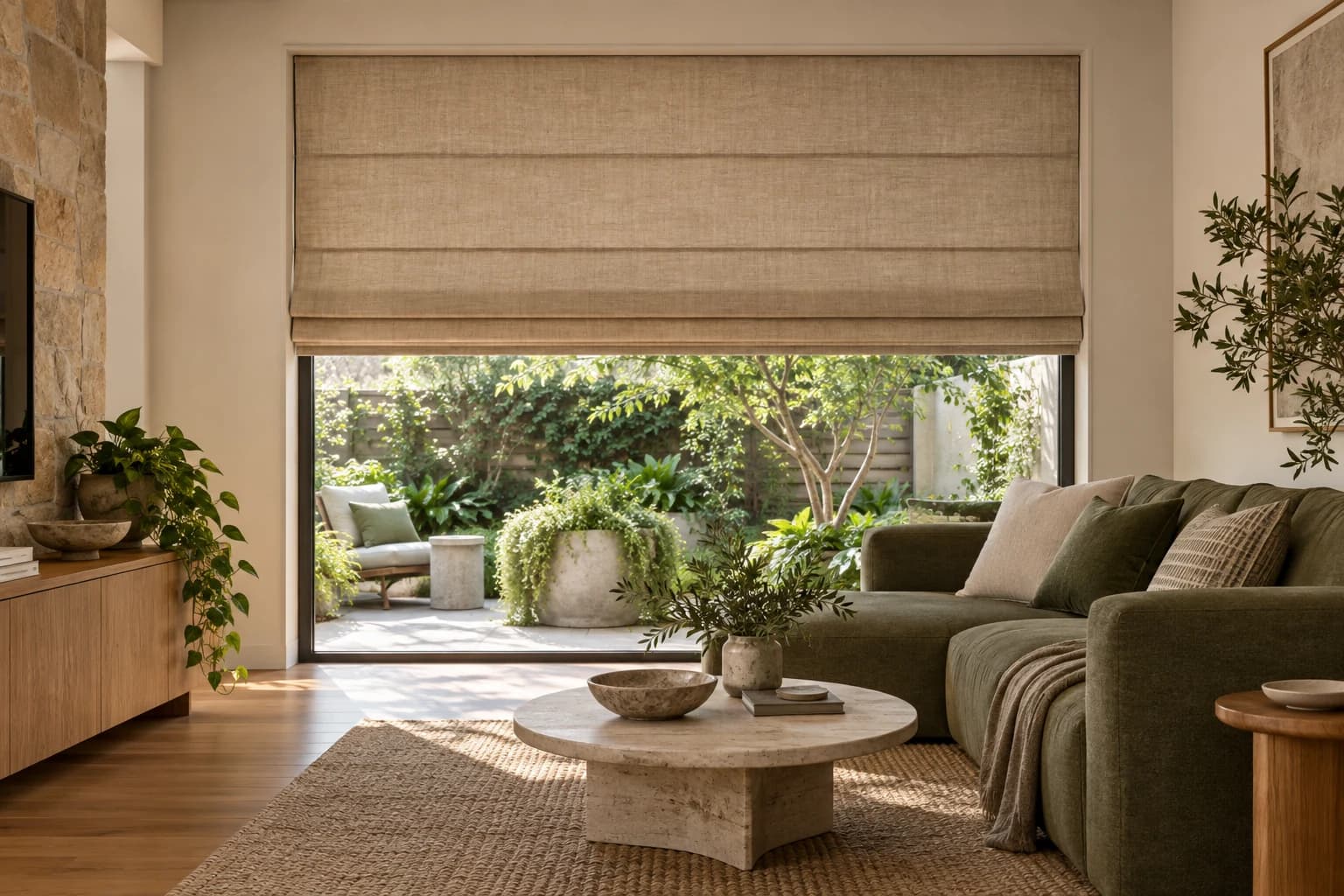
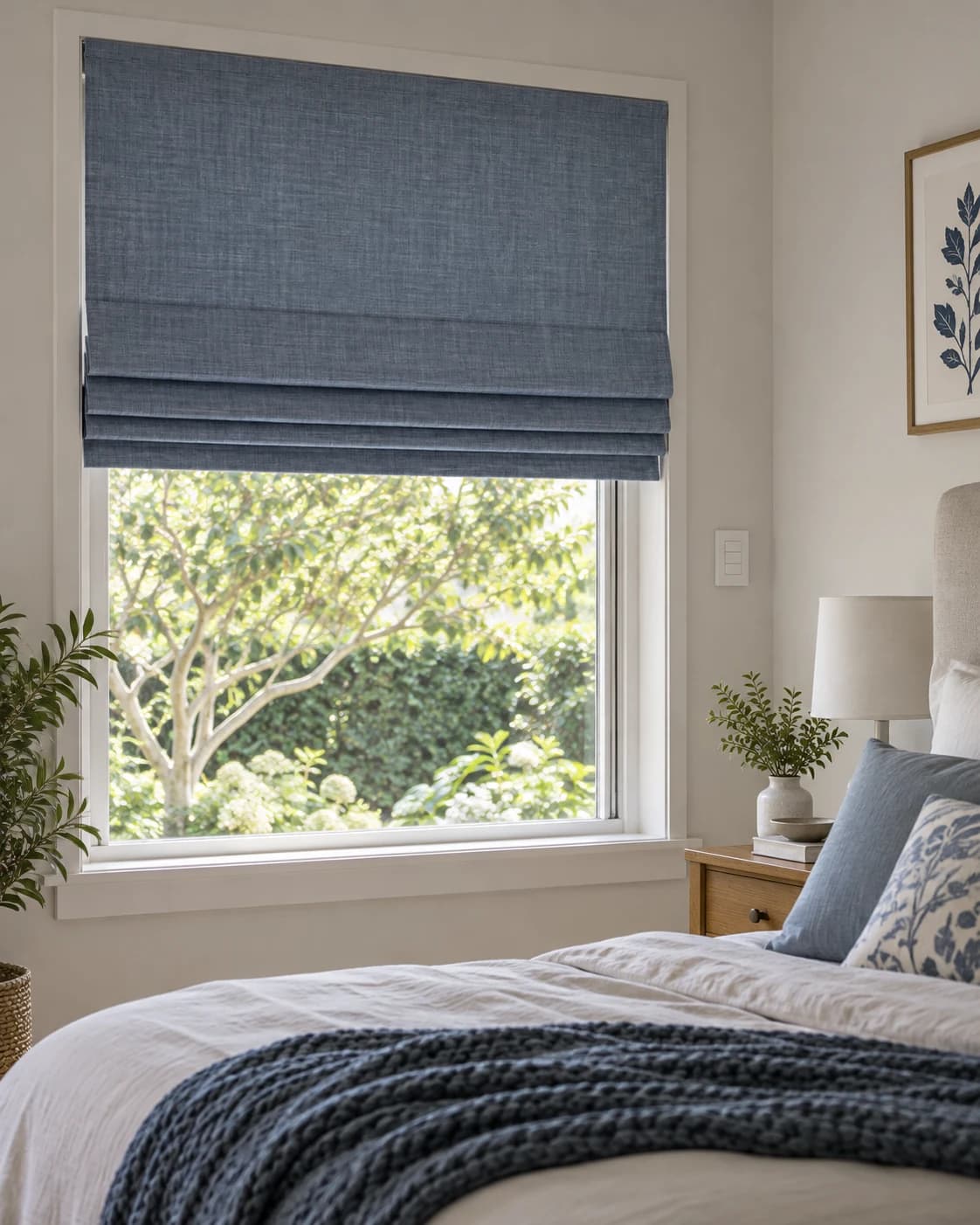
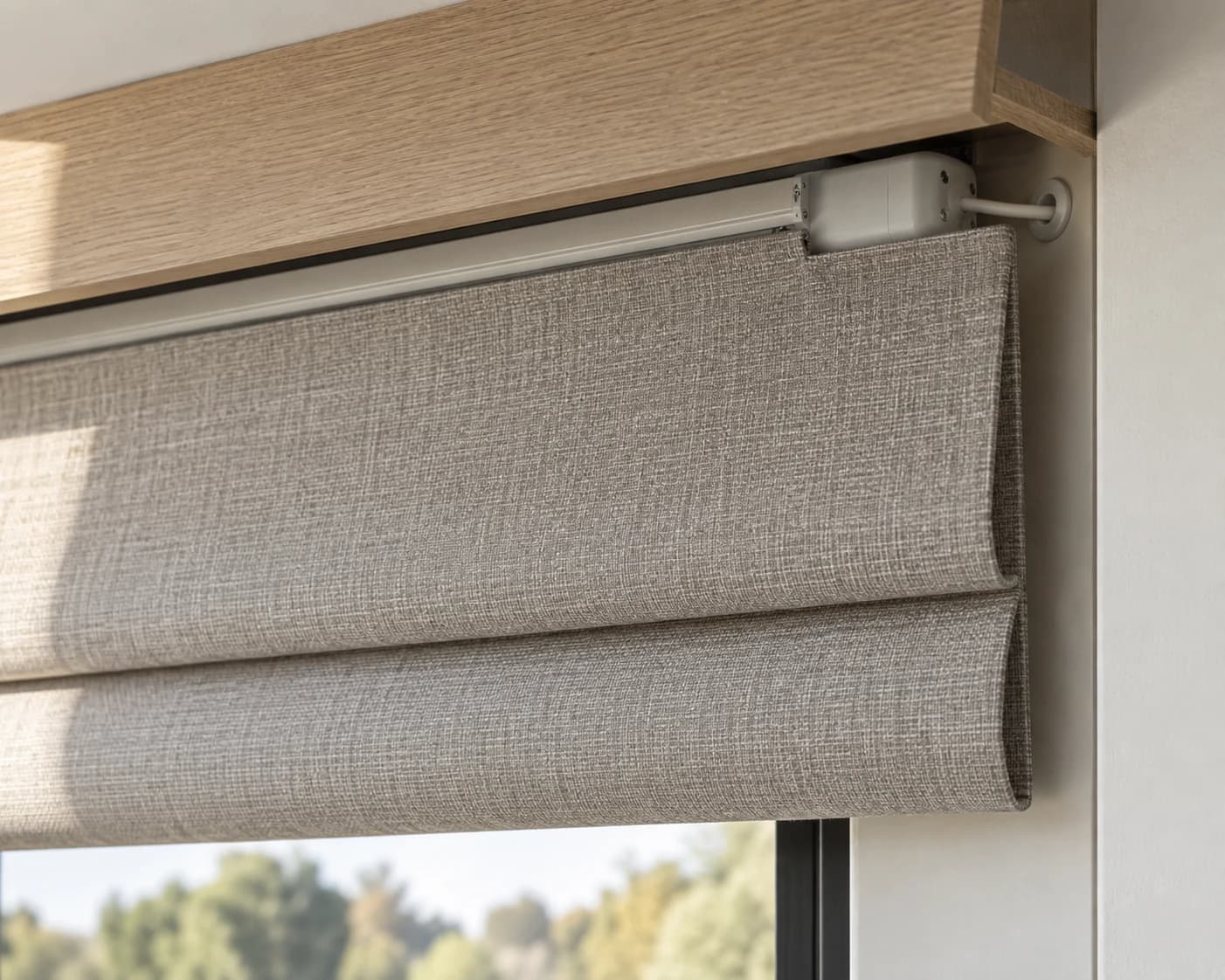
Corded internal window coverings supplied and installed in Australia are subject to mandatory safety requirements covering supply, labelling, safety components and installation, including keeping loose cords and chains secured and away from young children.
Manual operation must be specified and installed correctly. Cord-free or motorised operation can also be considered where appropriate.
Australian Product Safety guidance ↗A whole home can feel coordinated without repeating one product everywhere. Fabric, colour and texture can connect Romans with curtains, sheers, cushions and upholstery while each window receives the treatment that makes practical sense.
Will it fold properly?
What does the room actually require?
How should it sit against the window?
Where should the repeat fall?
Inside or outside?
Where will the fabric sit when raised?
Manual or motorised?
Is it appropriate for the finished size and weight?
What is the headrail actually being fixed into?
Does the finished blind operate safely and correctly?
A Roman should not only look right on installation day. It should work properly every day after it.
WANT TO GO DEEPER?
Michelle’s designer guide looks at Roman blinds in Sydney homes—including Federation rooms, apartments, bay and corner windows, fabric, cost, light control, acoustics, motorisation and the situations where a Roman may not be the right solution.
Read the Roman Blinds Designer’s Guide →QUESTIONS FROM SYDNEY HOMEOWNERS
They often involve more textile construction, face fabric, lining and workroom time than a straightforward roller, but neither product is always more expensive. Size, fabric, hardware, operation and installation conditions determine the quote.
A suitable fabric has the weight, thickness, weave and stability needed for the intended finish and blind size. The best choice may be a stable woven plain, a linen-rich cloth or a pattern whose repeat can be placed cleanly.
Yes. Linen can produce a beautiful, tactile Roman, but natural movement and small variations are part of its character. A linen blend may hold a more controlled line where that is preferred.
An opaque lining can stop light passing through the cloth. It does not seal the whole window: light may still enter around the perimeter according to the mount, overlap, frame and opening.
They can be, particularly where a soft textile appearance is wanted without full curtains. Privacy, lining, mount position and perimeter light should be considered together.
Neither is universally better. Reveal depth, architraves, handles, opening direction, fixing substrate, furniture, coverage and the raised stack determine the better position.
A Roman folds into a visible stack. Its depth varies with blind dimensions, fabric, lining, fold construction and operating hardware, so the stack should be allowed for before manufacture.
Yes, where the finished blind and a compatible system suit one another. Dimensions, fabric and lining weight, headrail, lifting system, motor capacity, power arrangement and controls need to be specified together.
Sometimes. As width and drop increase, so do fabric area, finished weight and headrail demands. Multiple Romans, motorisation, another fabric, a roller or curtains may be a better answer for some openings.
Yes. Romans can coordinate with curtains and sheers in the same room or connect to them through fabric, colour and texture elsewhere in the home.
Often, yes. A Roman stays at the opening rather than falling to the floor, which can make it useful above desks, beds, consoles, sofas and cabinetry.
Corded internal window coverings supplied and installed in Australia are subject to mandatory cord-safety requirements. Manual systems must be supplied and installed correctly, with loose cords or chains secured. Cord-free or motorised operation may also be considered where appropriate.
There is no responsible universal year figure. Longevity depends on fabric and lining, UV exposure, finished size and weight, hardware, frequency of use, installation, maintenance and care.
ROMAN BLINDS BY CCBD
CCBD has been providing custom window furnishings in Sydney since 2003, supported by earlier industry experience dating back to the early 1990s.
Romans are made to measure around the fabric, window and room, with linen, linen-rich, textured and selected designer furnishing fabrics, appropriate lining options, and manual or motorised operation.