Edited selection
Fabric and components are narrowed to options that suit the room, the Roman and the proposed dimensions—not simply the sample-book colour.
Roman Blinds by CCBD
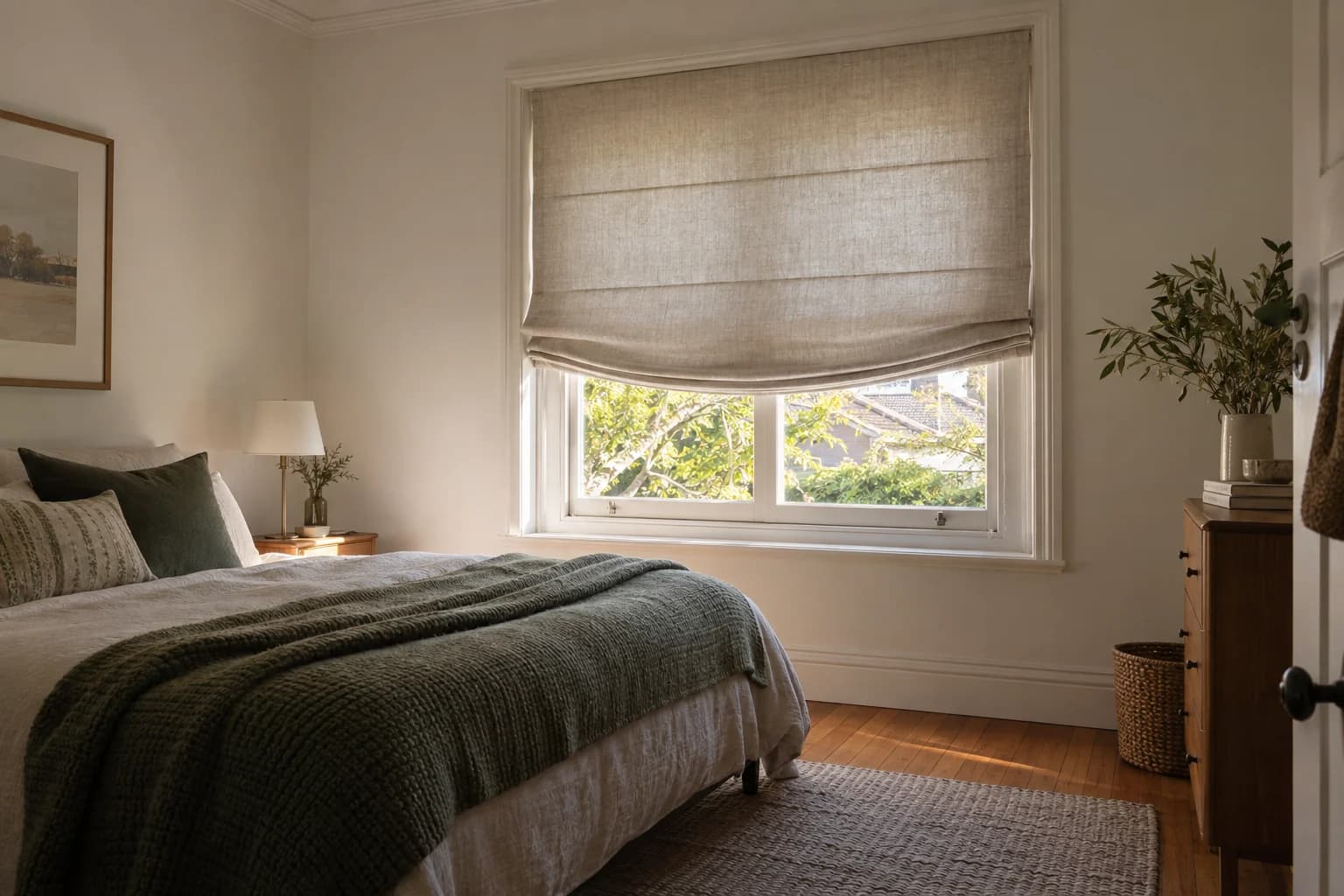
A softer line, when the room does not need perfect formality.
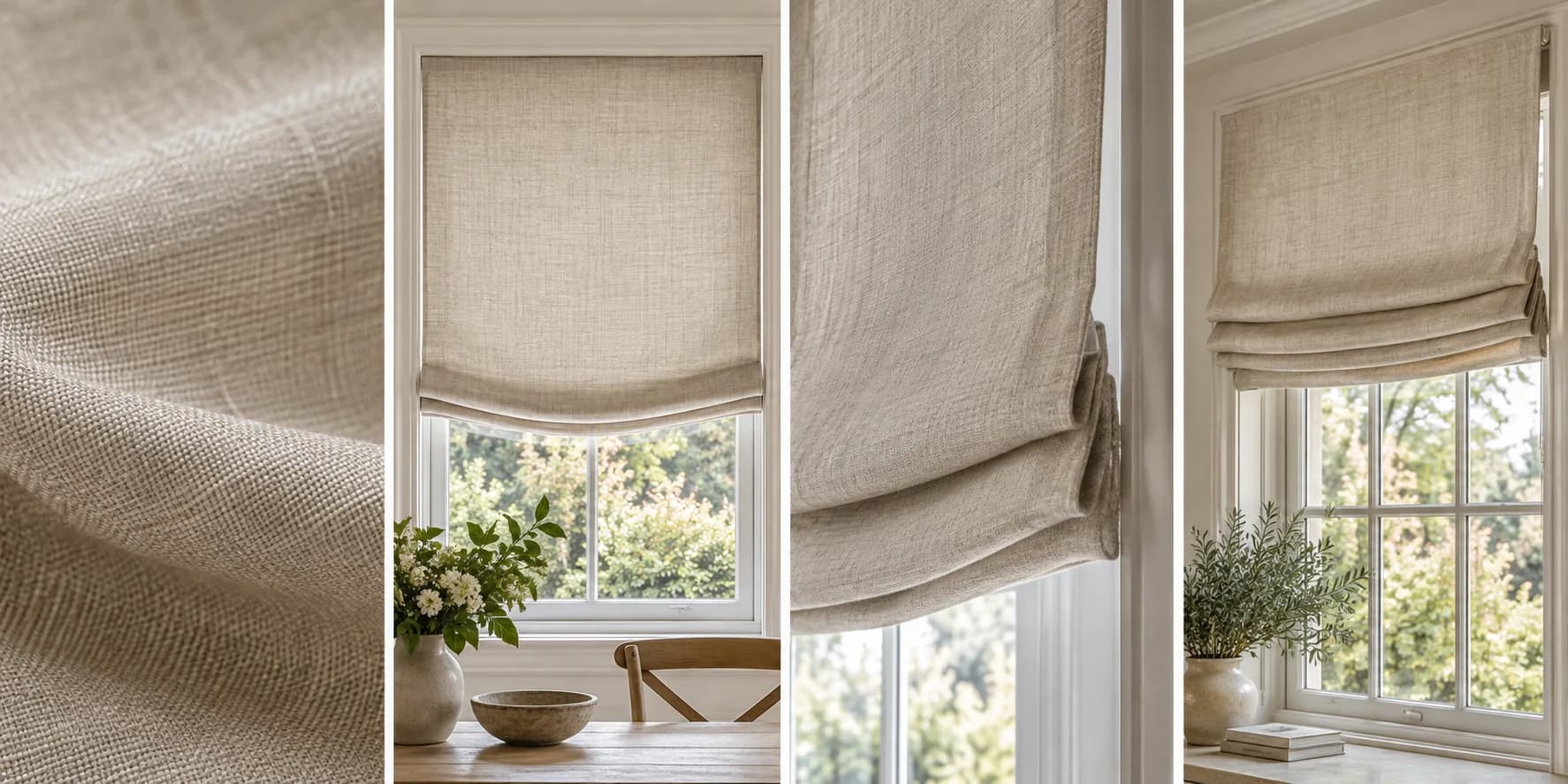
A relaxed Roman allows the lower profile to fall more gently, giving the treatment a softer and less structured character than a Classic Roman. The success of the style depends heavily on fabric behaviour, blind width and the amount of relaxation intended.
Customer question
A Relaxed Roman suits a room where a perfectly straight finish would feel too formal. Its curve still needs deliberate width, symmetry, lining and fabric behaviour so it reads as intentional softness, not uneven making.
Relaxed Roman in the room
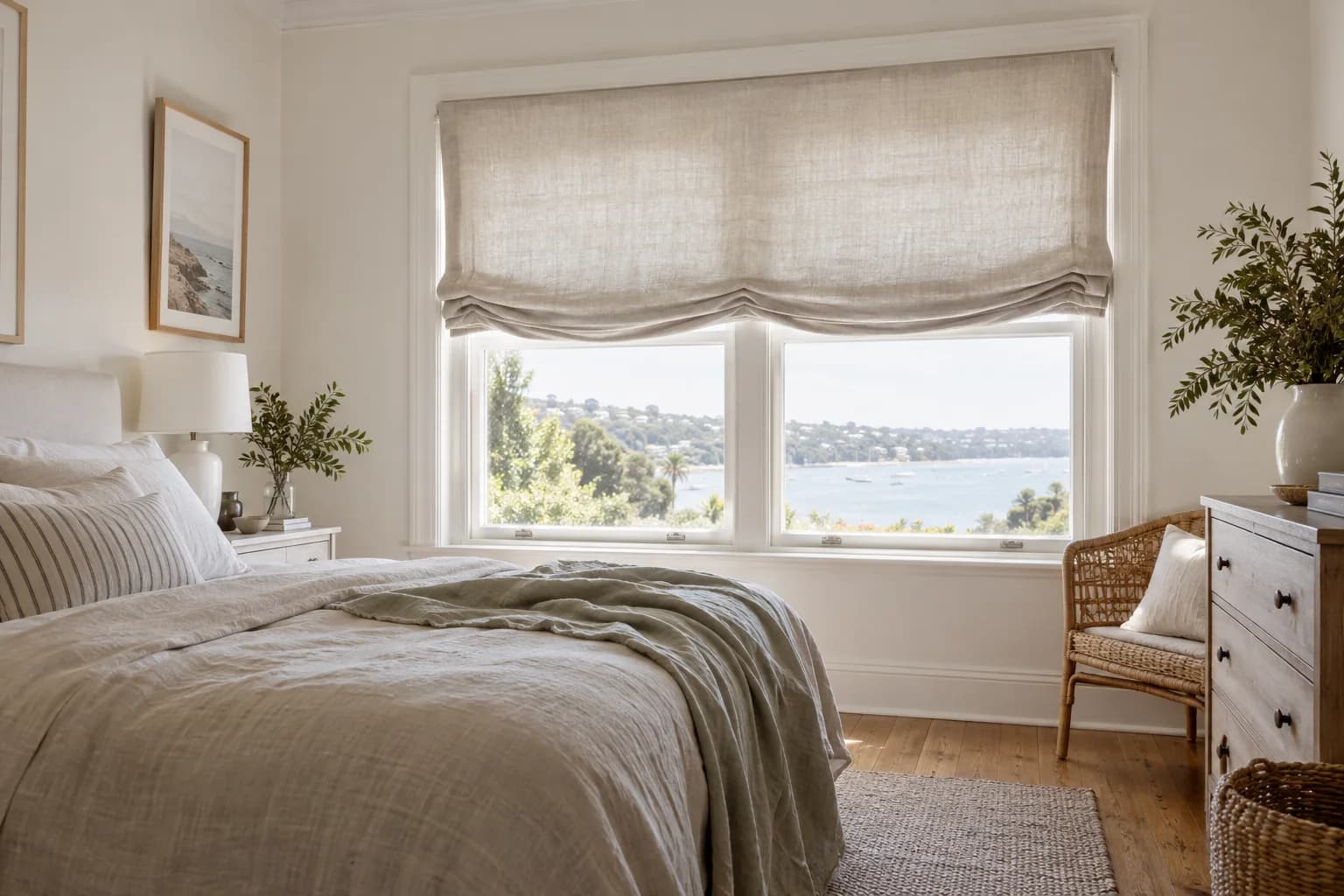
The lower curve is allowed to relax, but width, symmetry, fabric and lift still need to work together.
Intentional, not uneven
A relaxed bottom profile is part of the aesthetic. It should not read as a Classic Roman that has failed to hang straight.
The width, amount of centre relaxation, lift positions, fabric drape and symmetry are resolved as one shape. A sample or agreed drawing is more useful than the word “relaxed” on an order.
Textile-led applications
Fabric behaviour
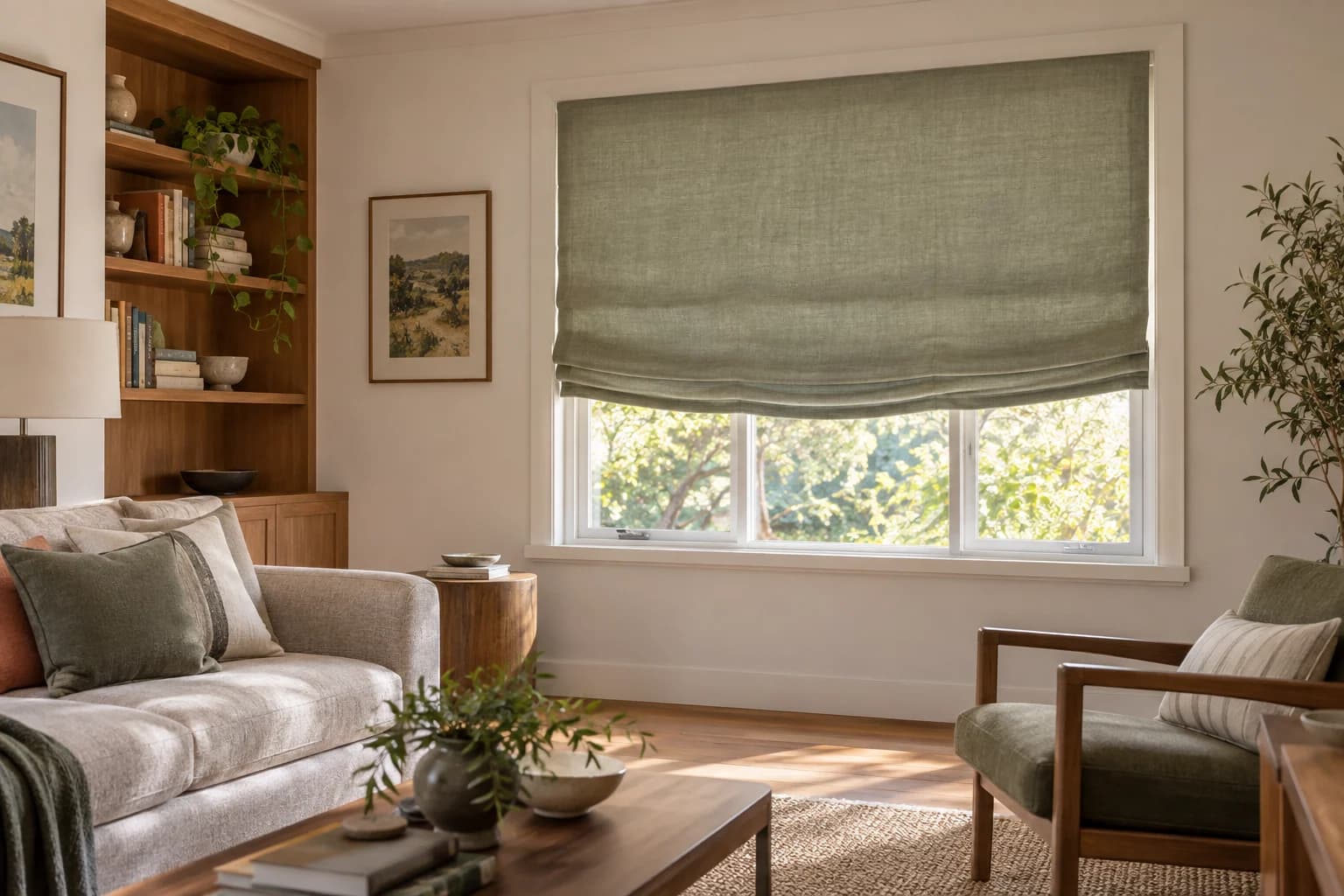
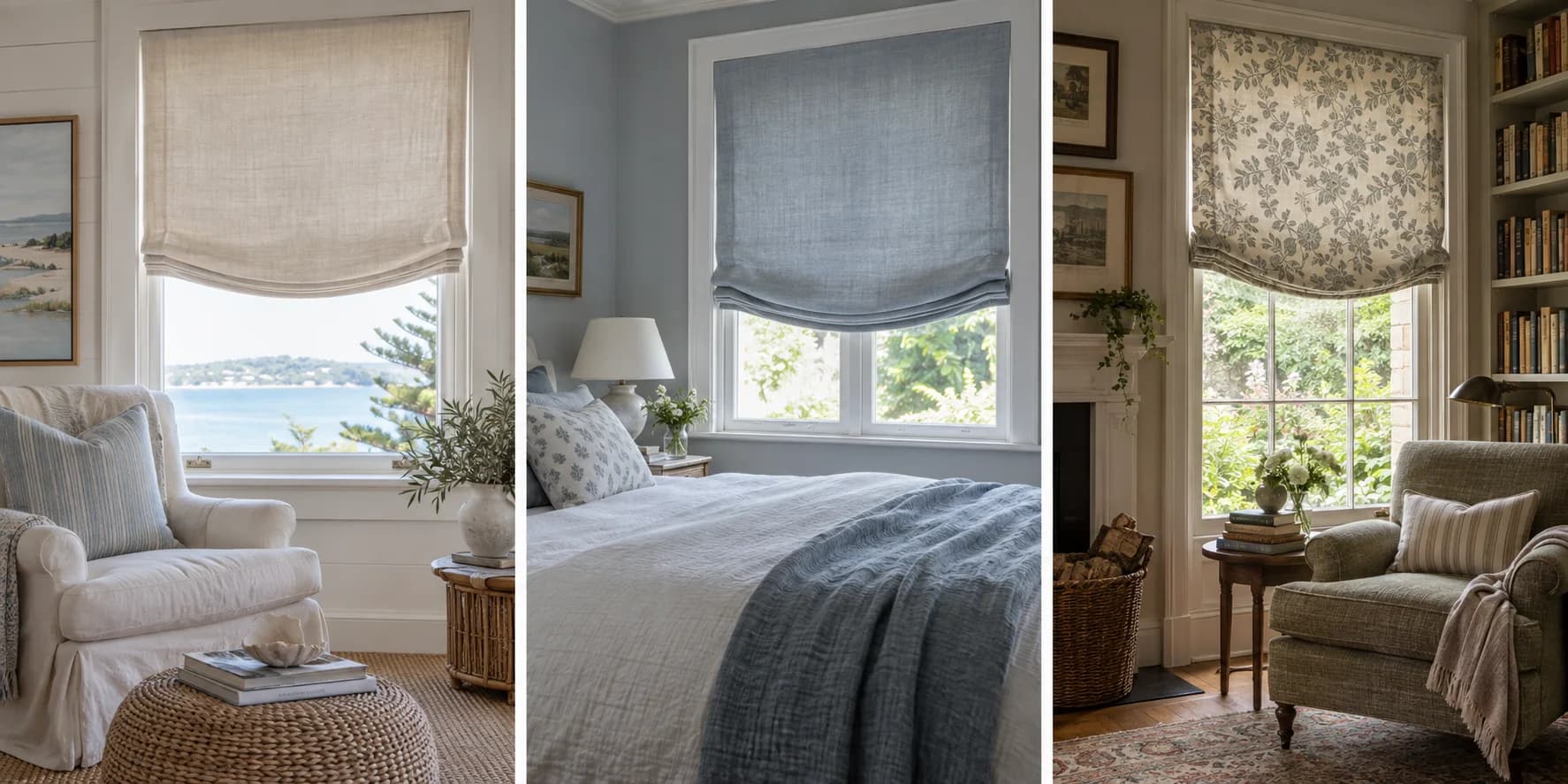
An overly rigid cloth fights the intended curve. A very stretchy or loosely constructed cloth can become unstable, while a heavy lining can change how the centre falls. Linen-like texture can suit the style, but natural slub and movement should be discussed honestly rather than treated as defects or hidden promises.
A strong geometric pattern can amplify small differences in the profile. Softer textures and restrained motifs often accommodate the curve more naturally, although the exact fabric still needs testing with its lining.
Natural fibres can have movement and character. The aim is not to make linen behave like a rigid synthetic panel; it is to decide whether that living textile character suits the intended Roman and room.
The softer profile can belong naturally in bedrooms, elegant smaller windows and rooms with tactile fabrics or less formal architectural lines.
Soft construction
Professional judgement
Very wide openings, strict symmetry requirements, strong geometric fabrics, high-frequency operation and rooms demanding formal structure can work against the Relaxed Roman’s character.
Where a reliable straight line is more important than the soft profile, we would compare a Classic Roman. Where the opening is used as a door or the raised stack is intrusive, a curtain or roller may be more appropriate.
Made to specification
Fabric, lining, construction, finished dimensions and operation are resolved together before making begins. The blind is not forced around a generic off-the-shelf format.
Fabric and components are narrowed to options that suit the room, the Roman and the proposed dimensions—not simply the sample-book colour.
Availability, measurement and system details are coordinated early. Actual timing is confirmed for the chosen materials and scope rather than advertised as a fixed universal lead time.
Level, mounting height, projection, control position and final adjustment determine whether the installed Roman belongs to the architecture.
Before you specify
A defined relaxed style uses a deliberate softer centre profile, but its amount and exact shape depend on the construction, width and fabric. Confirm the intended outline rather than relying on the name alone.
Pliable, stable furnishing fabrics are useful starting points. Very stiff, stretchy or bulky constructions may fight the curve or make repeatability difficult.
Width changes the curve and the consistency of the lift. A broad opening needs project-specific review; several blinds or another treatment may give a more controlled result.
Potentially, where the chosen face and lining work with the construction. The extra body and thickness can alter the curve and stack, so the layers need to be evaluated together.
A conversation, then a considered specification
Bring the window and the atmosphere you want to create. We’ll assess the curve, fabric response, coverage and lining before recommending a Relaxed Roman.