Edited selection
Fabric and components are narrowed to options that suit the room, the Roman and the proposed dimensions—not simply the sample-book colour.
Roman knowledge · Headrail & operation
The mechanism should support the design—not dominate it.
A Roman blind still has to work reliably every day. The headrail, lifting system, fixing, projection and operating method should therefore be considered as part of the finished treatment rather than selected afterwards.
Customer question
Control position, reach, furniture, finished weight, fixing, child-safety requirements and future access should be resolved before the operating system is ordered.
Operation in context
Manual and motorised systems are considered around the finished blind, its position and the way the window is used.
Headrail position
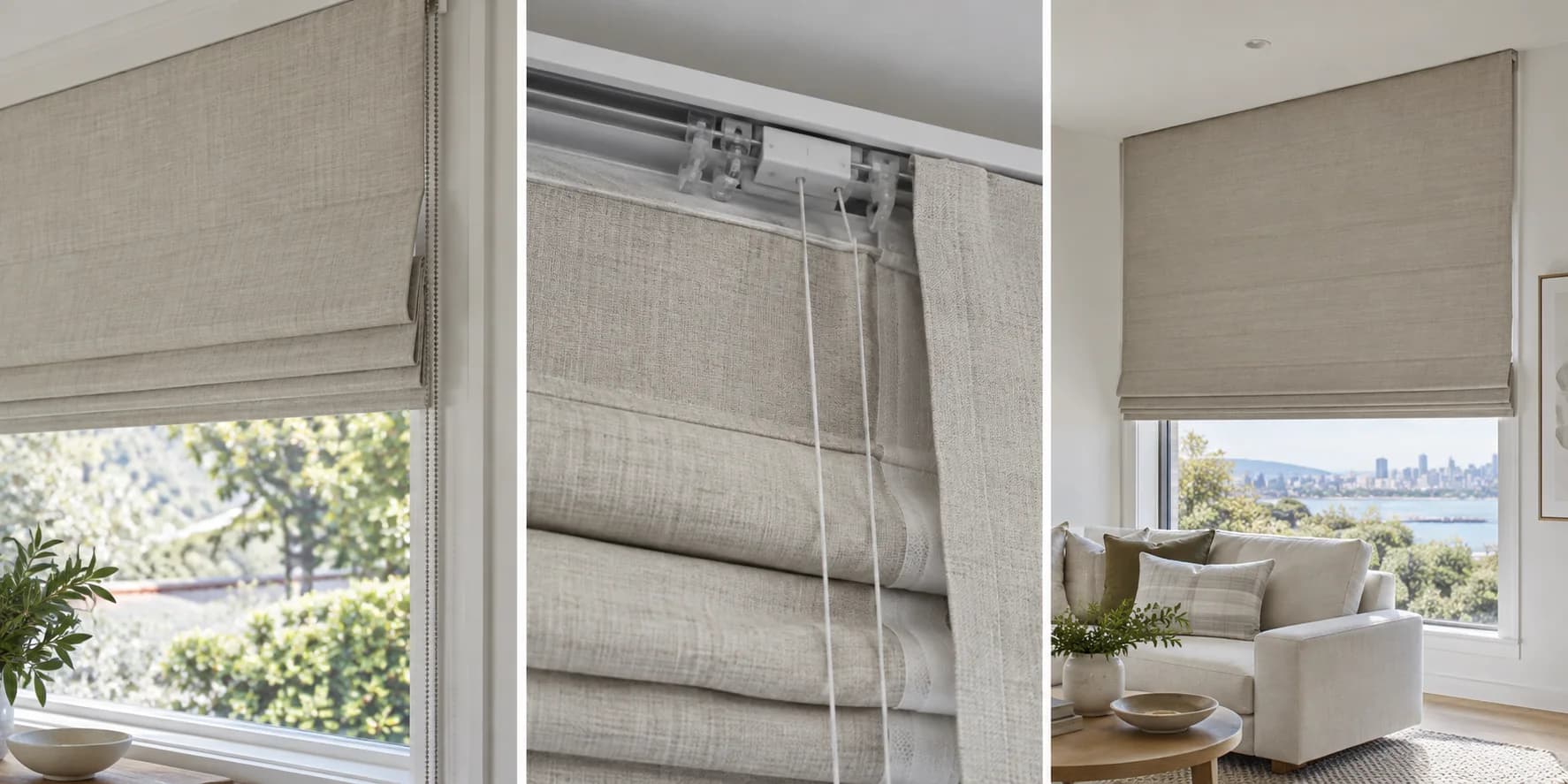
Inside a recess, the headrail must share limited depth with handles, sashes and the folded fabric. Outside the opening, it needs a suitable fixing surface and a deliberate relationship to architraves and wall lines.
Fixing conditions
Timber, suitable structural support, masonry, concrete and lined walls require project-appropriate assessment and fixings. The installer also needs to consider concealed services and the condition of the finished substrate.
No one fixing method should be assumed from a room photograph or applied universally across a building.
Lifting positions, fabric stability, finished weight and headrail selection influence how the blind travels. Multiple blinds may share a visual line while still requiring separate mechanisms or controls.
Manual operation
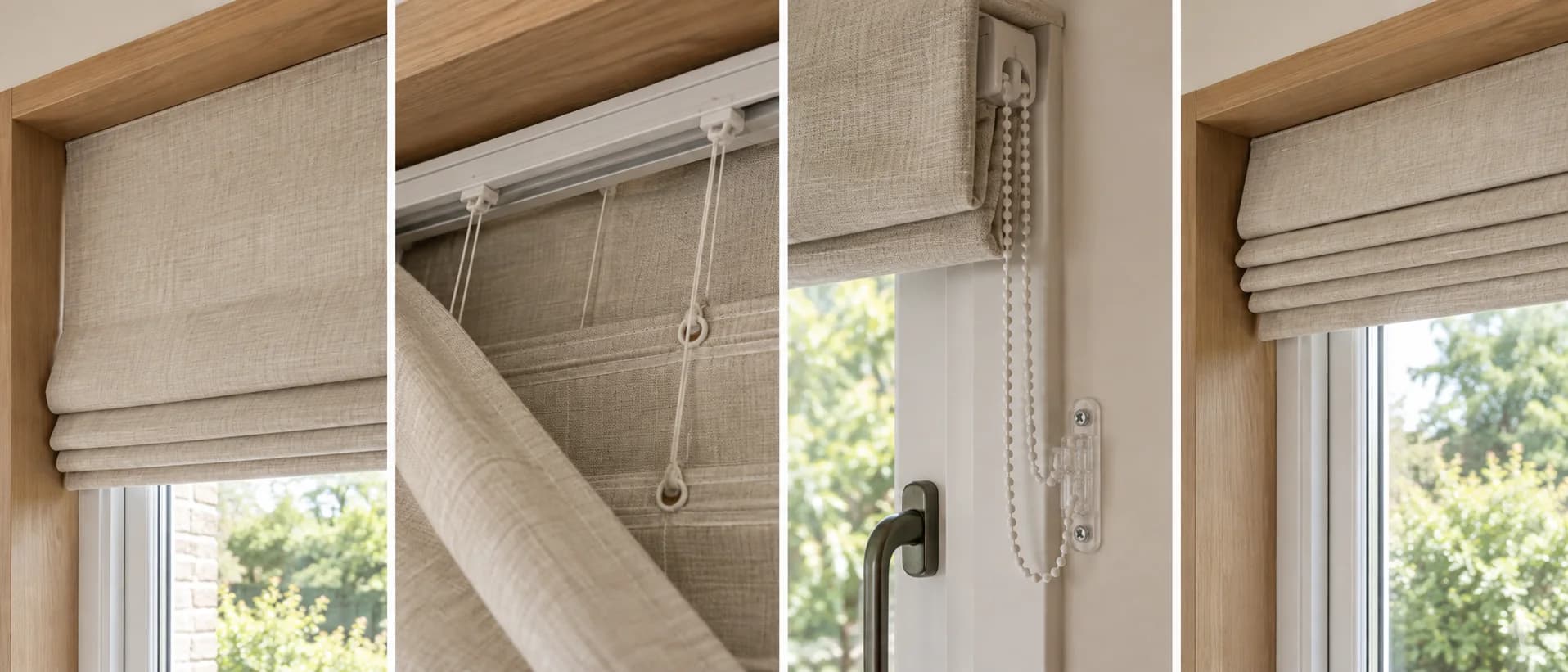
Control side, furniture, beds, reach and operating frequency should be reviewed before ordering. Chains and cords require the applicable safety components and installation practices; they are not decorative options to resolve at handover.
Cots, beds and climbable furniture should remain clear of accessible cords. The selected blind and installation must follow current Australian requirements and product instructions.
Manual system detail
Motorisation
The motor and headrail are selected for the finished assembly, power arrangement, expected use and access. Hiding the system should not make future adjustment, charging or service impractical.
A well-designed installation should consider how the headrail can be accessed if the blind ever requires adjustment or servicing. Pelmets, joinery and furniture should not turn a routine check into demolition.
Access is part of the specification, even when it is not meant to be seen.
Professional judgement
Large and layered Romans place greater demands on headrail, brackets, fixing, lifting consistency and daily operation. If the proposed assembly is too broad, heavy or awkward for credible use, dividing the opening or selecting another treatment may be the better design decision.
Made to specification
Fabric, lining, construction, finished dimensions and operation are resolved together before making begins. The blind is not forced around a generic off-the-shelf format.
Fabric and components are narrowed to options that suit the room, the Roman and the proposed dimensions—not simply the sample-book colour.
Availability, measurement and system details are coordinated early. Actual timing is confirmed for the chosen materials and scope rather than advertised as a fixed universal lead time.
Level, mounting height, projection, control position and final adjustment determine whether the installed Roman belongs to the architecture.
Before you specify
Its position depends on recess depth, fixing, handles, fabric projection, stack and the desired relationship to the window trim.
Choose a reachable side clear of furniture and room obstacles, then incorporate the required safety components and installation conditions.
It can often be visually discreet, but access for adjustment, charging or service should remain practical.
High, larger, grouped or frequently operated blinds may benefit. The finished Roman, power and access should be resolved before selecting the system.
Stop forcing it, check for an obvious external obstruction without dismantling the mechanism, and arrange an assessment if the cause is not clear.
A conversation, then a considered specification
Bring the window, expected fabric construction and daily routine. We’ll work through headrail position, fixing, control and service access before the mechanism is selected.