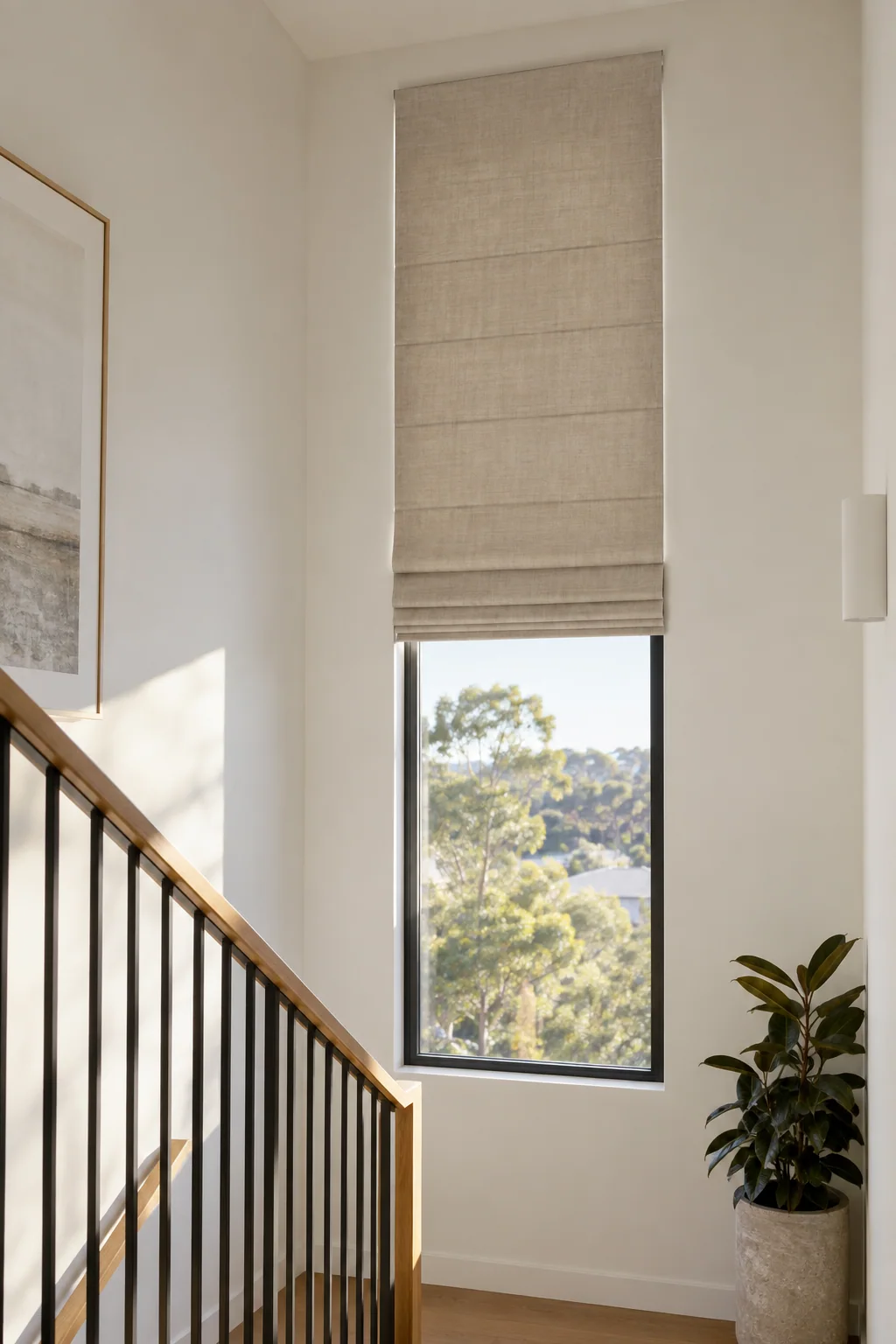
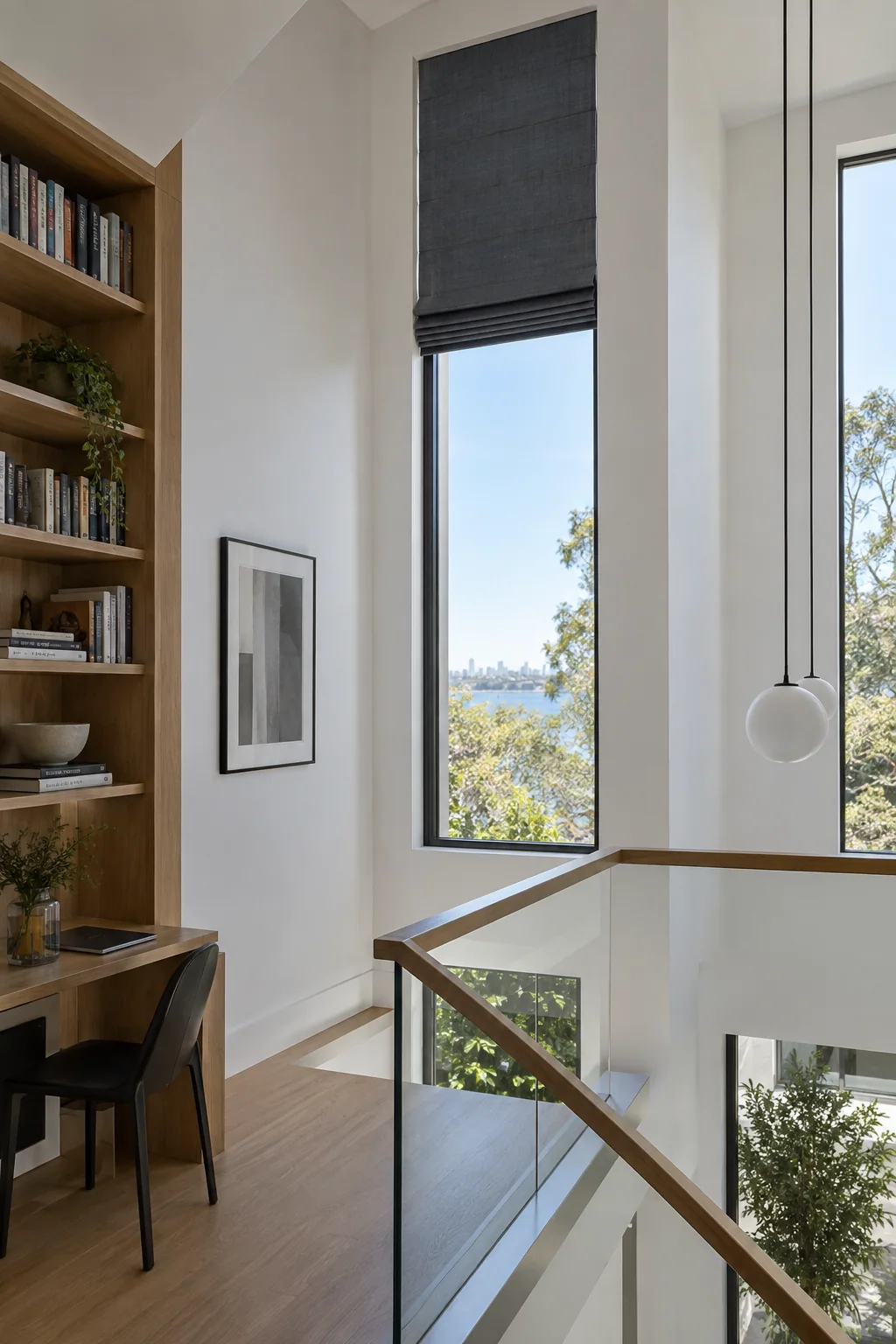
Tall windows
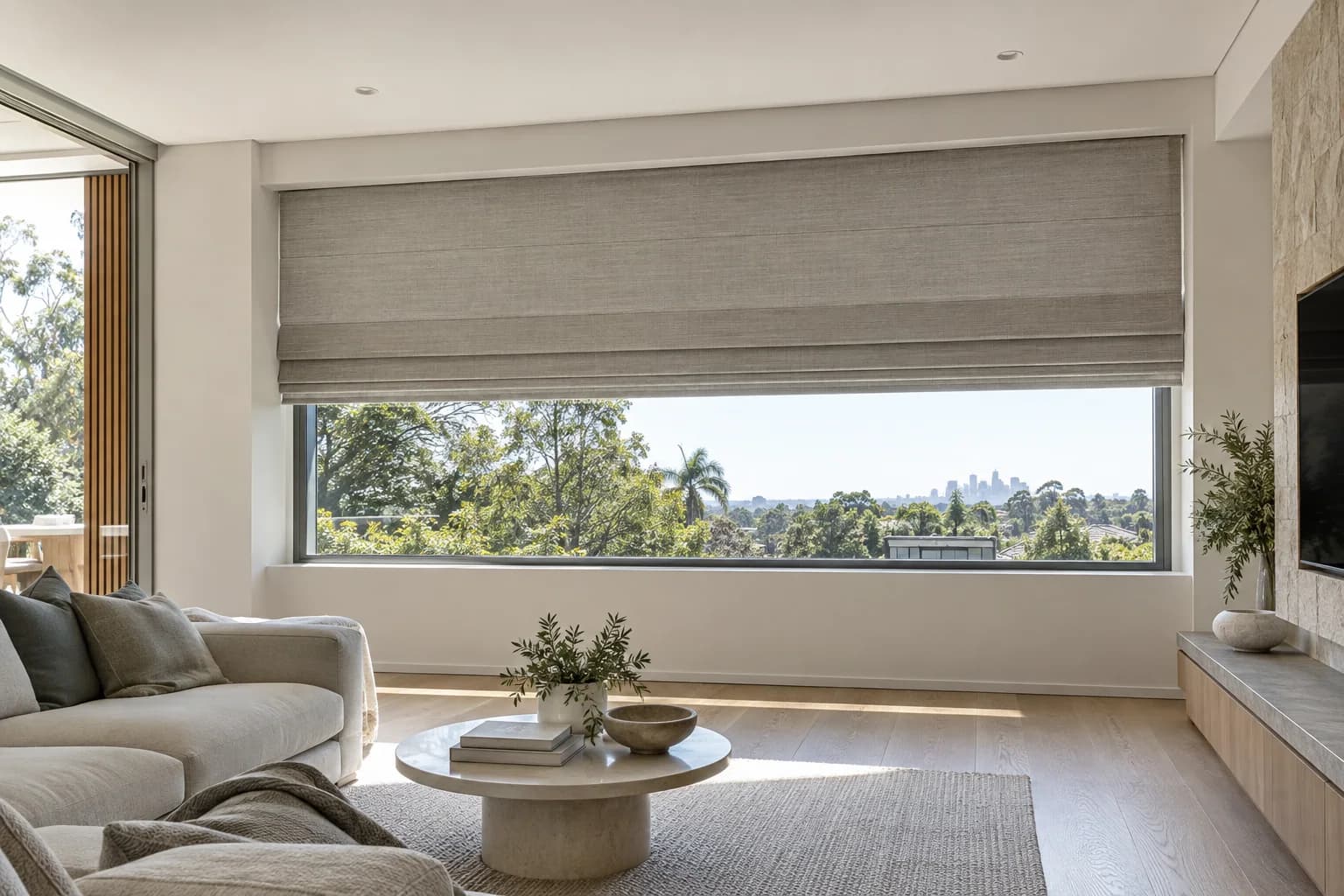
Motorisation brings a high Roman into ordinary daily use without a long control chain at the side of the opening.
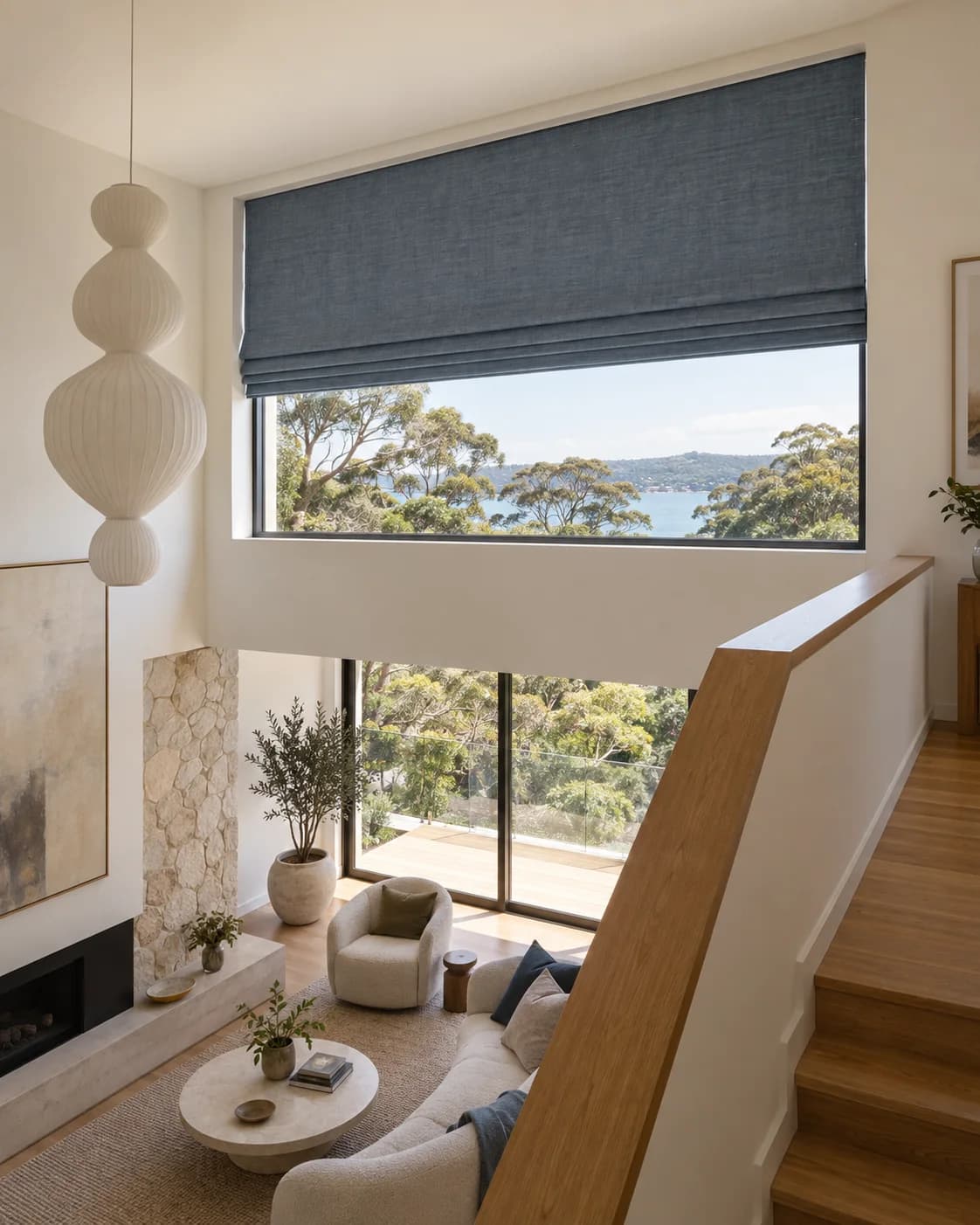
Motorised Romans · Sydney
The motor is not selected first. The Roman is designed first.
Motorisation is most useful when it removes friction from everyday use—on larger Romans, hard-to-reach windows, multiple blinds or in rooms where treatments move more than once a day. The technology belongs behind the blind, selected around its finished size, weight, construction and use.
Movement
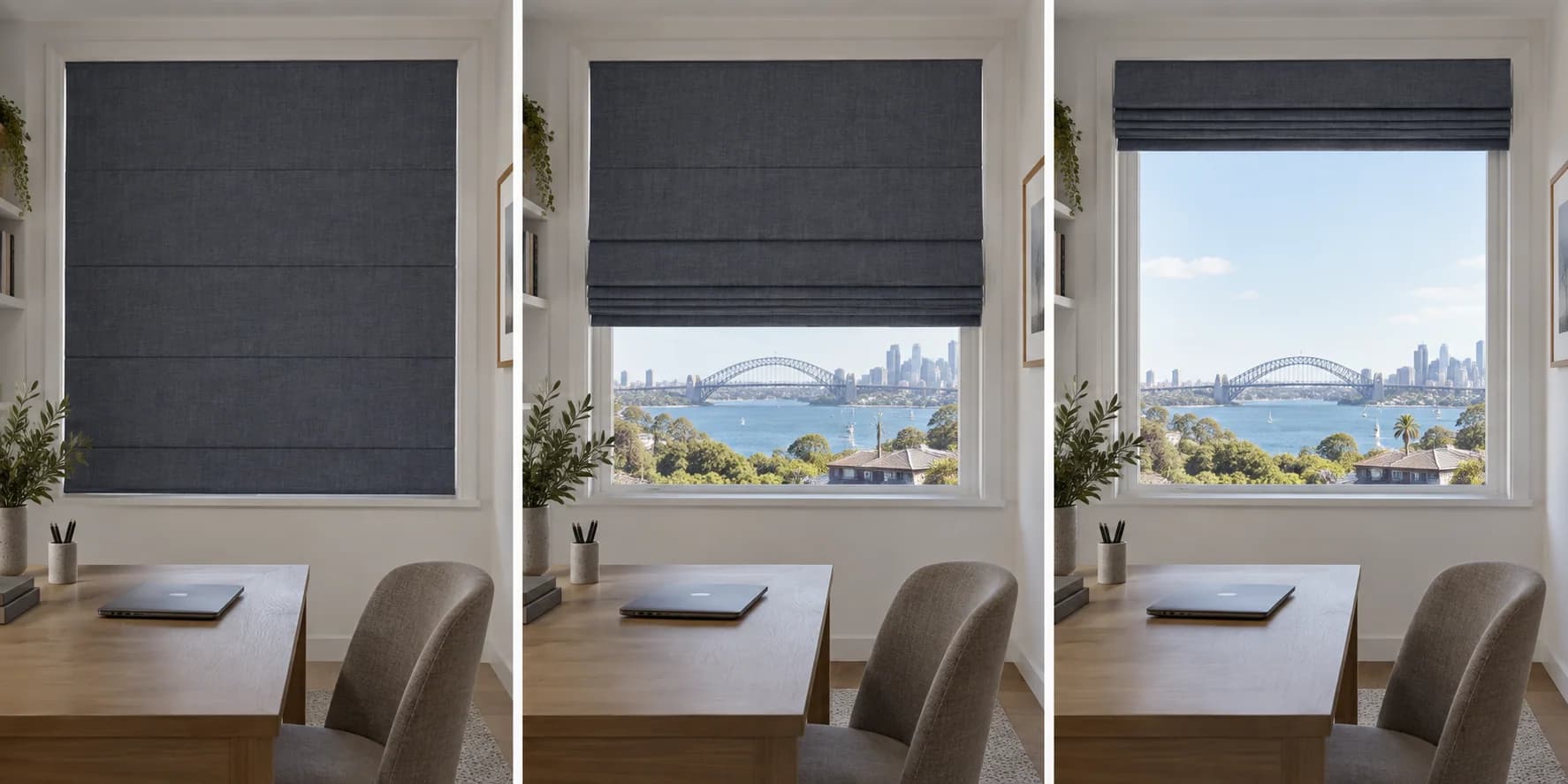
A motorised Roman still needs to lower evenly, pause cleanly and collect into a credible stack. The movement should feel considered rather than mechanical.
Practical value
Height, finished load, multiple blinds and frequent operation can make motorisation genuinely useful. The reason comes first; the feature list follows.
Motorisation brings a high Roman into ordinary daily use without a long control chain at the side of the opening.
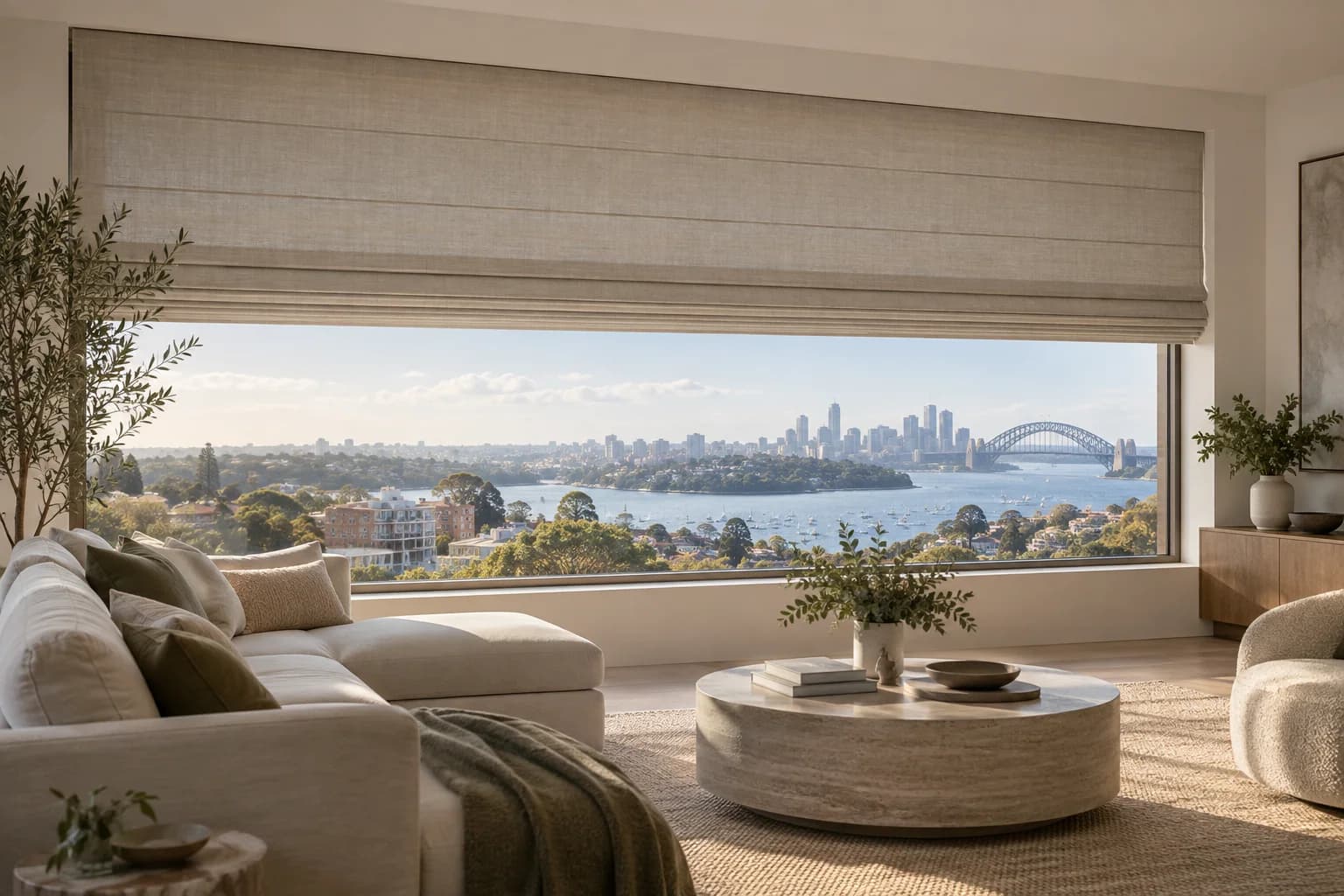
A wider blind needs the motor, headrail and lifting points resolved around its full finished load and proportions.
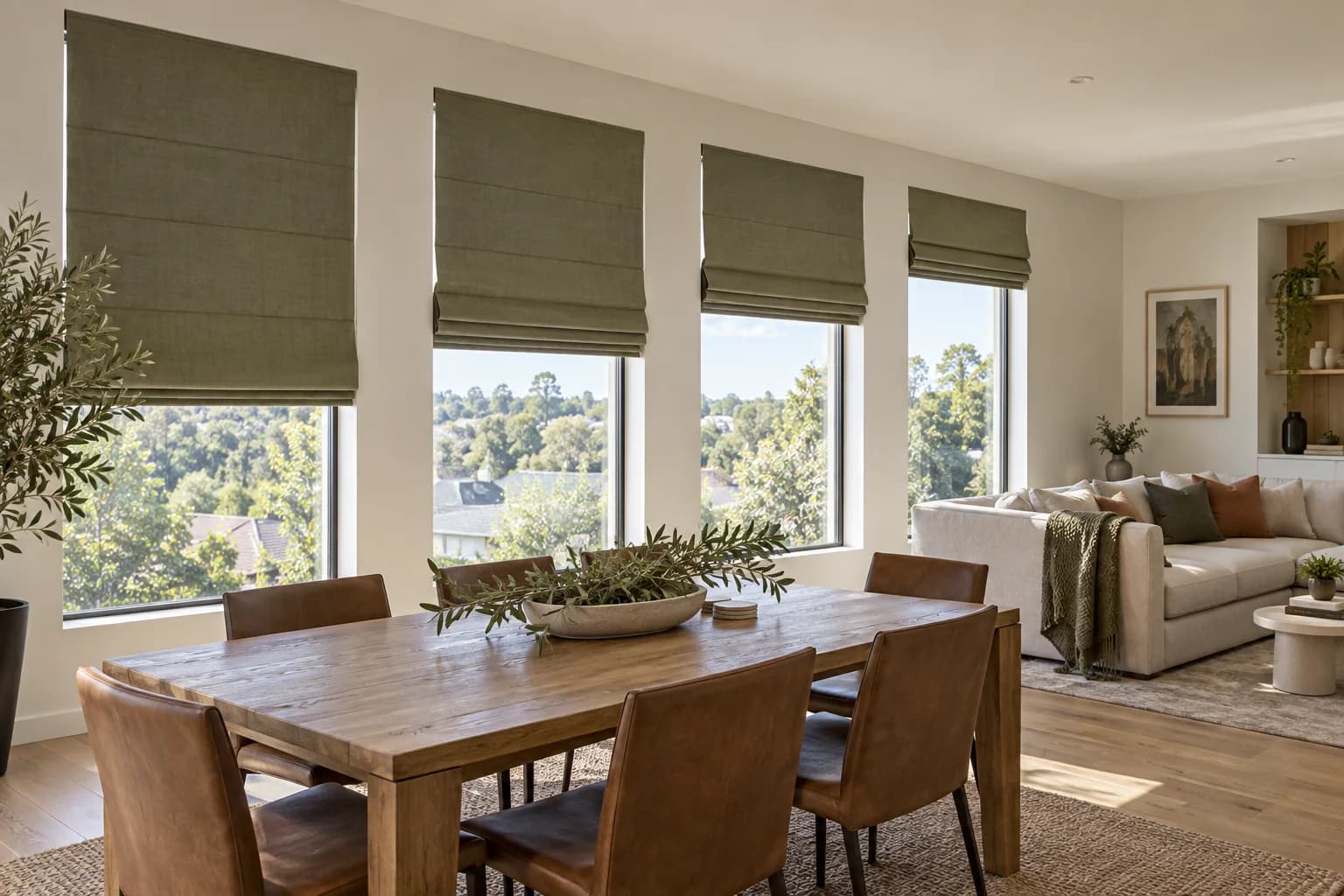
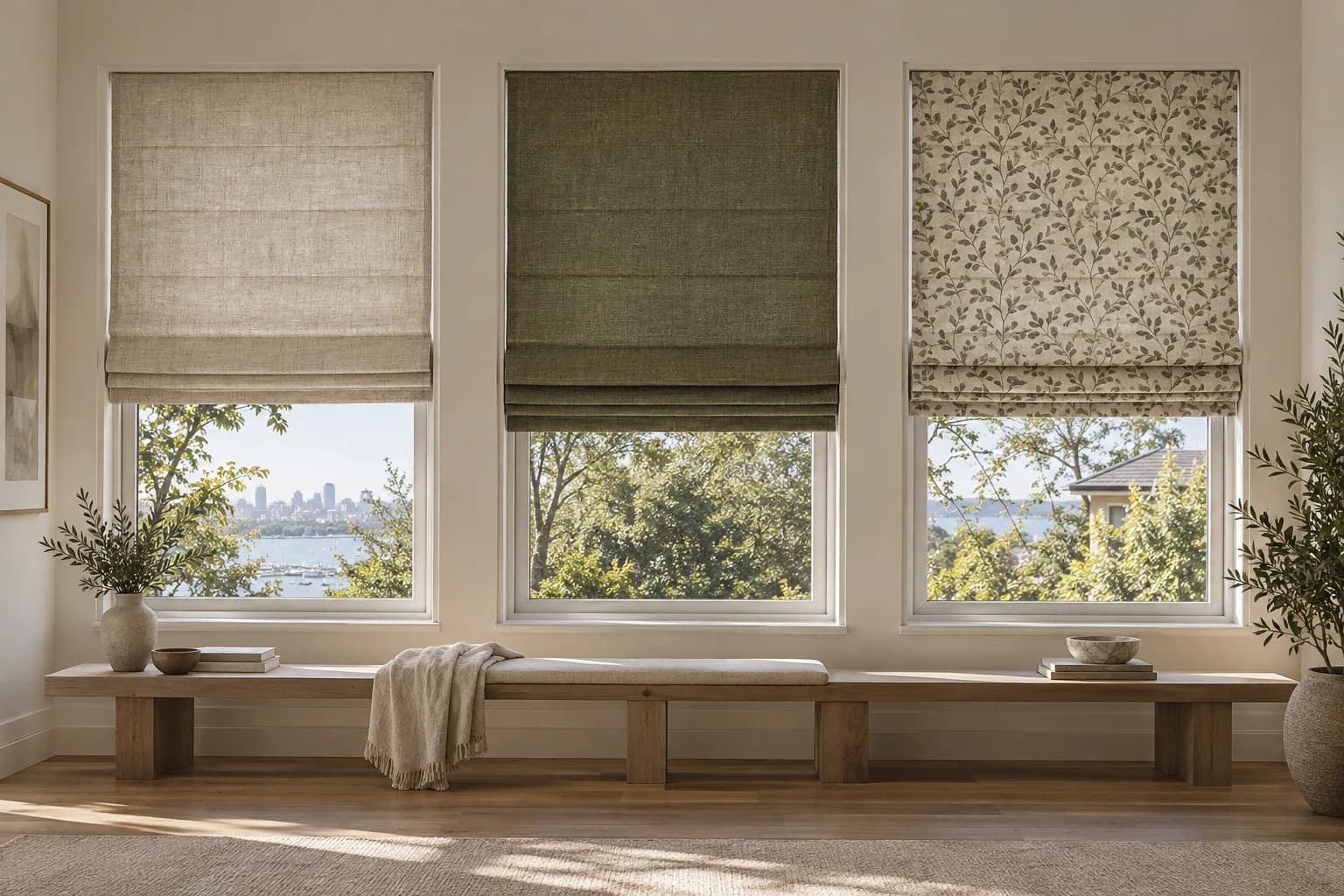
Grouped control can make a bank of Romans feel calm and coordinated, provided the selected system supports it.
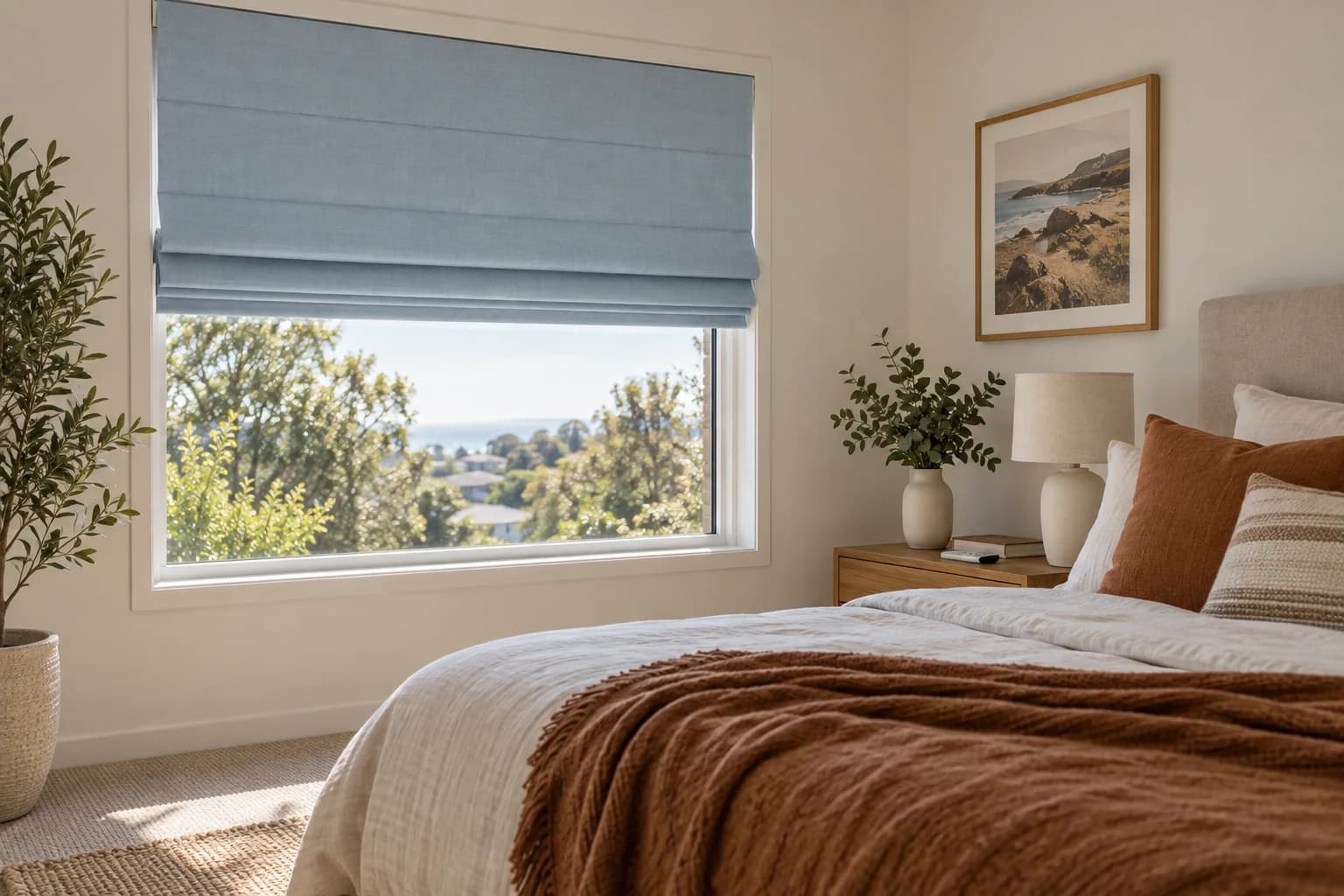
Reliable, repeatable operation earns its place where light and privacy are adjusted several times through the day.
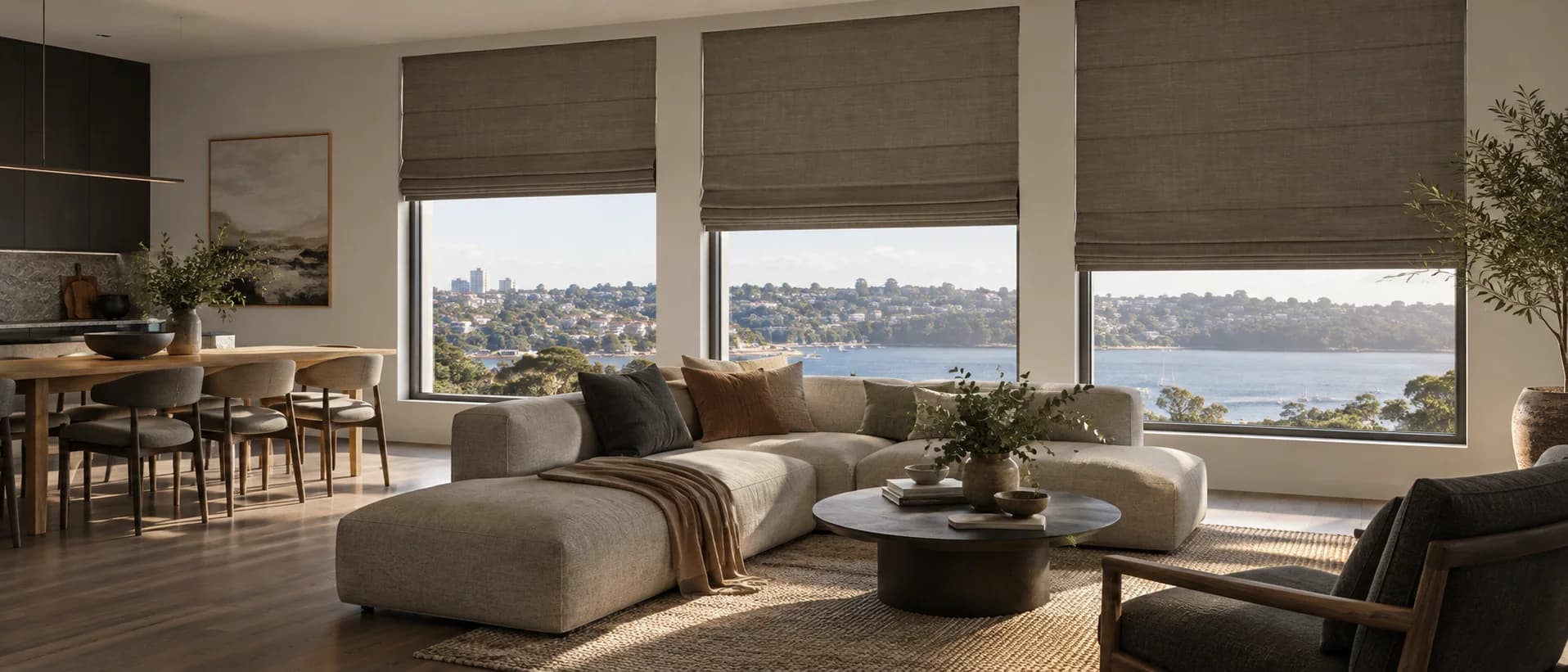
One touch. A composed room.
System selection
The headrail, lifting points, drive and power route should support the Roman without becoming its visual story. Selection follows the complete finished treatment—not the face fabric alone.
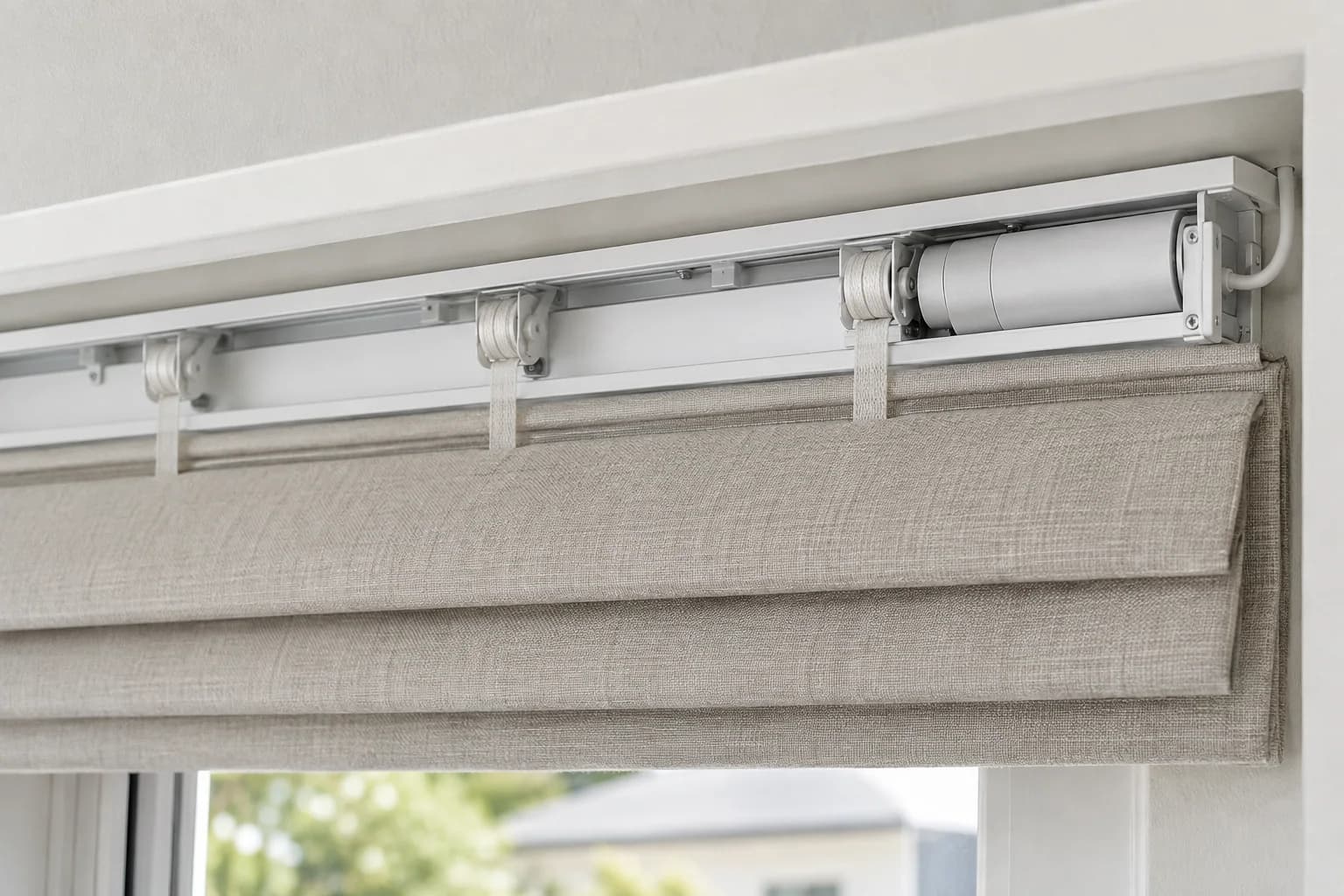
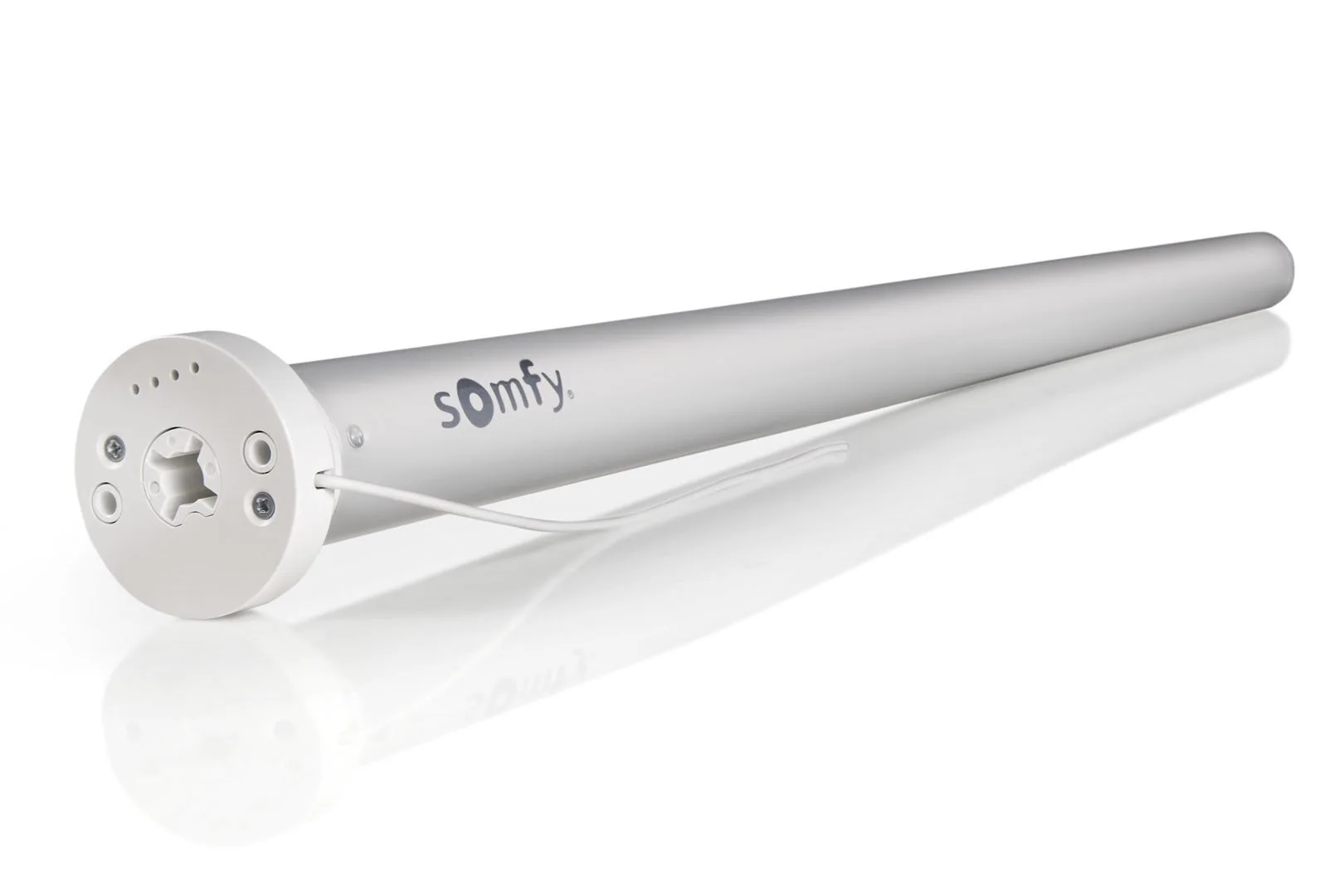
The exact motor, headrail, power arrangement and limits are confirmed for the final dimensions and selected construction.
Controls
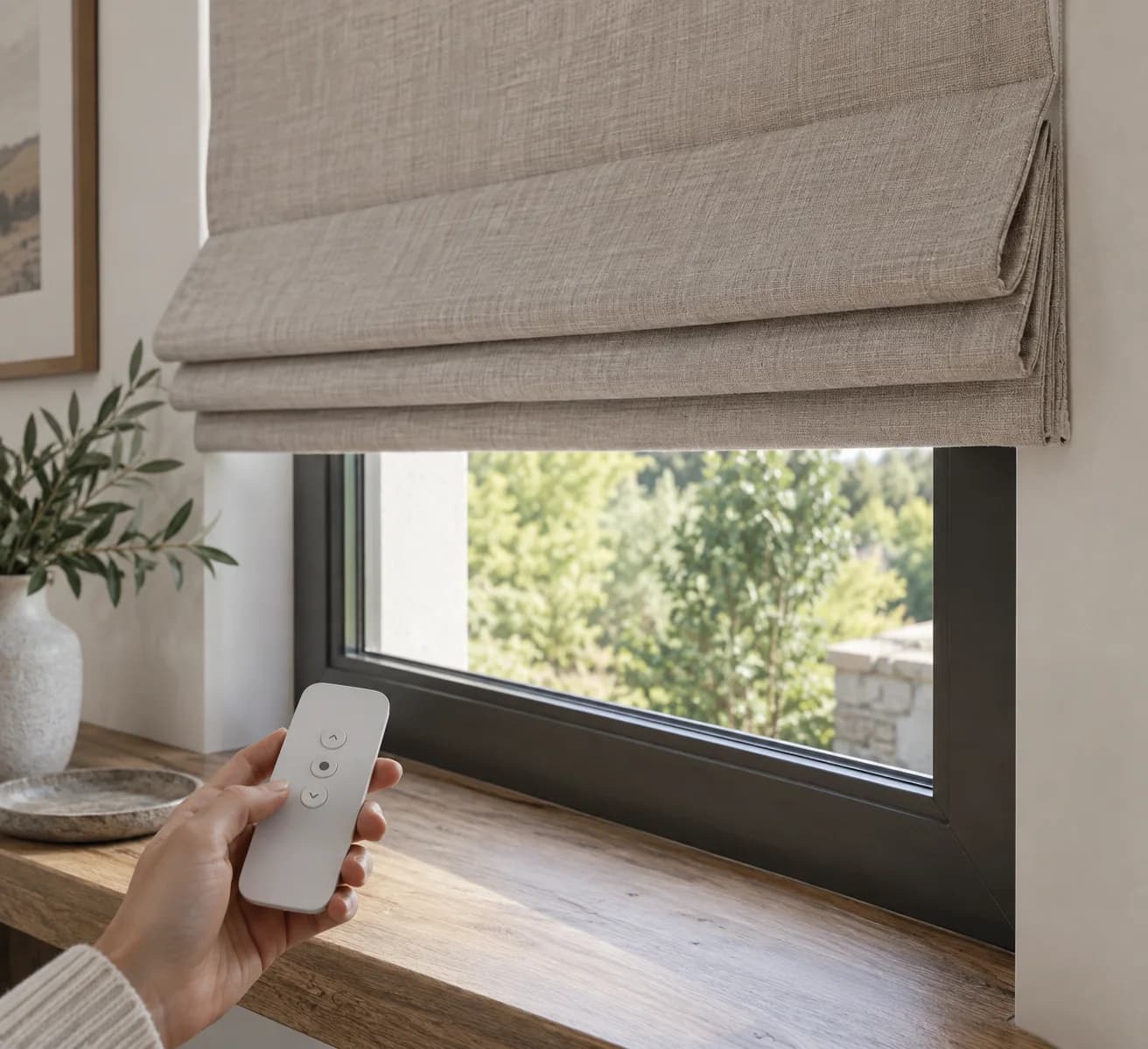
The right interface may be a simple remote or wall control. App, grouping and selected smart-home functions are included only when the proposed system supports them.
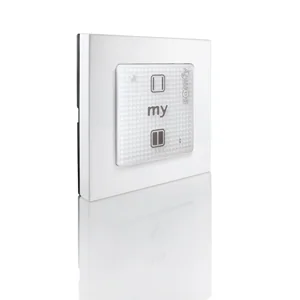
A fixed control can suit a frequently used room. Position and compatible control hardware are confirmed with the selected system.
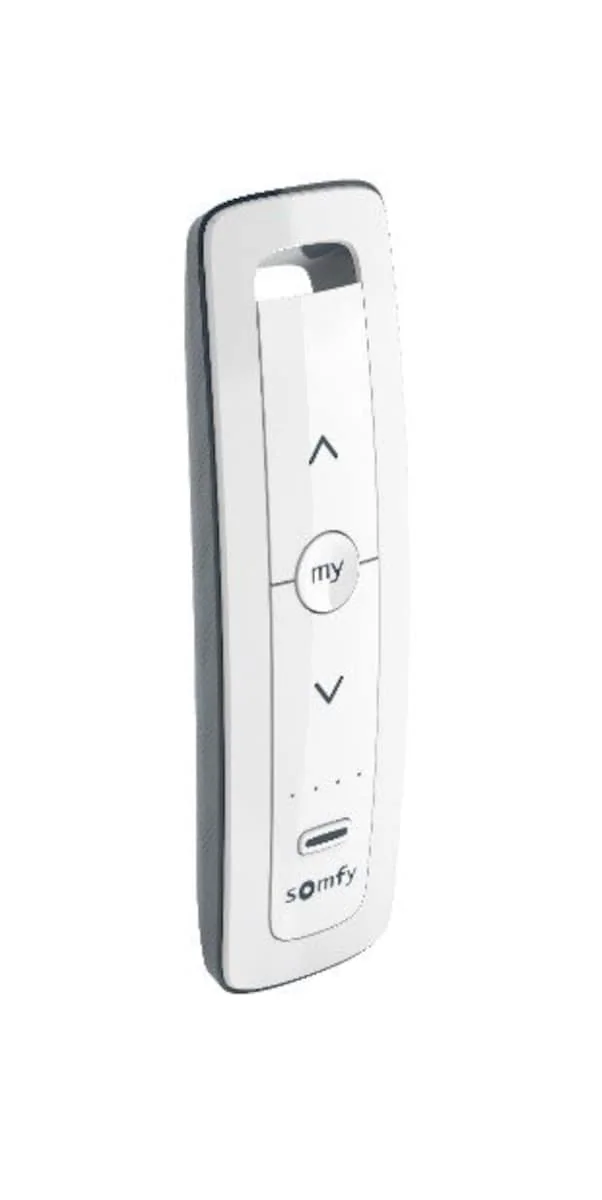
Individual or grouped operation may be specified where the selected motor and control protocol support it.
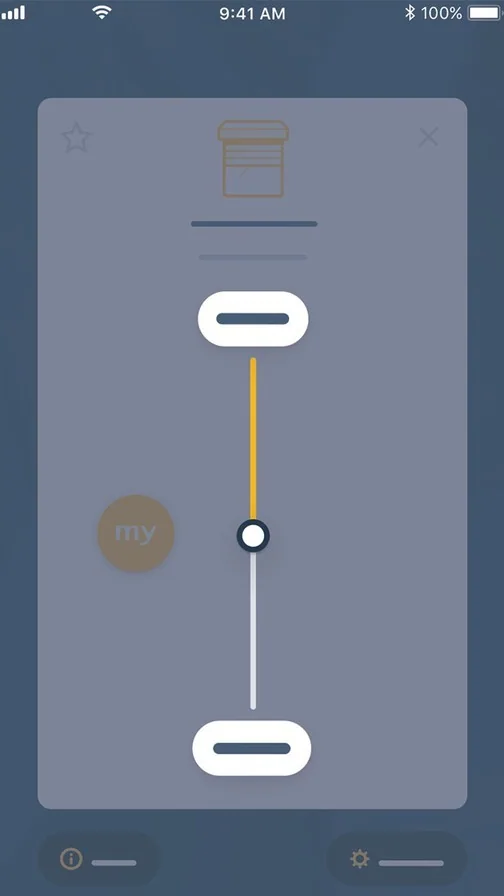
App control is considered only with a compatible motor, hub and project network. It is not assumed from the word motorised.
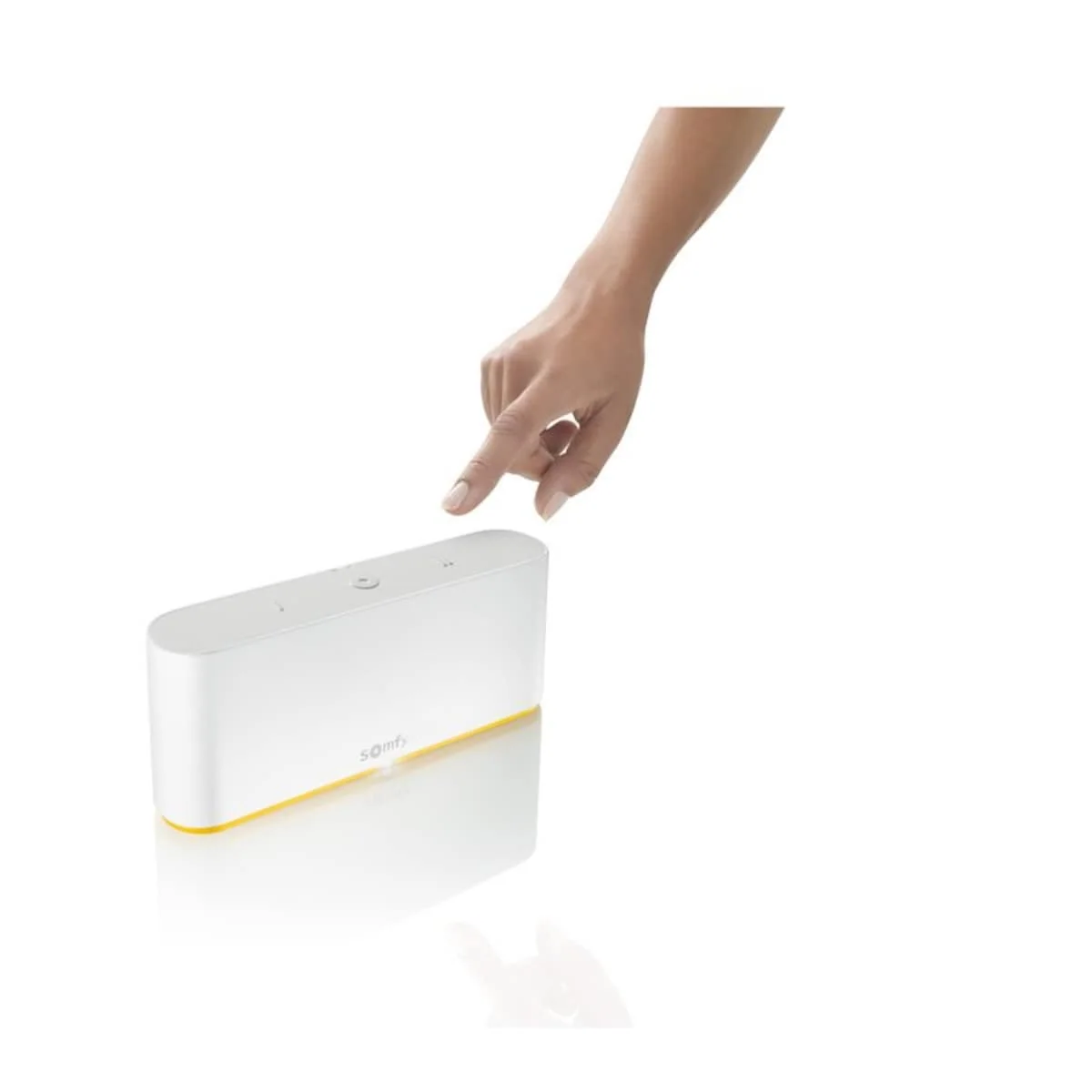
Grouping and selected integrations are checked against the actual system, protocol and scope before they are included in a proposal.
Product images are supplier references. The exact hardware, protocol and compatibility are confirmed in the CCBD proposal.
Before the walls close
New work creates the opportunity to coordinate power, fixing and access before the finishes are complete. The aim is a quiet installation that can still be serviced.
Existing homes
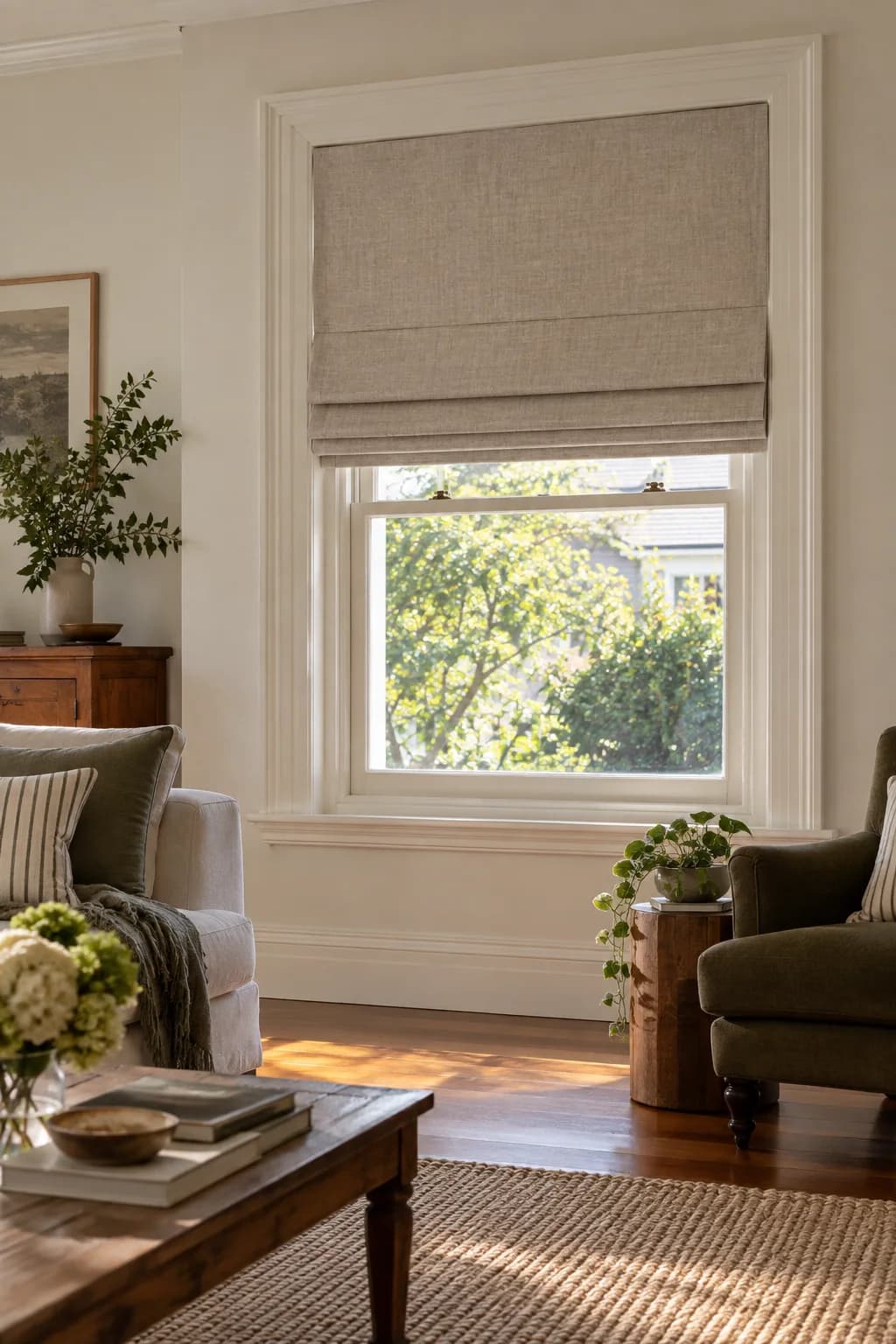
An existing opening can often be considered for motorisation without rebuilding the room. Selected wired or rechargeable arrangements may be suitable, depending on the proposed product, available space and a practical power or charging route.
CCBD inspects the fixing position, headrail clearance and future service access before recommending the arrangement.
Fabric still matters
The mechanism changes how the Roman operates. It should not remove the textile character that made a Roman blind the right choice in the first place.
Installed detail
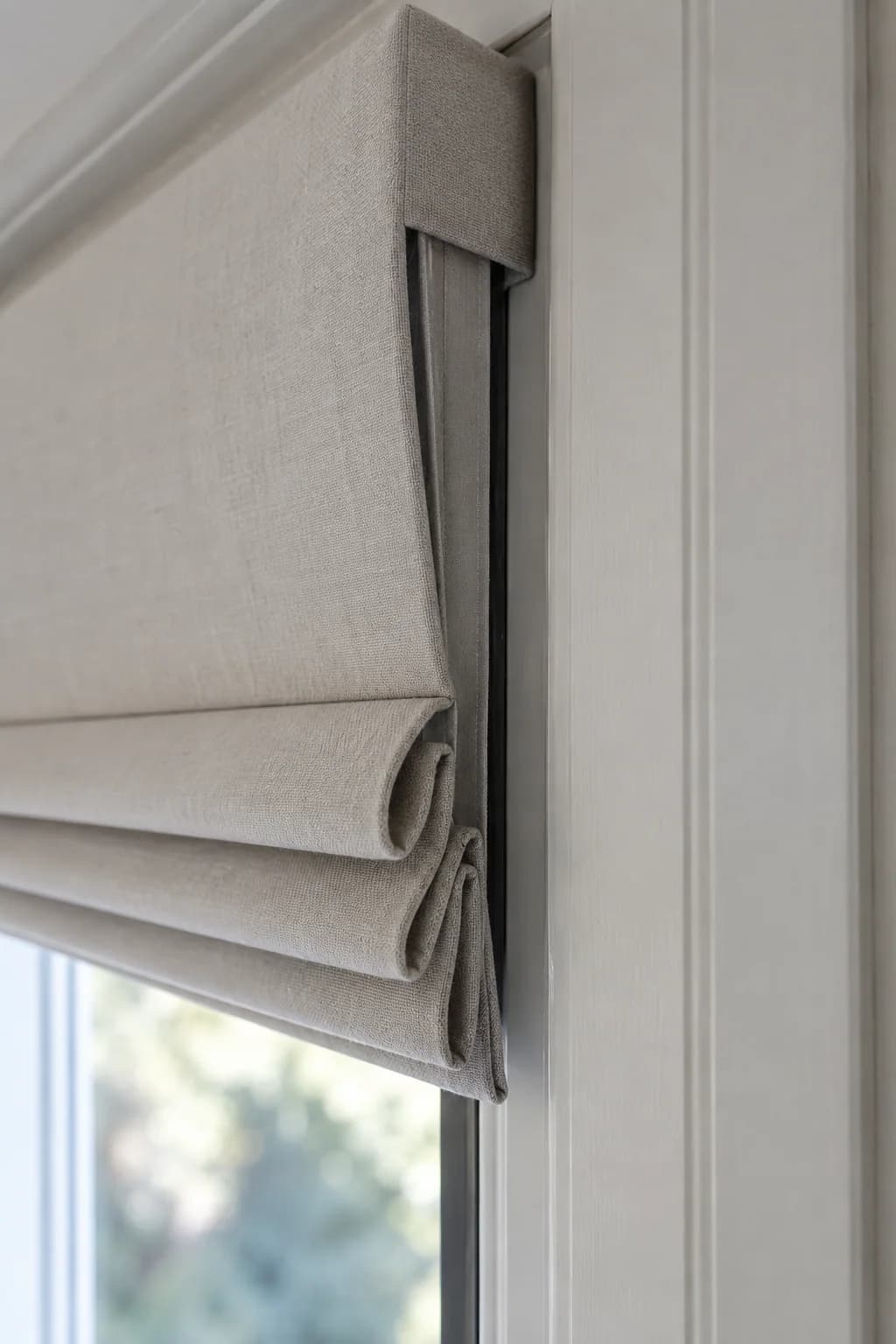
Motorisation is successful when the blind remains composed at the side, through the stack and along the lower edge—and the control does not compete with the fabric.
Visual studies
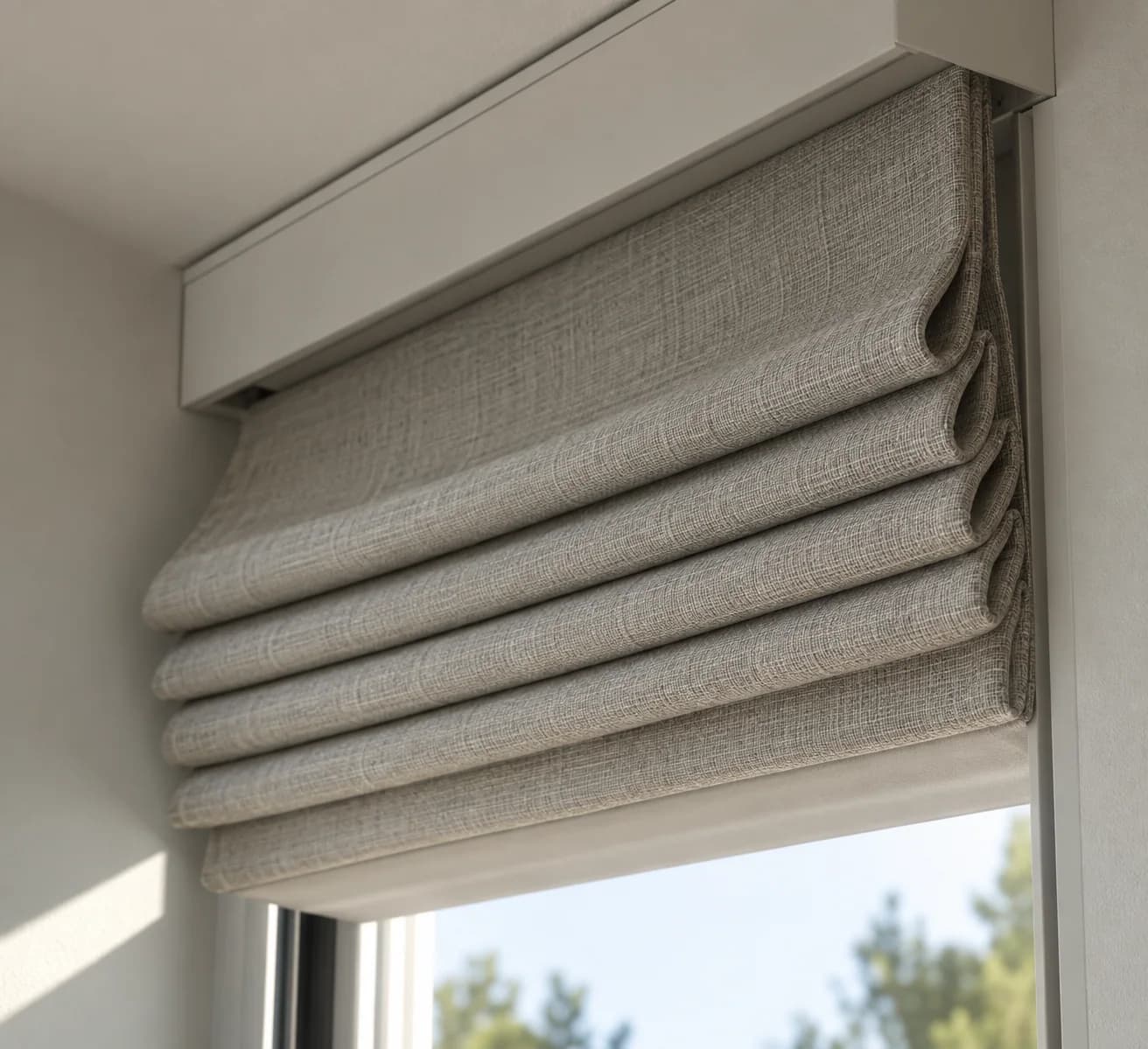
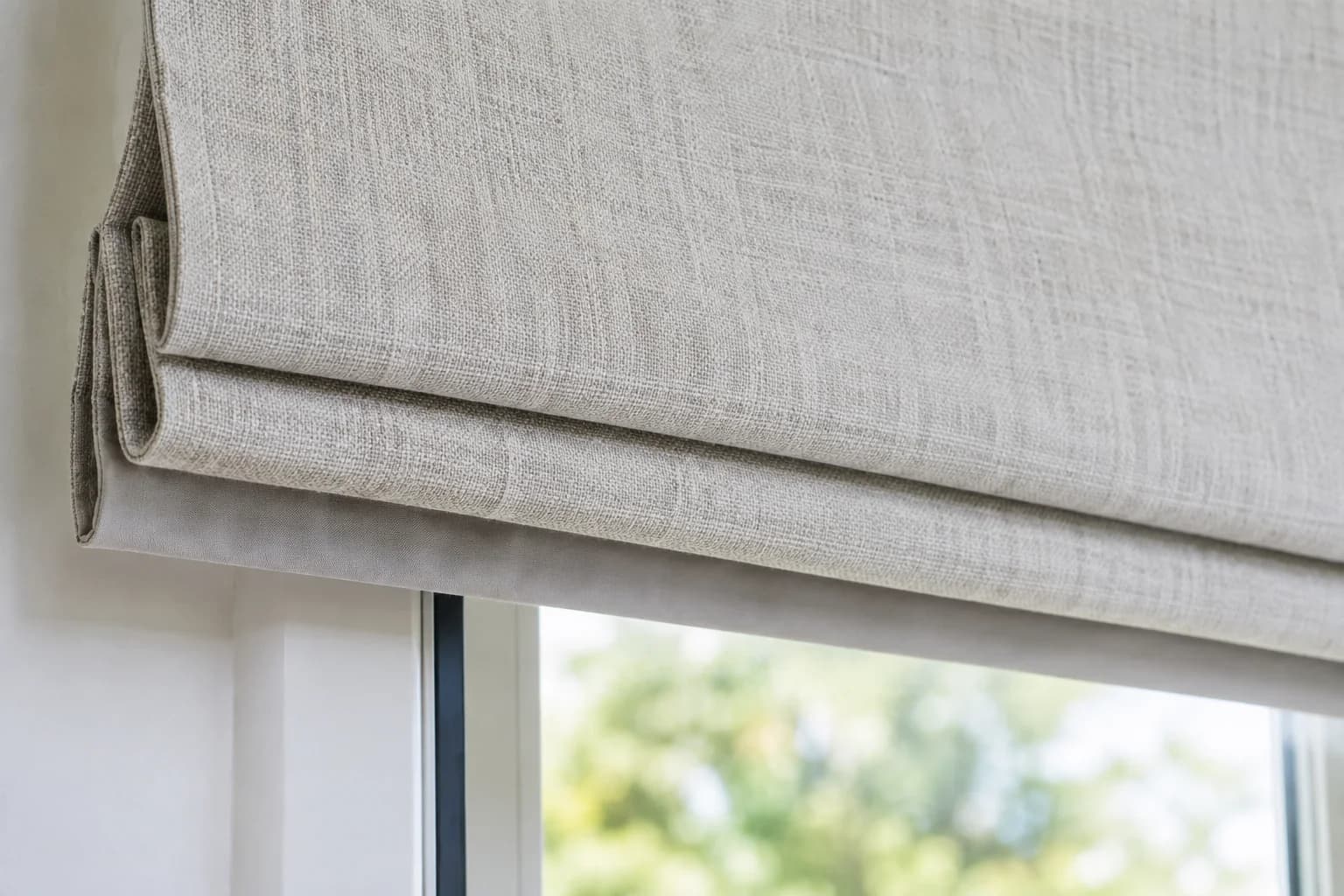
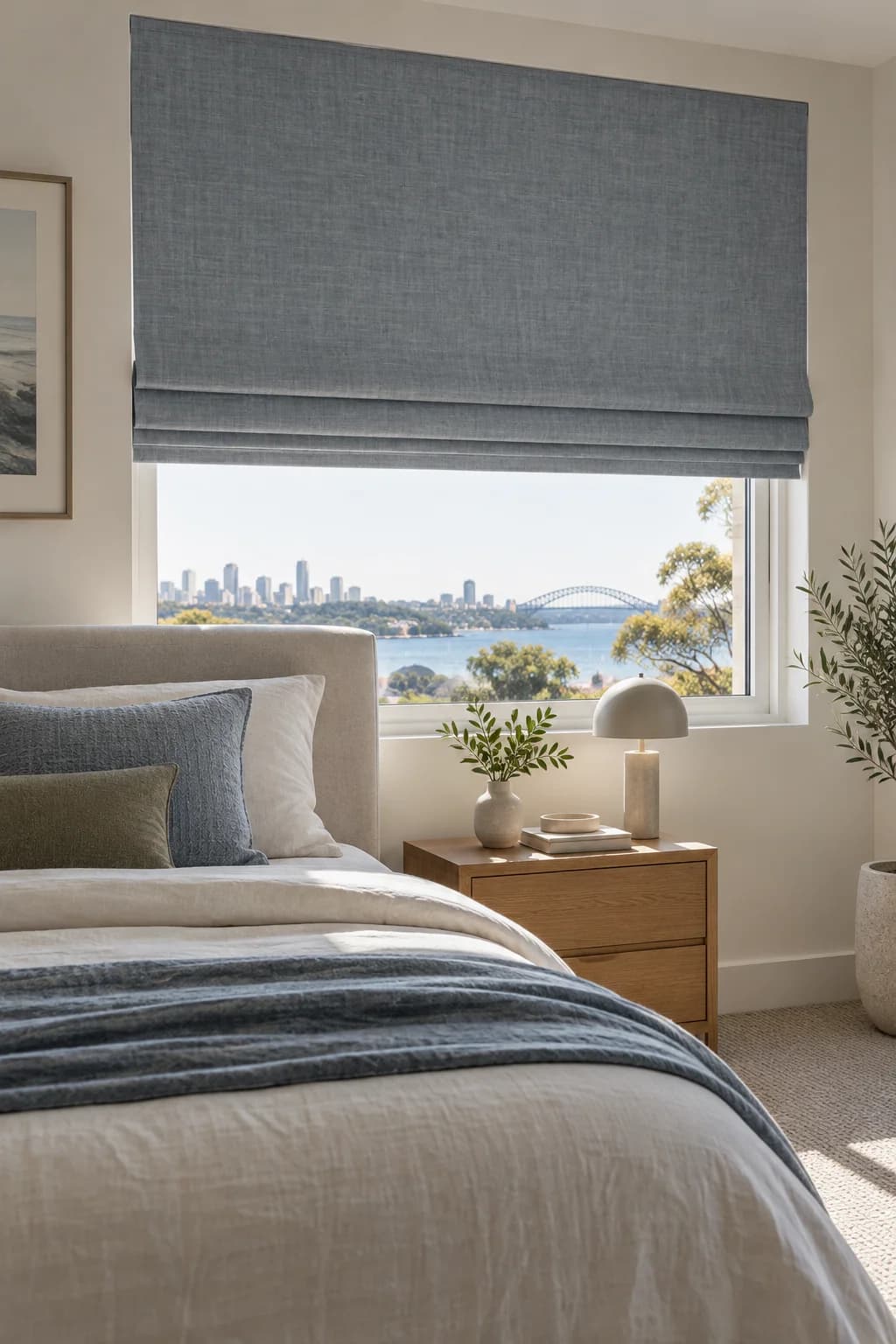
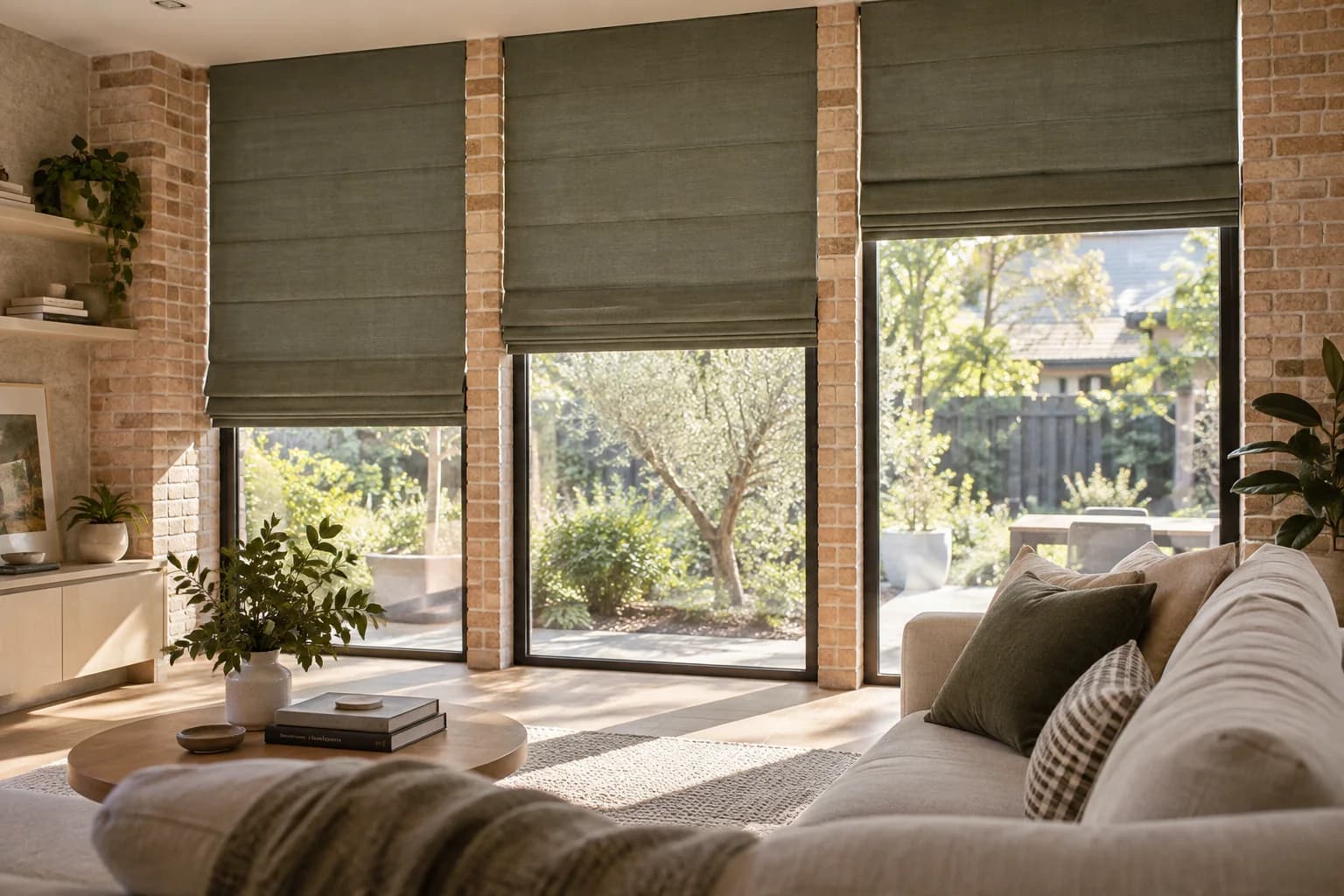
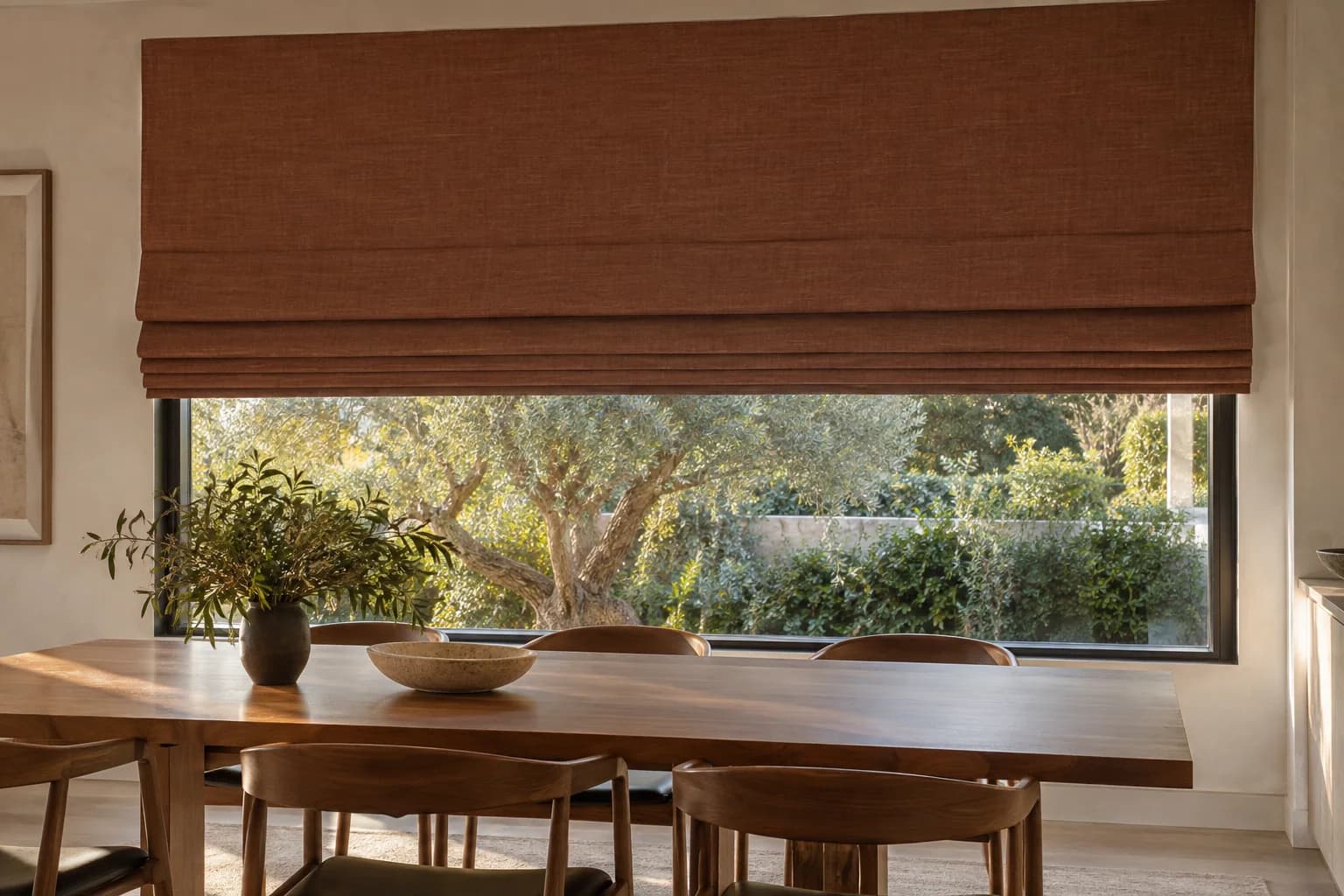
These visual studies explore scale, fabric and application. Completed CCBD project work is identified only when its provenance has been verified.
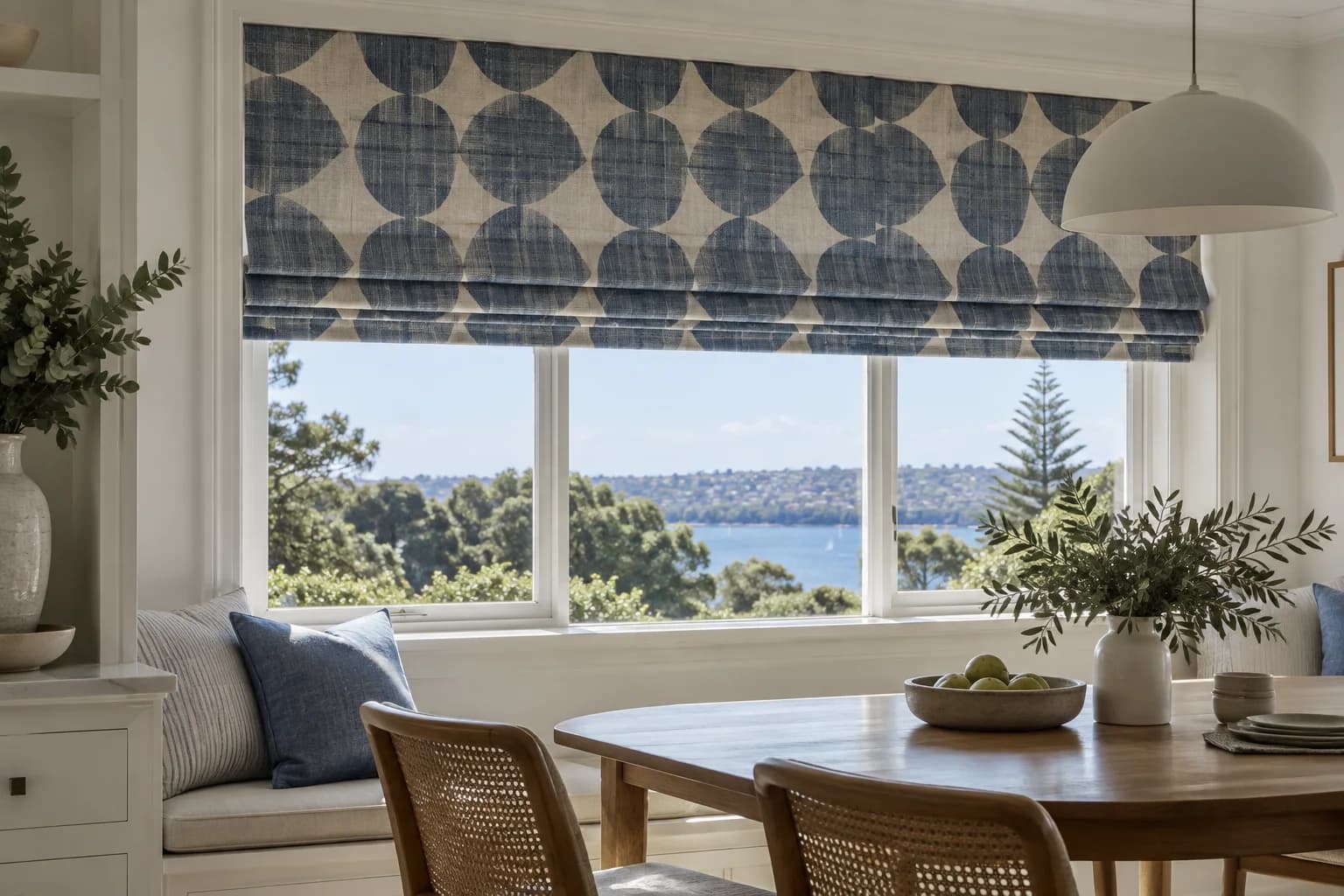
Three reasons CCBD specifies before ordering
The window, fabric, lining, fold depth and fitting position are resolved before the operating system. That keeps motorisation in service of the Roman’s proportion, textile character and daily use.
Finished weight, width, drop, lifting points, operating frequency and power availability determine the system brief. A brand or motor family alone does not approve every blind size.
Level, fixing, end limits, grouping and final fold behaviour are checked at the opening. Future access remains part of the installation rather than an afterthought.
Practical detail
Not every system uses the same power arrangement. Wired and rechargeable options may be considered where suitable; the blind, access and project requirements determine the recommendation.
Potentially. The opening, fixing, headrail space and practical charging or power route need inspection before the system is selected.
Compatible systems can support grouping, but widths, weights, controls and the expected visual alignment need to be resolved for the actual project.
Selected Somfy systems may be specified where they suit the Roman, power arrangement and control brief. Exact model information and compatibility are confirmed for the proposal.
It can remove a hand-operated chain in many designs, but the complete blind and installation still need to meet applicable requirements and the selected system instructions.
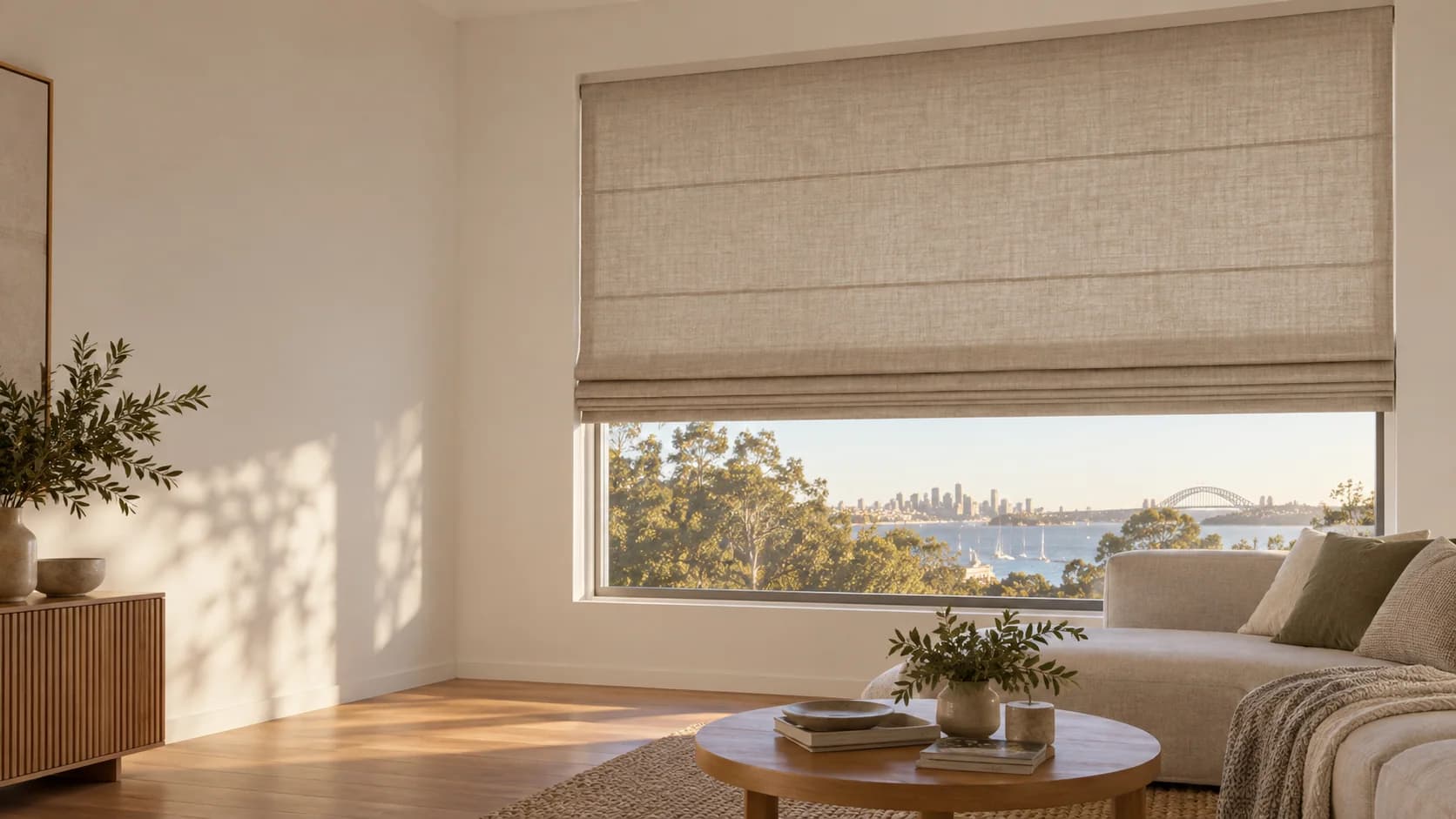
Motorised Roman consultation
Bring the windows, room use and any electrical plans. We’ll resolve the Roman construction, finished load, power, control and service access as one system.