Edited selection
Fabric and components are narrowed to options that suit the room, the Roman and the proposed dimensions—not simply the sample-book colour.
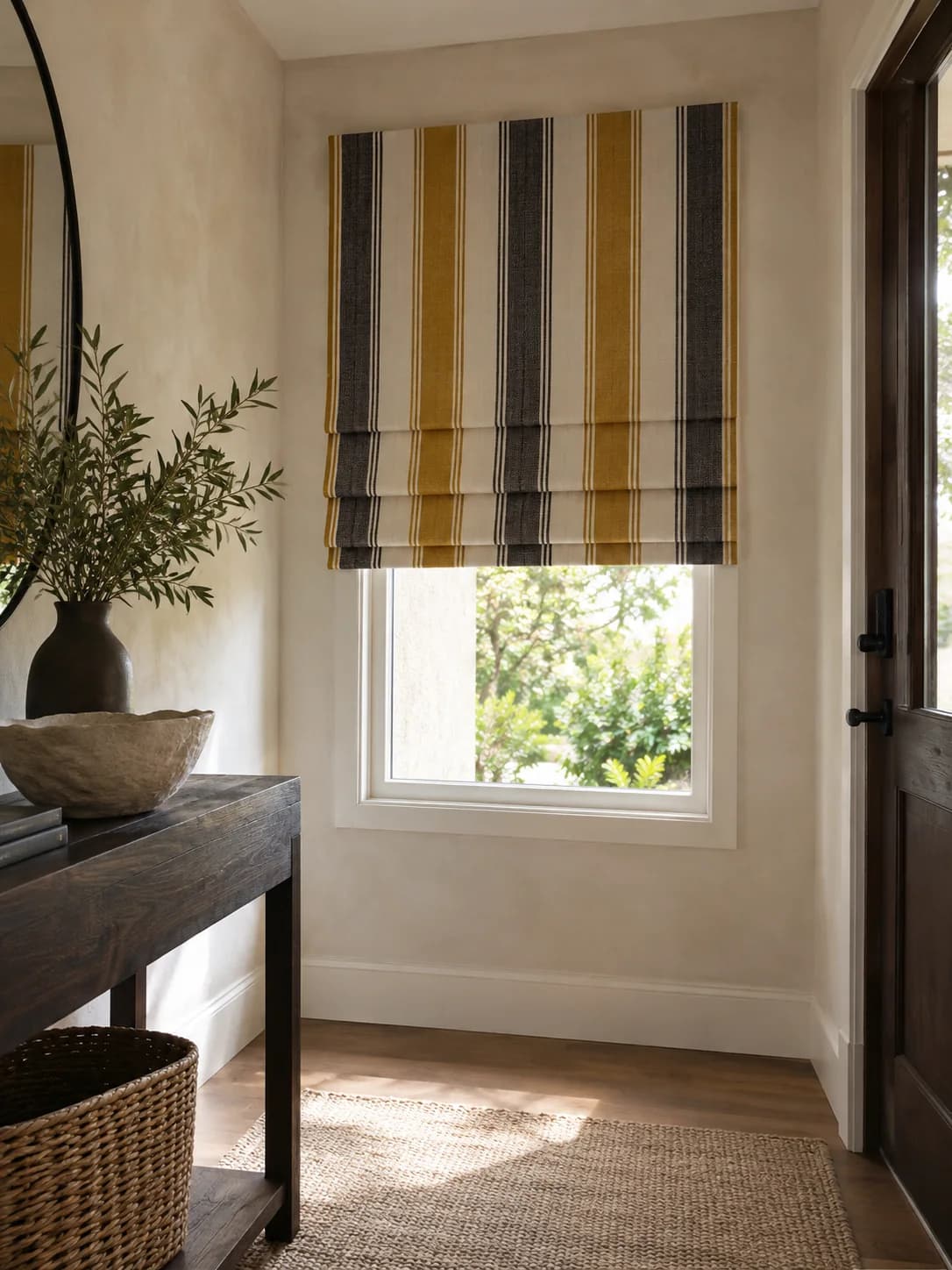
Roman Blinds by CCBD
Clean structure. Quiet confidence.
Classic Roman blinds use controlled horizontal folds to give fabric a more tailored architectural presence. They work particularly well where the room needs textile softness without the volume of a full curtain.
Customer question
When the room wants fabric without the visual volume of full curtains: individual windows, tailored interiors, controlled pattern, bedrooms, studies, dining rooms and Romans paired with full-height curtains.
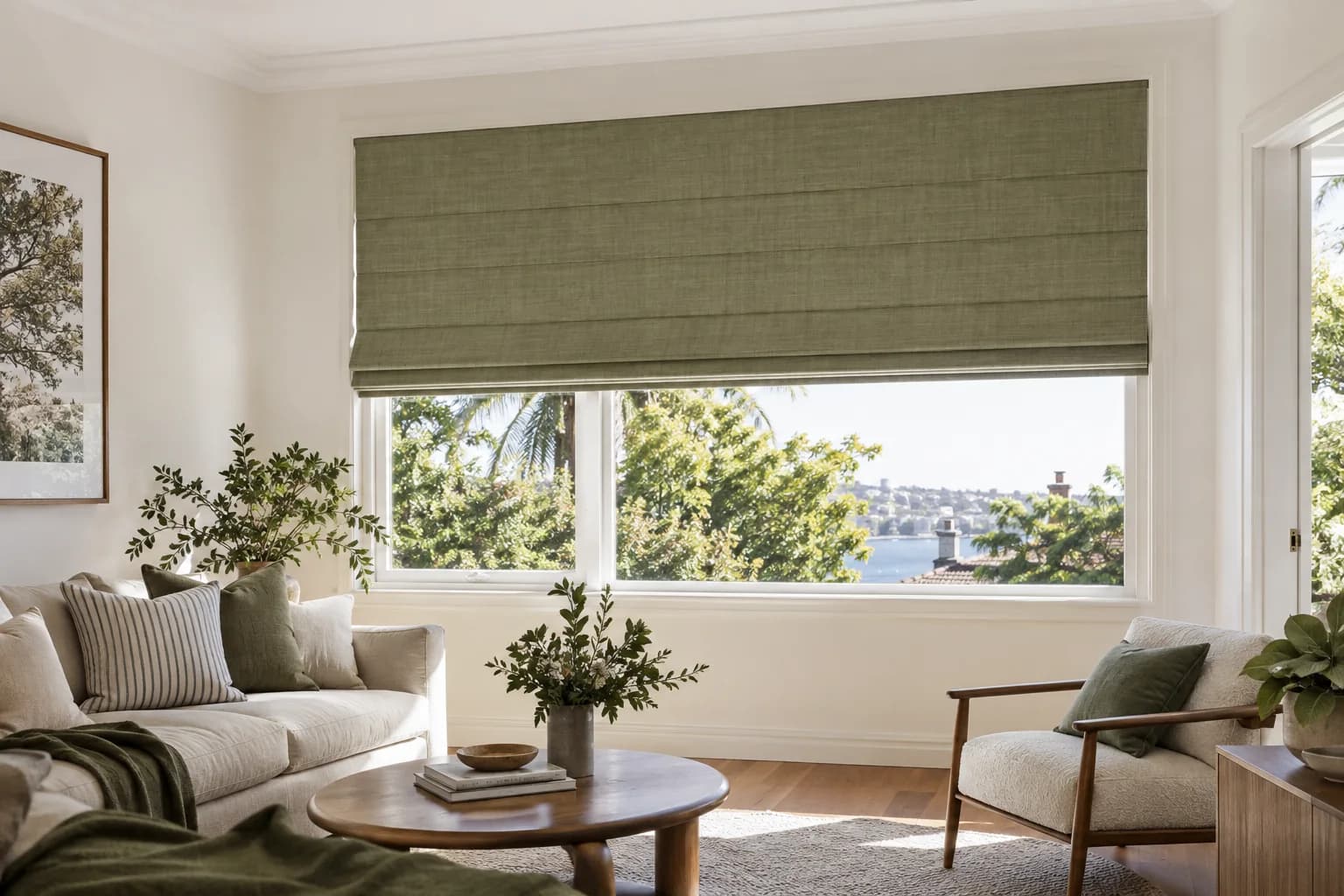
Classic Roman in the room
A Classic Roman should bring the textile into the architecture without losing the discipline of its lower line and fold rhythm.
Why Classic
A good Classic Roman looks composed rather than rigid. The fabric still needs to behave as a textile, while the construction provides enough control for the folds to settle in an ordered way.
Fabric body, lining, fold rhythm and window scale are read together. A narrow study window may suit a tighter visual rhythm; a taller living-room opening can carry a deeper fold without looking overworked.
Manufacturing depth
The clean front is supported by lining, internal support, planned fold positions, the bottom finish and lifting components. Each part must move with the face fabric rather than telegraphing through it or pulling it out of line.
A Classic Roman asks the cloth to hold a broad face, turn consistently at the fold and settle without excessive bulk. Loose weaves, stretch, skew, heavy embroidery and unstable finishes can work against that control. A clean front does not tell you whether the Roman has been well resolved behind it.
Different rooms, same discipline
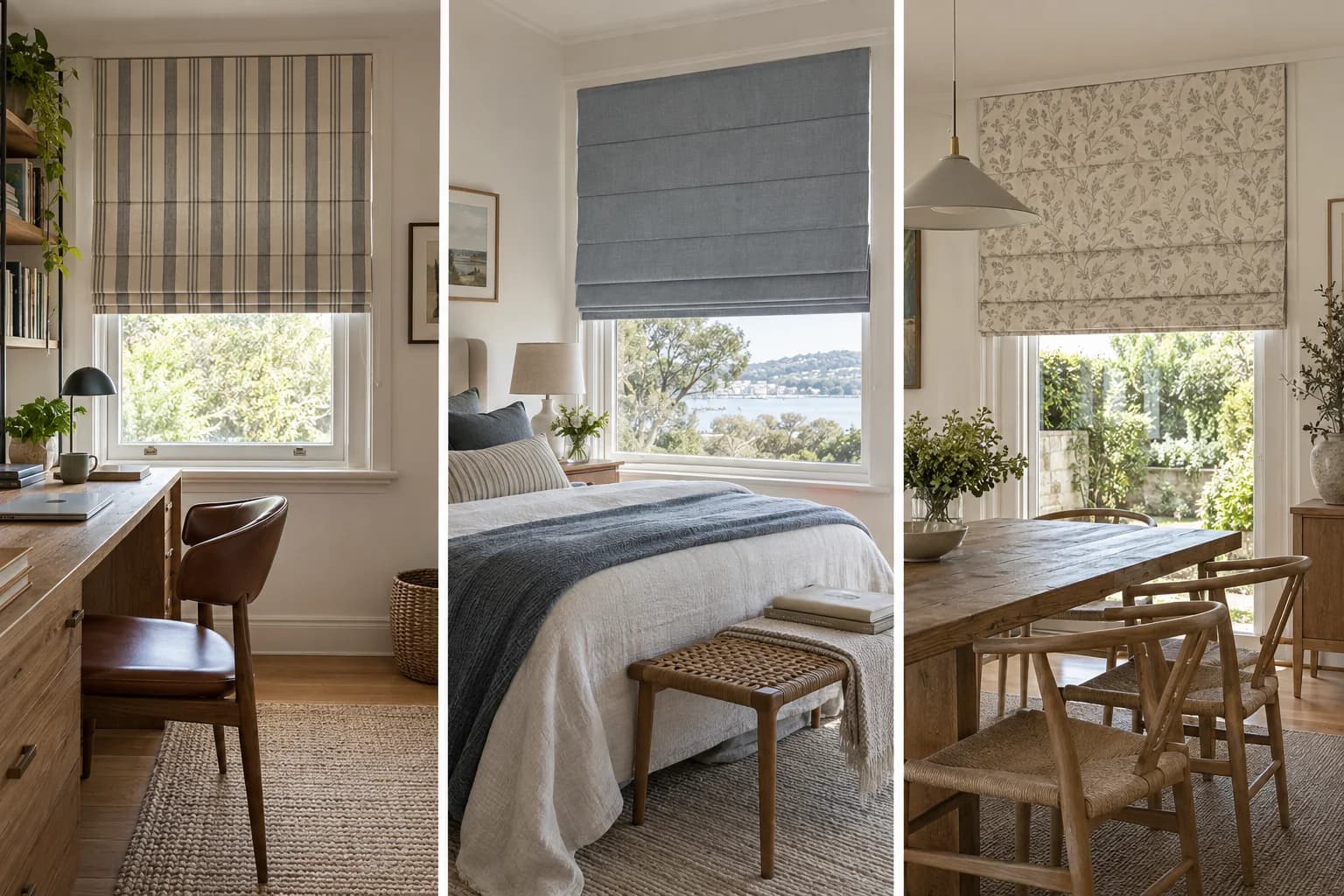
The blind has a centre line, the fabric has a repeat and important motifs may need to remain legible when folds form. Those decisions become more exacting across adjacent Romans or windows with different drops.
We establish which relationship matters most: motif to centre, pattern to fold line, or continuity across a group. Pattern matching reduces visual interruption; it does not make a seam or folded thickness disappear.
Proportion
Fold depth should relate to blind width, window height, mullions and the architecture around the opening. The raised stack also occupies real glass and needs to clear opening sashes or the line of a neighbouring curtain.
We design the fold to belong to the window — not simply to the mechanism.
Close detail
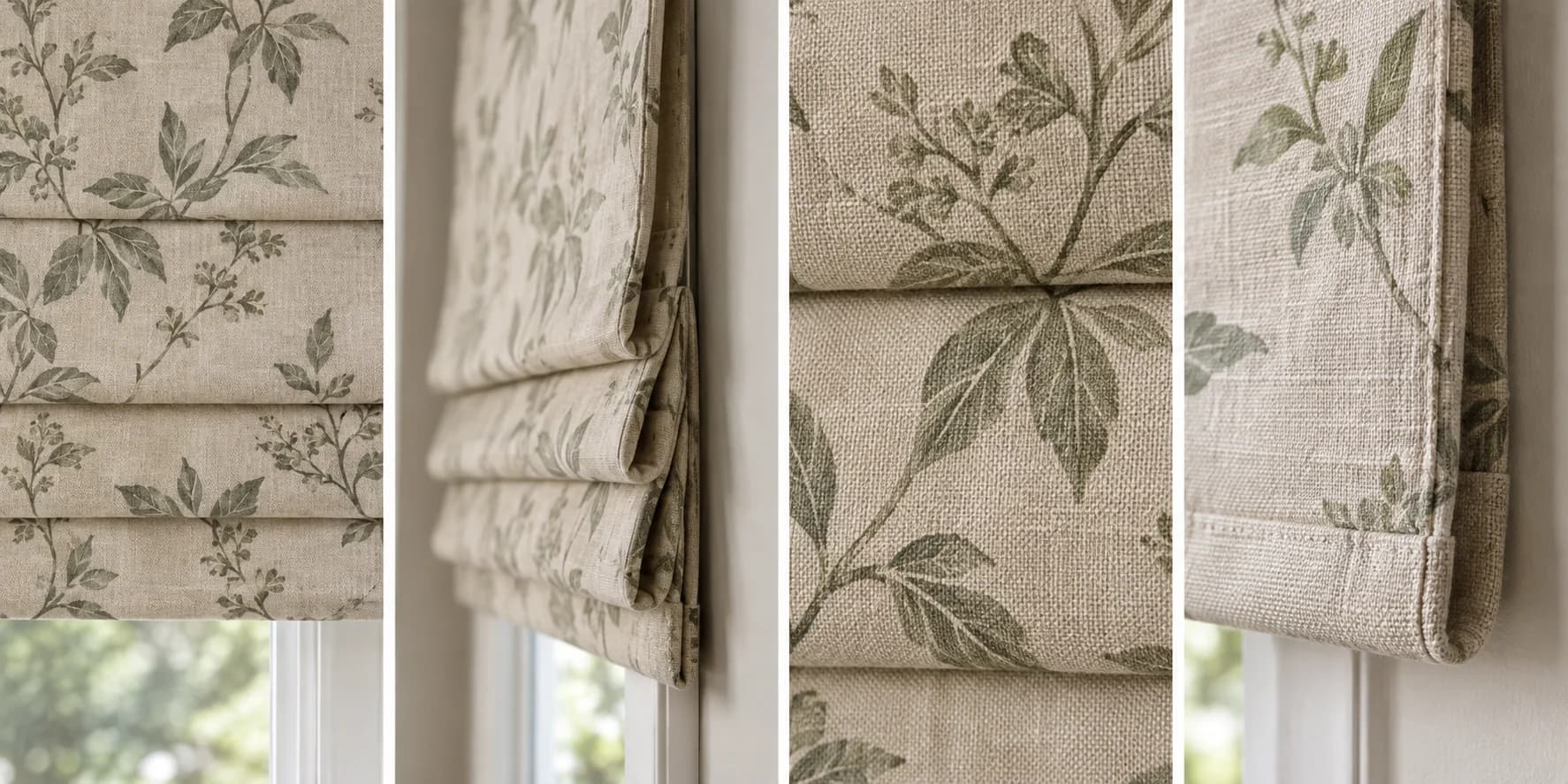
Classic construction is useful where the room benefits from calm geometry and a controlled textile surface.
Professional judgement
Frequently used doors, very wide spans, shallow recesses, awkward handles, limited stack allowance or a demanding room-darkening brief can expose the limits of the format.
In these situations a curtain, roller blind or another Roman construction may be a better answer. A straight profile is valuable only when the blind can move, stack and cover the opening properly.
Made to specification
Fabric, lining, construction, finished dimensions and operation are resolved together before making begins. The blind is not forced around a generic off-the-shelf format.
Fabric and components are narrowed to options that suit the room, the Roman and the proposed dimensions—not simply the sample-book colour.
Availability, measurement and system details are coordinated early. Actual timing is confirmed for the chosen materials and scope rather than advertised as a fixed universal lead time.
Level, mounting height, projection, control position and final adjustment determine whether the installed Roman belongs to the architecture.
Before you specify
Stable furnishing fabrics with enough body to form controlled folds are strong candidates. The weave, stretch, thickness, pattern and proposed lining still need to be assessed together.
Yes. Centre lines, repeat, seam positions and fold lines should be planned before cutting, especially where several blinds share one room.
They can be, but lining and fitting position must be considered with perimeter light paths. Blockout lining controls light through the cloth; it does not seal every edge.
Stack height varies with drop, fold construction, fabric, lining and headrail. It should be drawn against the opening rather than assumed from a universal percentage.
A conversation, then a considered specification
Bring a room image, fabric idea or simply the window. We’ll assess how structure, pattern, lining and proportion can work together before the Classic Roman is made.