Edited selection
Fabric and components are narrowed to options that suit the room, the Roman and the proposed dimensions—not simply the sample-book colour.
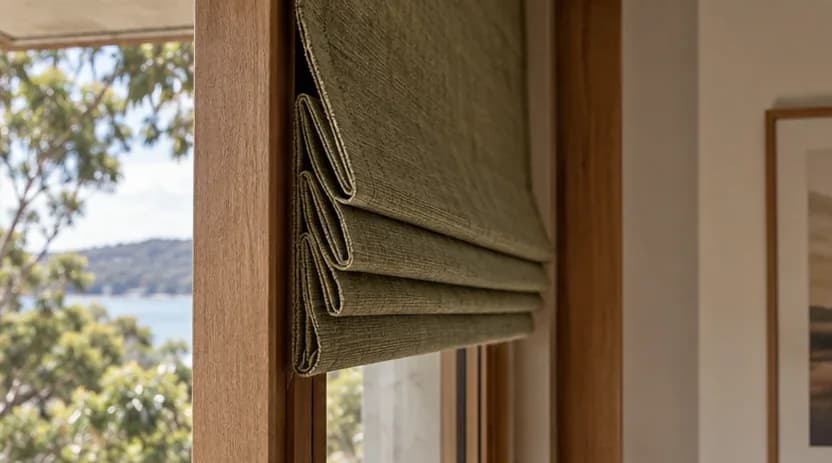
Roman knowledge · Construction
The front is only one view of the blind.
A Roman blind asks the face fabric, lining, support structure and lifting system to move together repeatedly. The quality of the finished blind depends on how those layers are resolved, not simply how the front looks when it is new.
Customer question
The lowered face, part-raised folds, full stack and behaviour after repeated use all belong to the same construction decision. A blind that photographs well only once has not been fully resolved.
One blind, three positions
The face, forming folds and finished stack should all look credible—not only the blind in one photographed position.
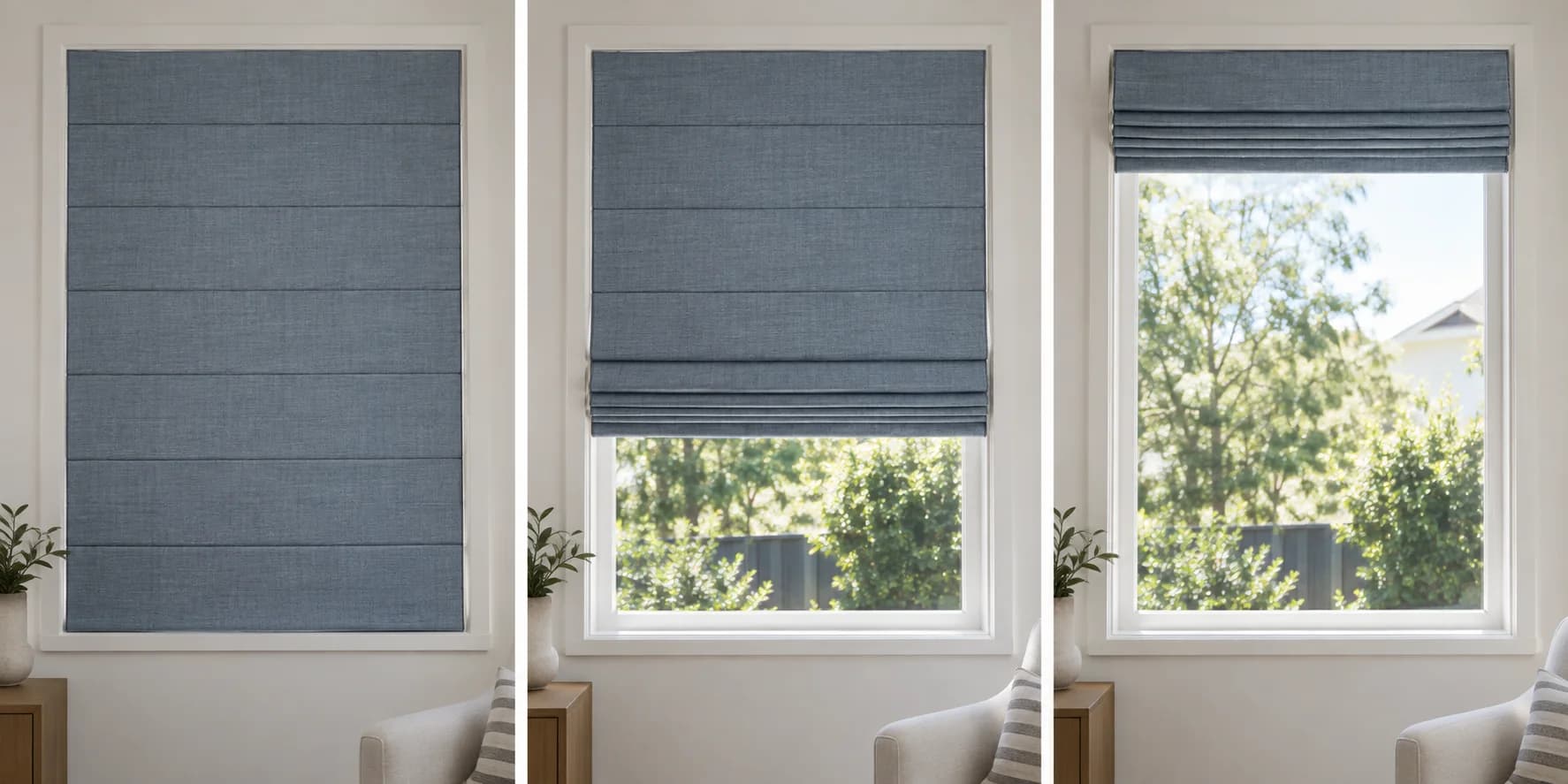
Fold geometry
Fold depth, spacing and consistency are related but not interchangeable. Their proportion changes how the lowered face reads, how the blind moves through the middle of its travel and how much fabric accumulates above the glass.
Support
Depending on the selected make-up, battens, support rods or other approved components help establish horizontal structure. Their spacing, attachment and relationship to the lining can affect shadows, stitching and the way the face settles.
The objective is enough support for repeatable movement without making the blind look mechanically stiff.
The layers change thickness as they turn, and their interaction influences the front appearance, opacity, stack and operating load. A smooth face in one position is not enough; the blind must settle through repeated movement.
Construction evidence
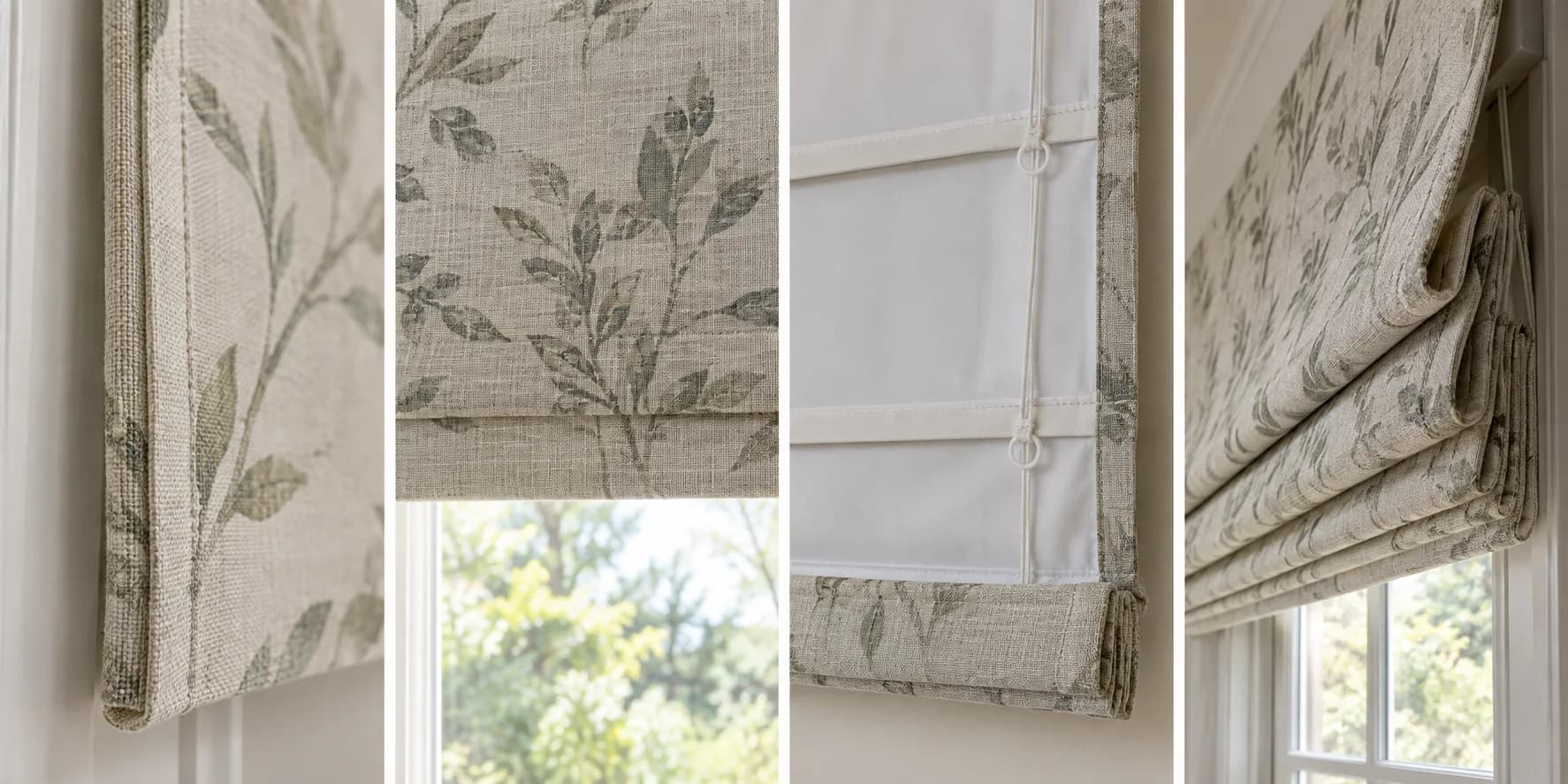
Stack & bottom finish
Raised stack is accumulated fabric, lining and construction—not empty space. The bottom finish helps the blind present and move as intended, but additional weight must be considered within the complete assembly.
Fabric has memory, natural variation and changing thickness across seams or borders. Construction should support the intended fold, while realistic expectations are set for occasional light dressing where a softer textile is chosen.
Professional judgement
Uneven folds, excessive bulk, twisting, unstable fabric, poor alignment and an awkward stack are not solved by adding more decorative language. They point back to fabric behaviour, dimensions, support, lifting positions, load or clearance.
We would reconsider the fabric, construction or treatment where the proposed combination cannot move and settle credibly.
Made to specification
Fabric, lining, construction, finished dimensions and operation are resolved together before making begins. The blind is not forced around a generic off-the-shelf format.
Fabric and components are narrowed to options that suit the room, the Roman and the proposed dimensions—not simply the sample-book colour.
Availability, measurement and system details are coordinated early. Actual timing is confirmed for the chosen materials and scope rather than advertised as a fixed universal lead time.
Level, mounting height, projection, control position and final adjustment determine whether the installed Roman belongs to the architecture.
Before you specify
Style, total drop, fabric, lining and the intended visual rhythm all contribute. One standard fold dimension is not appropriate for every blind.
It remains over part of the window and can affect daylight, views, opening sashes and doors. Its size changes with the complete construction.
A structured Roman should show controlled consistency, while a softer textile may retain natural movement. The agreed style should define what variation is intentional.
External obstruction, fabric instability, alignment, support or lifting-system issues can contribute. Stop forcing the blind and arrange an assessment where the cause is not obvious.
A conversation, then a considered specification
Bring the window, fabric and the way you expect to use it. We’ll work through the fold, support, lining, stack and mechanism before the Roman is made.