Edited selection
Fabric and components are narrowed to options that suit the room, the Roman and the proposed dimensions—not simply the sample-book colour.
Roman Blinds by CCBD
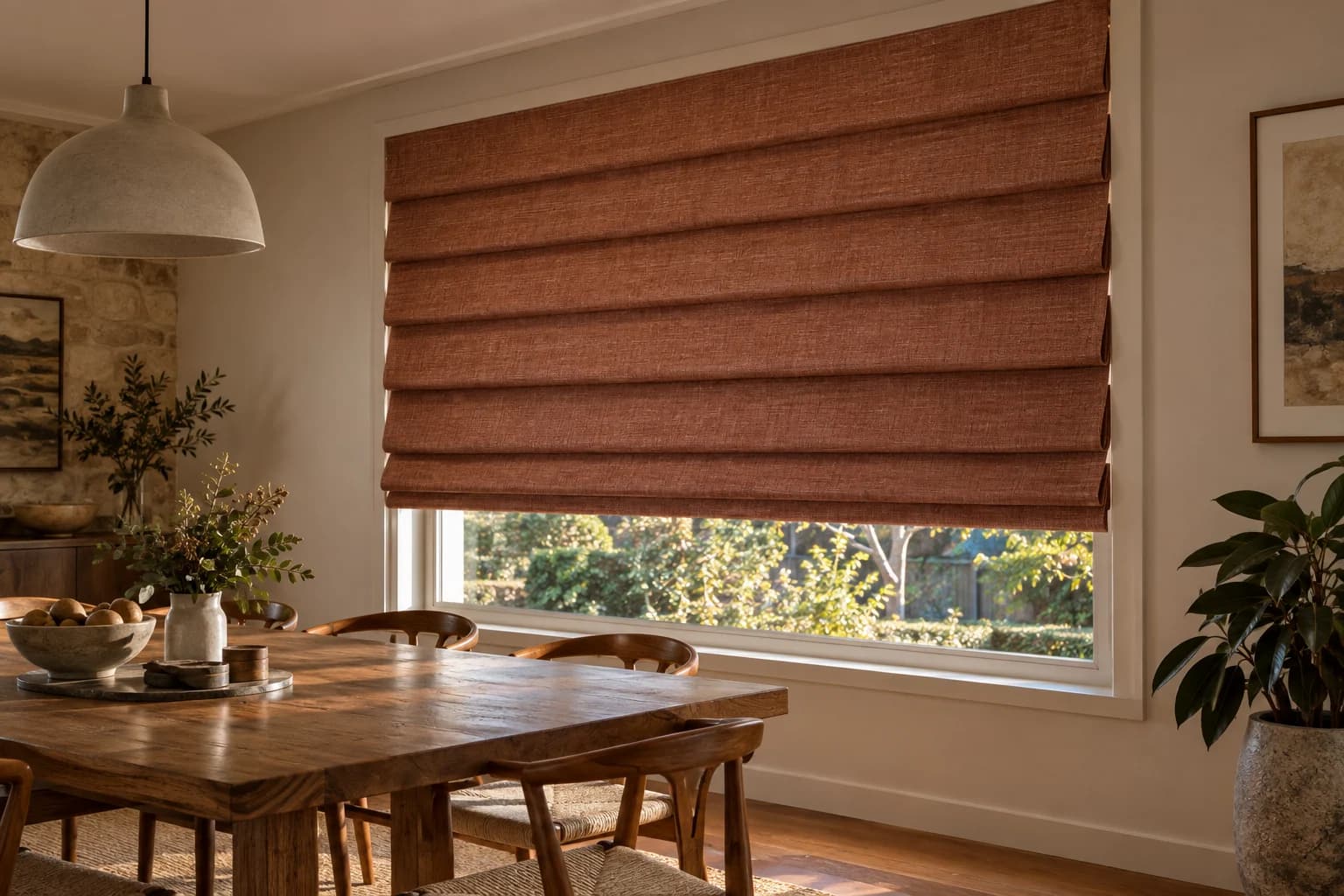
More depth in the fold. More presence at the window.
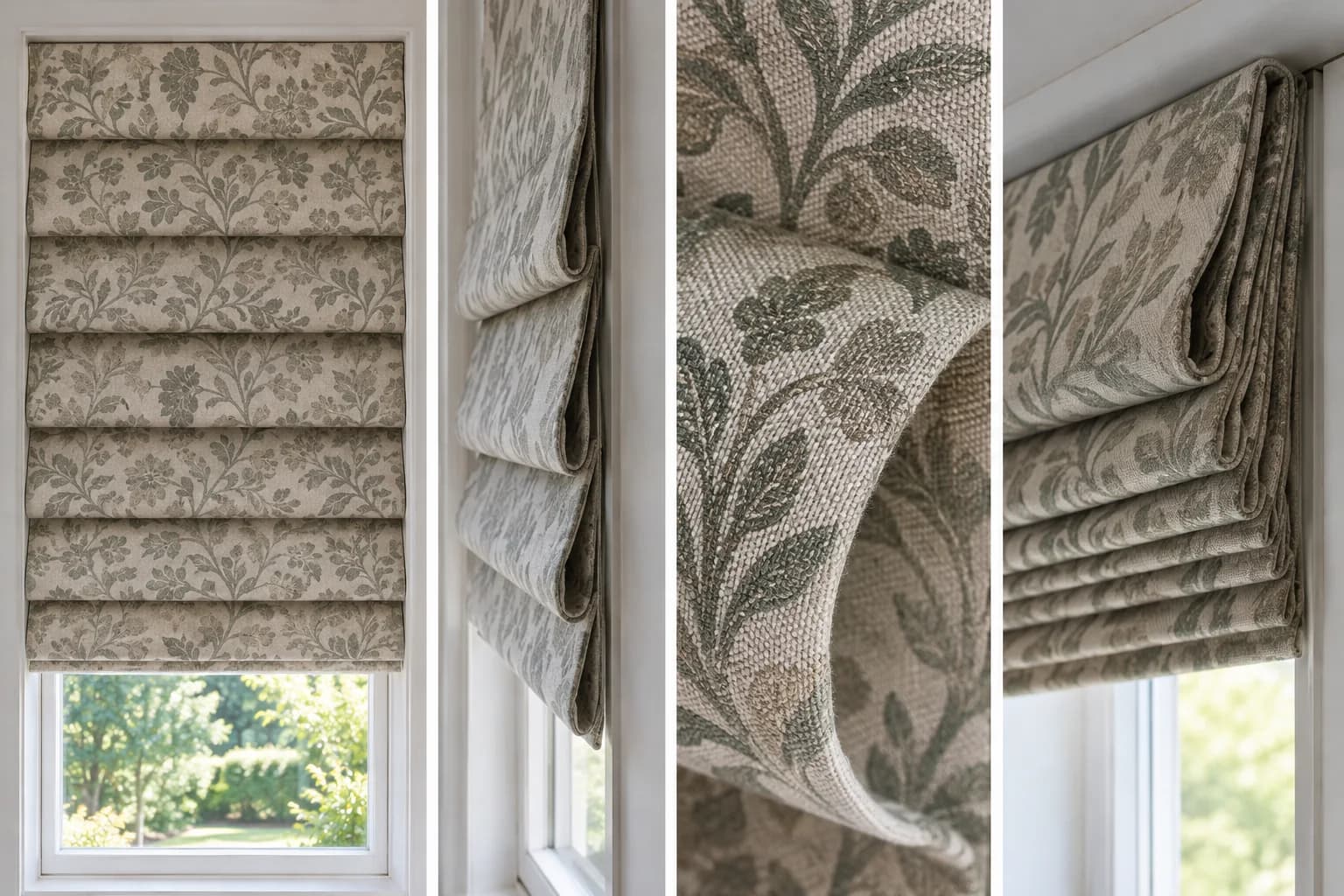
A Waterfall Roman keeps visible fabric depth across the face of the blind, creating a more layered treatment than a flatter Classic Roman. The additional fabric changes both the visual weight and the way the blind stacks.
Customer question
Waterfall folds project into the room and create repeated shadow. They need a compatible fabric, enough surrounding space and an honest allowance for the larger stack when the blind is raised.
Waterfall Roman in the room
Repeated folds create shadow, projection and a larger raised stack. The room needs to support that extra textile presence.
Fold depth
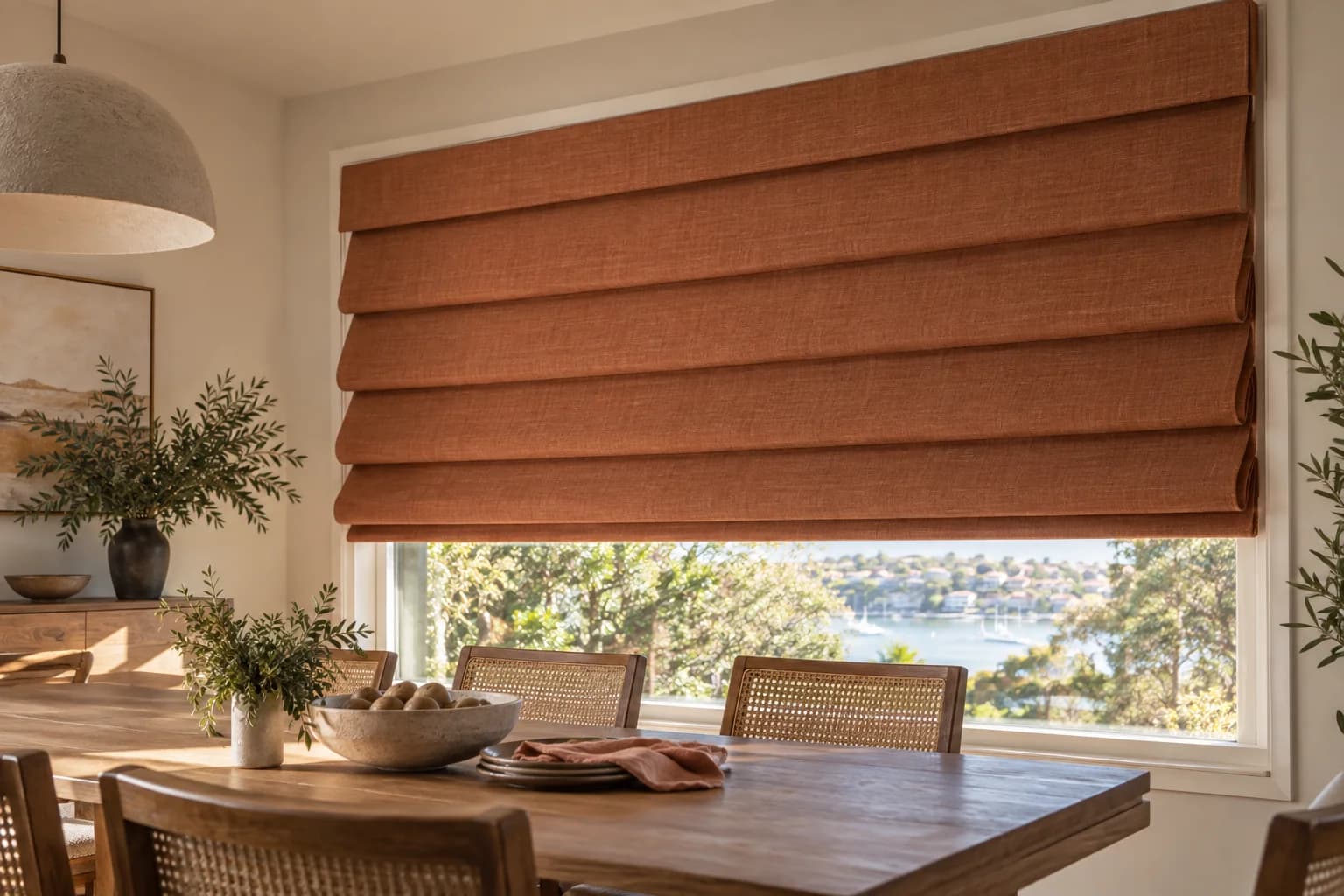
Waterfall construction brings greater visual depth and projection to the window. It also affects fabric use, raised stack, operating load and how close the treatment can sit to surrounding handles, joinery or furniture.
More fabric is not automatically more luxurious. The fold needs enough space around it to look intentional, and its depth has to belong to the window.
Scale and fabric
Pattern & shadow
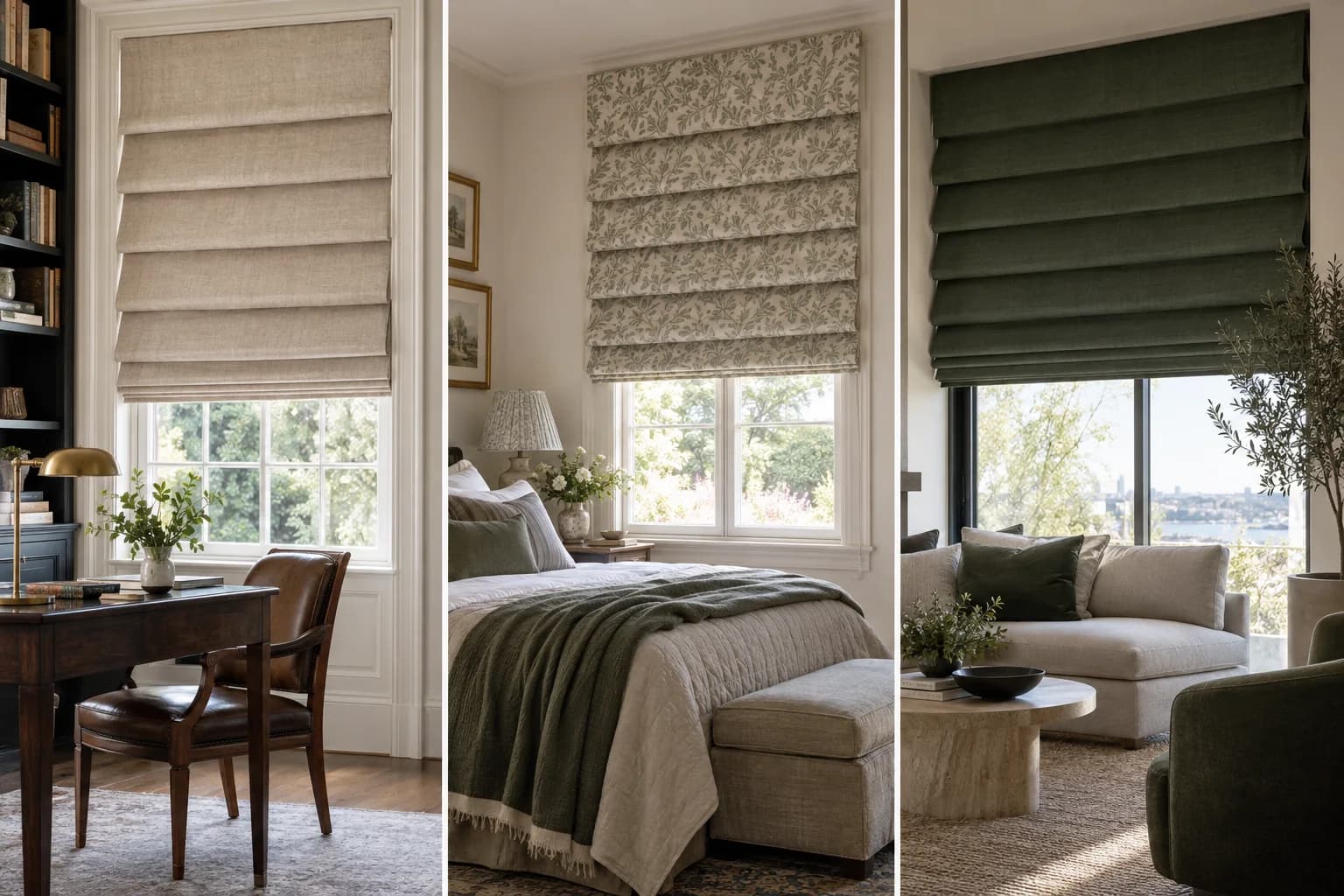
Forward folds create a repeating line of highlight and shadow. A plain or textured fabric can gain depth; a large motif may be repeatedly interrupted. Strong horizontal pattern can either reinforce the rhythm or make the face feel busier than intended.
Review the cloth in the room’s actual light direction. Side light emphasises every projection, while diffuse light can make the same construction appear quieter.
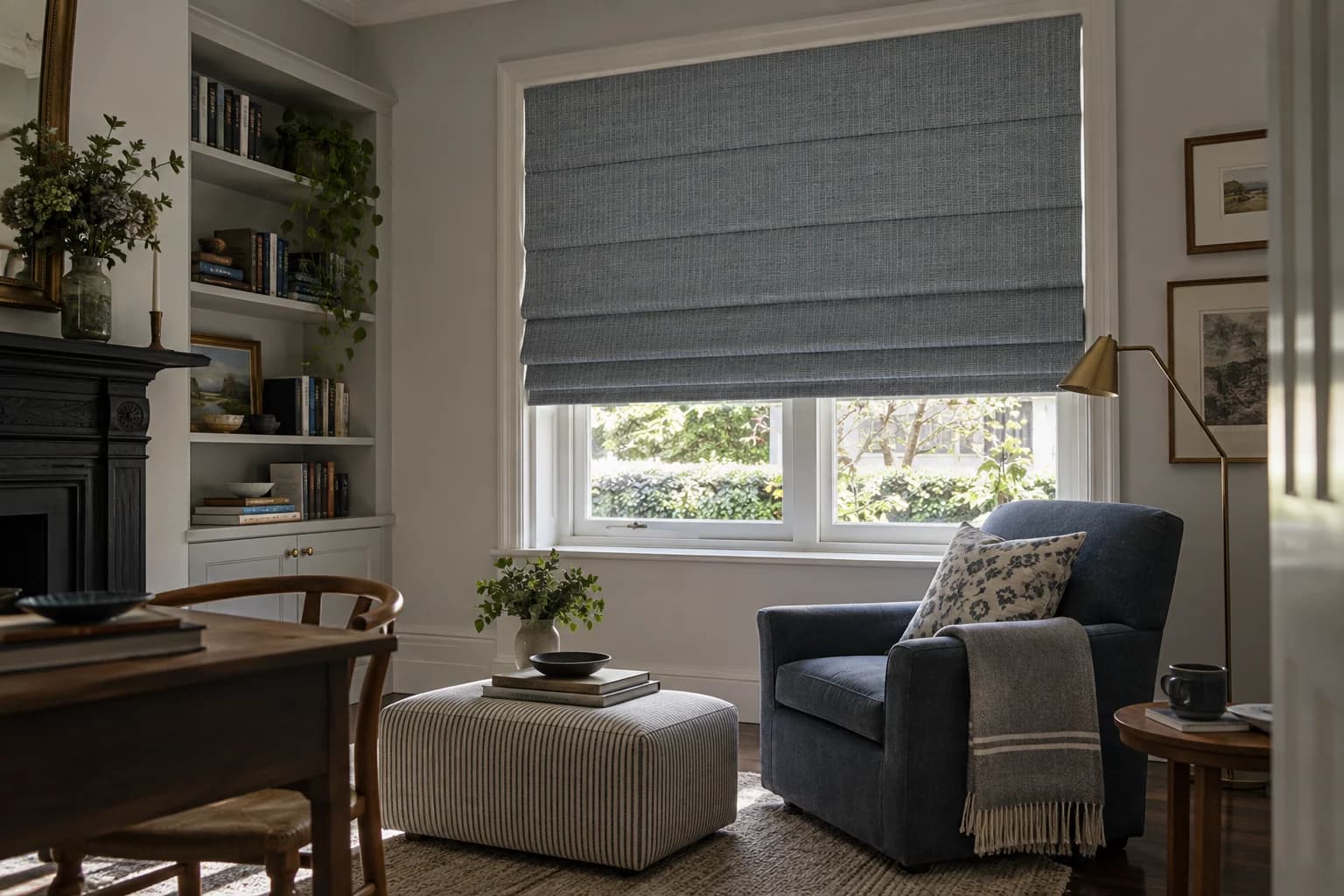
Taller windows, decorative rooms and interiors with enough visual space can support the additional textile presence.
Waterfall detail
Professional judgement
Shallow openings, compact rooms, already decorative interiors, bulky fabrics and limited stack allowance can make the extra depth feel crowded or interfere with operation.
Where the room needs a quieter line, a Classic Roman may be the stronger design decision. Where glass clearance is critical, a roller or curtain may use the opening more efficiently.
Made to specification
Fabric, lining, construction, finished dimensions and operation are resolved together before making begins. The blind is not forced around a generic off-the-shelf format.
Fabric and components are narrowed to options that suit the room, the Roman and the proposed dimensions—not simply the sample-book colour.
Availability, measurement and system details are coordinated early. Actual timing is confirmed for the chosen materials and scope rather than advertised as a fixed universal lead time.
Level, mounting height, projection, control position and final adjustment determine whether the installed Roman belongs to the architecture.
Before you specify
A Waterfall Roman retains visible forward fabric folds across the lowered face, creating more projection and shadow. A Classic Roman reads flatter and more ordered when lowered.
The visible fold depth generally changes fabric consumption and construction. The exact requirement depends on the agreed fold profile, width, drop and making method.
The additional fabric and projection can increase the raised stack. It should be assessed with the chosen fabric and window rather than assumed from the style name.
Rooms with enough scale and visual calm to carry additional textile depth are strong candidates. Small or already highly detailed rooms may suit a quieter treatment.
A conversation, then a considered specification
Bring the window and a fabric direction. We’ll work through fold depth, shadow, stack and scale before deciding whether a Waterfall Roman belongs in the room.