Understand
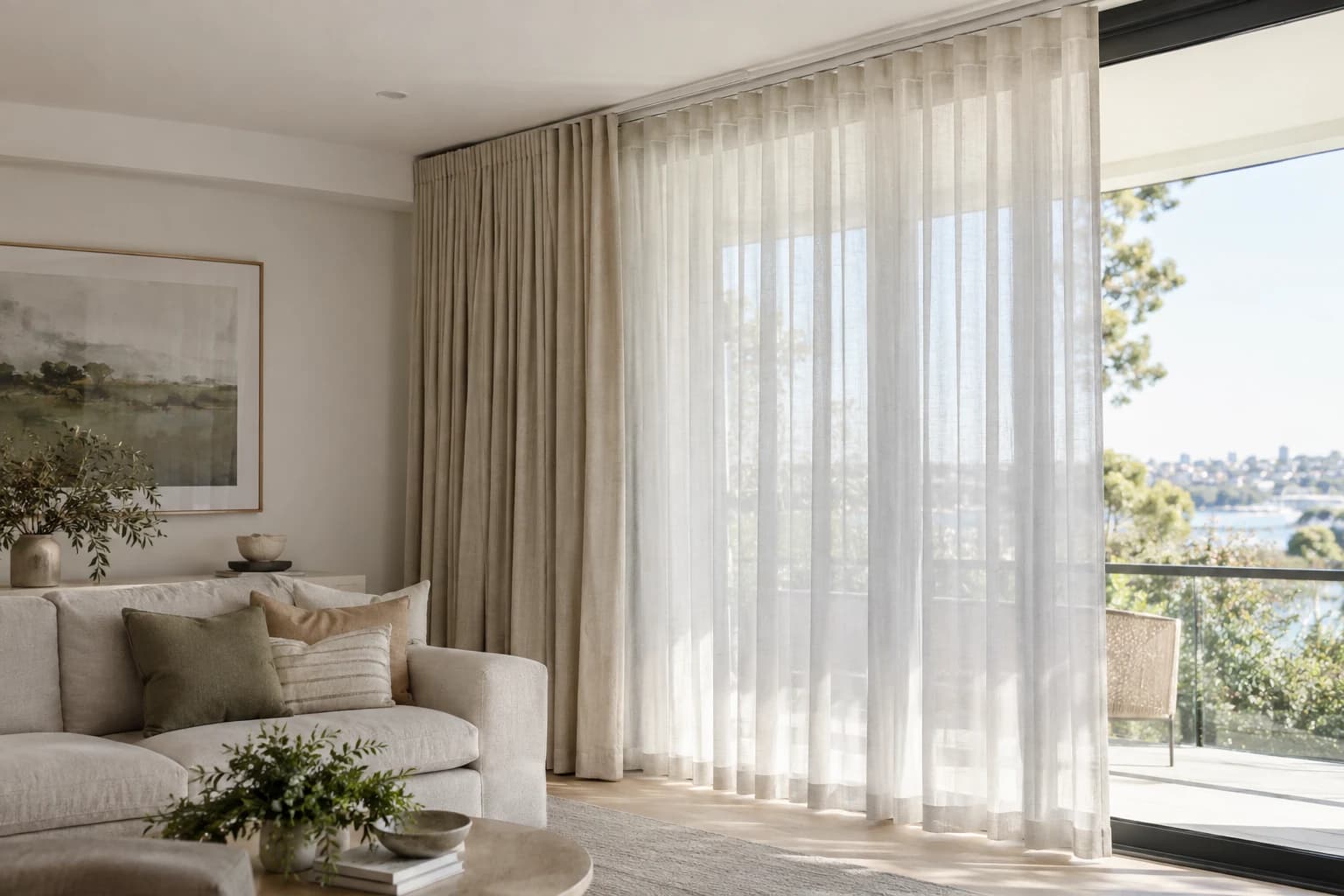
Light, privacy, outlook, orientation, architecture, furniture and daily use are considered before product selection.
THE CCBD APPROACH
A good specification begins with the room, the opening and everyday use. Product selection follows that understanding — not the other way around.
CORE PROCESS
Light, privacy, outlook, orientation, architecture, furniture and daily use are considered before product selection.
Determine whether the window is better resolved with a curtain, Roman blind, blind, shutter or layered treatment.
Fabric, lining, hardware, motorisation, proportions, fixing and installation are considered together.
The approved treatment is produced according to the final specification and construction requirements.
Professional installation and final adjustment complete the treatment in relation to the actual window and room.
PROFESSIONAL JUDGEMENT
Something fitting into a measured opening does not automatically make it a well-resolved treatment. We consider how the product will look, move, load the hardware and behave over time.
A Roman blind may technically fit a very wide opening but still be a poor design or operational choice.
A blockout fabric may stop light through the material but still allow significant perimeter light into a bedroom.
A motor may physically operate a treatment, but weight, power, access, fixing and servicing still need one coordinated specification.
A beautiful sample may behave poorly once made into a large Roman blind or exposed to strong sunlight.
A CRAFT WE KNOW DEEPLY
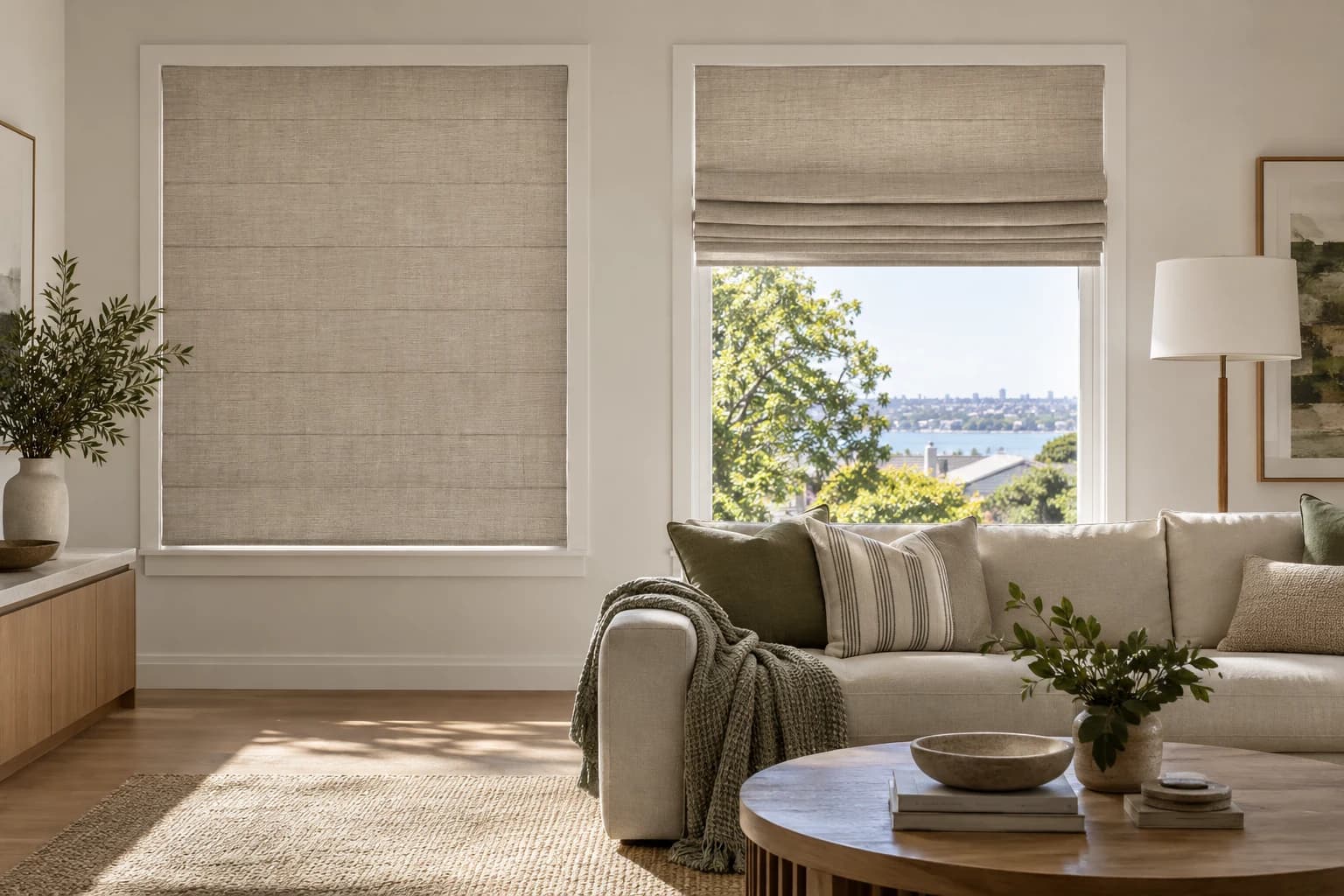
Roman blinds bring together many of the disciplines that define CCBD — fabric judgement, lining, dimensional stability, proportion, fold construction, pattern placement, headrail selection, operation and installation.
They are one of the clearest examples of why a made-to-measure treatment needs to be designed before it is made.
Explore Roman Blinds by CCBDWHOLE HOME
A home rarely needs the same treatment at every window. A living room may suit sheers, a bedroom may need stronger room darkening, a study may call for a Roman blind and a large opening may benefit from motorisation.
CCBD can coordinate these decisions so each room functions properly while the home still feels visually connected.
Explore Whole Home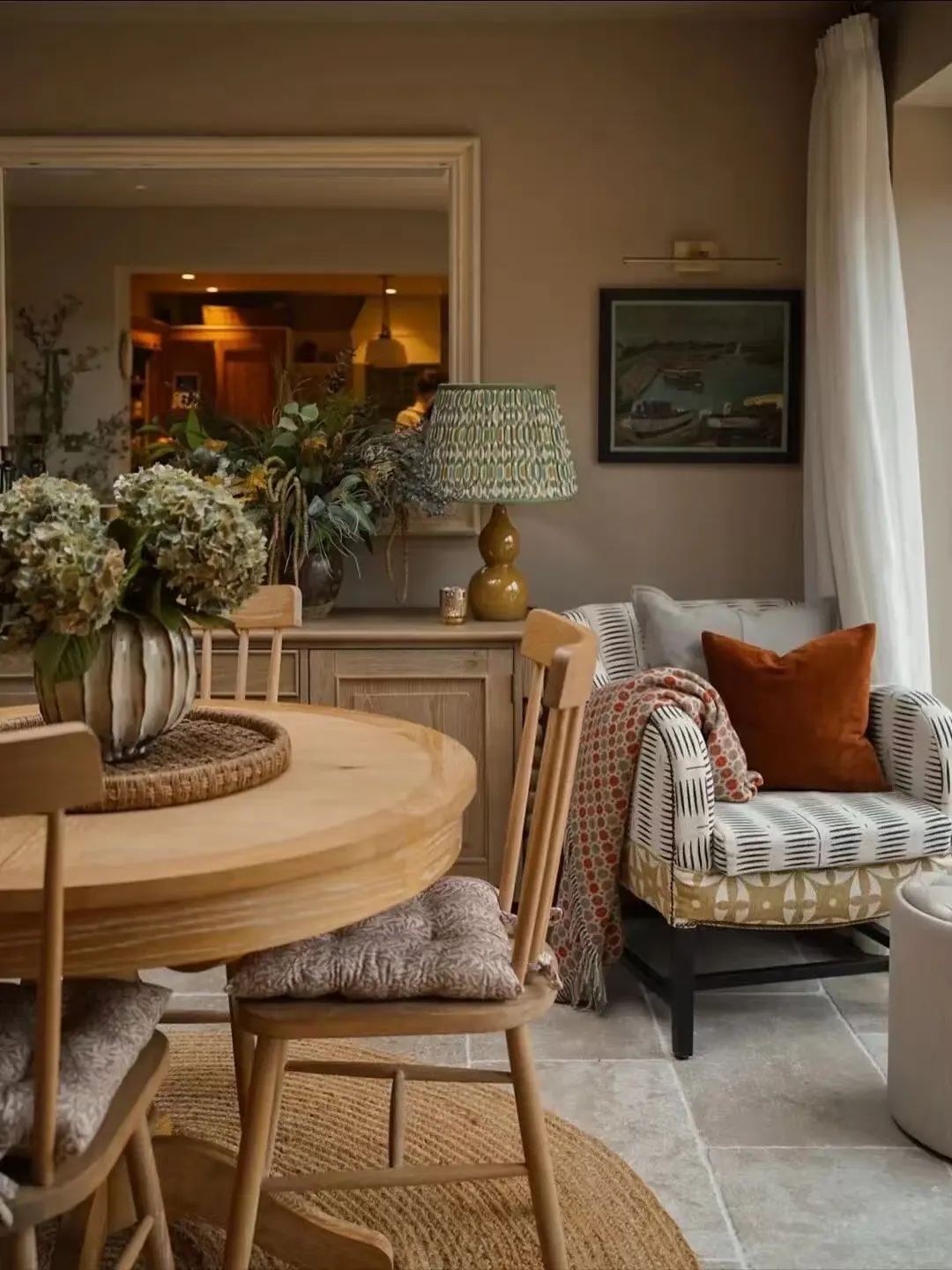
REAL-LIFE CONDITIONS
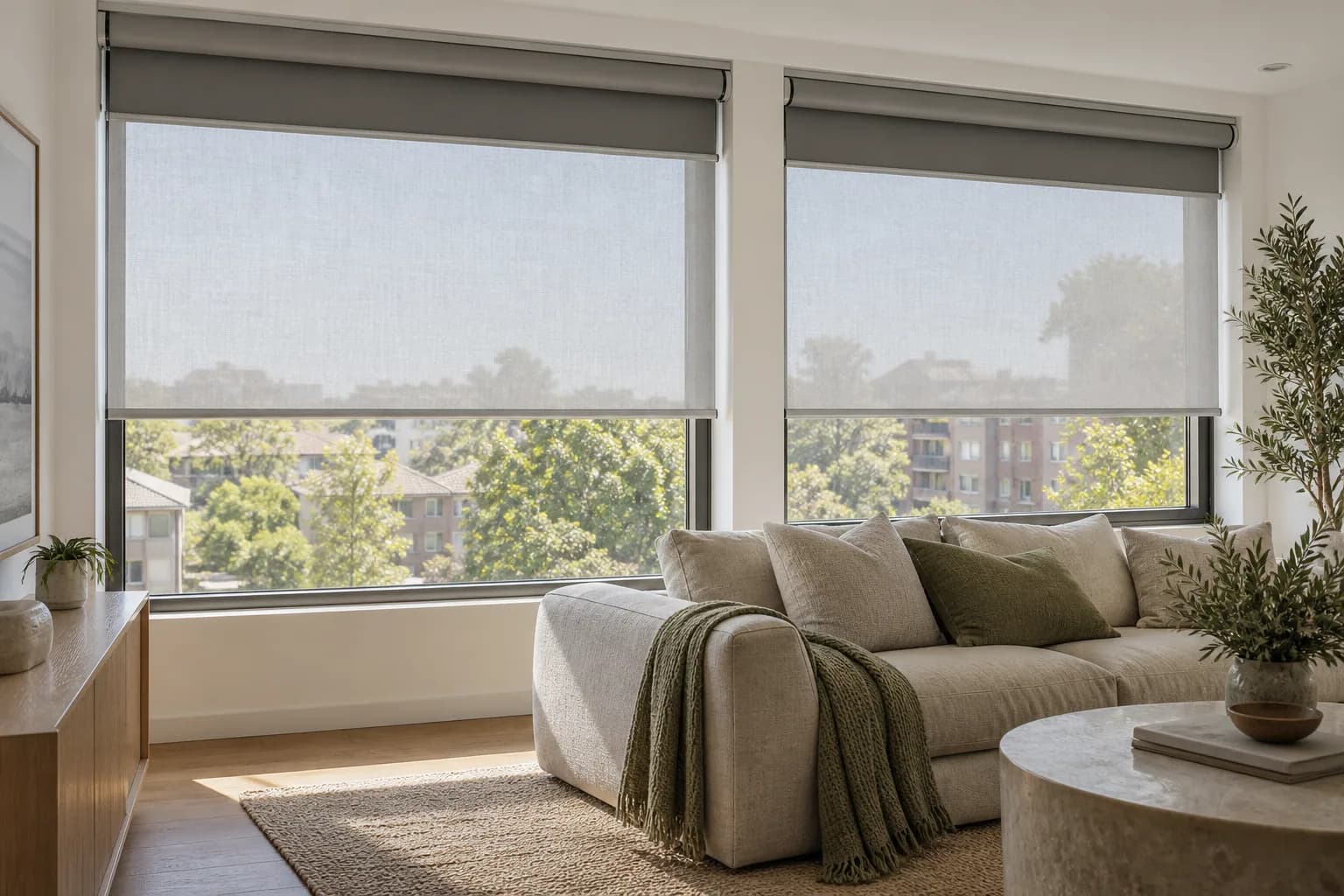
Orientation, glazing, fabric colour, lining and exposure all influence how a treatment performs and ages. West-facing windows, northern exposure and large glazing need to be assessed at the actual room.
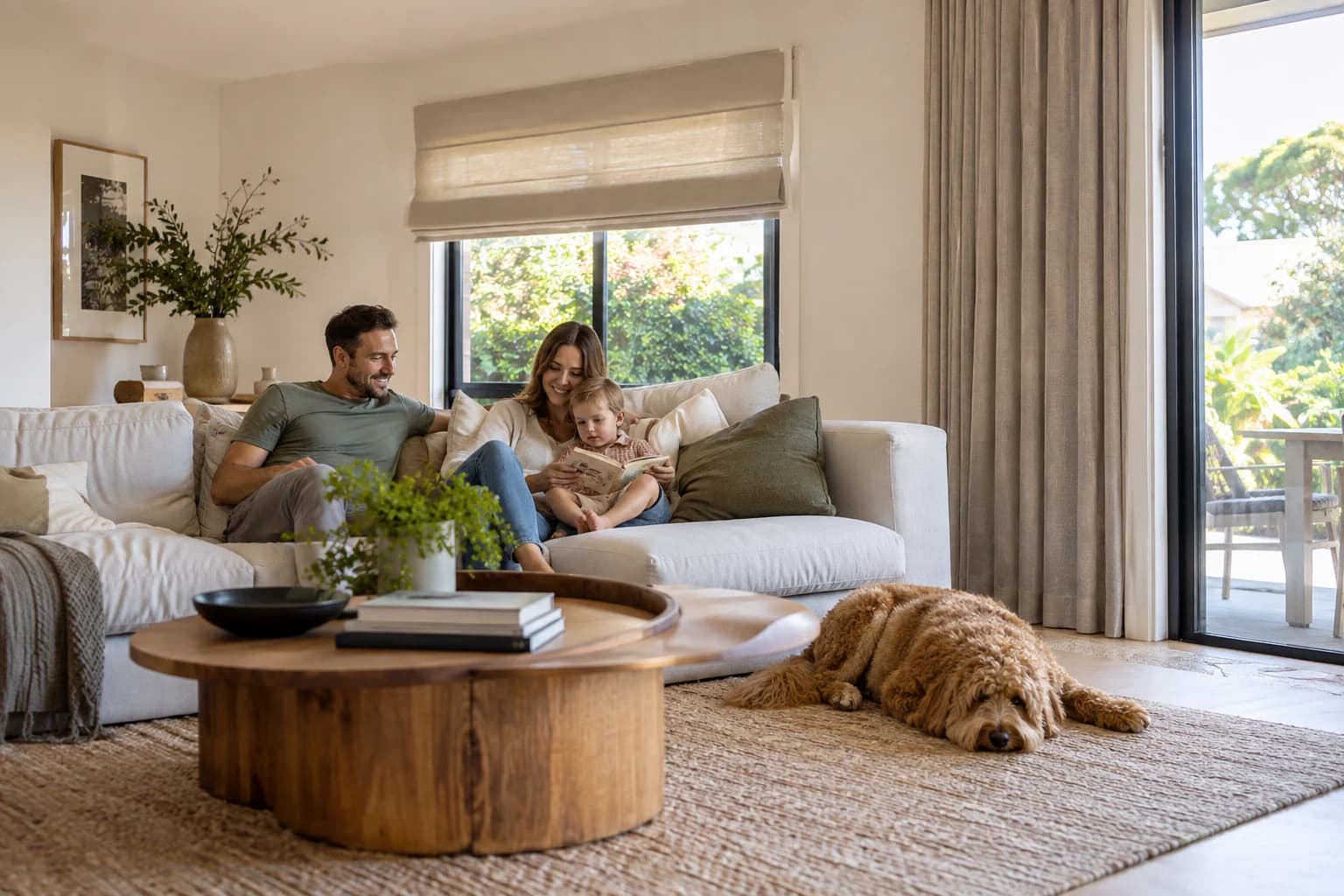
Snagging, claws, low-level contact, sliding-door access and cleaning can change which fabric or treatment makes sense. No furnishing should be described as pet-proof without specific evidence.
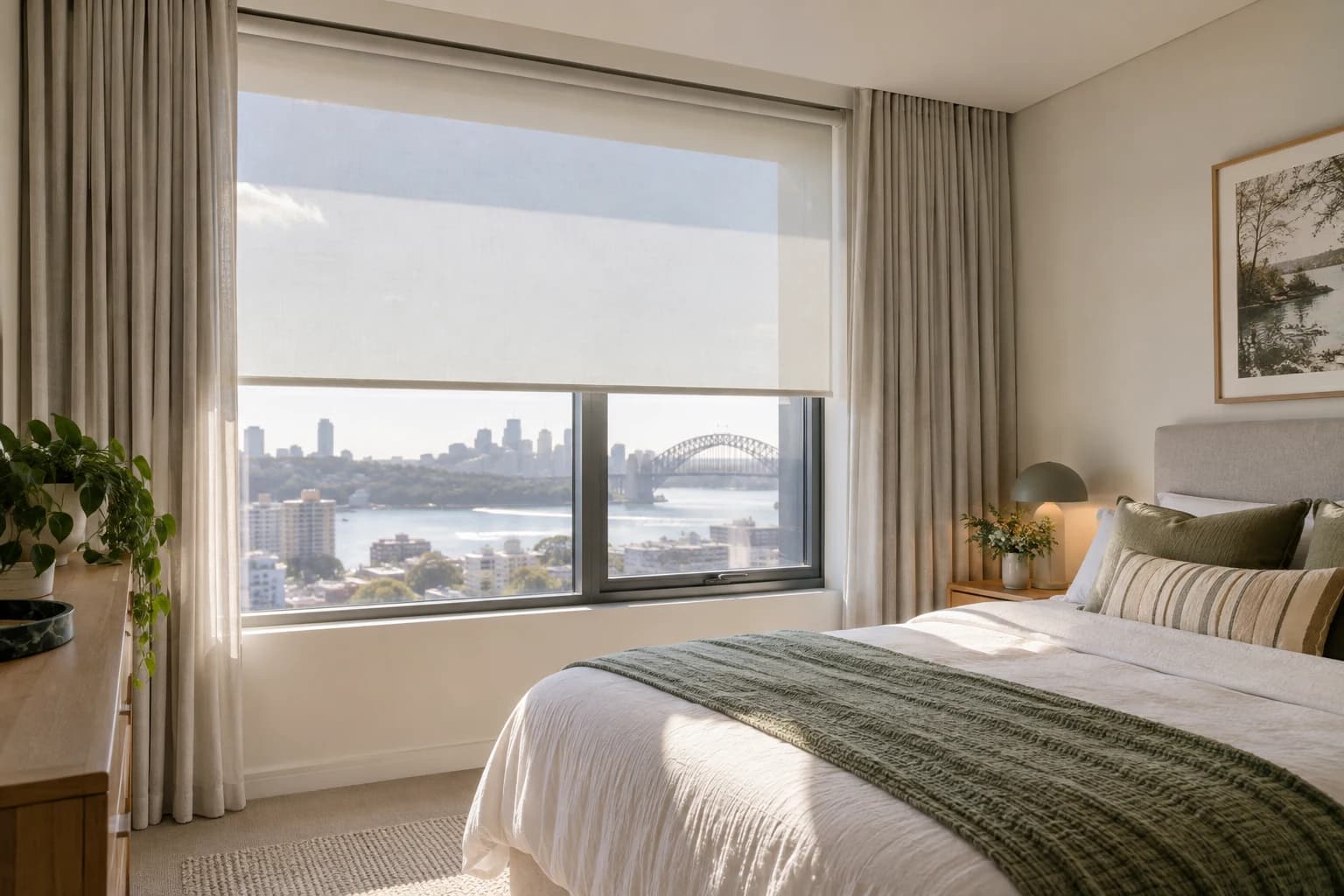
Strong room darkening depends on the face fabric, lining, fitting position, overlap and perimeter light paths — not an opaque swatch alone.
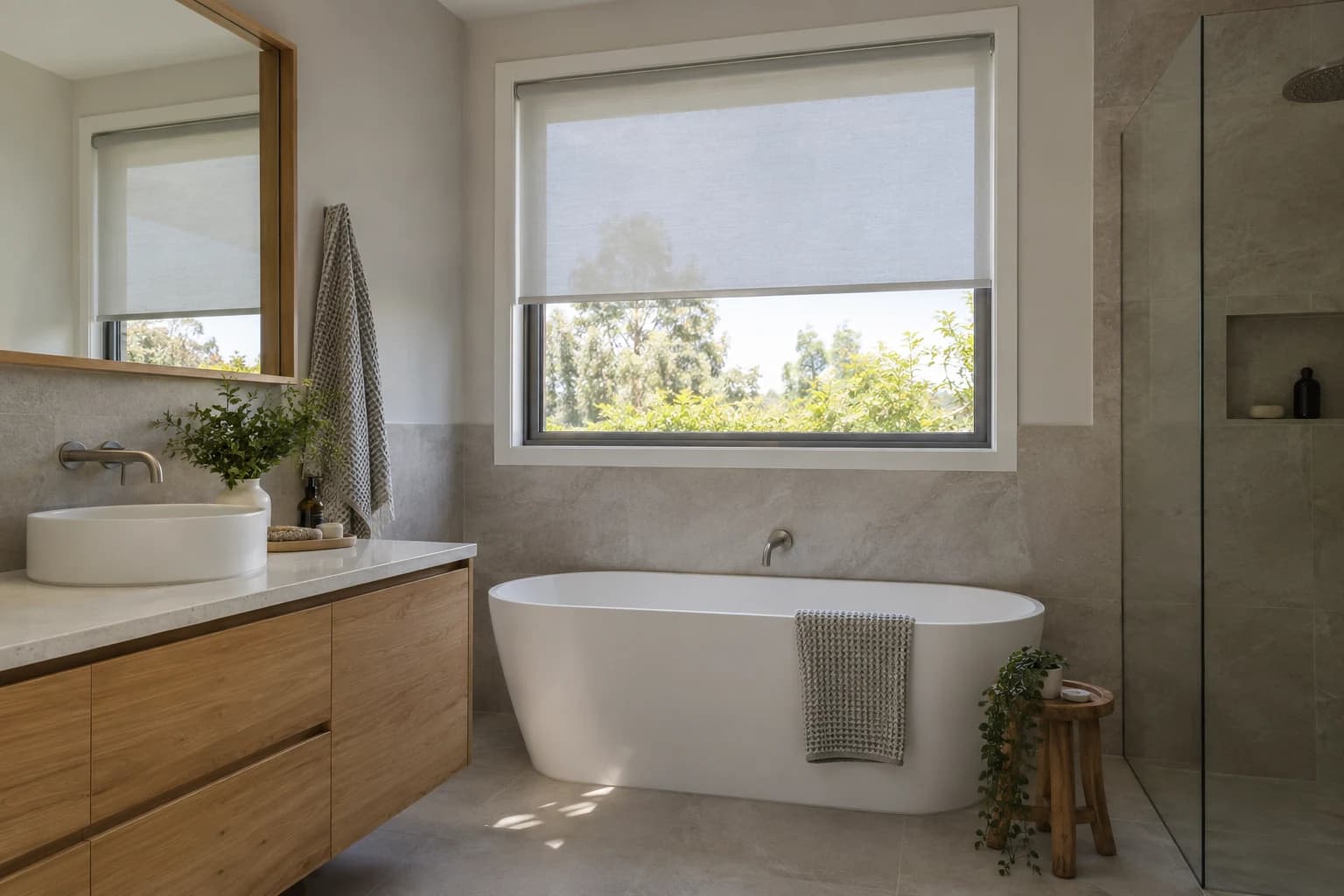
Moisture, grease, cleaning and material stability can matter more here than in a quiet living room. Suitability depends on the selected material and its actual exposure.
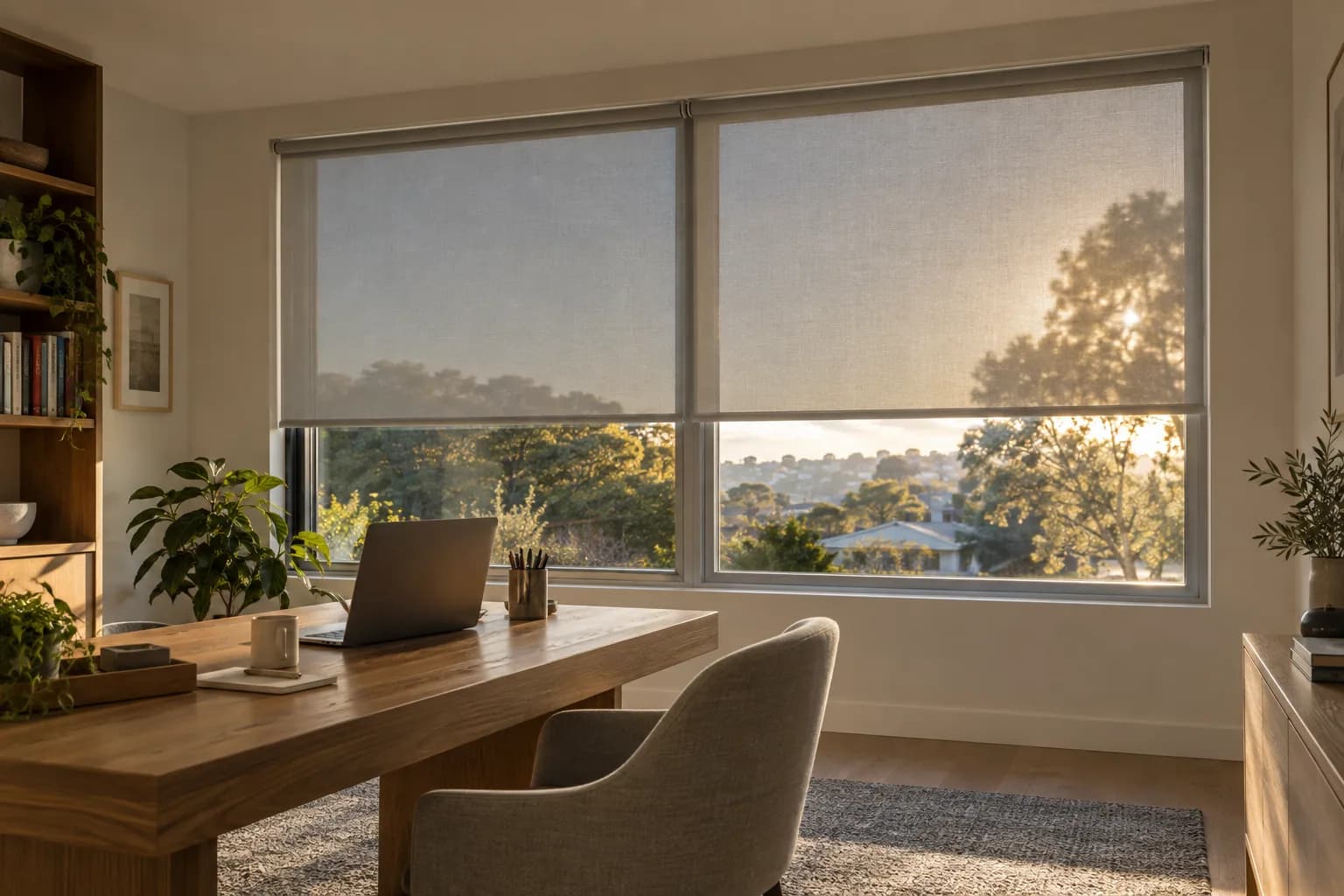
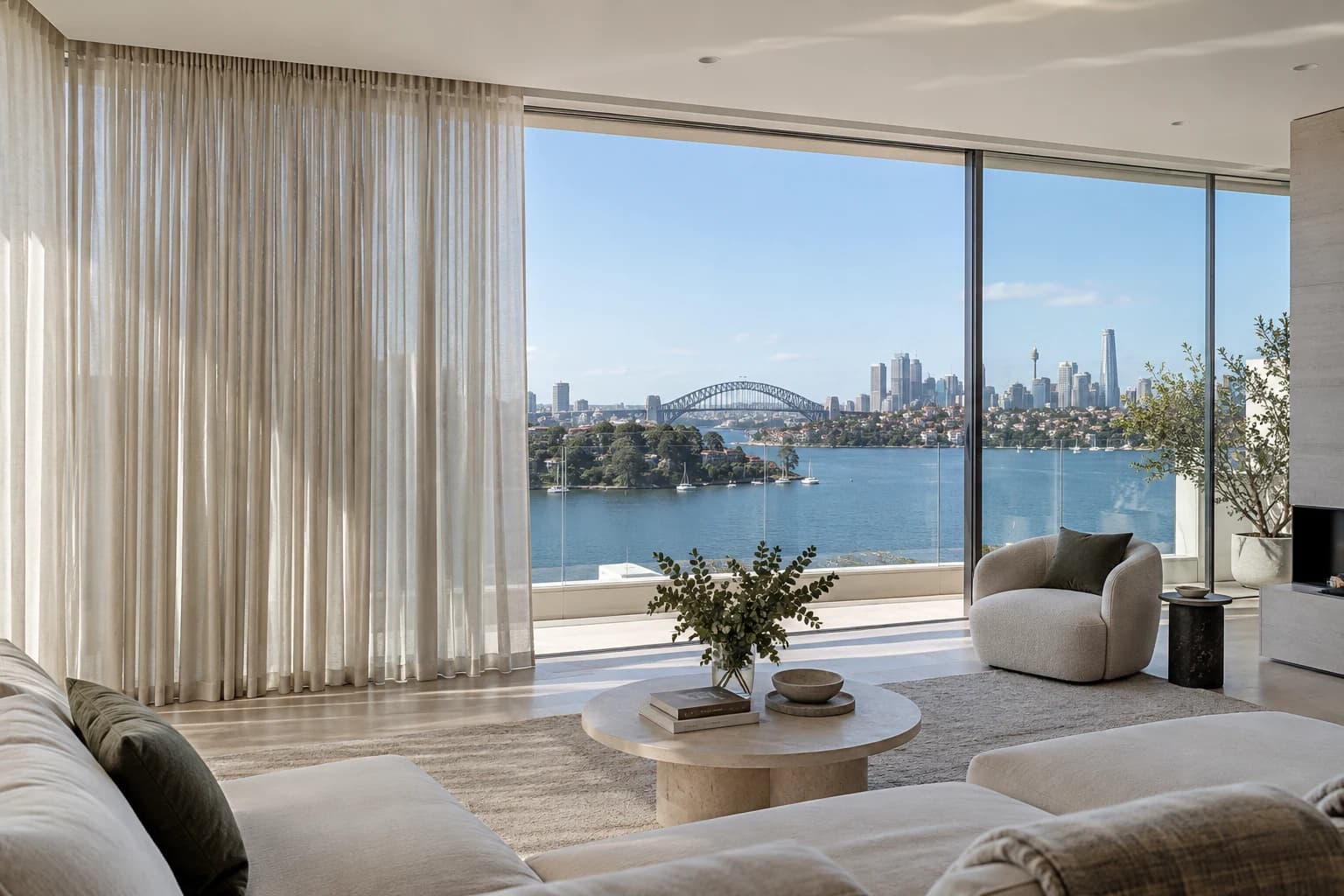
Large spans and drops change track loads, stack-back, fixing, treatment weight, motorisation and daily operation. More glass does not simply mean more fabric.
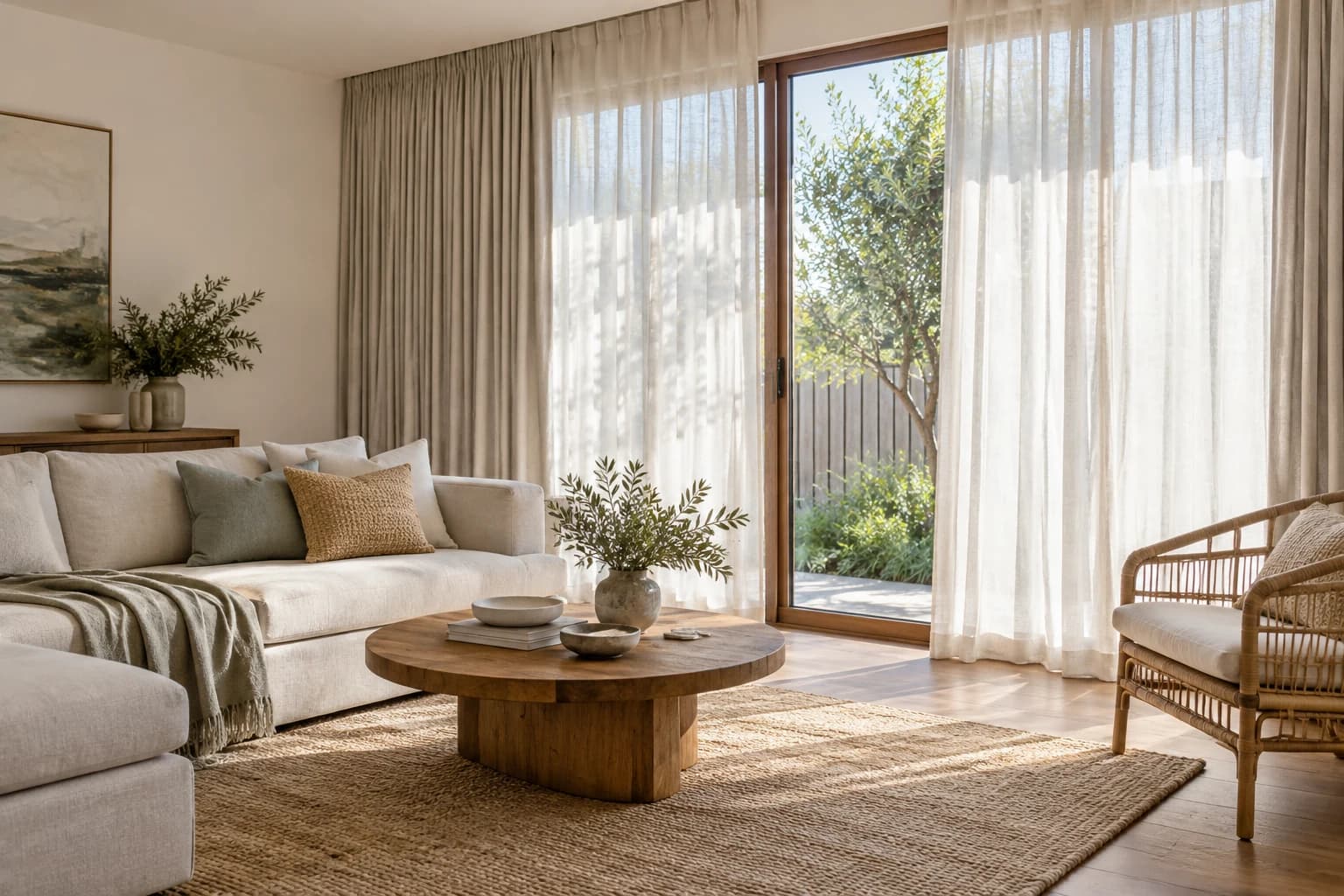
Salt-laden air, humidity and strong exposure can influence material, finish and hardware selection across the Northern Beaches, Eastern Suburbs and other coastal Sydney locations.
MOTORISATION
Motorisation is most useful where it solves a real operational problem — large or high windows, frequently used treatments, multiple rooms or projects where coordinated control matters.
The treatment, finished weight, motor, power, control method, fixing and service access should be considered together. A particular motor or integration is only specified after its compatibility with the actual system is confirmed.
START WITH THE ROOM
You do not need to choose the product first. Tell us what the room needs to do and we can work through light, privacy, fabric, operation, construction and installation in the right order.
Arrange an in-home measure and quote.
Talk with us about fabrics, styles, light, privacy and planning your window furnishings.