Roller blinds, simple by design and precise in specification.
Custom roller blinds, measured around the room rather than treated as one standard product.
A roller blind is visually quiet, compact and practical. Its performance, however, depends on decisions that are easy to underestimate: fabric openness, colour, roll direction, mounting position, edge gaps, window hardware and the way the room changes from day to night.
What is the difference between sunscreen and blockout roller fabrics?
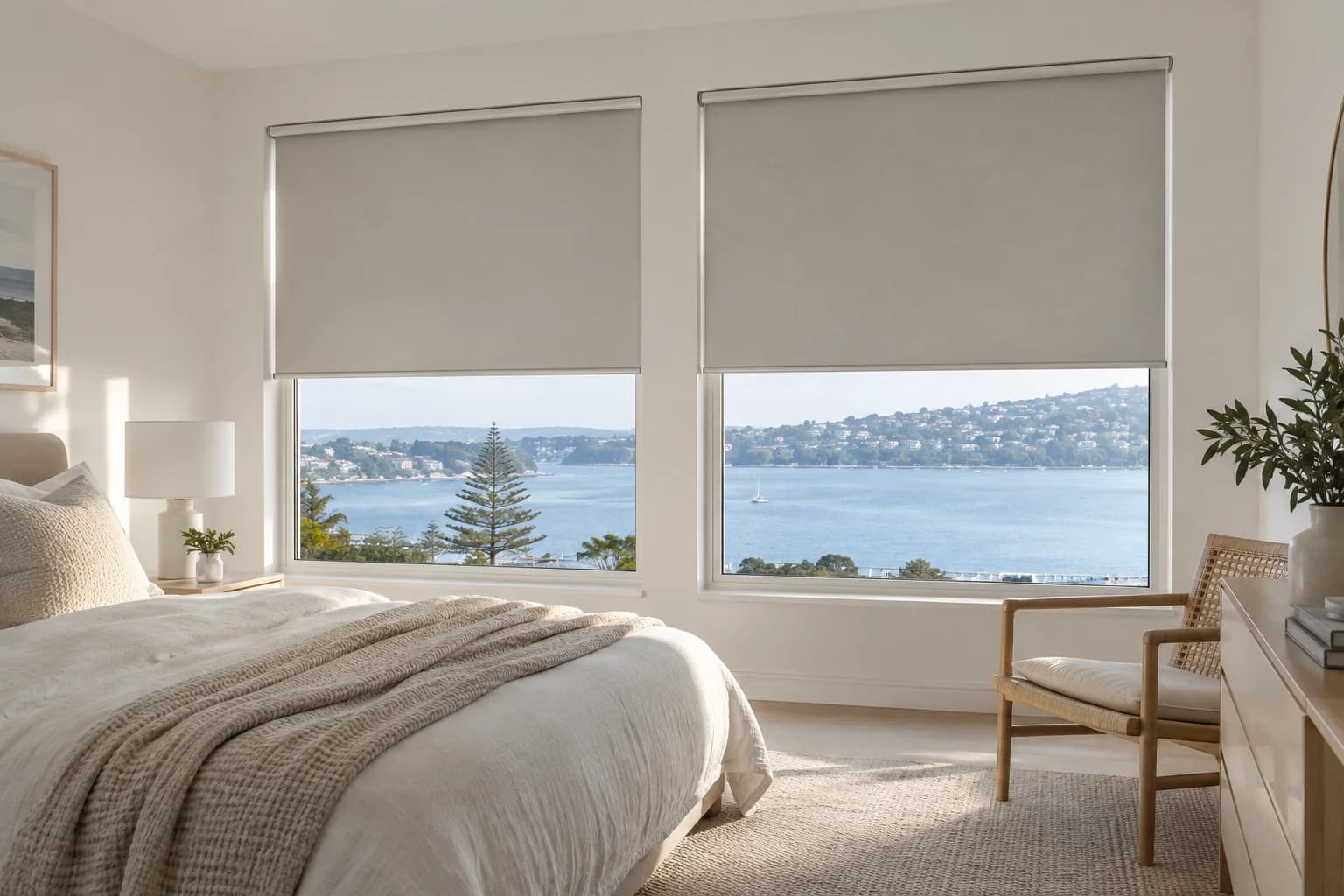
Sunscreen roller fabric reduces glare and preserves some daytime outlook, but it does not provide dependable privacy after dark when interior lighting is brighter than outside. Blockout fabric prevents light passing through its face and presents an opaque privacy layer.
Neither fabric description explains the whole installation. Side gaps, tube position, fit, glazing orientation and night-time use still matter. A double roller can combine separate daytime and evening layers where there is enough depth and clear operating space.
Should a roller blind be fitted inside or outside the recess?
A recess fit keeps the blind within the opening but needs sufficient depth and clearance from handles and opening sashes. Because the cloth is narrower than the brackets and control hardware, visible side gaps usually remain.
A face fit can add overlap and move the blind clear of some obstructions, but it projects into the room and needs a suitable fixing surface. CCBD measures the actual opening before deciding which fit better serves privacy, light control and window access.
Can a roller blind provide complete bedroom darkness?
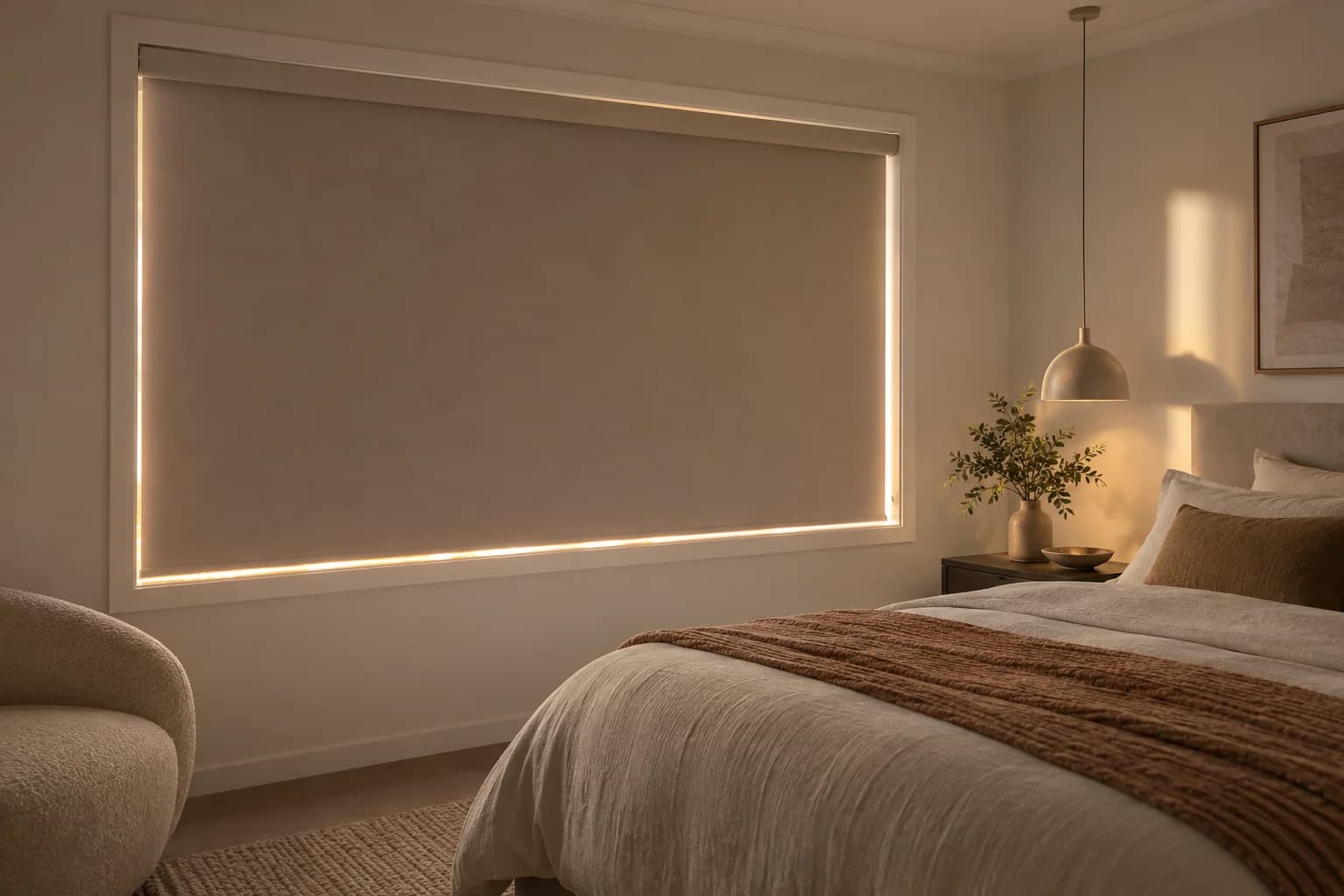
A conventional blockout roller improves room darkening but does not normally create complete darkness. Light can remain beside the cloth, above the tube, below the bottom rail or between adjacent blinds because the moving system requires clearance.
Greater overlap, selected side channels, a cassette or a layered curtain may reduce particular light paths. The appropriate construction depends on whether the room needs ordinary night privacy, daytime sleep or a more controlled media environment.
Strong Australian sun asks more of a roller blind.
Strong sun, west-facing glass and heat behind glazing can place considerable demands on a roller blind.
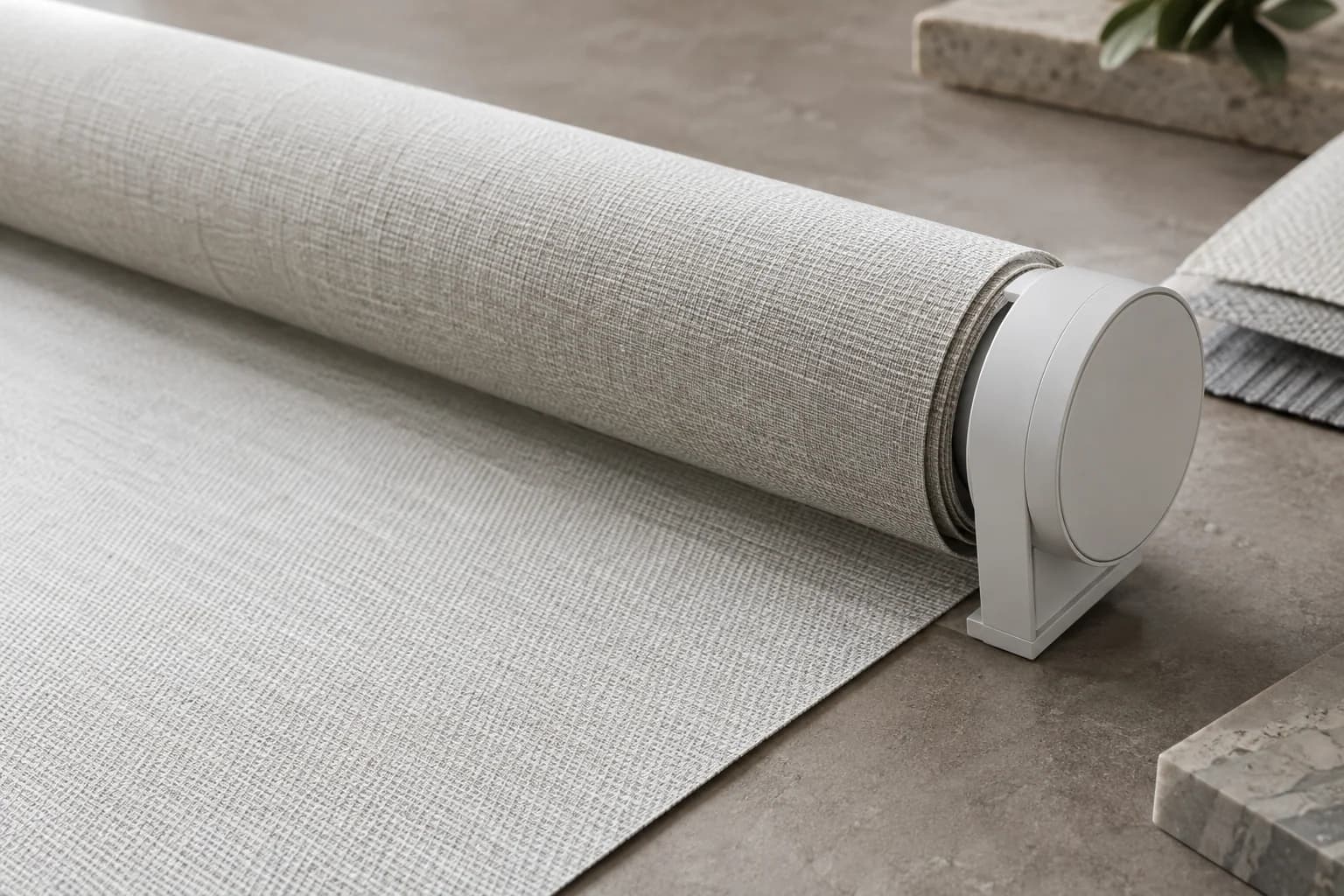
For these applications, CCBD can compare selected performance fabrics around dimensional stability, light control and everyday operation. Composition, usable width and supporting test documents are confirmed for the exact range before order.
We select the fabric around the window—its orientation, size, exposure and required light control—rather than specifying the same material throughout the home.
Fibreglass constructionConfirm for the selected range
A stable structural foundation suited to demanding roller blind applications.
Substantial constructionWeight varies by fabric
Selected coated fabrics provide a substantial, stable blackout construction.
Large windowsUsable width must be checked
Wider fibreglass options provide greater flexibility for larger residential glazing.
Selected ranges include tested colourfastness, flammability, anti-fungal and low-emission credentials.
View Fabric Performance & Specifications +
Composition and fibreglass content
[CCBD TECHNICAL DATA REQUIRED]
Weight and thickness
[CCBD TECHNICAL DATA REQUIRED]
Usable width
[CCBD TECHNICAL DATA REQUIRED]
Colourfastness and UV information
[CCBD TECHNICAL DATA REQUIRED]
Flammability documentation
[CCBD TECHNICAL DATA REQUIRED]
Environmental or low-emission certification
[CCBD TECHNICAL DATA REQUIRED]
Current manufacturer documentation must be confirmed for the selected supplied product before order. A component claim should not be interpreted as a guarantee of unlimited fabric life behind exposed glazing.
The specification changes with the window
A smaller strongly exposed window may call for a different fabric from a wide living-room opening. CCBD considers window size, orientation, sun exposure, light control and finished appearance before recommending the fabric. The origin and detailed specification remain available for customers who want to investigate further.
Start with the decision
What do you need this window to do?
Can I keep the view and reduce glare?
A sunscreen fabric can help during daylight, but colour, weave and the sun angle change both glare and view-through.
Will it give me privacy at night?
Do not rely on sunscreen after dark. When the room is brighter than outside, a separate opaque layer is usually needed.
Should it sit inside the recess?
Only if depth, handles and the acceptable side gaps support it. Face fitting may provide better overlap.
What if the opening is very wide?
Blind divisions, tube strength, fabric width and door access should be resolved before choosing a single span.
Choose the fabric for the job
Three fabrics. Three different jobs.
Opacity is not a quality ladder. Sunscreen, light-filtering and blockout fabrics solve different problems, and a room may need more than one layer across the day.
Sunscreen
Keep useful daylight and a degree of outlook.
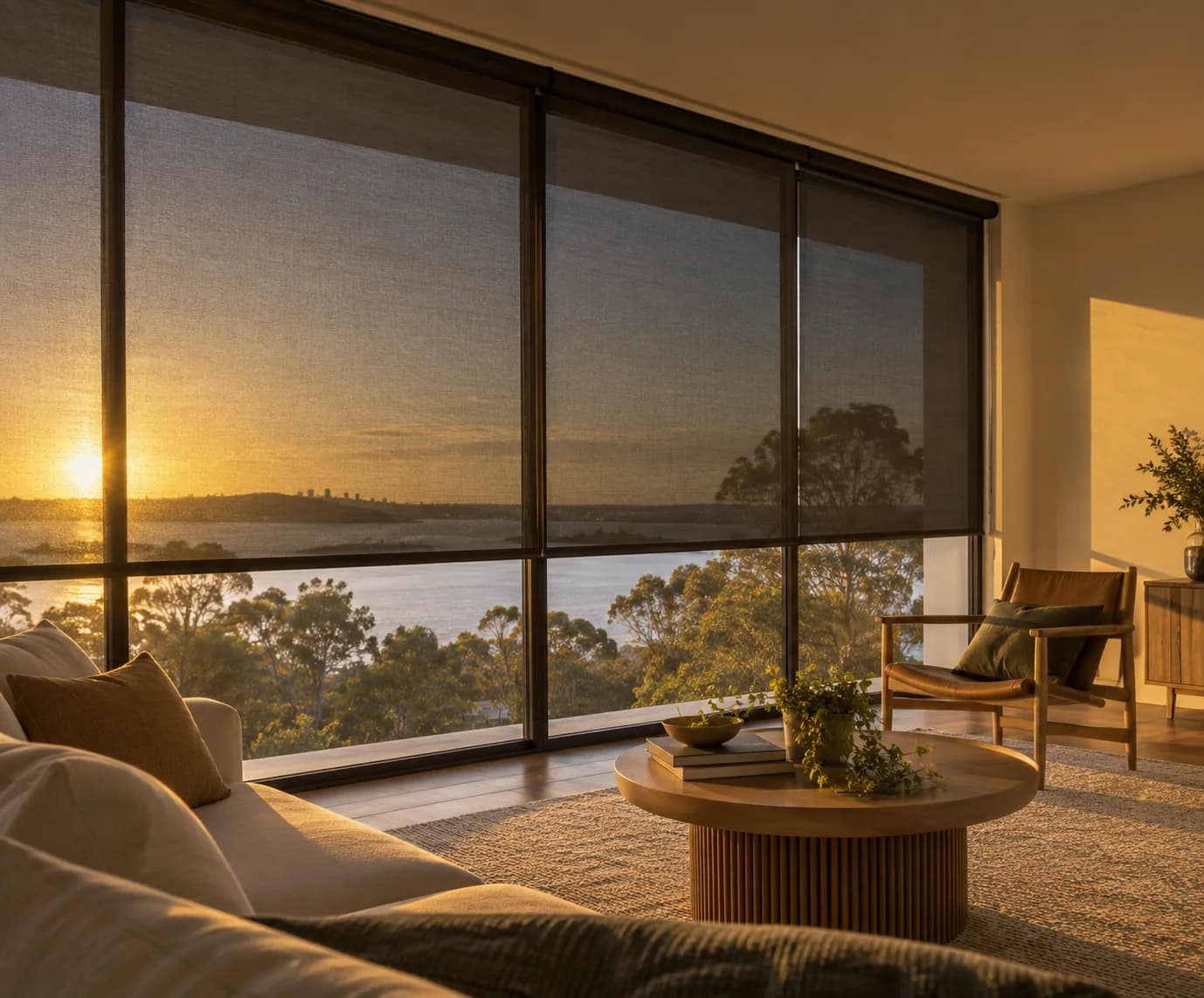
In apartments and west-facing rooms, openness and colour affect glare, view-through and how the fabric reads against a bright sky. Evening privacy reduces once the room becomes brighter than outside.
Light filtering
Diffuse the light rather than preserve the view.
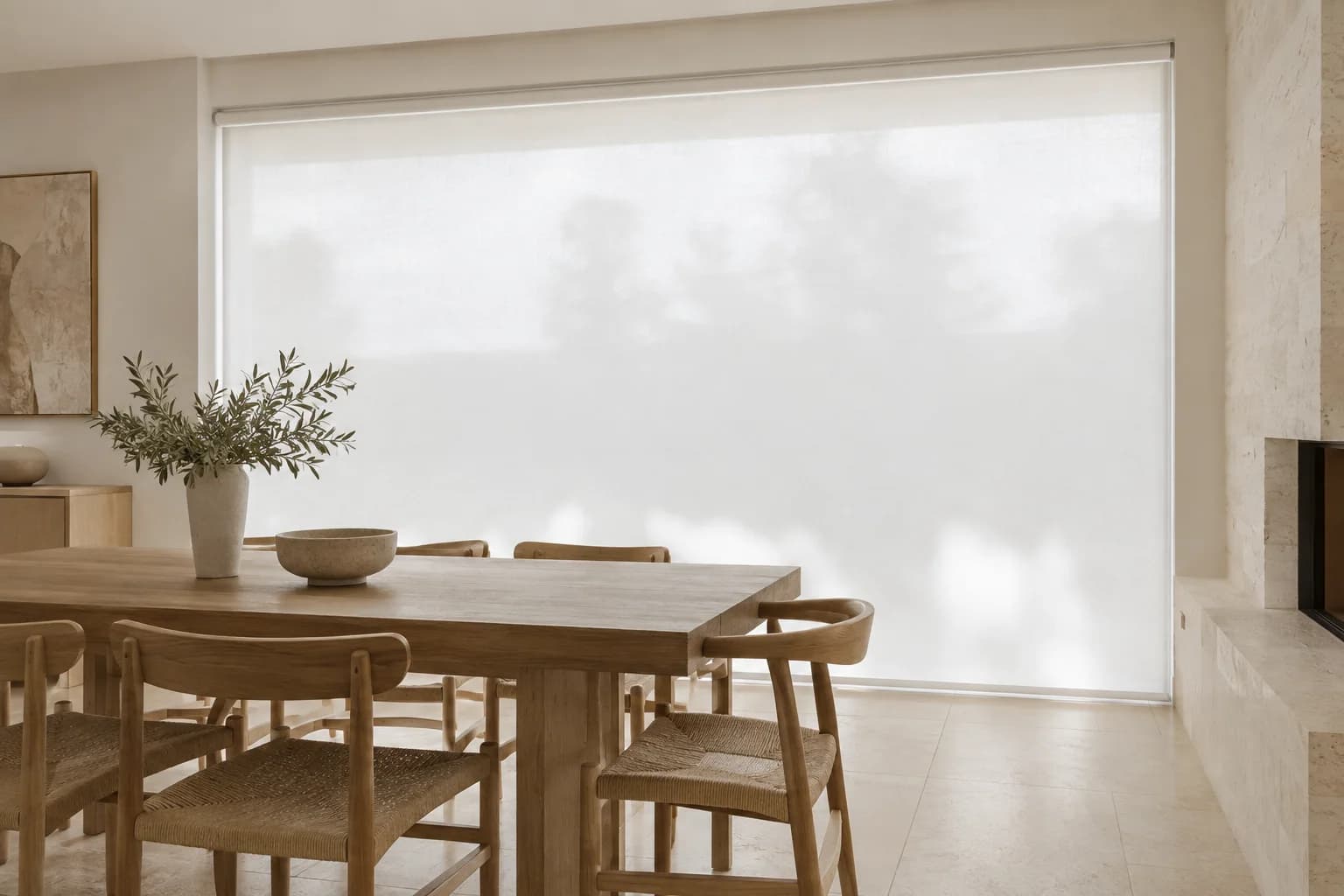
A translucent fabric can soften a living or dining room without the visual weight of an opaque blind. Silhouettes and privacy vary, so the actual sample should be viewed against the window.
Blockout
Stop light through the cloth.
Blockout fabric supports privacy and room darkening in bedrooms. It does not close the light paths around the brackets, sides and bottom of a standard blind.
Real applications
A compact answer for rooms that work differently.
01
Living room
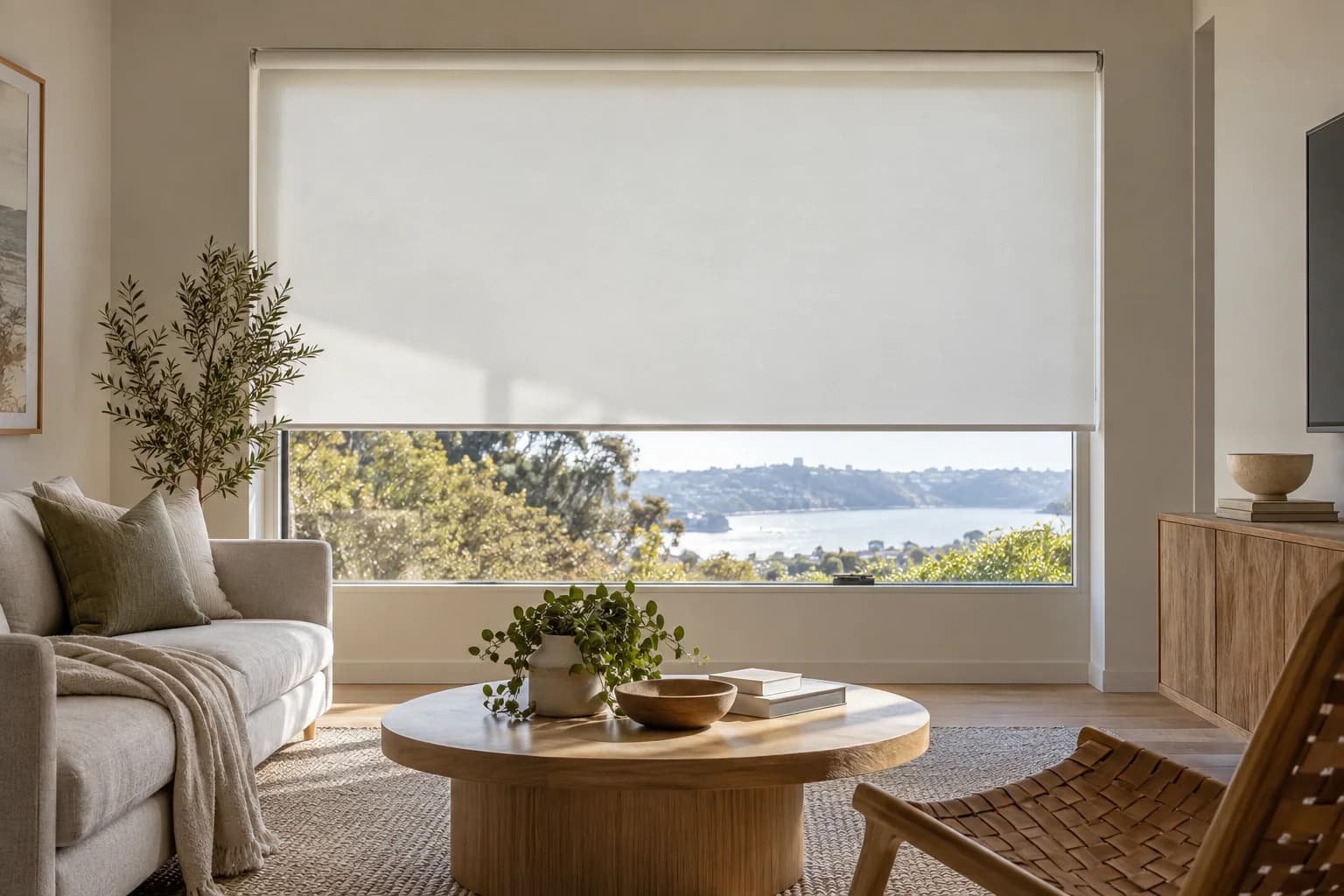
Balance glare with the view and test night privacy separately.
02
Bedroom
Specify the fabric and perimeter together around the darkness required.
03
Home office
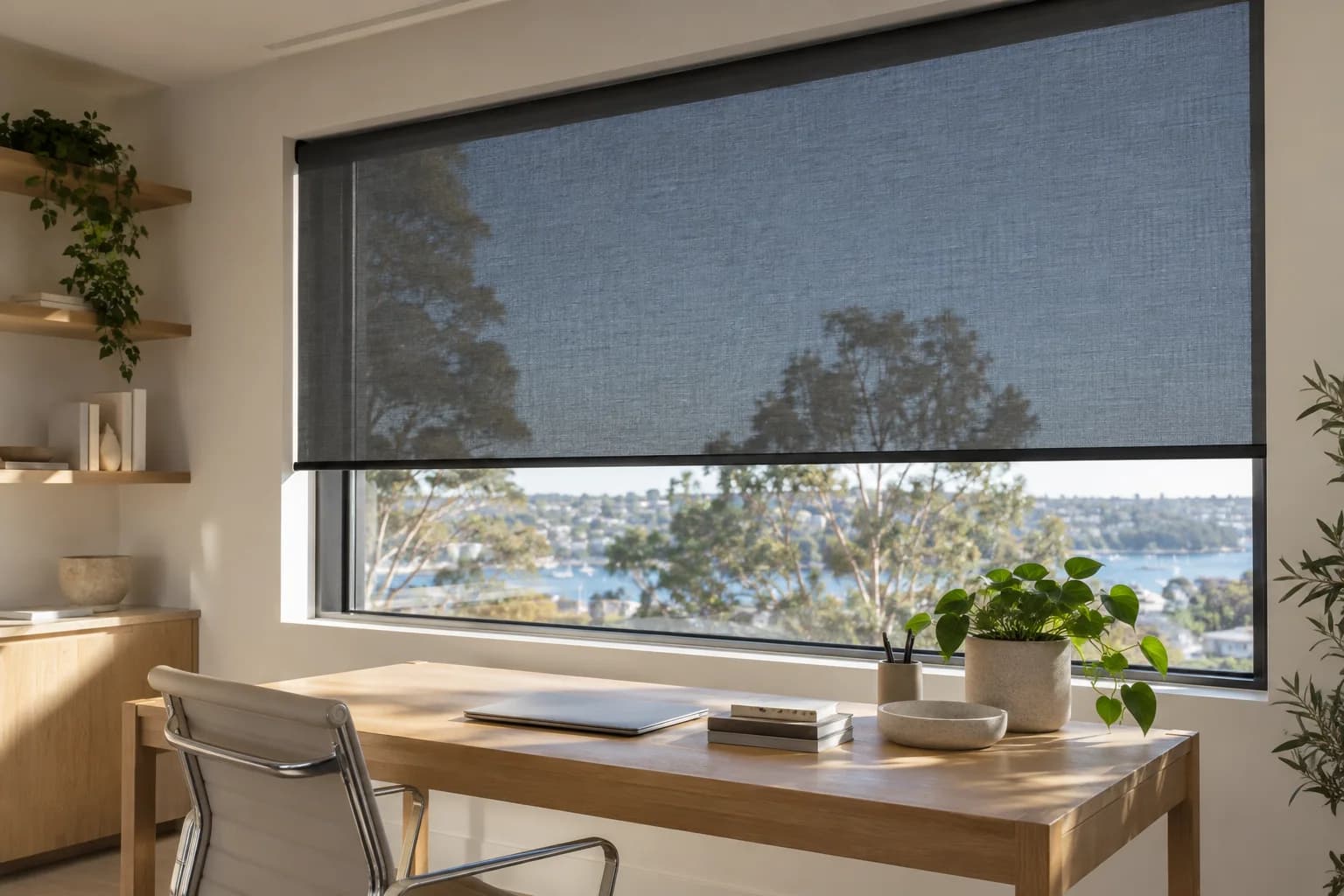
Control screen reflections without removing all ambient daylight.
04
Apartment
Review neighbouring sightlines, evening lighting and restricted recess depth.
05
Large glazing
Divide blinds around mullions and doors rather than forcing one oversized span.
The details that change performance
A few millimetres can change coverage and operation.
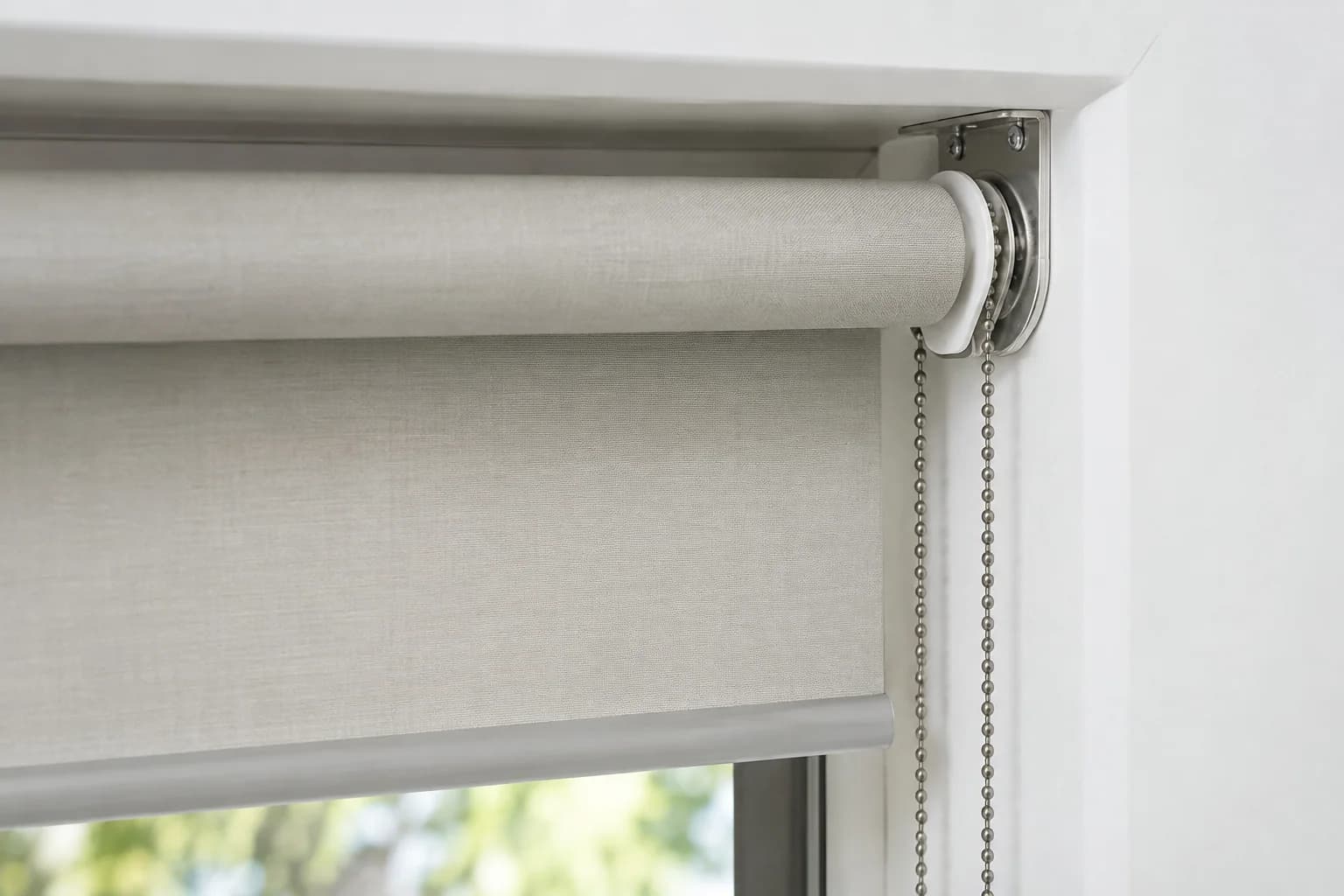
The bracket and control sit outside the fabric width, so every roller has a relationship between neat clearances and visible edge light. Handles, opening sashes, sliding doors and the available fixing plane should be checked before the final size is ordered.
01
Recess or face fit
A recess fit is contained; a face fit can create useful overlap where the wall and trim allow.
02
Front or back roll
A front roll can clear a projecting handle but moves the cloth further from the glass. A back roll usually sits closer to the window.
03
Cassette and channels
A headbox can conceal the roll. Compatible side channels address selected perimeter paths but require space, alignment and service access.
04
Bottom rail and doors
The rail must travel freely and finish level without obstructing frequently used openings.
Strong sun
West-facing glass changes the brief.
Strong afternoon sun can turn one elevation into a glare and heat problem even when the same fabric feels comfortable elsewhere in the home. Orientation, glazing, fabric colour, screen use and the desire to keep an outlook should be reviewed together.
In Sydney apartments, exposed Eastern Suburbs and Northern Beaches homes, and newer Hills or North-West glazing, the fabric should be viewed against the actual bright window whenever possible—not only on a sample-book page.
Beyond the fabric
When the edges matter too.
A high-performance blockout fabric does not by itself create a fully room-darkened window.
Where greater light control is required, CCBD can combine the appropriate fabric with a cassette, side channels and considered installation to reduce light around the perimeter of the blind.
Free float / cordless control
Stop the blind where you want it.
On a verified compatible system, direct hand operation can remove the continuous side chain and create a cleaner daily interaction. Blind size, fabric weight, reachable height and the actual mechanism must suit one another; this is not available on every roller.
Enhanced room darkening
Reduce the main perimeter light paths.
Compatible headboxes, side channels and bottom details can substantially reduce edge light where daytime sleep or media use demands more than a conventional roller. The complete installed assembly must be selected and aligned as one system.
Air movement & stability
Some openings need more than a free-hanging blind.
Large balcony doors and cross-ventilated rooms can make a free-hanging roller move repeatedly. Guided edges, retained systems or a different treatment may be more stable, subject to the exact opening and documented system capability.
Motorised operation
Match operation to the size and daily routine.
Larger blinds, frequently used windows and whole-home applications can also be specified with motorised operation. Blind load, power, controls, fixing and future service access are considered together.
Professional installation
The blind is only finished when it works on the actual window.
Level fixing, bracket spacing, substrate, roll direction, handle clearance and fabric tracking all affect the first operation and long-term appearance. On grouped windows, bottom rails and fabric divisions should read coherently across the elevation.
Child-safety devices, chain position, door access and motor limits are resolved as part of installation—not left as finishing details after the blind is made.
Professional judgement
Sometimes the room needs more than a clean line.
Where strong textile softness or a decorative window treatment is central to the room, we would compare a Roman or curtain. For demanding daytime sleep, a standard recess-fit roller may need perimeter control or a layered blockout arrangement.
Very wide openings deserve a system review and may work more reliably as several aligned blinds. The correct division should follow glazing, access and fabric width—not an arbitrary equal split.
Blinds knowledge hub
Understand the decision before choosing the finish.