Do I need one fabric or two?
Choose two when daytime outlook and evening privacy are genuinely different jobs—not simply because a double bracket is available.
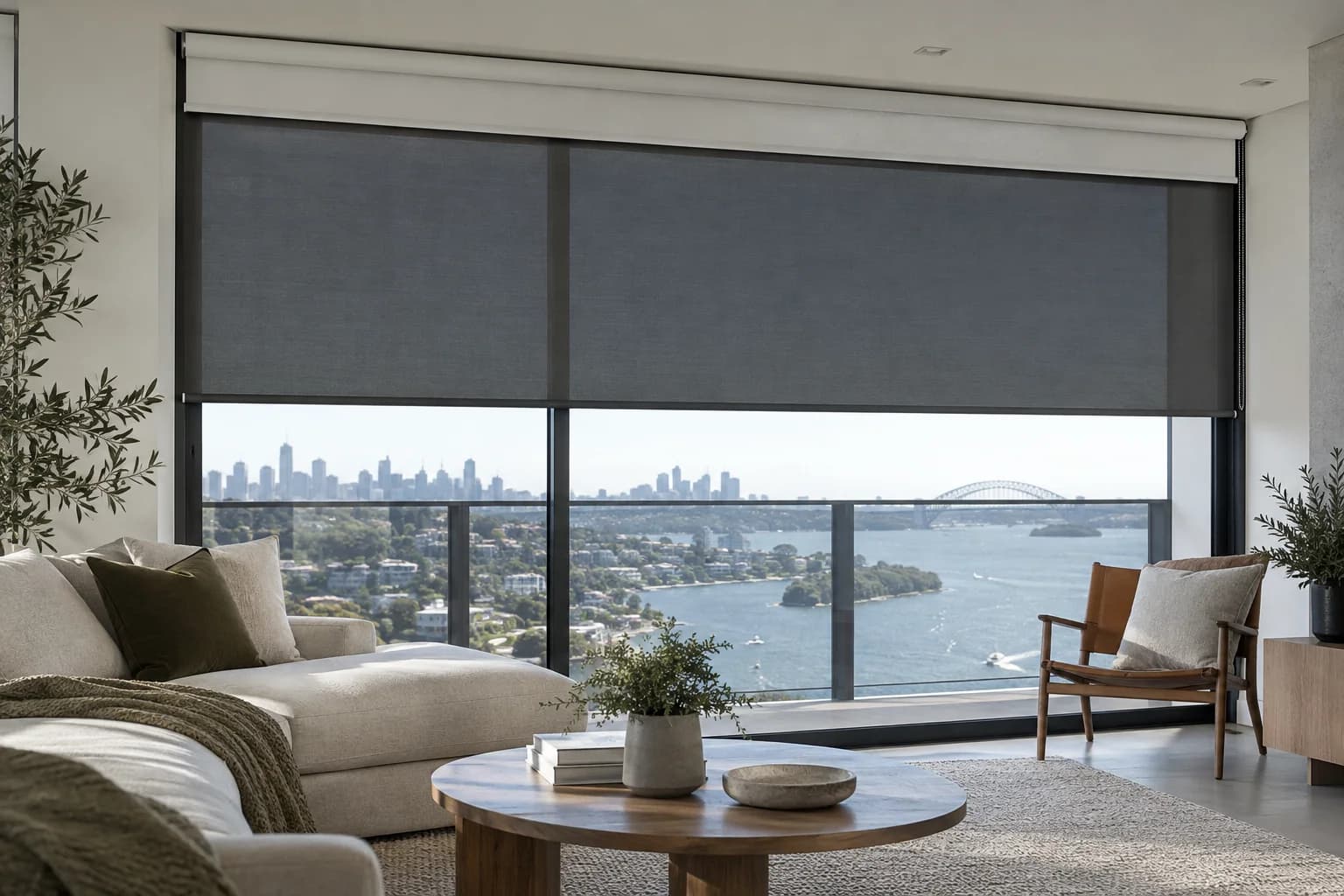
Double Roller Blinds · Sydney
One window. Two levels of control.
A double roller combines two independently operated fabrics at one window—usually a sunscreen or light-filtering layer for the day and an opaque layer for evening privacy and room darkening. The usefulness is in the separation of jobs, not simply having twice the hardware.
Two independent fabrics. One compact architectural zone.
Start with the decision
Choose two when daytime outlook and evening privacy are genuinely different jobs—not simply because a double bracket is available.
A dual system needs more depth and clear travel. Handles, opening sashes and the finished roll diameters must be checked.
The order affects appearance, travel and access. It should be selected with roll direction, bracket geometry and the room-facing finish.
Compatible systems can, provided each roll, motor, power source and control channel is specified as a complete arrangement.
Morning · afternoon · evening · night
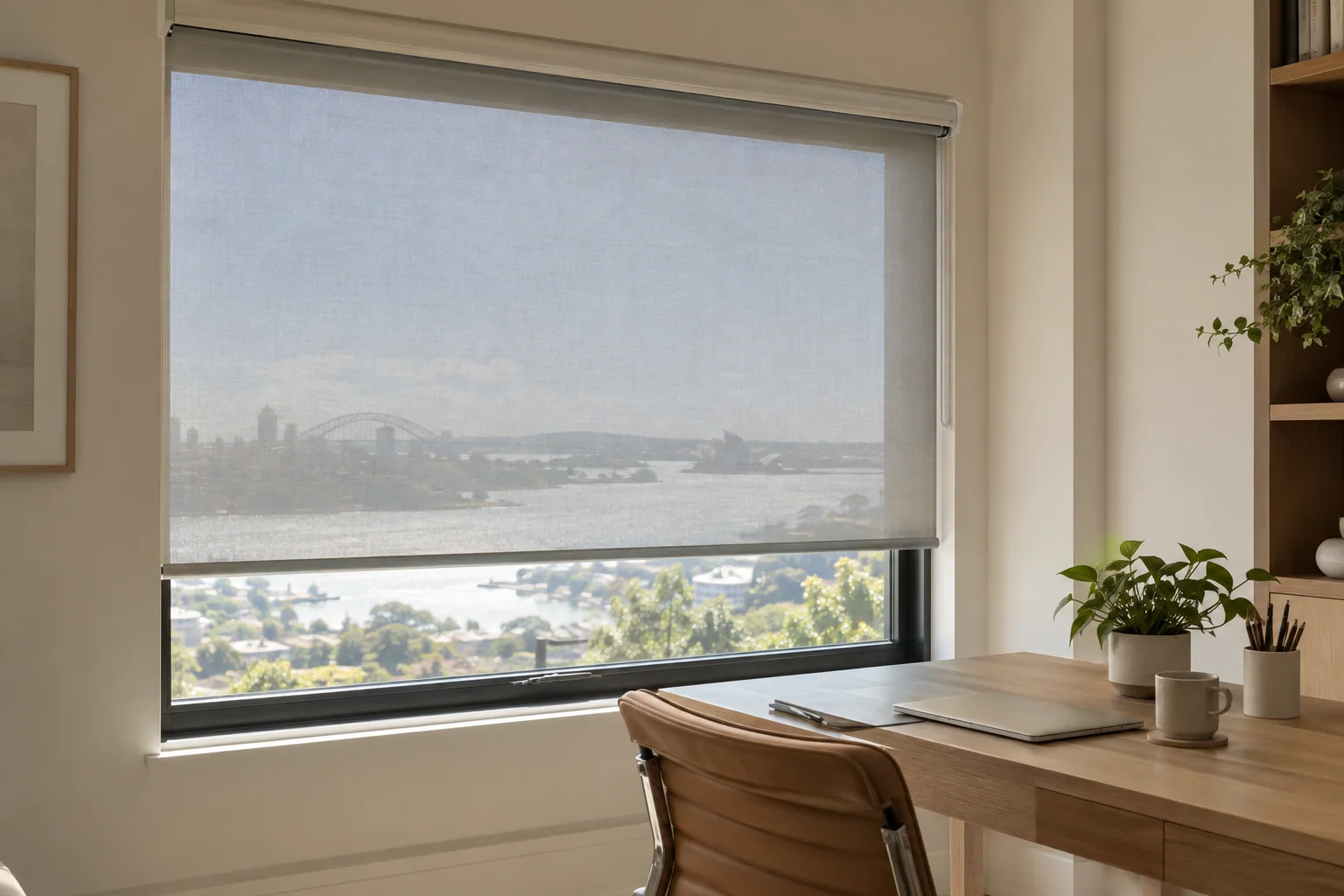
Use the sunscreen or light-filtering layer where glare arrives before full privacy is needed.
Adjust the daytime layer around orientation and screen position without treating an internal blind as external shading.
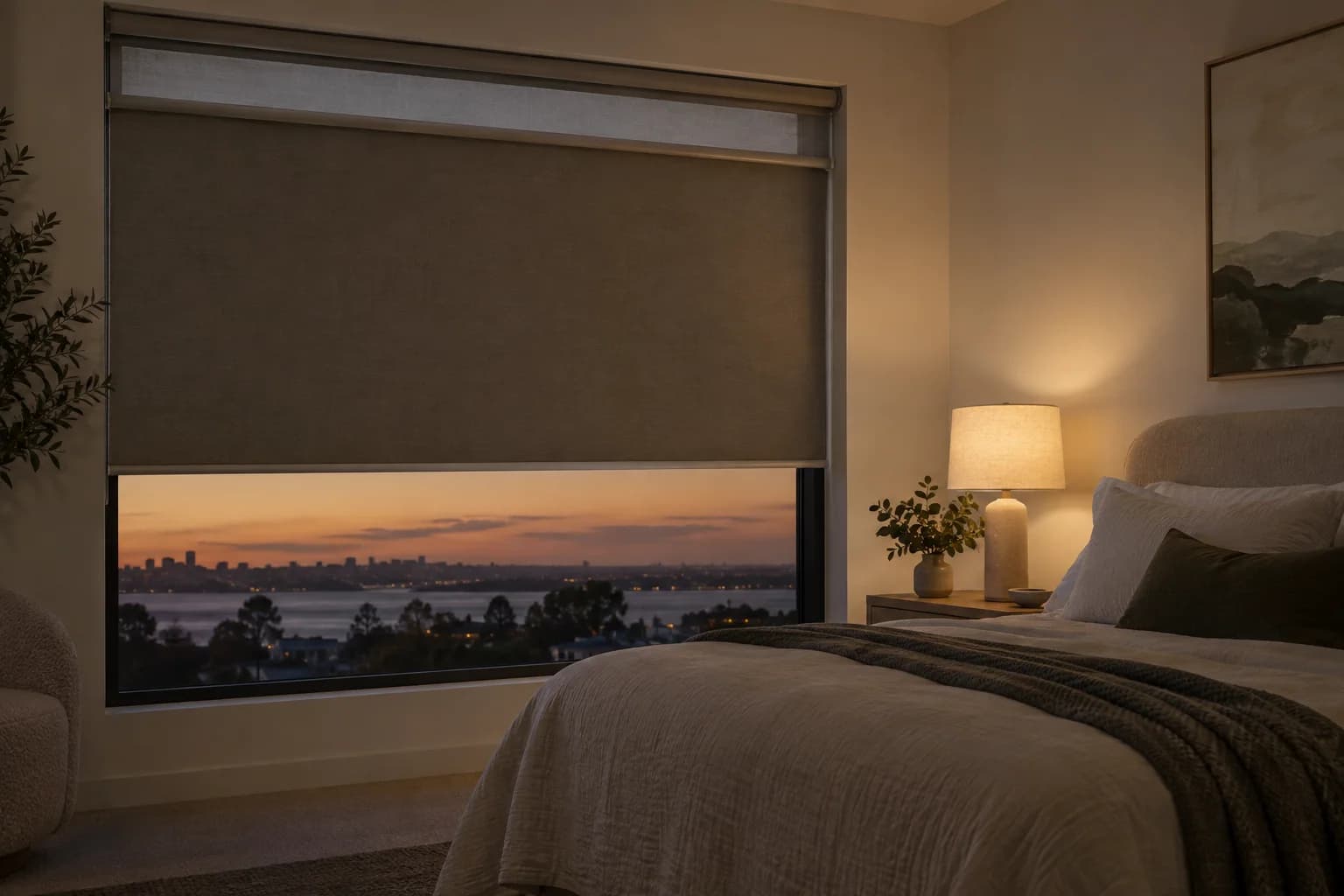
As room lighting becomes stronger than outside, lower the opaque layer rather than relying on sunscreen.
The room becomes more enclosed, while perimeter gaps remain part of the final darkness.
Where the two-layer logic works
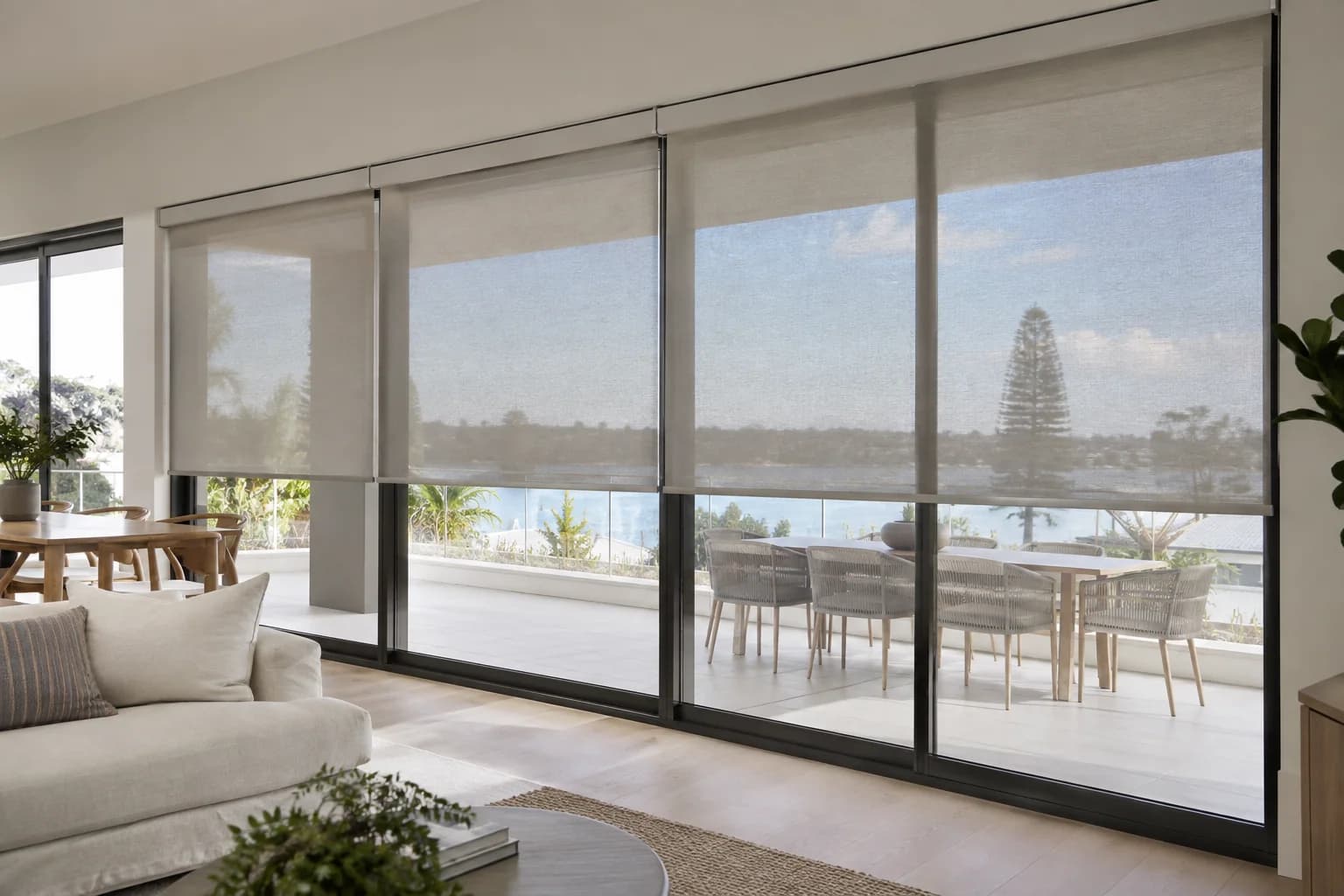
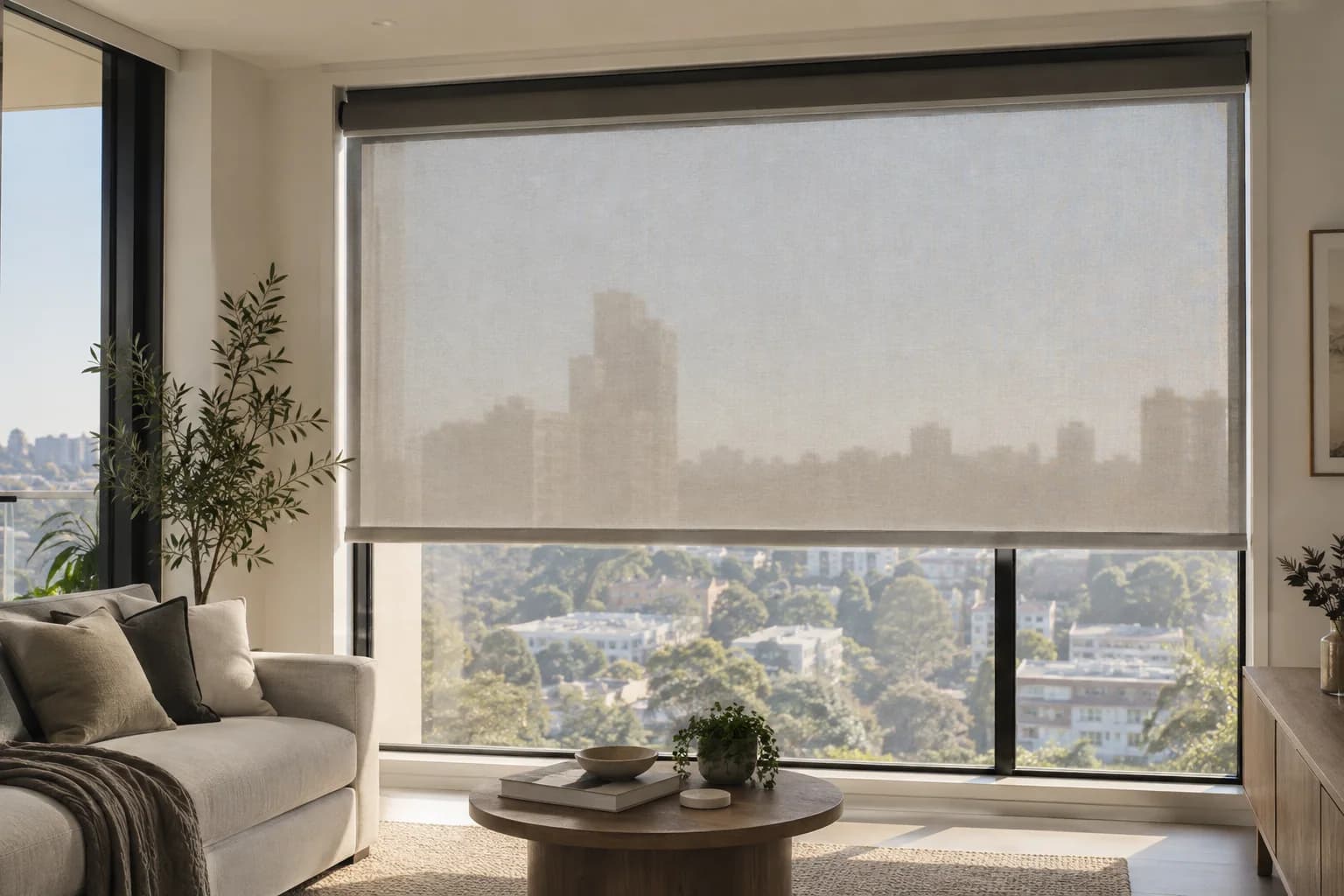
Keep daytime screening and add independent night privacy within a compact window zone.
Use daylight without exposing the room, then move to stronger opacity at night.
Switch between screen-glare control and a more enclosed video-call backdrop.
Preserve a cleaner architectural line than a full double-curtain wall.
Align divisions to mullions, doors and access rather than forcing one broad dual assembly.
Two rolls need a real allowance
A dual bracket carries two tubes, two moving fabrics and two bottom rails. Recess depth, handles, frame projection, roll order and clear travel must be verified against the exact system.
Controls should be easy to distinguish and reach. If both layers are motorised, they still require separate supported motors and a planned individual or group-control arrangement.
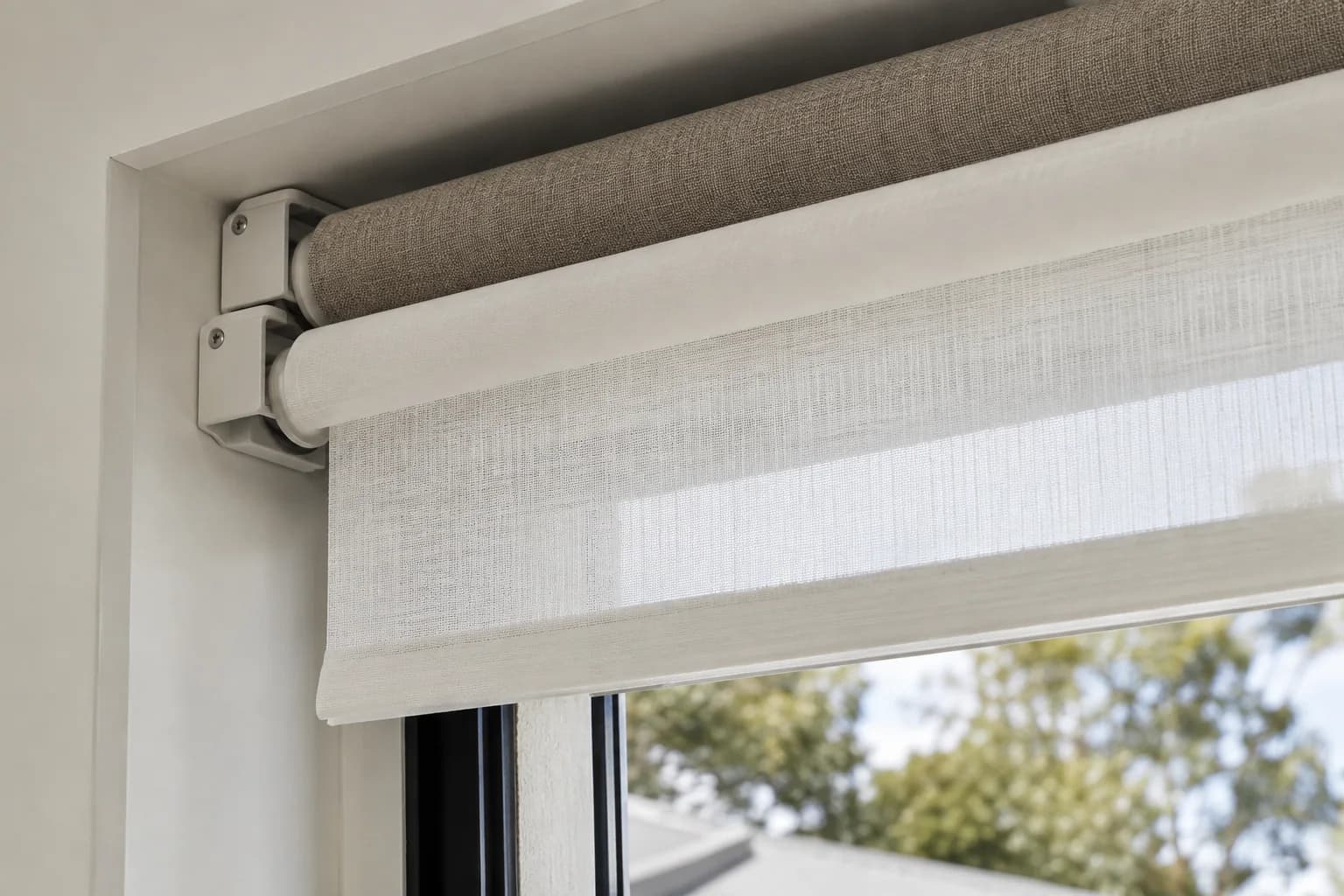
Professional installation
The front and rear rolls need separate clear travel, accessible controls and enough space for their finished diameters. Brackets must remain level under the combined load, while rails and divisions align with the window rather than one another by accident.
On sliding doors, each blind division should respect the moving panel and normal access route. Motorised layers require individual limits and a control plan that makes the day and night blinds easy to distinguish.
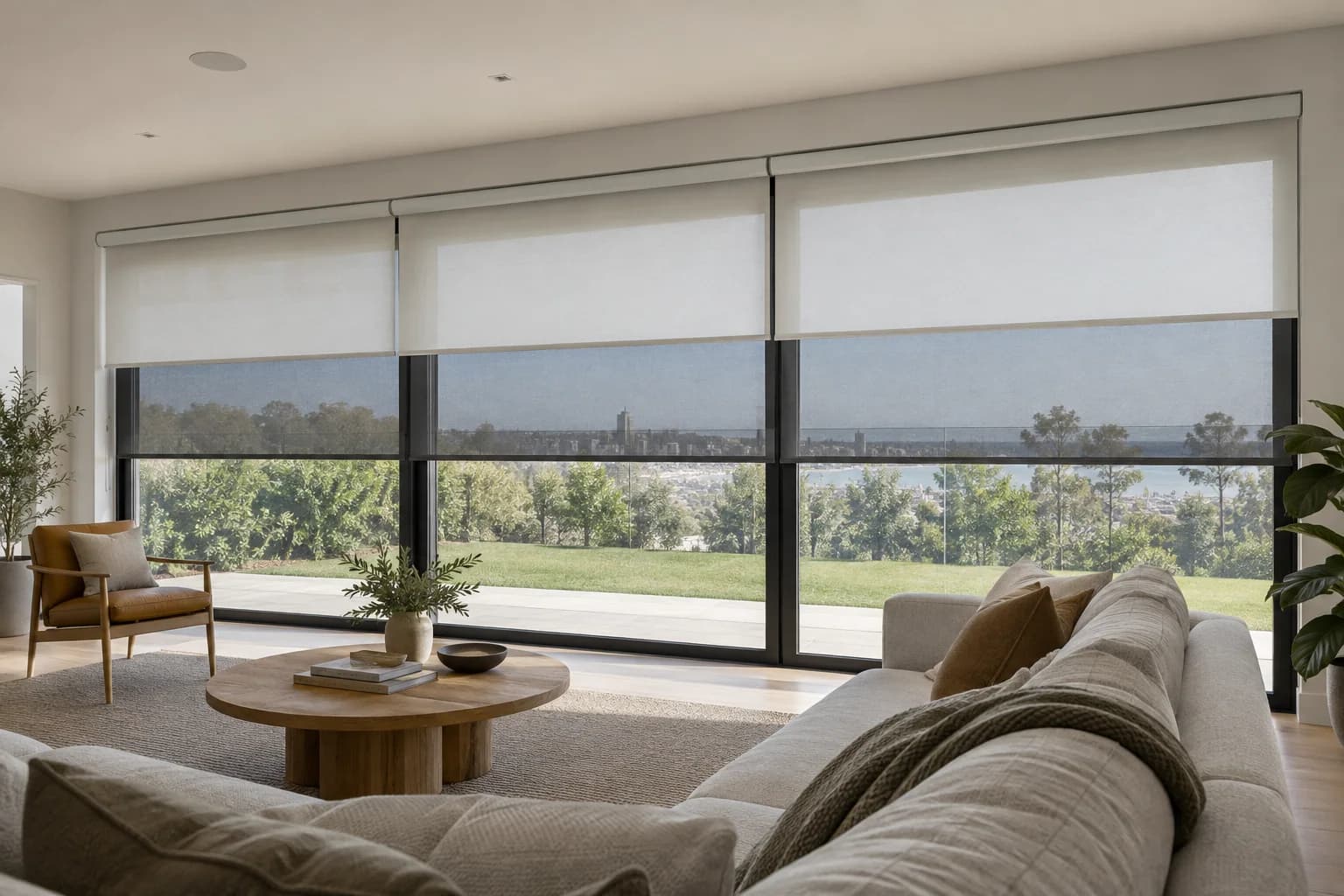
Professional judgement · Two ways to layer
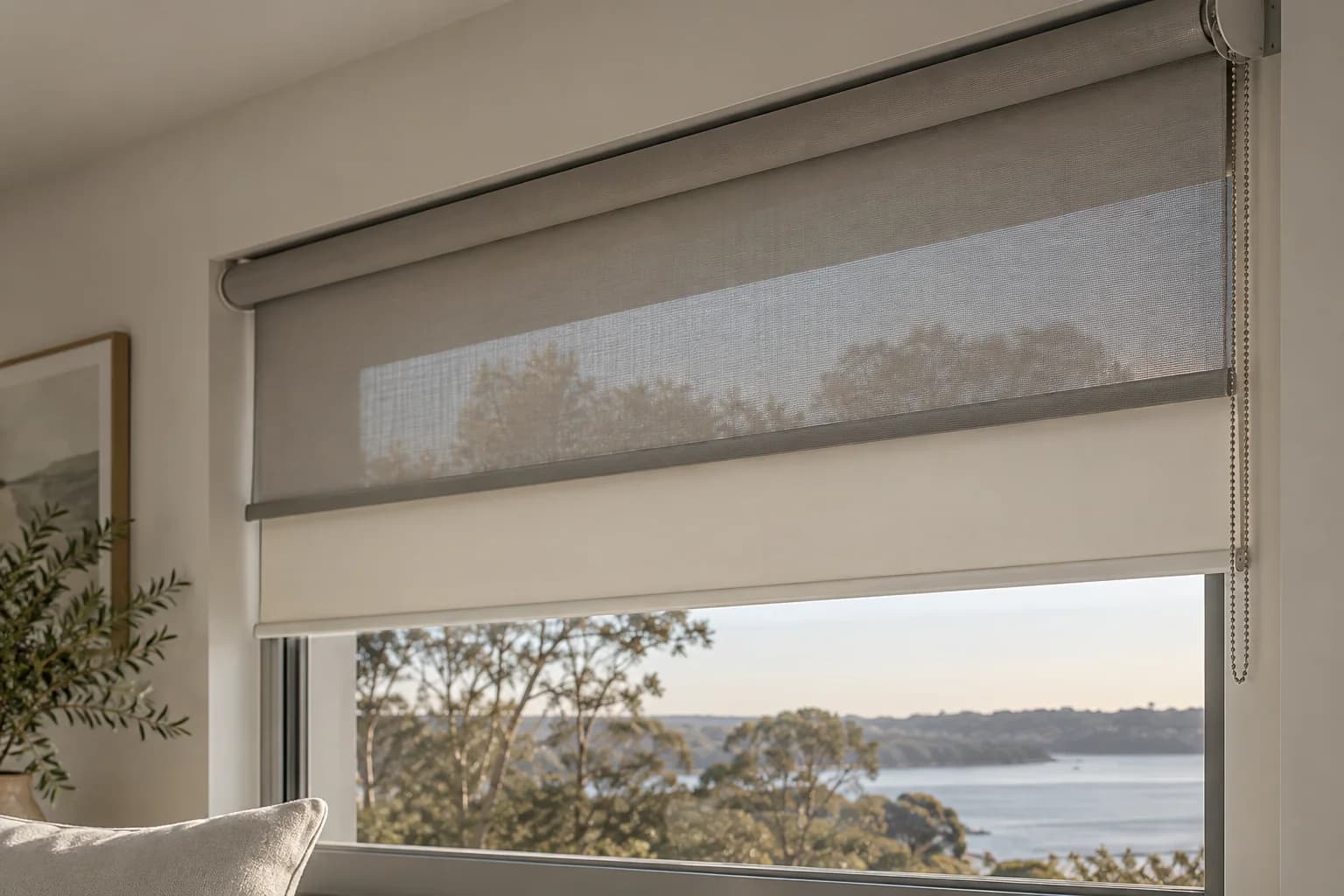
Compact, architectural and lower in visual volume. Strong where wall space and curtain stack-back are limited.
Softer, more decorative and more textile-led. Track position, fullness, returns and stack-back shape the result.
Blinds knowledge hub
Before you specify
A double system has two independently operated fabrics and tubes, allowing one material to serve daytime use and the other evening privacy or room darkening.
Yes, where the selected dual hardware and window depth allow. Each layer retains its own limits, including sunscreen night privacy and blockout edge gaps.
Generally yes. Confirm the actual dual bracket projection, roll direction, fabric travel and handle clearance.
Selected systems support this. Each roll needs compatible hardware, power and control planning.
They can be useful, but demanding room darkening may still require stronger perimeter control or an additional curtain layer.
A conversation, then a considered specification
Bring the daytime view, night privacy requirement and recess dimensions. We’ll decide whether two rollers belong at the window and how each layer should operate.