Will cellular fabric make the room cooler?
The cells add a still-air layer, but the result also depends on glazing, fit, exposure and how fully the opening is covered.
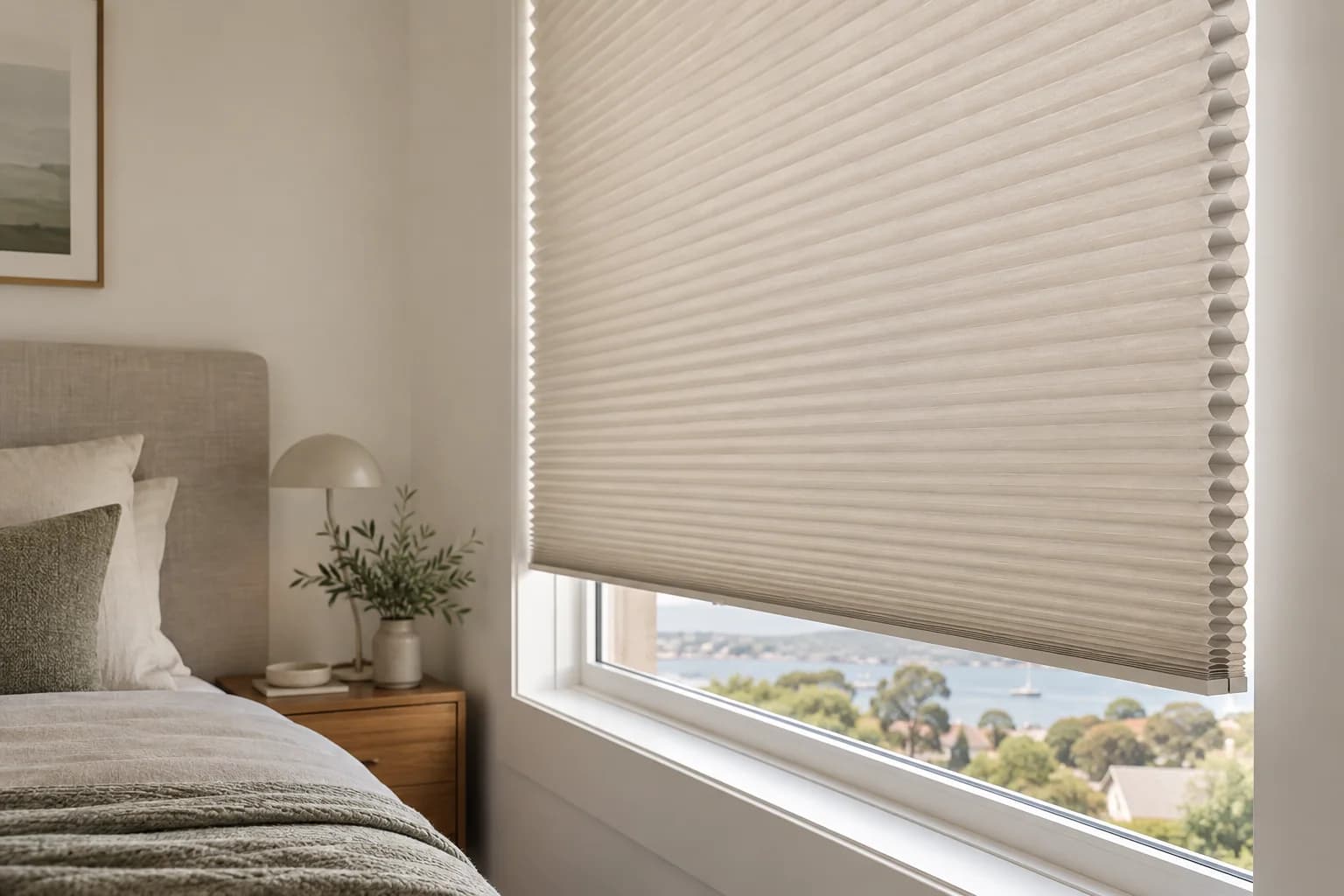
Honeycomb (Cellular) Blinds · Sydney
A compact blind with structure inside the fabric.
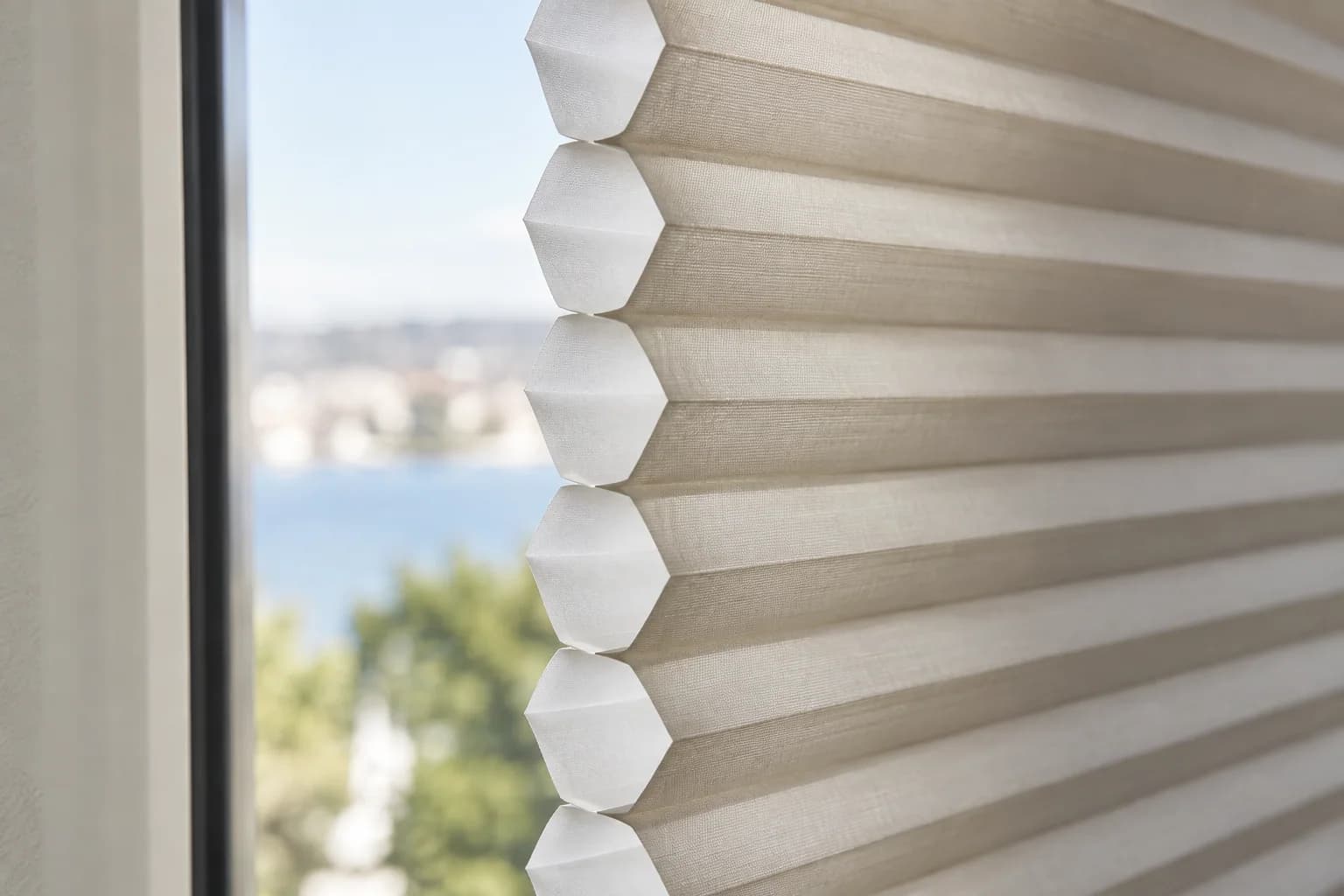
Honeycomb blinds use closed cellular pockets rather than a single pleated sheet. The structure holds still air within the blind and creates a compact, softly textured treatment for privacy, light control and selected exposed windows.
Privacy below. Daylight above.
Start with the decision
The cells add a still-air layer, but the result also depends on glazing, fit, exposure and how fully the opening is covered.
Selected top-down bottom-up systems can do this where the exact size, controls and installation support the feature.
Honeycomb fabric stacks compactly, but the headrail and compressed fabric still occupy space that must be checked.
Only after confirming the complete product, ventilation, fixing surface and care guidance for that humid location.
The structure does part of the work
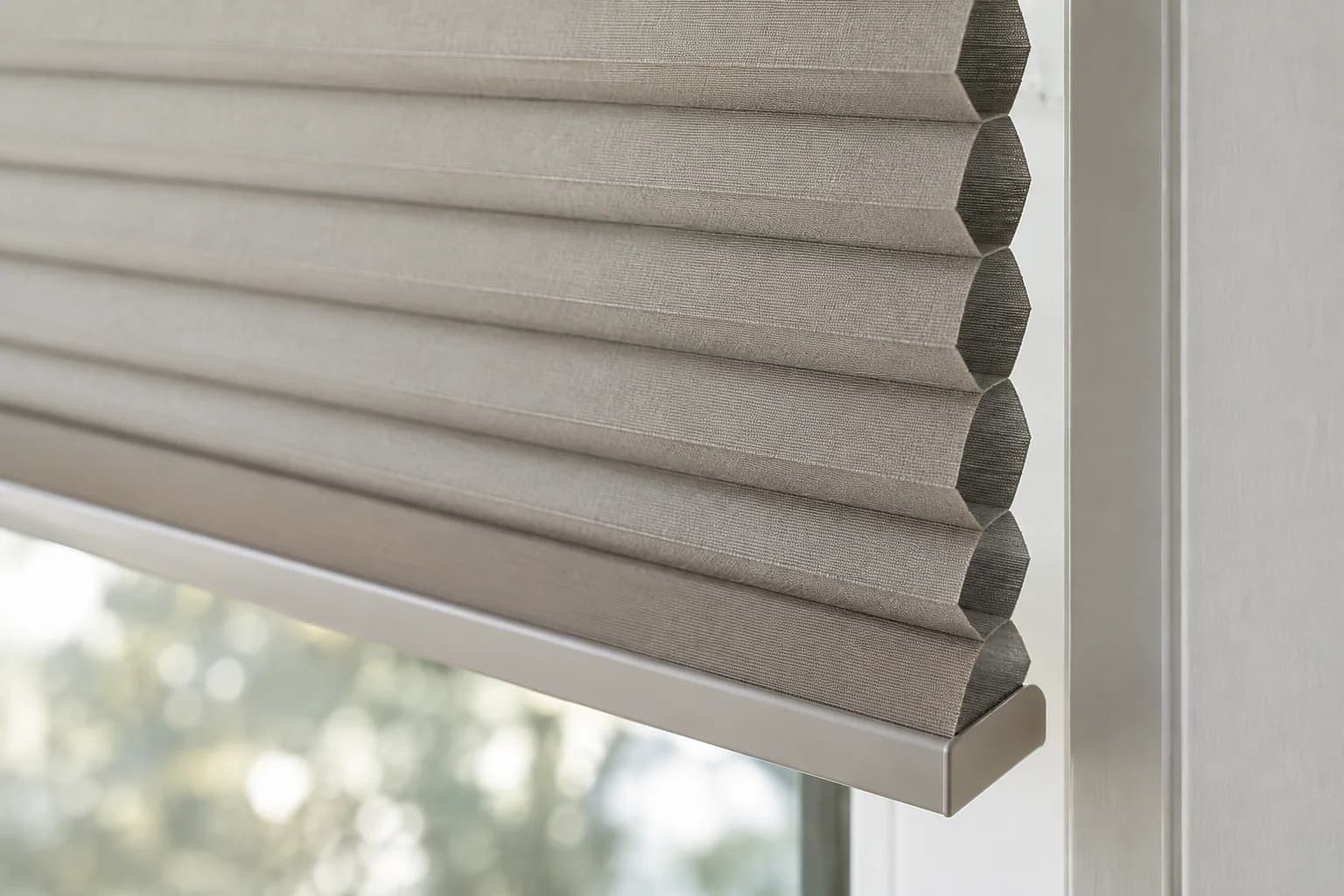
The closed cells distinguish honeycomb fabric from a conventional pleated blind. The cellular layer, the air space at the window and the fit contribute together; glazing and perimeter leakage still influence the completed result.
No universal thermal saving or R-value should be inferred without verified data for the exact product and installation.
Top-down / bottom-up
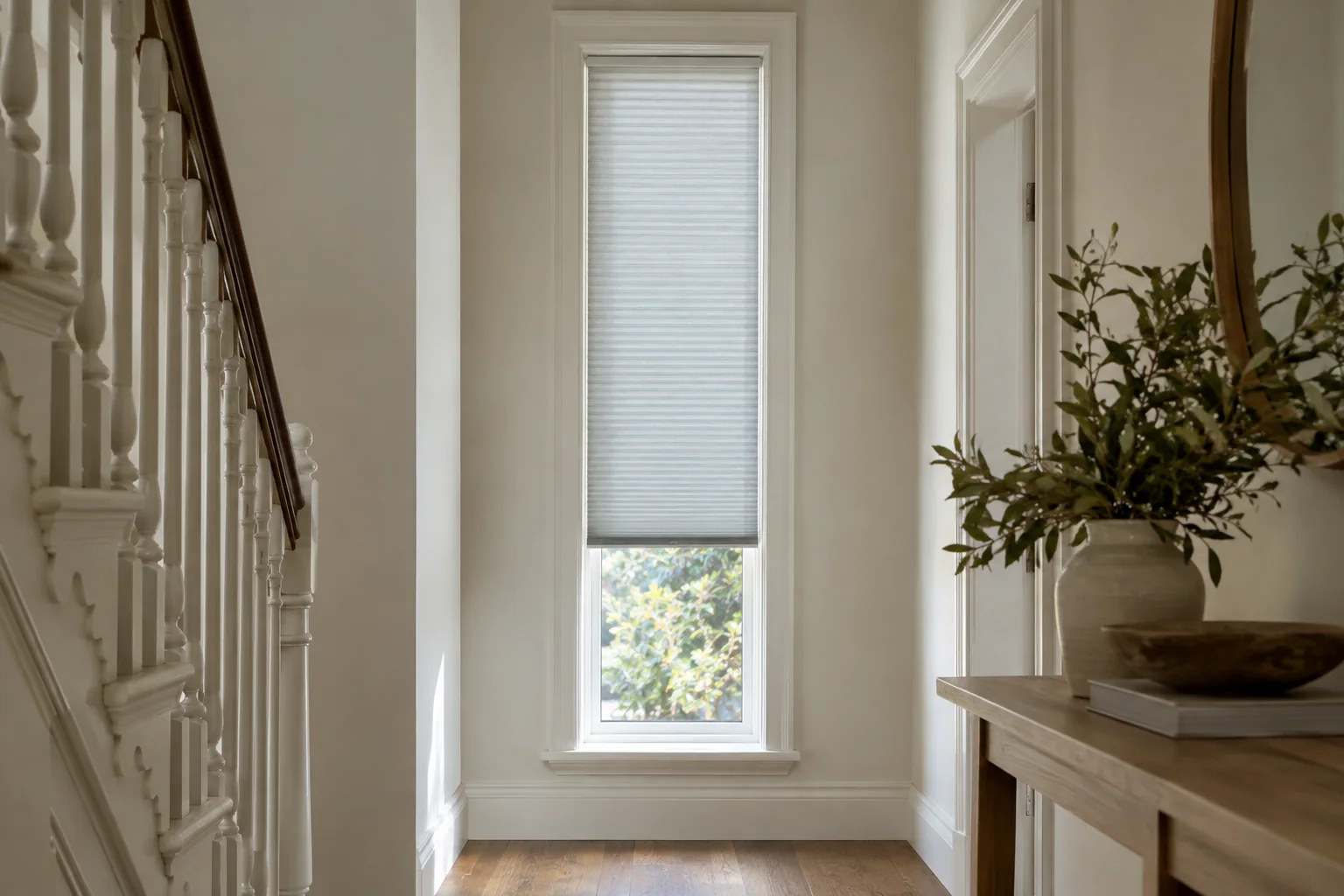
Covering the lower section while leaving the upper glass open can work especially well at street level, in ground-floor bedrooms and selected apartments. The real sightline should be checked from pavement, neighbouring windows and the normal seated position.
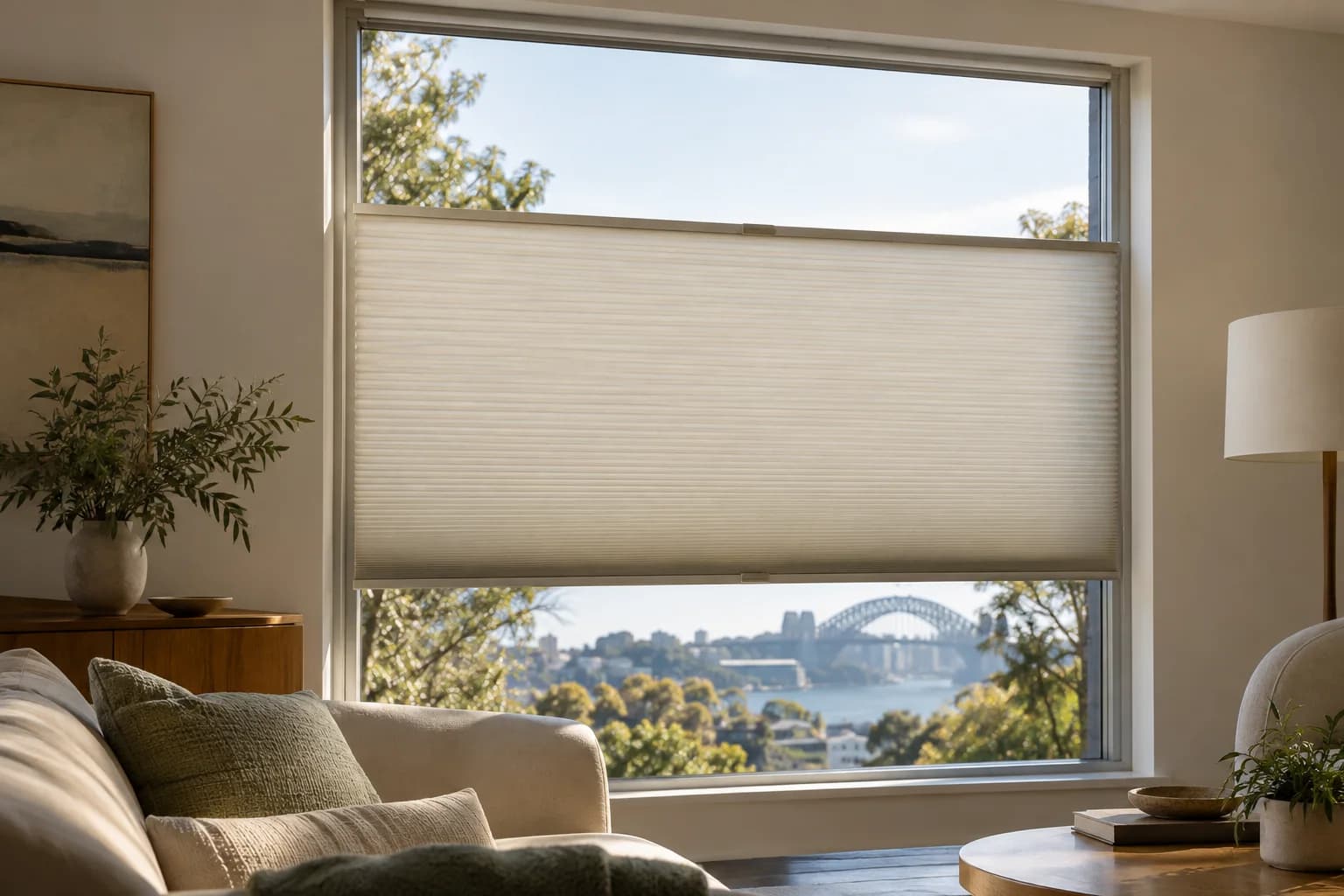
Screen people and furniture at eye level while daylight enters above.
Change the opening during the day without exposing the entire room.
Respond to opposite buildings and upper sightlines independently.
Applications
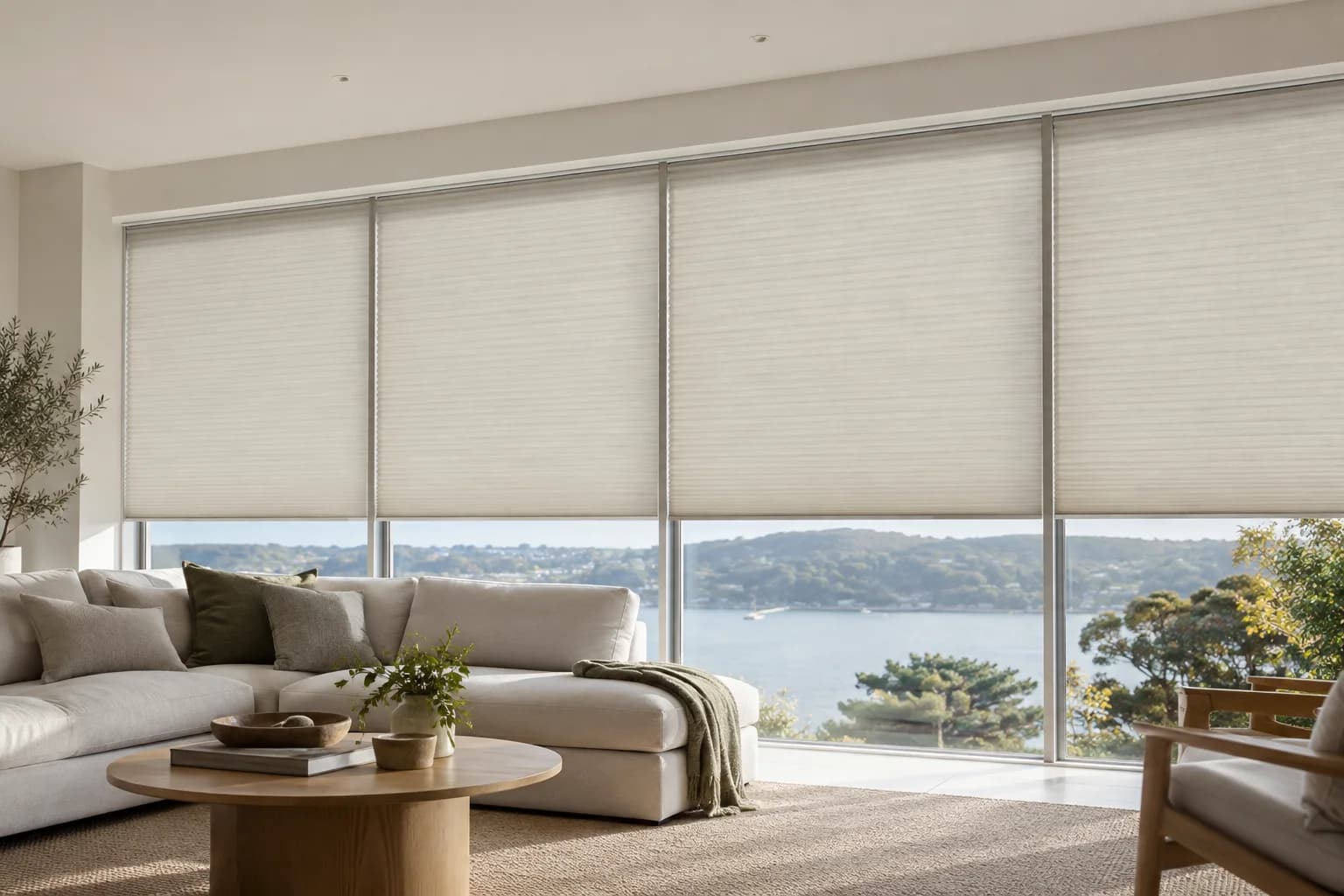
Add a cellular layer where exposed glass and afternoon sun deserve closer assessment.
Choose light-filtering or blockout cellular fabric around privacy and sleep.
Diffuse strong light while keeping a compact raised stack.
Use top-down operation where the lower sightline is the real privacy problem.
Keep the treatment visually quiet where wall space is limited.
Day & night
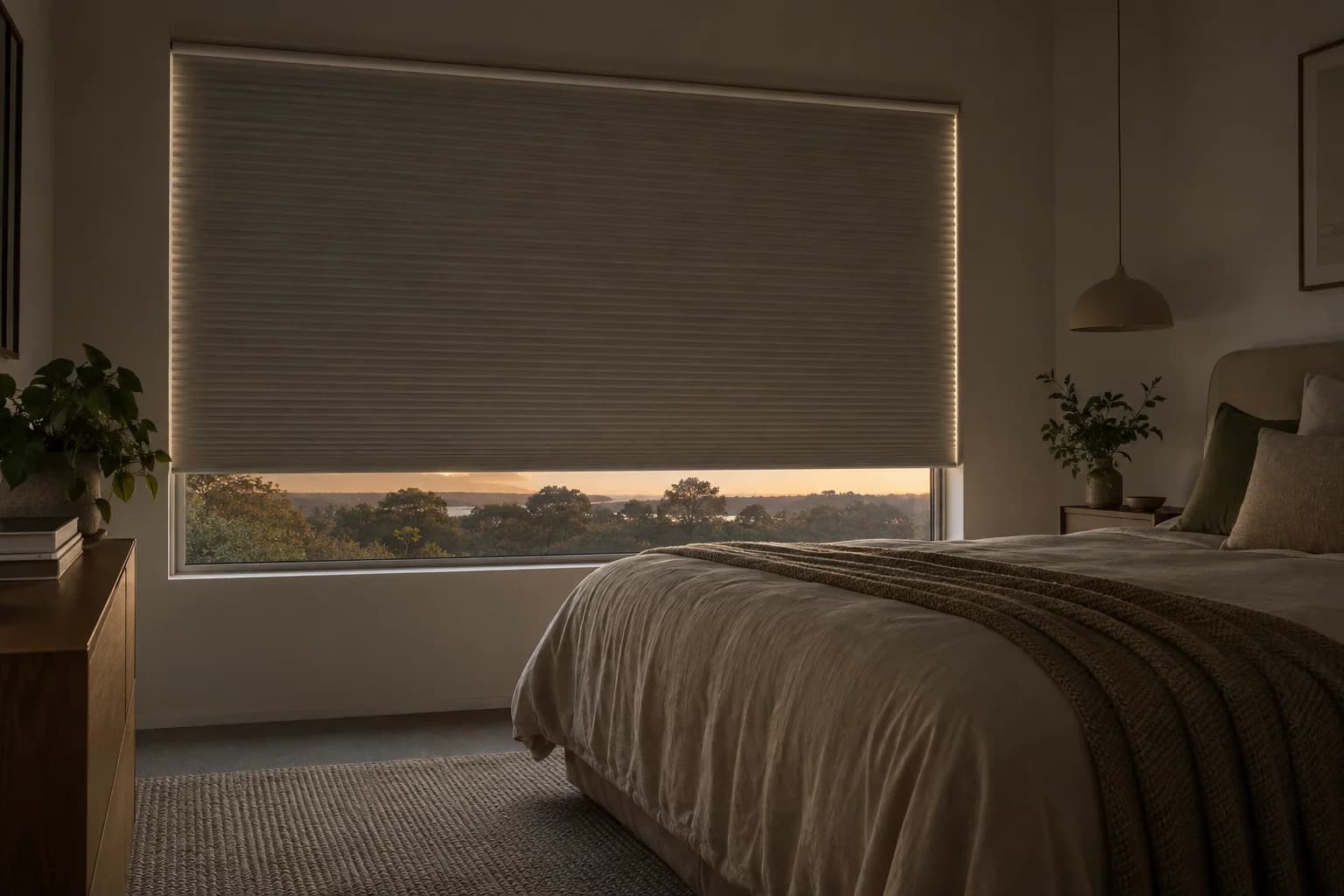
Selected day-and-night cellular systems combine a light-filtering zone with an opaque zone. The transition rail, fabric travel, stack and control method need to be seen on the exact working sample; this is not simply two ordinary blinds placed together.
Blockout cellular fabric controls light through its face. Perimeter paths still determine the remaining room glow.
Fit, operation & care
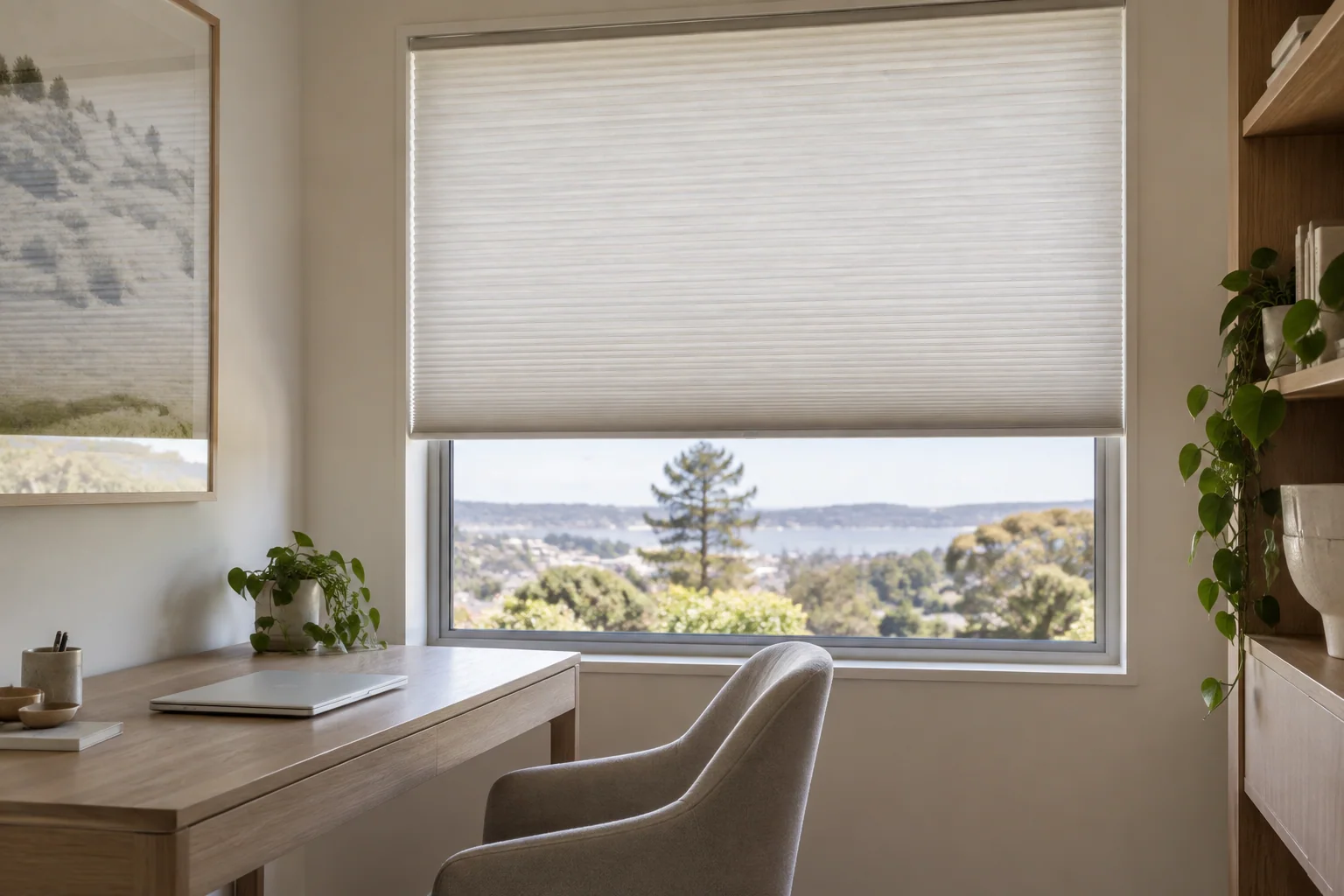
The headrail, compressed stack, side clearances and bottom position should be checked against handles, opening sashes and the view you want when the blind is raised. Top-down bottom-up controls also need to remain reachable and intuitive in normal use.
Light-filtering and room-darkening fabrics have different privacy and care implications. In dusty, greasy or humid locations, the selected fabric and hardware should be assessed against the actual cleaning and ventilation conditions.
Professional judgement
Where a clear outlook, highly decorative textile presence or frequent exposure to grease, dust or humidity dominates the brief, another treatment may be more suitable. Product care and wet-area suitability must be confirmed rather than assumed from appearance.
Honeycomb blinds add an internal layer; they do not replace glazing, building insulation or external sun control.
Blinds knowledge hub
Before you specify
No. Honeycomb fabric has enclosed cells visible in cross-section; a conventional pleated blind is a folded single sheet.
Their cellular structure adds still-air pockets at the window. The result depends on the exact product, fit, glazing and building, so no universal saving should be assumed.
It allows an opening above the fabric while the lower part remains screened, as well as conventional movement from the bottom. Availability depends on the selected system.
Selected cellular fabrics are opaque. Light around the edges still affects the finished room.
Only where the complete selected product and installation conditions are suitable. Ventilation, care and fixing surfaces need review.
A conversation, then a considered specification
Bring the exposed glass, privacy sightline and room use. We’ll compare cell construction, fabric, top-down operation and fit without overstating performance.