Judge daylight and night privacy separately.
Blinds by CCBD · Sydney
The right blind for the way the room works.
Start with the light and privacy the room needs. Then consider the opening size, ventilation and how you will reach and operate the blind.
We measure the opening and check the fitting conditions before recommending fabrics and hardware. A blind that suits a living room may not give a bedroom enough privacy or room darkening.
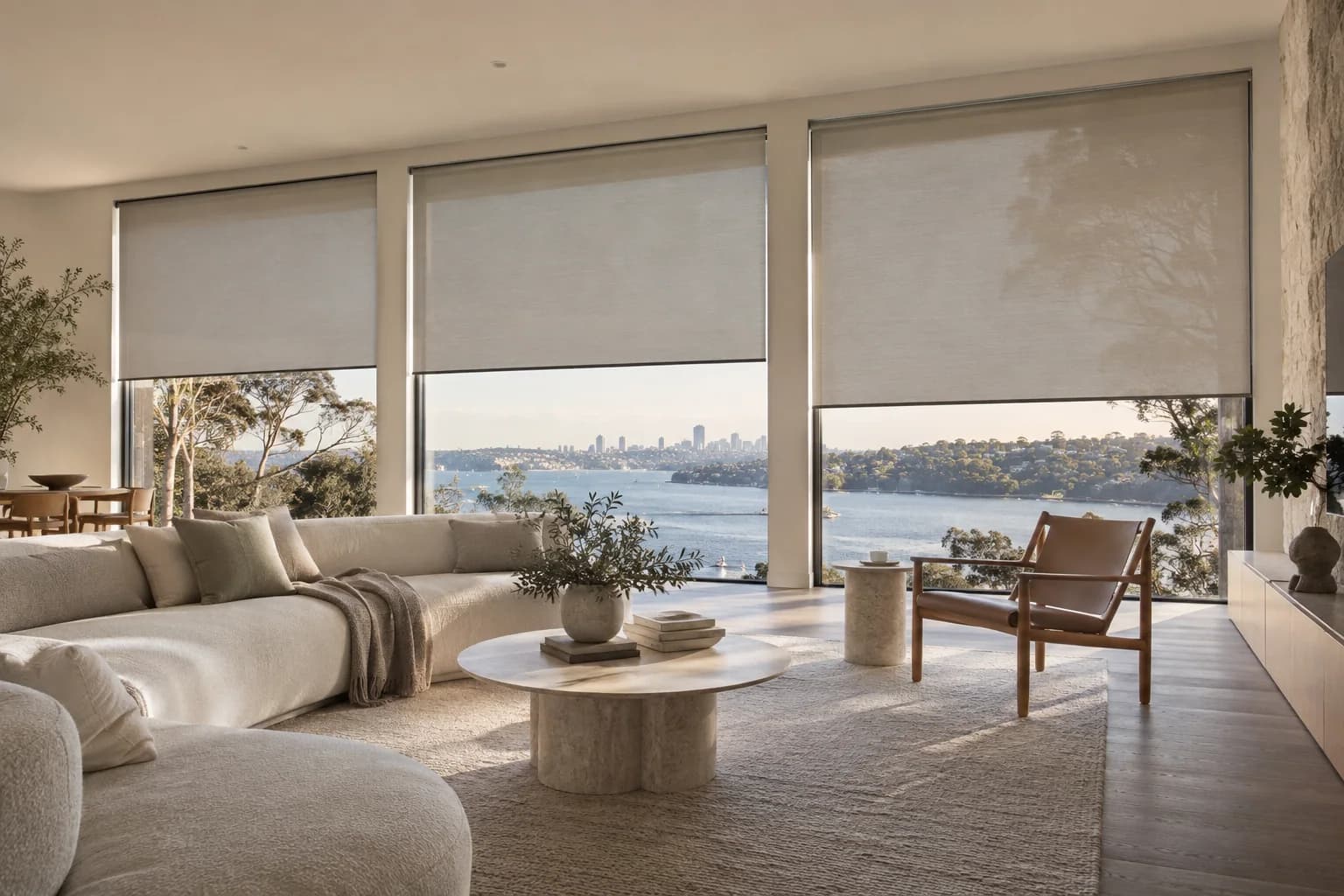
Start with the problem
What does the window need to do?
The useful first question is not “Which blind do I like?” It is “What changes at this window between morning, afternoon, evening and night?”
The needFirst compareBefore ordering
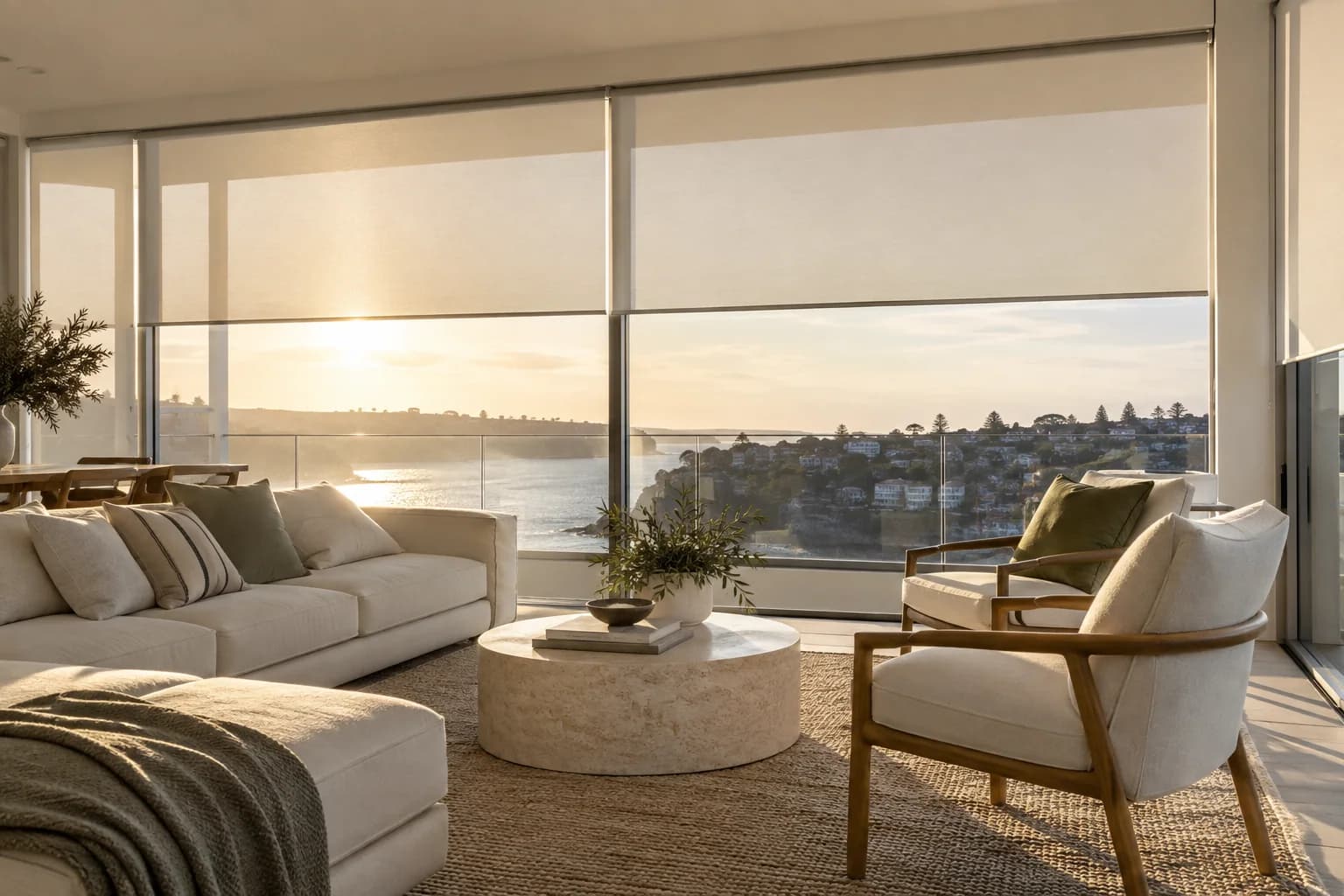
Keep a daytime outlookSunscreen roller · sheer shade
Glare, weave, colour, external sightlines and what changes after dark.
Stronger night privacyBlockout roller · double roller · cellular
Fabric opacity, edge gaps, fitting position and the room’s internal lighting.
Darken a bedroomBlockout · channelled system · layered curtains
Sleep hours, sun direction and how much perimeter glow is acceptable.
Manage west-facing glareSunscreen · cellular · motorised blind
Glass area, screen position, fabric colour and whether the outlook must remain visible.
Control a high or wide openingDivided rollers · motorised system
Tube and fabric limits, mullions, doors, power and future service access.
Treat a kitchen or bathroomVenetian · suitable roller
Moisture, ventilation, heat, grease, splash zones, coatings and care guidance.
Choose by the job
Seven blind systems. Seven different reasons to use them.
A coordinated home does not require the same treatment at every opening. It requires consistent judgement about colour, sightlines and control while each room receives the construction it actually needs.
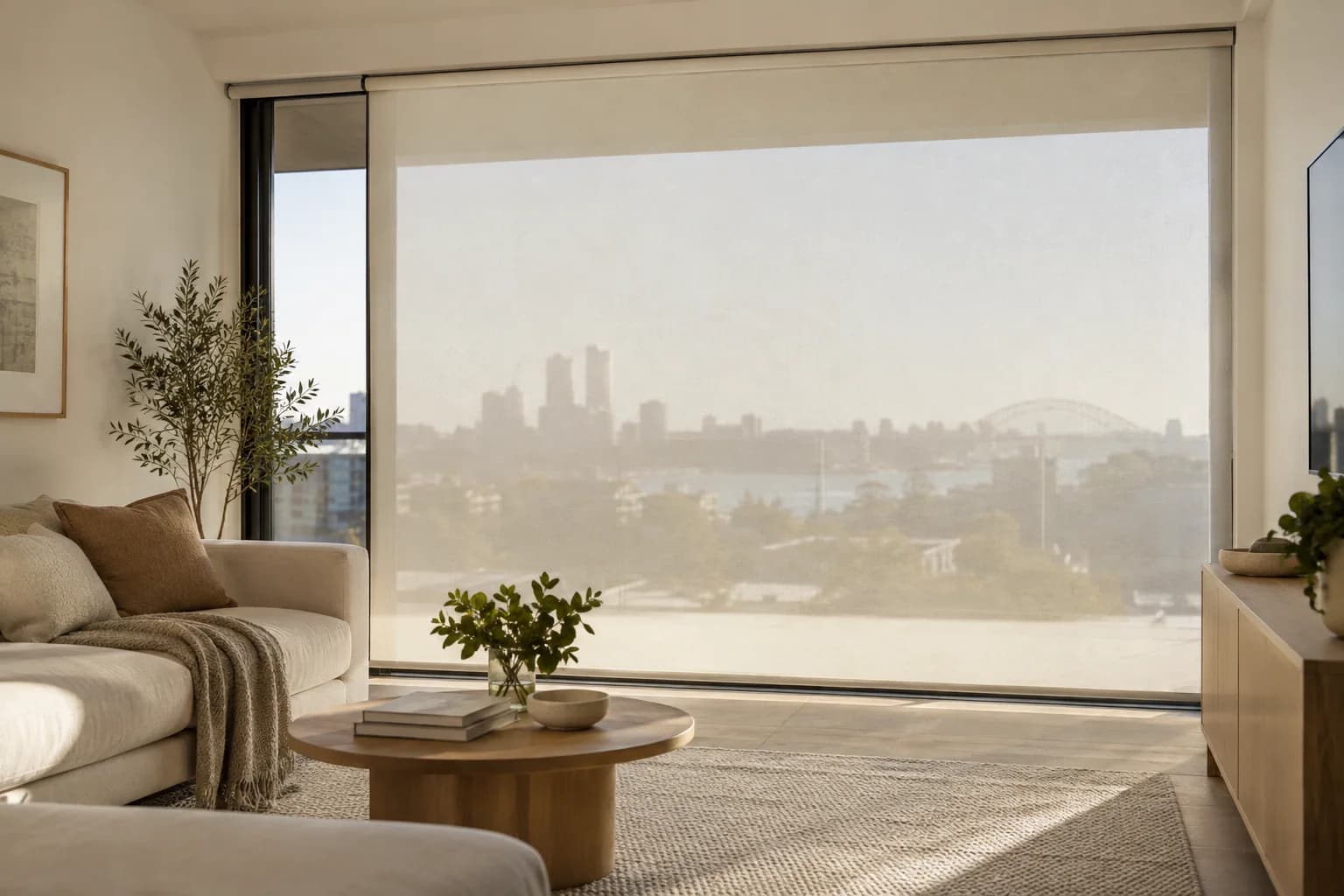
Compact everyday light and privacy control.
Roller Blinds
Start here when a clean architectural line, modest stack and direct fabric choice suit the window.
Explore system ↗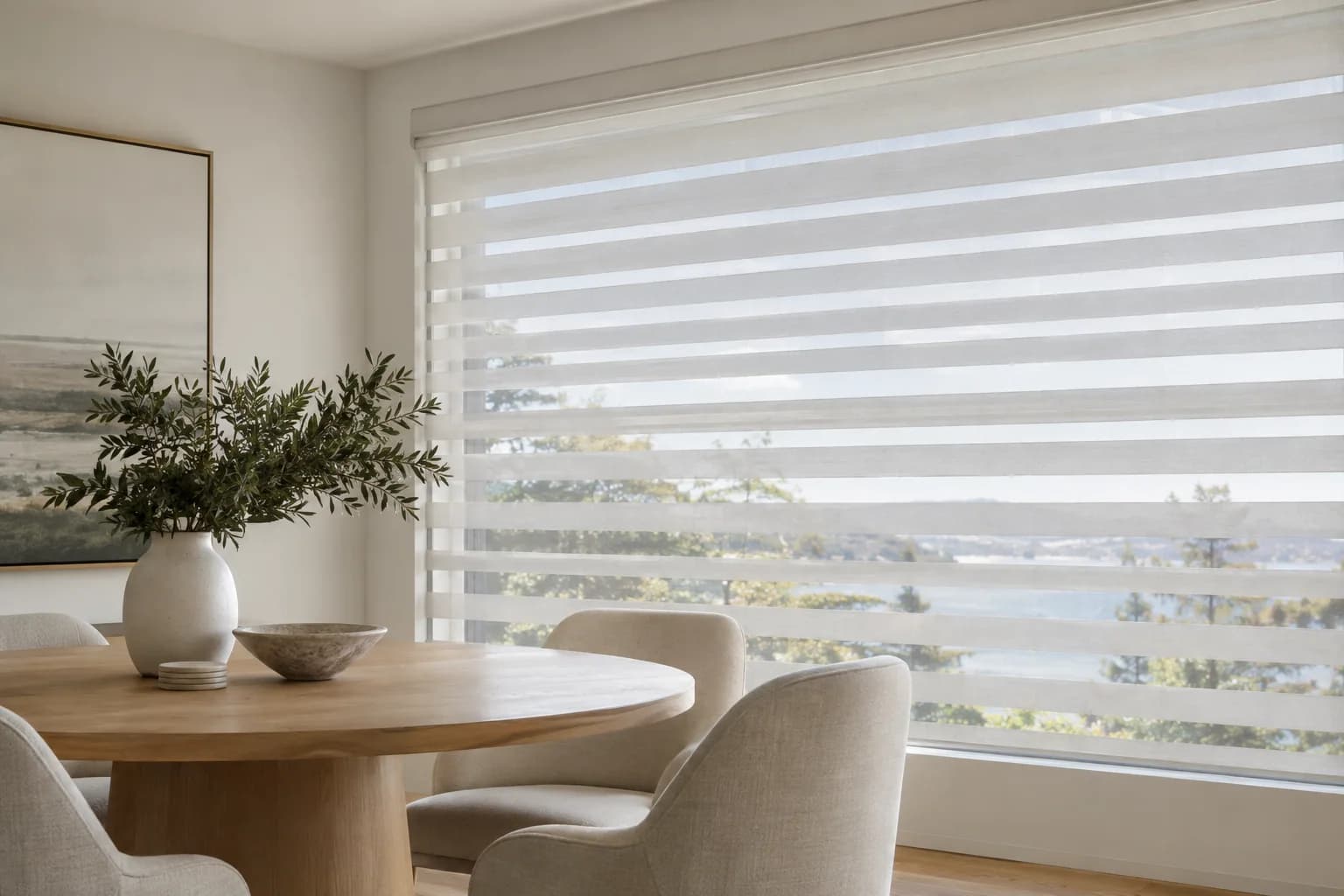
Soft filtered light with adjustable screening.
Sheer Shades
Useful when the room needs a softer face than a roller and privacy must change through the day.
Explore system ↗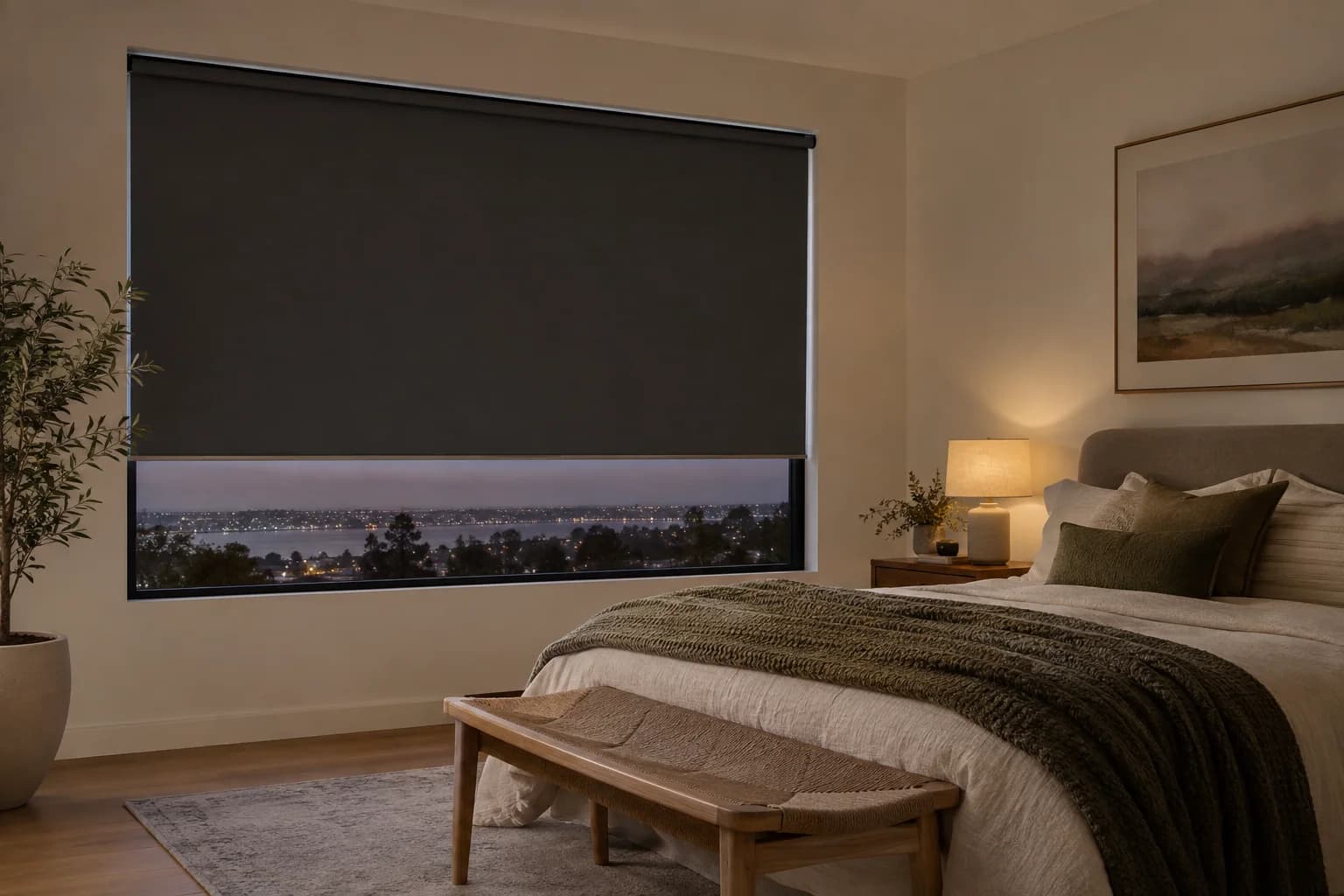
Room darkening specified around fabric and fit.
Blockout Blinds
Choose the darkness target first; then resolve overlap, edge gaps and any channel or curtain layer.
Explore system ↗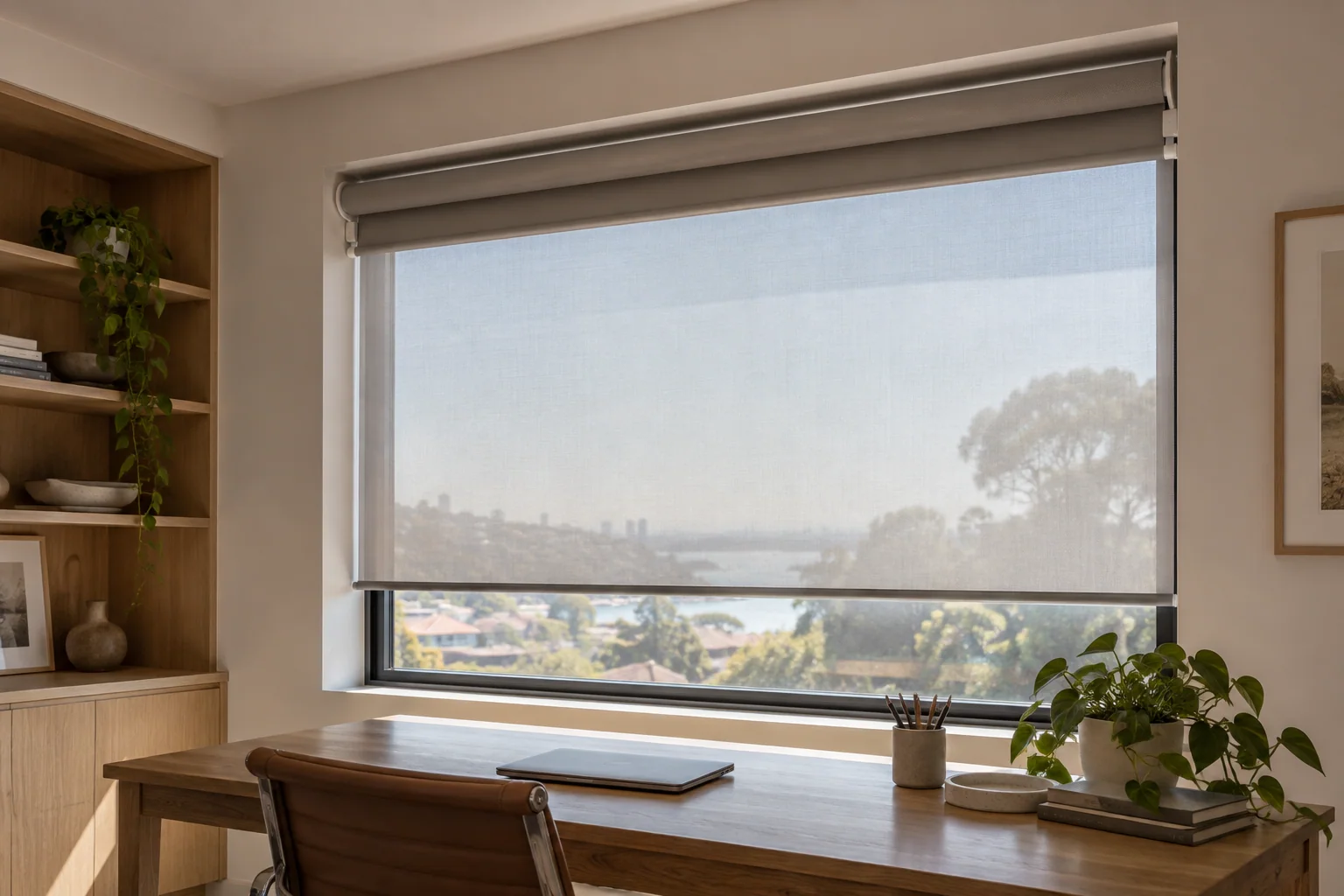
Daytime screening and night privacy in one window zone.
Double Roller Blinds
Strong where two genuinely different fabric jobs justify the extra bracket depth and hardware.
Explore system ↗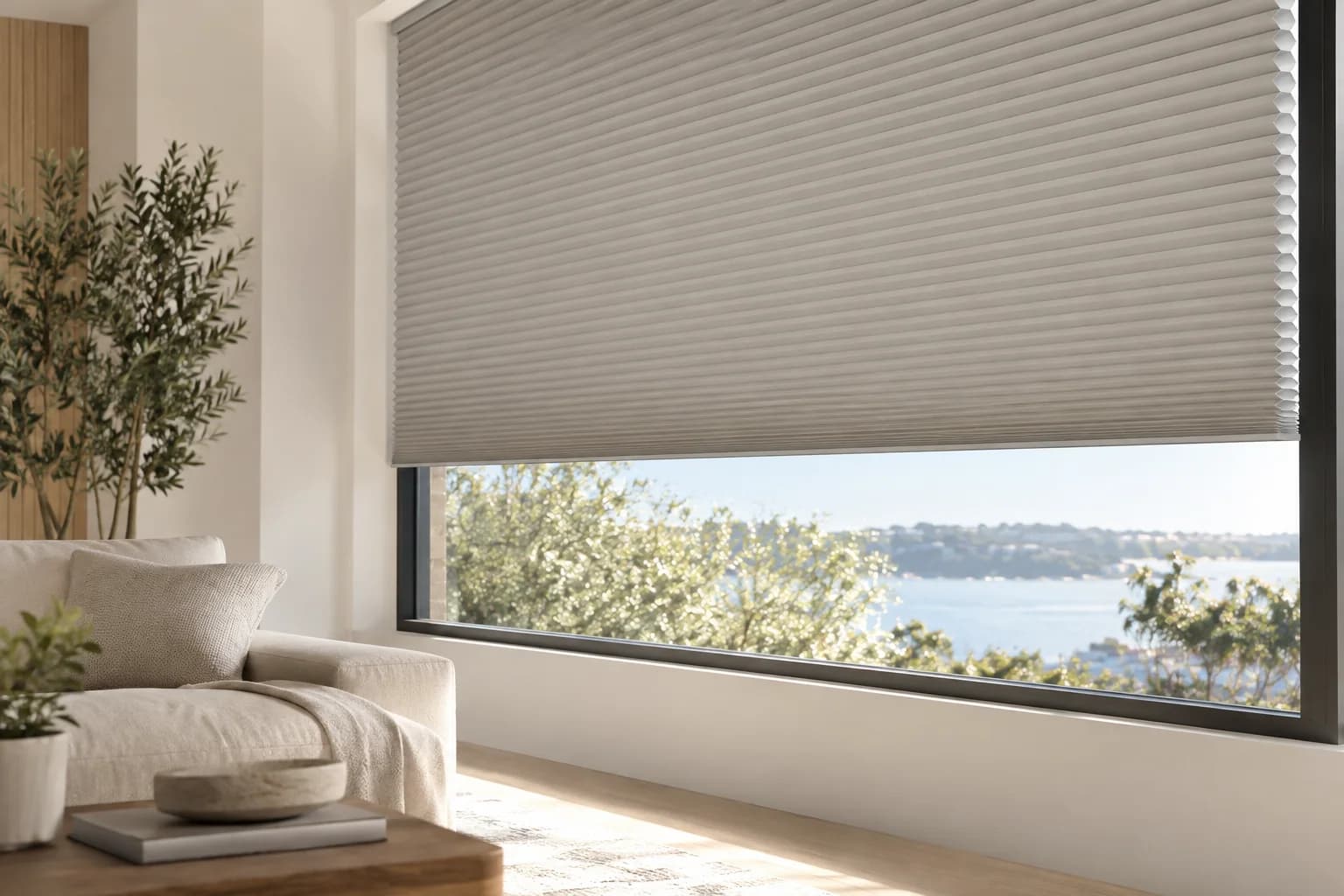
Cellular structure, compact stack and flexible privacy.
Honeycomb Blinds
Consider where top-down operation, a softly structured face or an additional still-air layer is useful.
Explore system ↗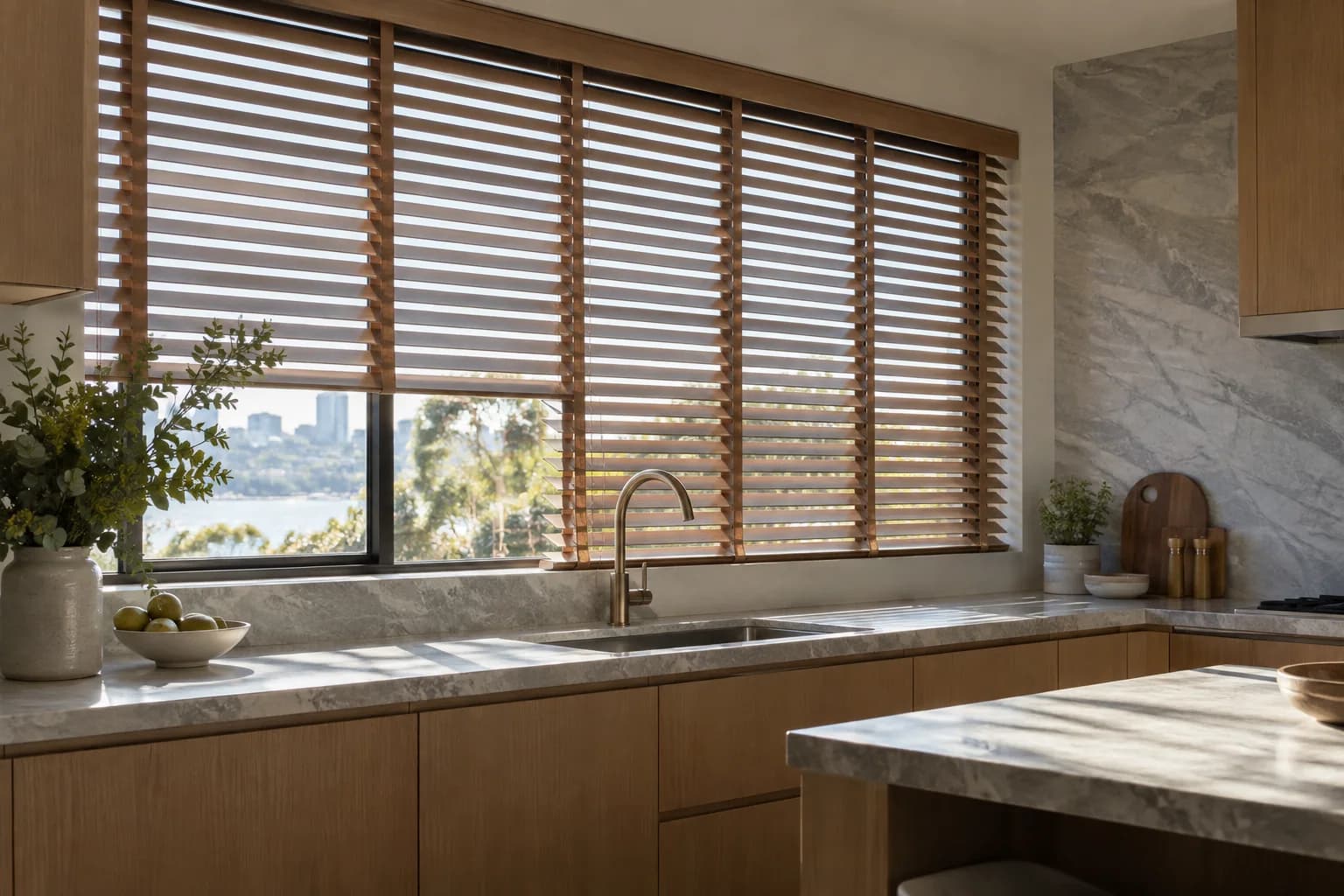
Precise louvre control for practical, high-use rooms.
Venetian Blinds
Valuable when adjustable light direction and a maintainable surface matter more than textile softness.
Explore system ↗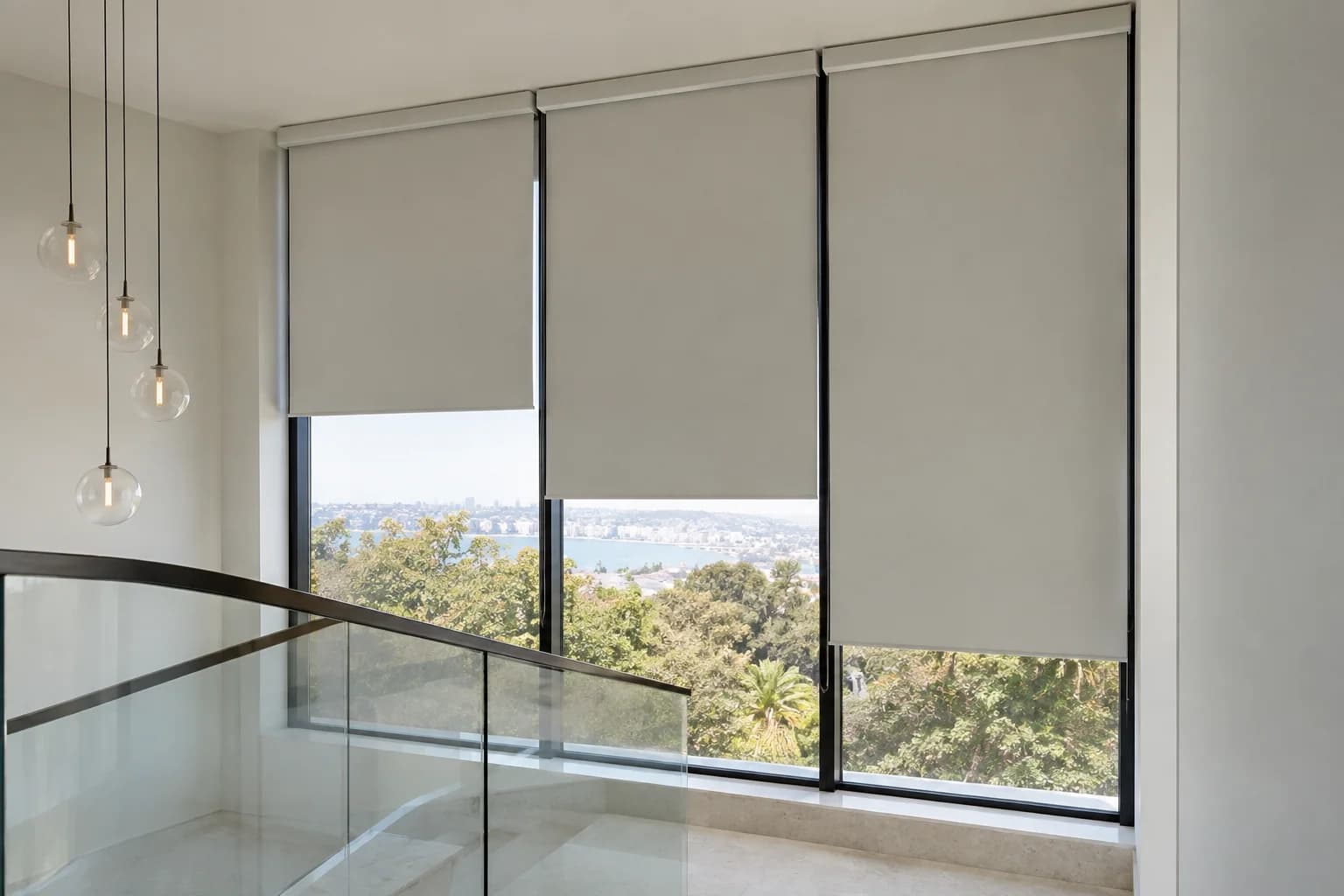
Practical control for larger, higher or multiple blinds.
Motorised Blinds
Plan the blind, load, power, controls, fixing and future access before selecting the motor.
Explore system ↗Fabric range
The useful choice is not the number of colours.
It is having the right combination of openness, opacity, colour, texture, width and performance for the room. Two fabrics that look similar in a sample book can behave very differently against real daylight.
A darker sunscreen can improve view-through in some daylight conditions while appearing stronger from inside. A pale fabric may feel quieter in the room but react differently to glare. Light-filtering cloth obscures direct views while retaining a glow; blockout cloth stops transmission through its face but does not seal the edges.
Check weave, colour, silhouettes and direct sightlines.
Resolve the cloth and the light paths around it.
Sydney · Established 2003
Two decades of windows teach you where the details matter.
Sydney homes rarely present the same window twice. CBD and inner-city apartments bring large glass, close neighbours and changing glare. Inner West renovations bring deep architraves, uneven reveals and projecting handles. North Shore and Hills new builds may offer broad openings but need blind divisions, power and recess details resolved before finishes close.
Western sun, coastal exposure, cross-ventilation and everyday family use can change the specification again. These details are easier to solve before the blind is ordered than after it is installed. Experience is visible in the questions asked at measure—not in repeating a number beside every product.
Professional installation
The blind is only finished when it operates correctly on the actual window.
Measure the operating space
Recess depth, squareness, mullions, handles, opening sashes, sliding doors and fixing surfaces decide what the proposed blind can physically do.
Resolve fabric and hardware
Opacity, width, roll diameter, headrail, bottom rail, control side, child safety and motor load belong to the same specification.
Install, align and test
Level, bracket spacing, fabric tracking, clear travel, group alignment and motor limits are checked on the completed opening—not assumed from the order sheet.
Systems, fabrics & sourcing
More choice is useful only when it leads to a better specification.
Coordinated sourcing
CCBD can draw from a broad network of fabrics, blind systems, components and motorisation options. Australian and international sourcing may be considered according to design, performance, availability and budget, while measurement, specification and installation remain coordinated for the Sydney project.
Responsive delivery
Fabric availability, accurate measurement, final system choice and early approval of motors or specialist hardware affect delivery. Coordinating those decisions reduces avoidable delay; timing is confirmed for the actual order rather than presented as a universal promise.
Support after installation
Useful support can include operation guidance, installation adjustment, motor commissioning, service coordination and replacement parts where available for the supplied system. Future additions are checked against current compatible hardware.
Professional judgement
Sometimes the right blind is not a blind.
A compact roller is not automatically right for a decorative focal window. A Venetian is not the answer when textile softness leads the room. A sunscreen fabric does not solve dependable night privacy, and an ordinary blockout roller does not create a sealed dark room.
CCBD may recommend a Roman blind, curtain, shutter, layered treatment or a different division when that better resolves the window. The purpose of the consultation is to remove guesswork—not to force every opening into the same product family.
Blinds knowledge hub
Read the detail behind the decision.
A specialist decision, not a product catalogue
Bring us the window. We’ll work out which blind belongs there—and why.
Tell us when privacy matters, where the sun arrives, how the window opens and how often the blind will move. We will compare the system, fabric, fit and operation before the finish is selected.