S-Fold Curtains · Sydney
A simpler heading. A better line.
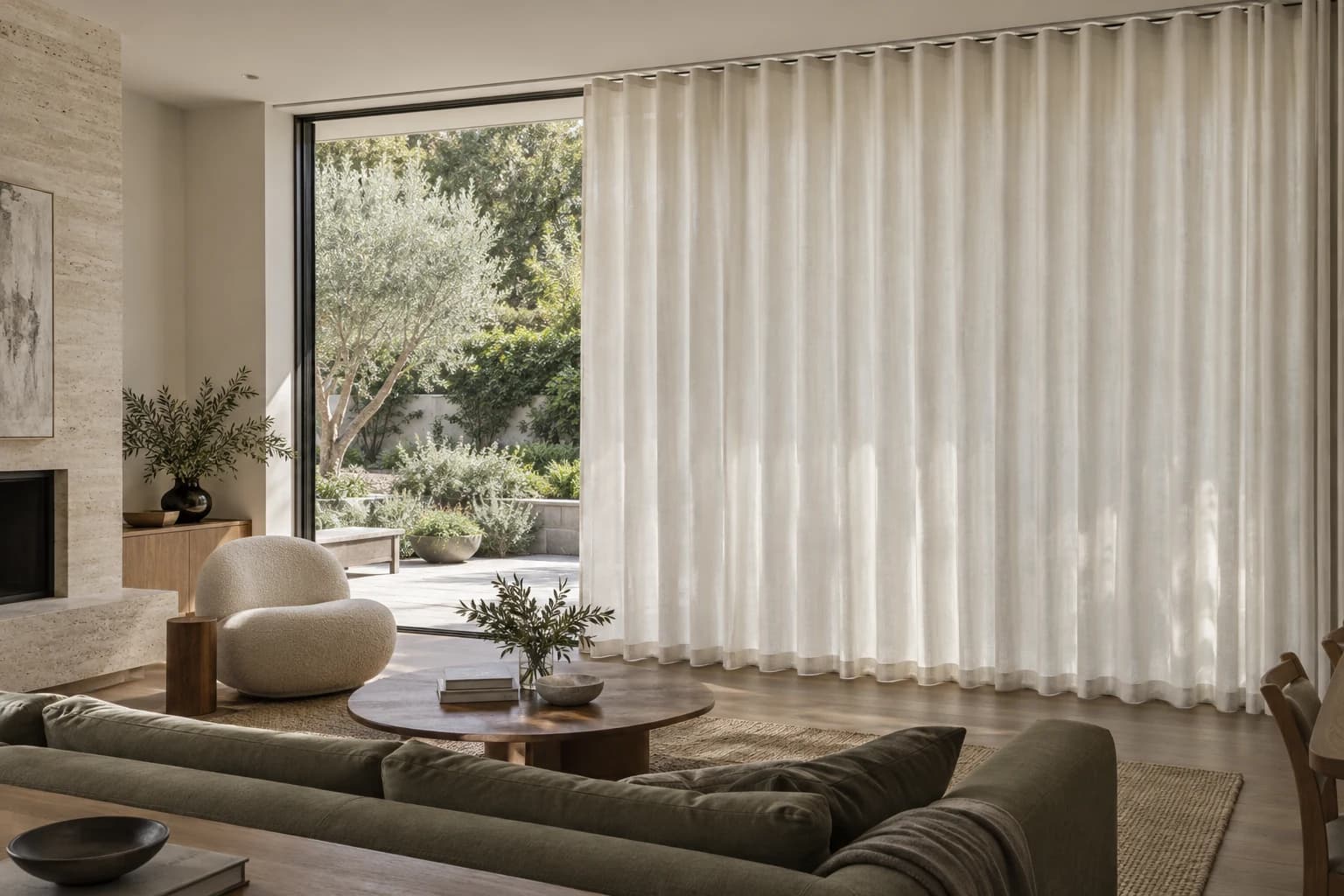
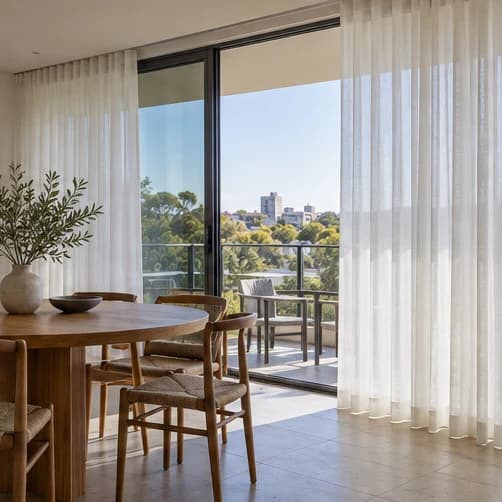
S-Fold curtains create a continuous, even rhythm from track to floor. Their clean profile works particularly well with contemporary interiors, large glazing and ceiling-mounted tracks.
The simplicity of the finished curtain depends on getting the fabric, fullness, track and making right.
Why S-Fold
Quiet in the room. Precise at the window.
S-Fold has become a natural choice for many contemporary Sydney interiors because it sits quietly within the architecture. There are no decorative pleats competing with the room — just an even rhythm of folds and the texture of the fabric.
It works particularly well across wide windows, sliding doors and full-height glazing, where the curtain can feel more like part of the architecture than an added decoration. Sometimes described as wave curtains, the heading is only one part of the complete specification.
Fabric first
The fabric decides the fold.
Not every fabric produces the same S-Fold.
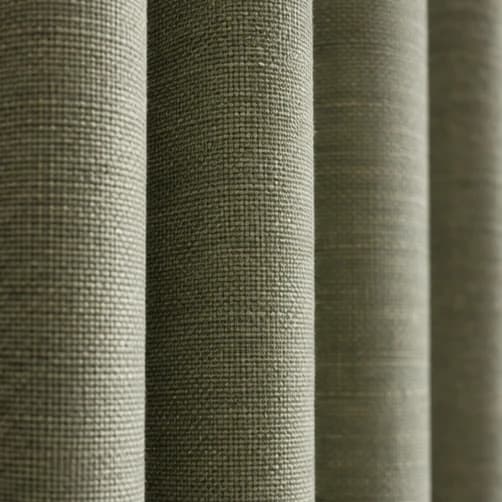
Weight, weave, softness, dimensional behaviour and fullness influence how the wave forms, how it stacks and how naturally it returns after the curtain has been opened.
At CCBD, we consider the fabric and finished curtain together rather than applying the same heading specification to every cloth.
Made by CCBD
Made to hold its line.
A well-made S-Fold should look controlled without looking stiff.
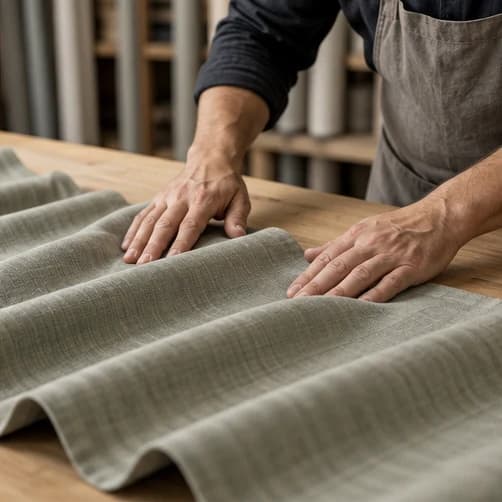
Where suitable for the selected textile, CCBD uses professional workroom finishing and heat-setting techniques to help establish a cleaner, more consistent fold through the drop of the curtain.
Fabric behaviour is assessed first. Fibre composition, finish and construction influence how a curtain should be handled, pressed and finished.
The objective is not an artificially rigid curtain, but a more consistent fall and a fold that returns naturally to its intended form.
Fullness & proportion
More fabric is not automatically better.
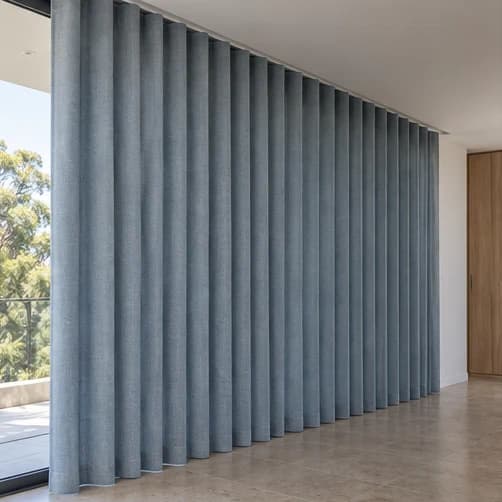
The appropriate fullness depends on the fabric, wave depth, track system, available stack space and scale of the window.
Too little fabric can make the curtain feel flat. Too much can create unnecessary bulk and reduce the usable glass area when open.
CCBD resolves fullness as part of the whole window rather than applying one ratio to every curtain.
We design the fold for the window — not simply to a standard ratio.
In the room
An architectural line, with room to live.
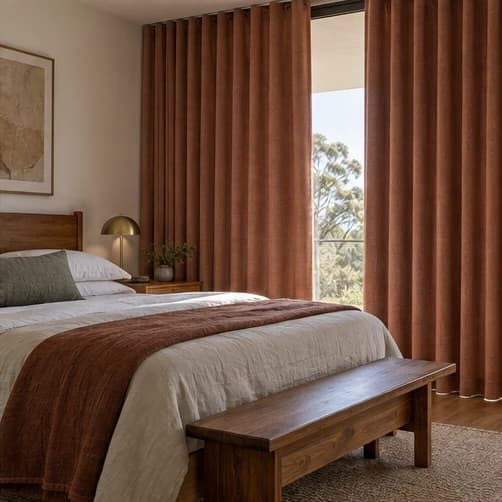
In an apartment or open-plan living space, S-Fold can bring continuity to full-height glazing and sliding doors. In a bedroom, the same quiet heading can soften the architecture with a more substantial lined fabric. The stack and daily opening route are planned for each room.
Professional judgement
S-Fold is not right for every window.
Highly structured fabrics, certain large-scale patterns, very limited stacking space or interiors calling for a more traditional expression may be better resolved with another heading.
The heading should belong to the fabric, window and architecture.
Before you decide
A few useful questions.
Is S-Fold suitable for every fabric?
No. Weight, weave, softness, dimensional behaviour and the proposed lining all influence the wave. Highly structured or bulky cloths and some large patterns may be better resolved with another heading.
How much fullness does an S-Fold curtain need?
The appropriate fullness depends on the cloth, carrier arrangement, intended wave depth, track system and available stack space. We review the finished window rather than applying one ratio to every curtain.
Can S-Fold curtains be motorised?
Yes, with a compatible track and heading specification. The finished weight, lining, width, fullness, stacking direction and power provision need to be considered together before making.
Your next step
Bring us the window.
We’ll work through the possibilities.
Share room photographs, approximate dimensions or plans, and tell us what you would like to change. We’ll work through the light, privacy, fabric and practical requirements before recommending the right treatment.
Arrange an in-home measure and quote.
Talk with us about fabrics, styles, light, privacy and planning your window furnishings.
Imagery includes AI-generated design illustrations, not completed CCBD projects or photographs of the CCBD workroom.