Fabric
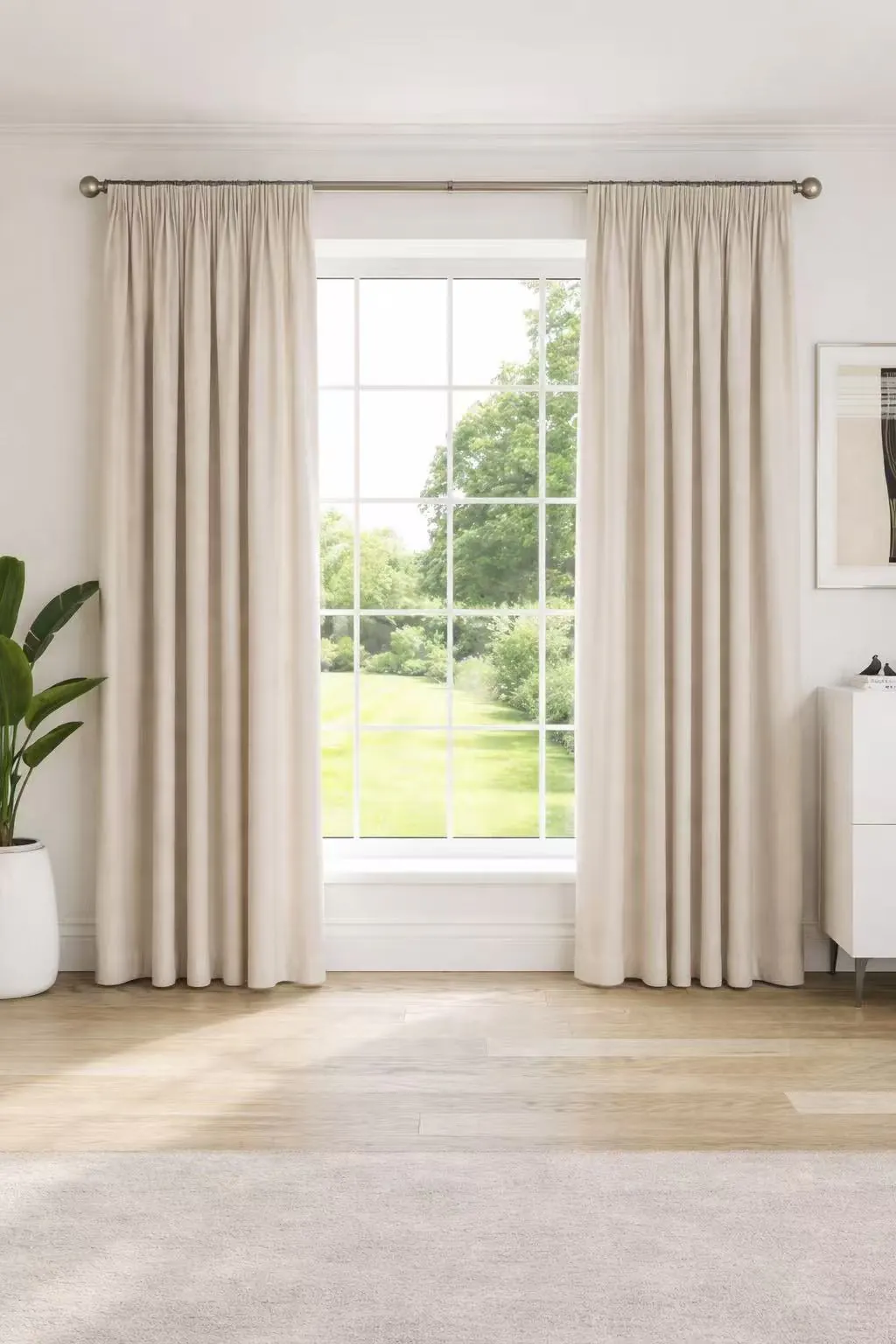
Softer fabrics settle differently from crisp or structured sheers.

Sheer Curtains by CCBD
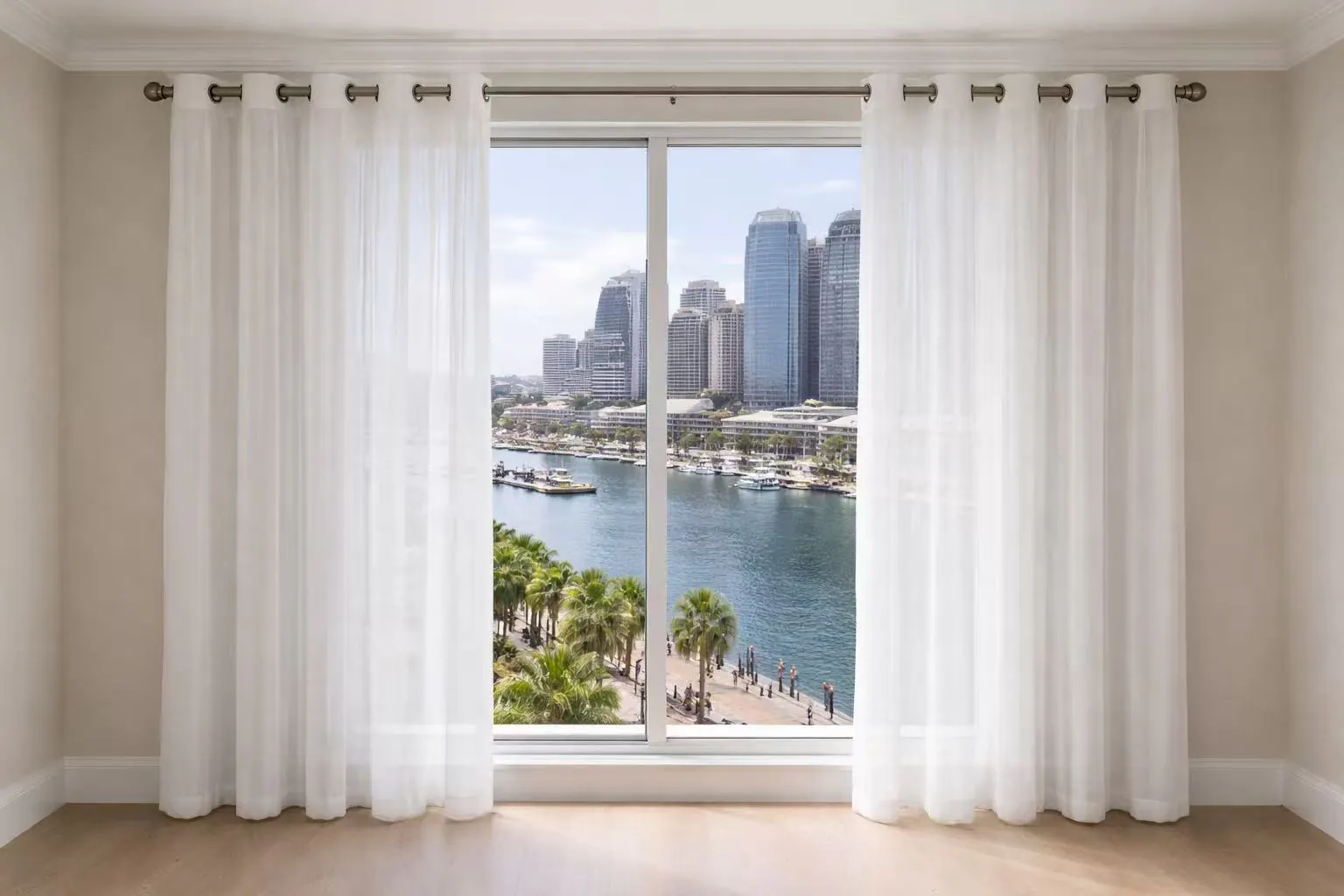
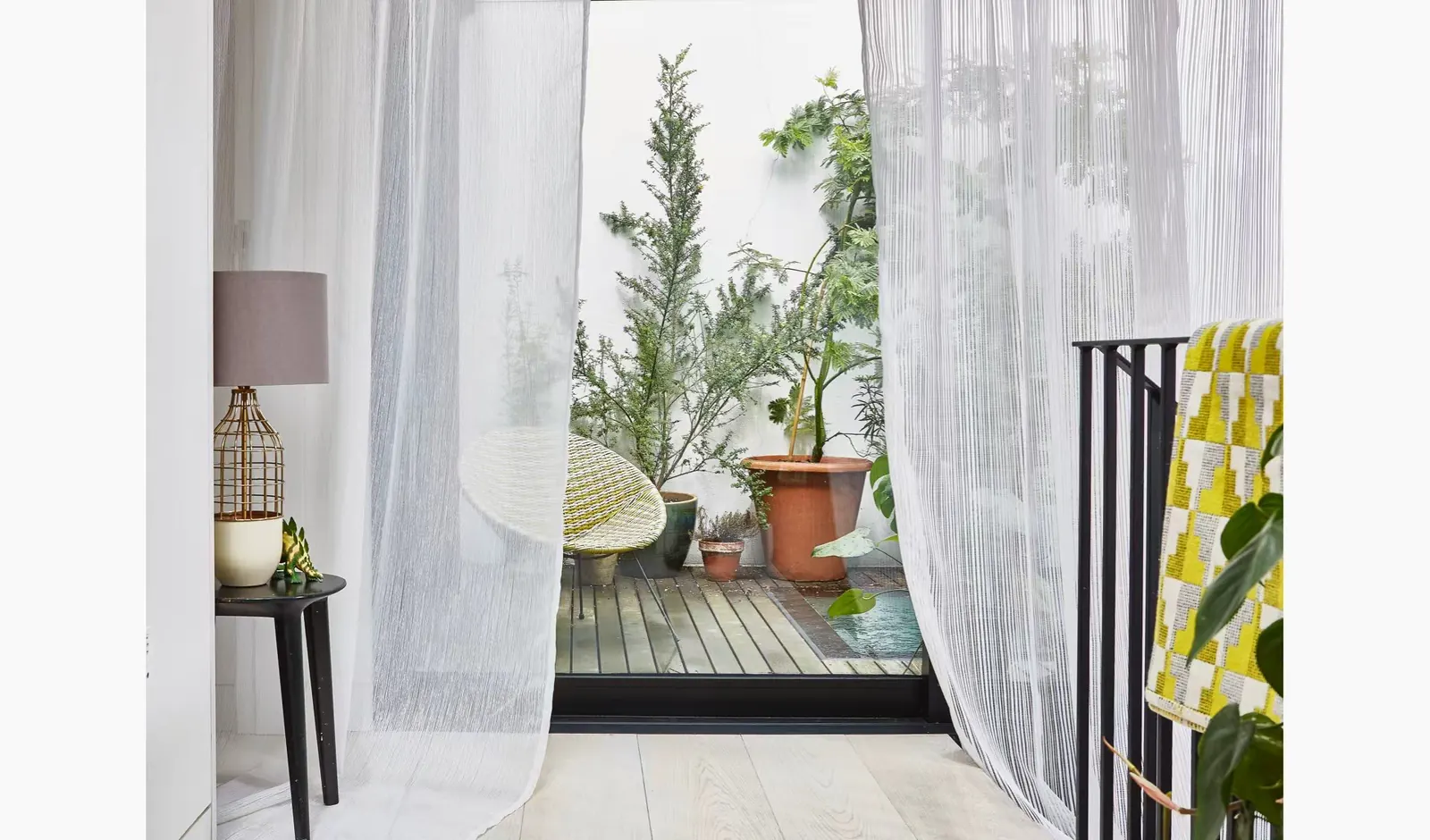
A beautiful sheer is about more than transparency. The weave, texture, fullness and way the fabric falls all influence how it filters daylight and frames the room.
Custom made and professionally installed for Sydney homes by CCBD.
Material & light
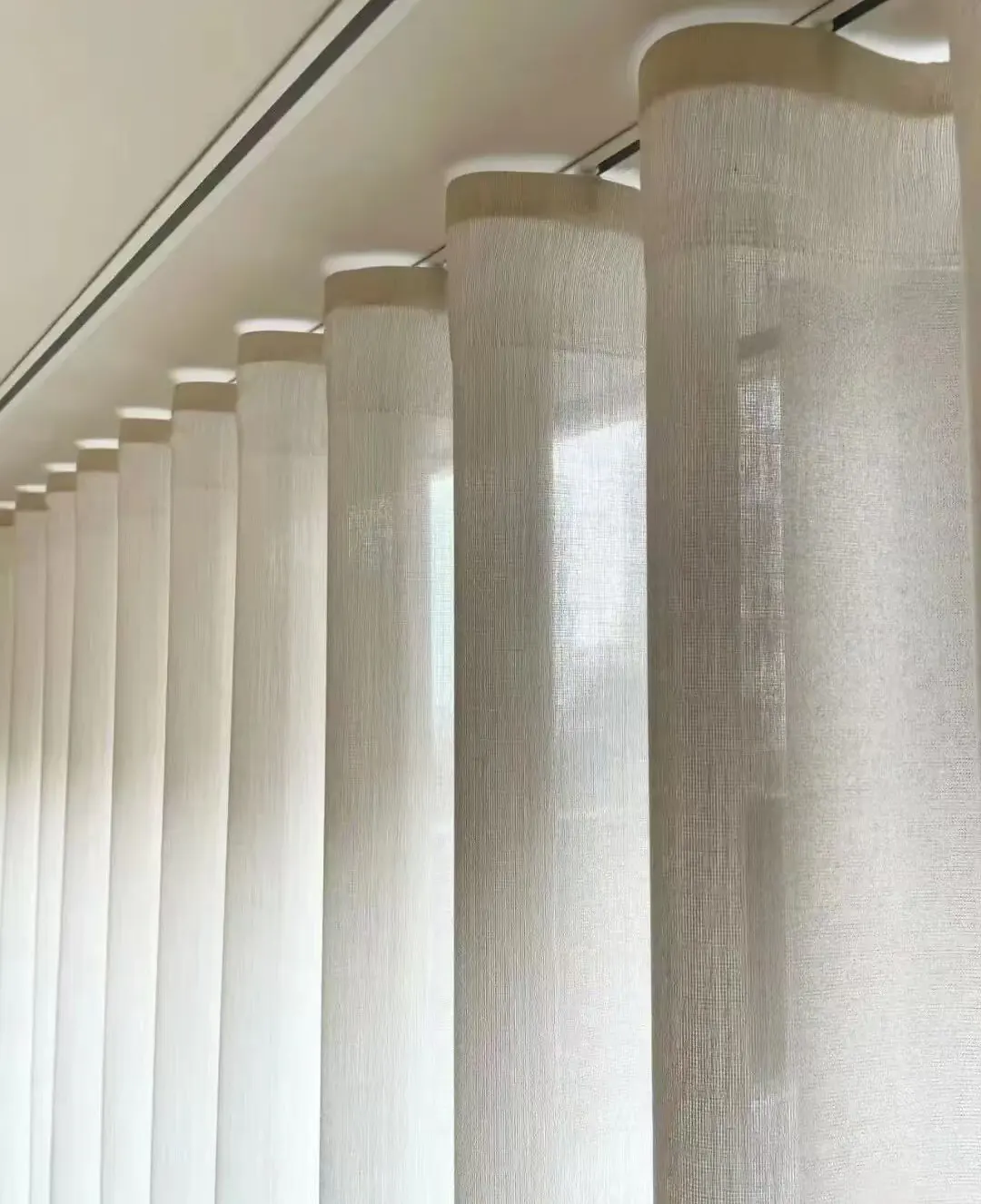
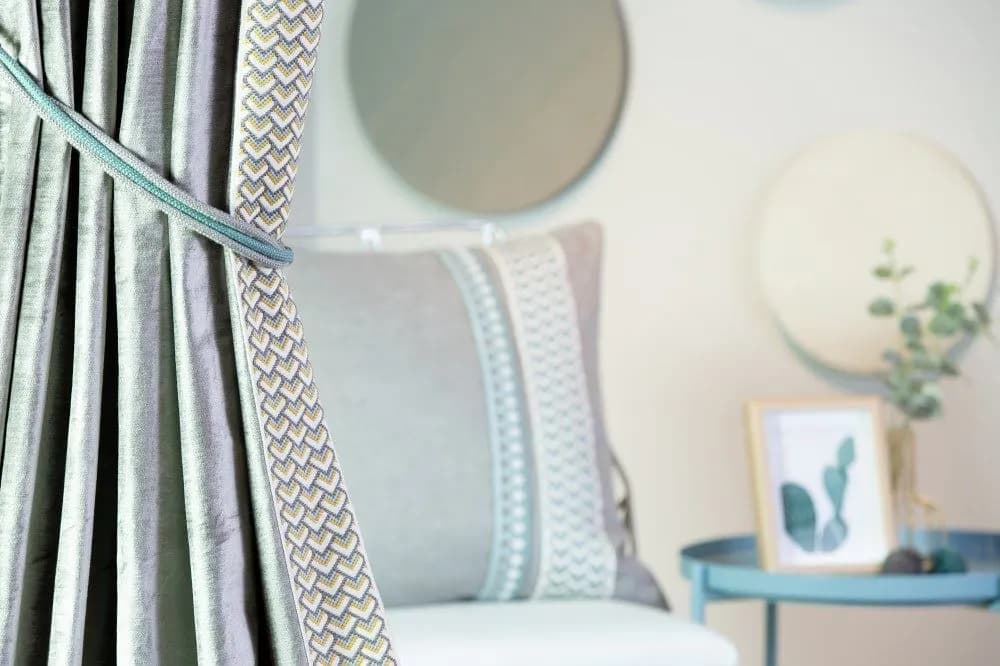
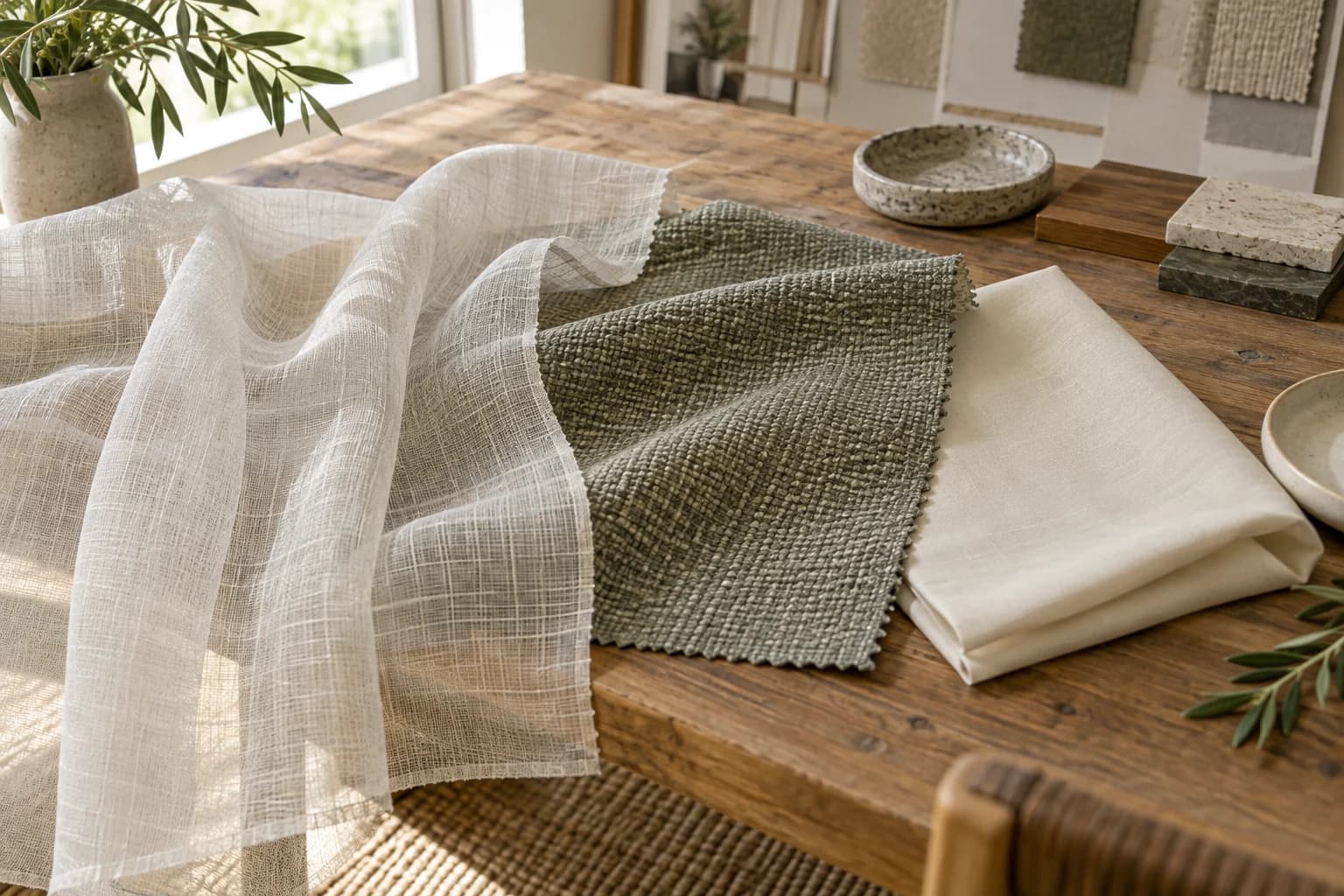
Linen sheers bring texture and softness to the window without making the room feel heavily dressed. Their natural variation gives the fabric character, particularly when daylight passes through the weave.
Pure linen is not always the most practical choice for every window. Depending on the room, exposure and required stability, we may recommend linen, a linen blend or a high-quality linen-look sheer.
The right choice is the fabric that gives the desired look while behaving properly at the window.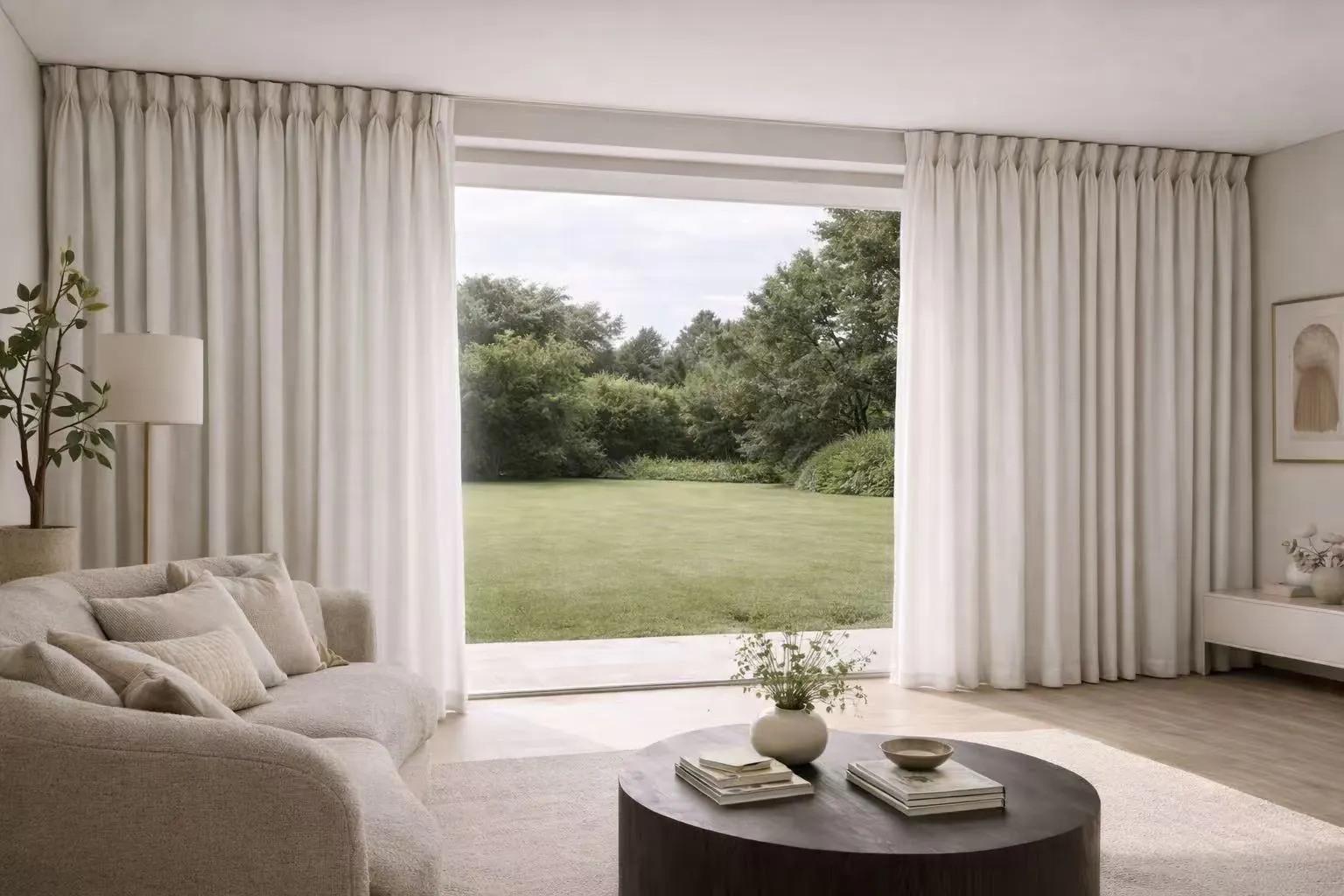
Professional judgement
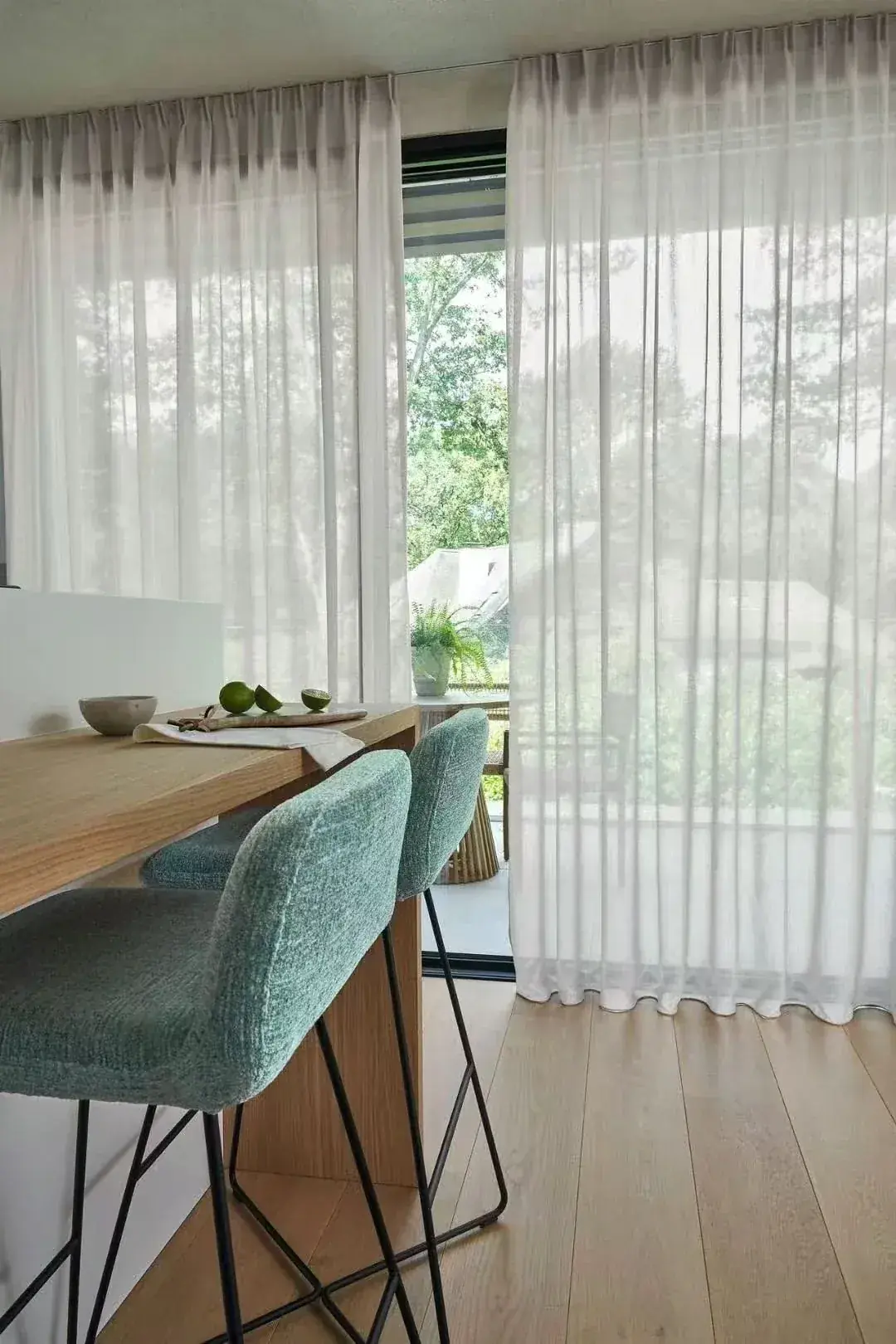
A sheer can look very different in a sample book than across a full window. We consider the weave against daylight, gather it into approximate folds and look at how its colour responds to the room around it.
Privacy also changes with light. A sheer that screens a room during the day should not automatically be relied upon for privacy after dark.
Drape & construction
The same sheer can behave very differently depending on its weight, weave, heading and fullness. These decisions should be made together.
Softer fabrics settle differently from crisp or structured sheers.
S-fold, pleated and other headings create different rhythm and volume at the window.
Too little fabric can look sparse; too much can overwhelm the window or create unnecessary stack.
S-Fold Sheers
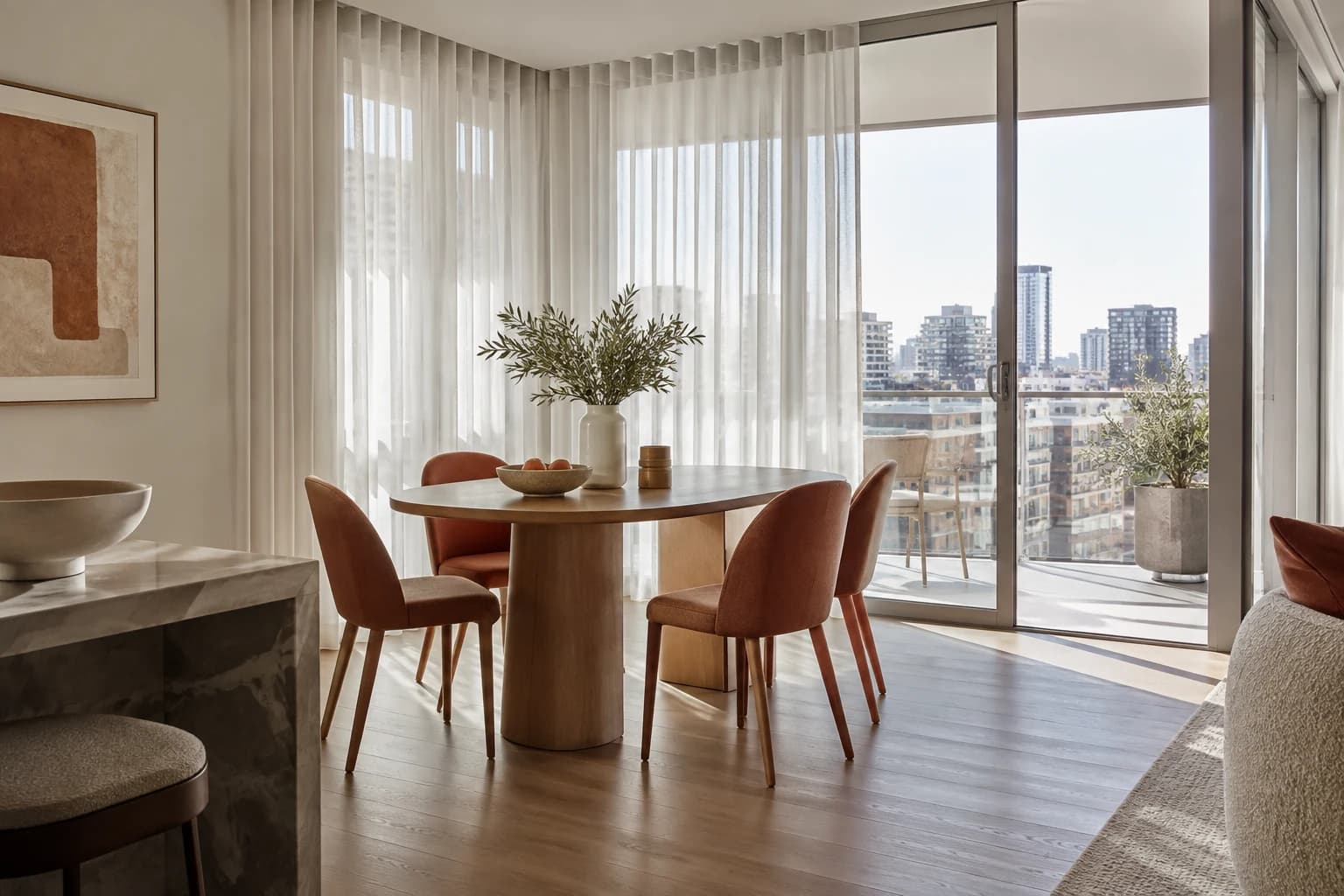
S-fold is a natural choice for many contemporary interiors, creating an even rhythm across the window and a clean relationship with the track.
But not every sheer fabric behaves equally well in S-fold. Fabric width, handle, weave, fullness, track position and available stack space still need to be considered.
Performance sheers · Sydney
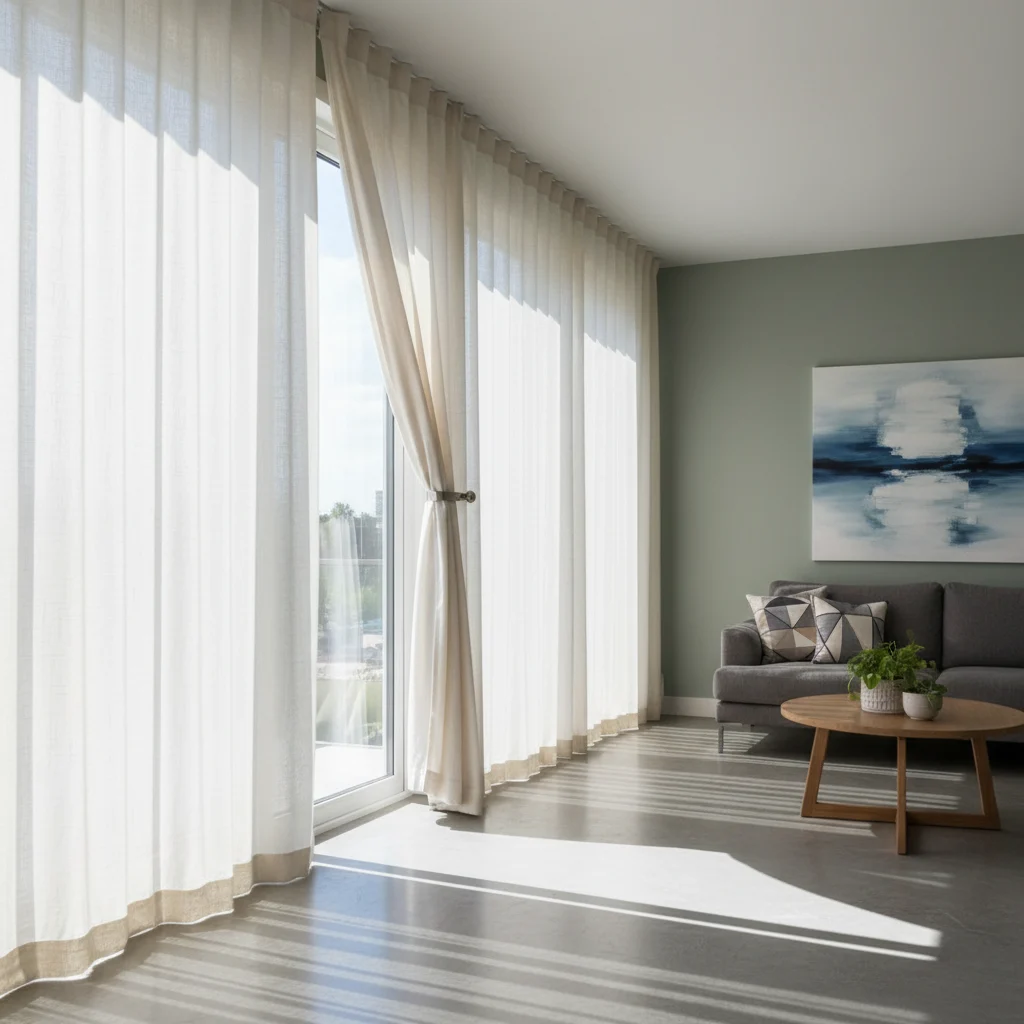
Sheer curtains are chosen for softness, privacy and filtered daylight. Selected modern fabrics can also be specified around UV management, thermal comfort, easier care and documented material attributes—without losing the lightness that makes sheers appealing in Sydney interiors.
The right choice depends on orientation, glazing, the room and what you want to improve. Start with how you want the room to feel—then choose the sheer.
What works best for a Sydney home? A sheer that balances daylight, daytime privacy, view, sun exposure and care at its particular window. One fabric will not solve every requirement.
What the window needs to do
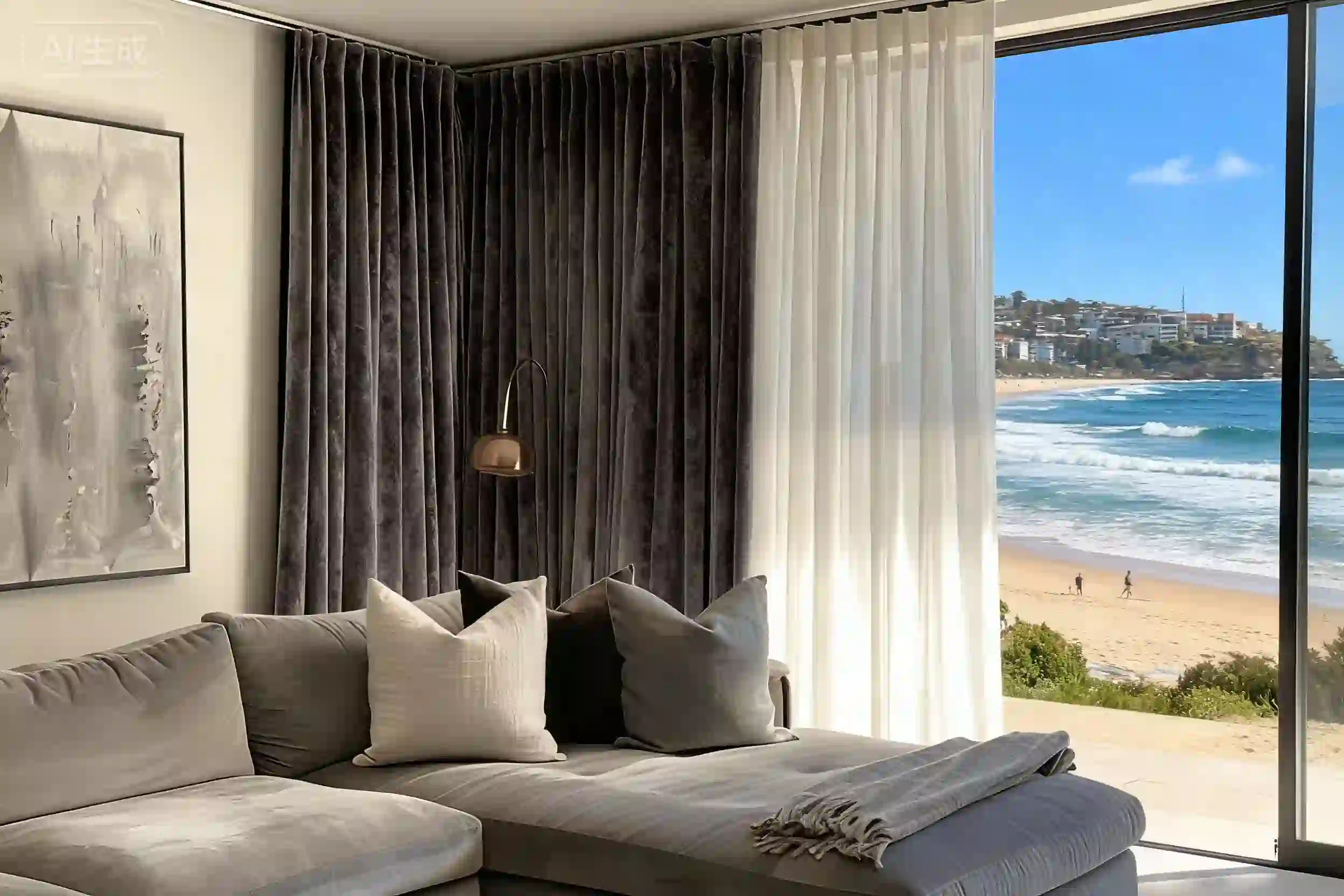
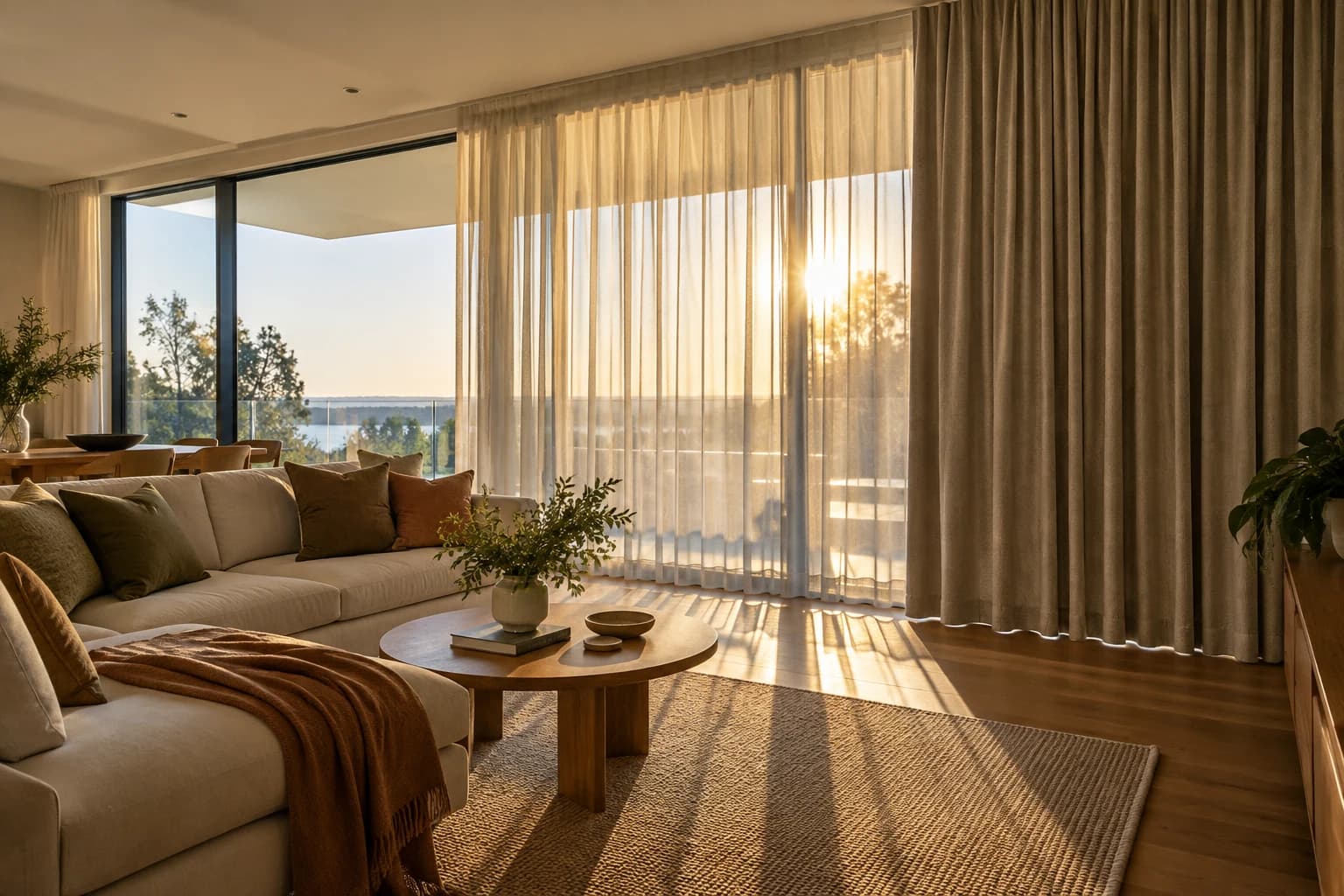
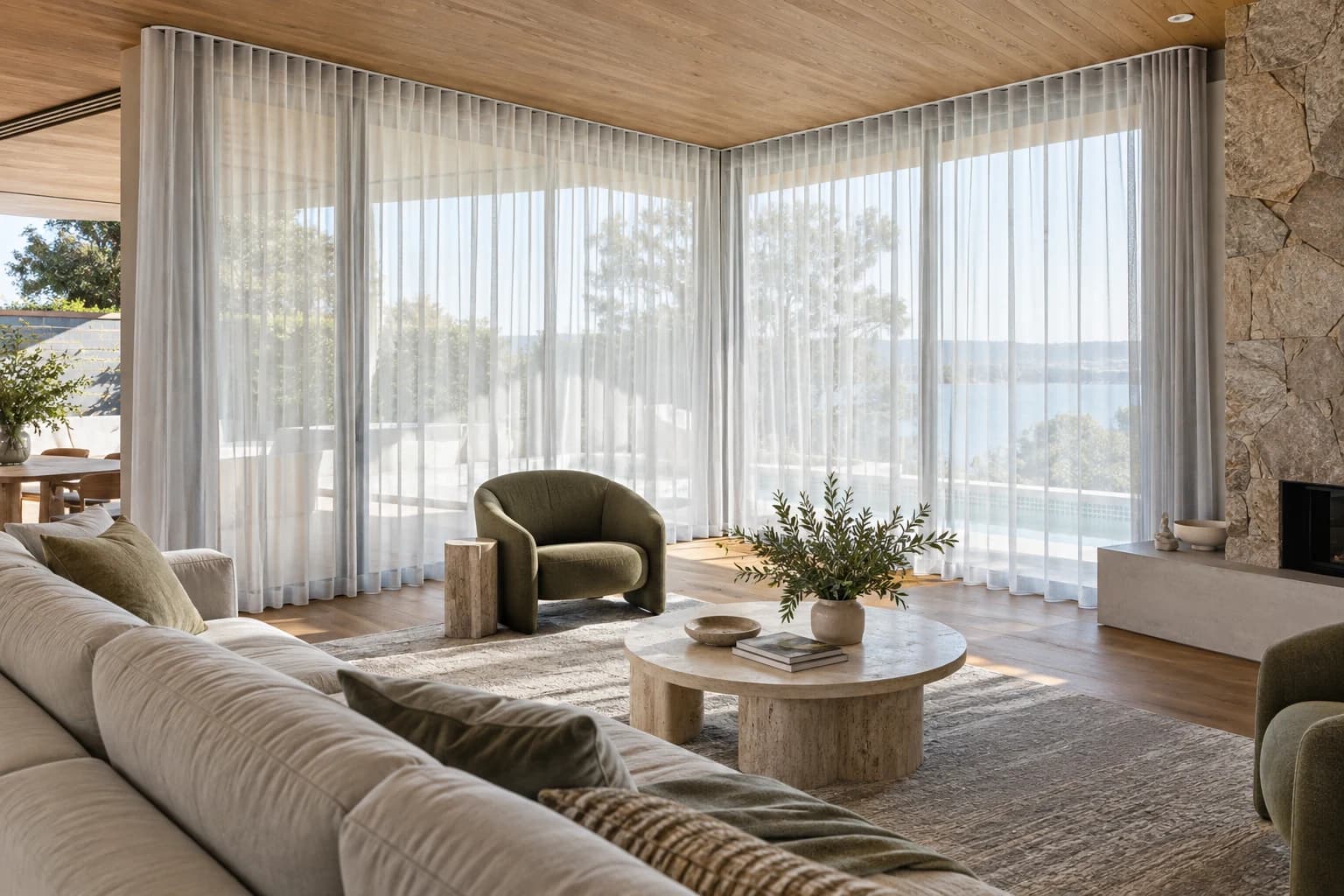
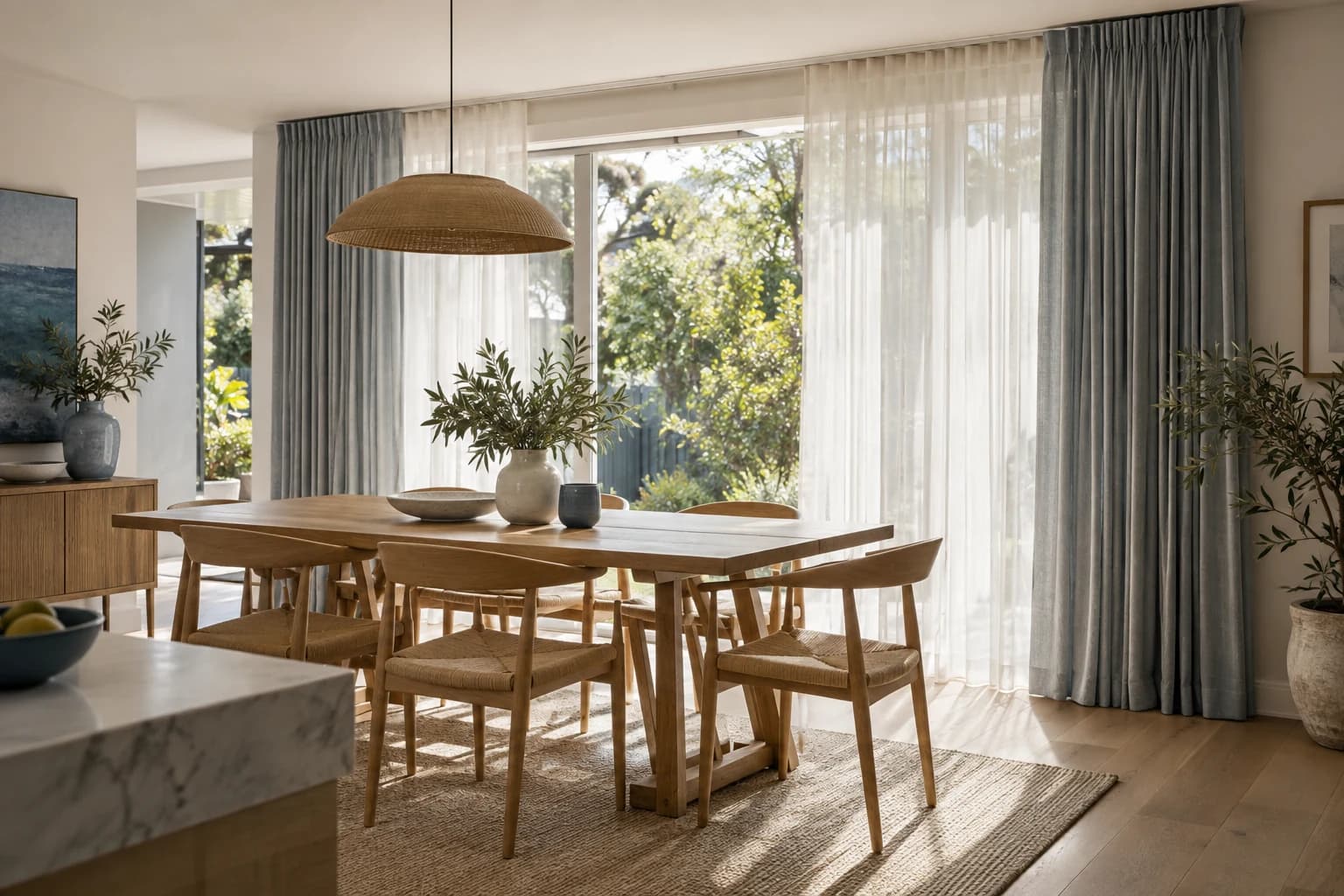
These photographs show design applications, not tested performance of the pictured fabric.
01 · UV & sunlight
Do sheer curtains block UV? Some selected fabrics are designed for enhanced UV filtering, but performance varies by fabric and installation.
North- and west-facing rooms, large glazing, timber floors and artwork may need more considered solar control. Ask for verified fabric data before relying on a particular UV claim; a sheer does not guarantee that furnishings will not fade.
03 · Thermal comfort
Do sheer curtains reduce heat? A sheer can moderate sunlight, but a sheer alone is not usually the strongest thermal window treatment.
Glazing, orientation, coverage, air movement and a closely fitted lined or blockout layer all matter. Plan the complete window treatment rather than assuming one lightweight fabric will control summer heat or winter heat loss.
See how a second layer changes the brief ↗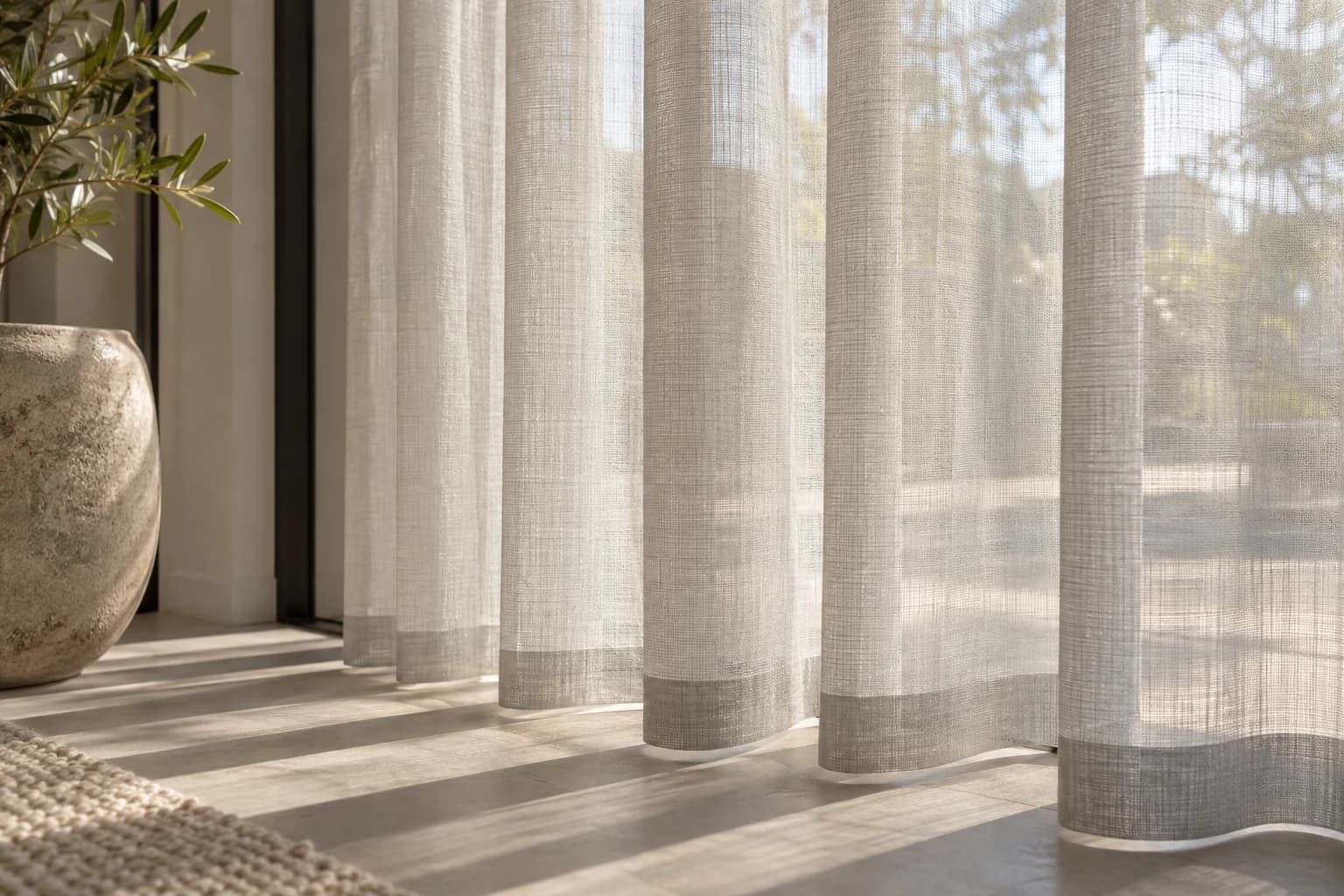
04 · Easy care
Which sheer fabrics are easiest to clean? Choose from options whose documented care instructions, stability and handling suit the room—not from appearance alone.
For busy Sydney homes, apartments and frequently used sliding doors, compare cleaning method, crease recovery, dimensional stability and durability. Machine washing is a fabric-specific claim and should only appear where the manufacturer permits it.
05 · Material choices
Can a sheer have documented environmental attributes? Yes, for selected fabrics where the manufacturer documents attributes such as fibre composition, recycled content or certification.
Durability, care and suitability for coastal exposure also affect the decision. We describe only the attributes supported by a product sheet rather than treating a symbol or natural-looking weave as proof.
A useful comparison
Light · daytime screening · texture
Light · privacy · documented solar or UV management
Light · privacy · practical documented maintenance
A selected combination of documented attributes
The best sheer is not the one with the most performance icons. It is the one whose appearance and documented performance match the window and the room.
Evidence before claims
Depending on the collection, that may include composition, width, weight, openness, UV data, care, environmental attributes, fire documentation, suitable applications and layering advice. Values are published only when verified for that fabric.
The second layer
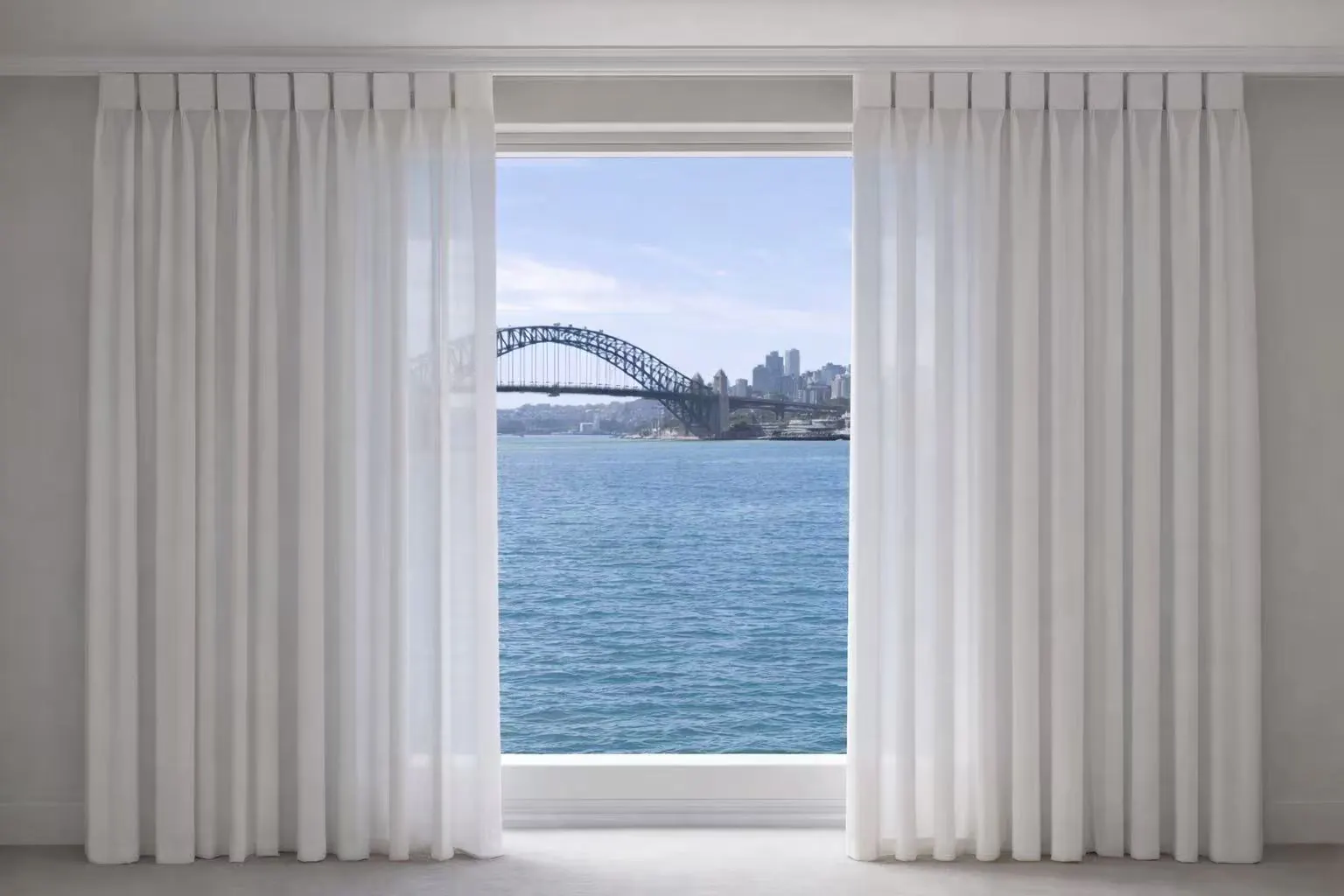
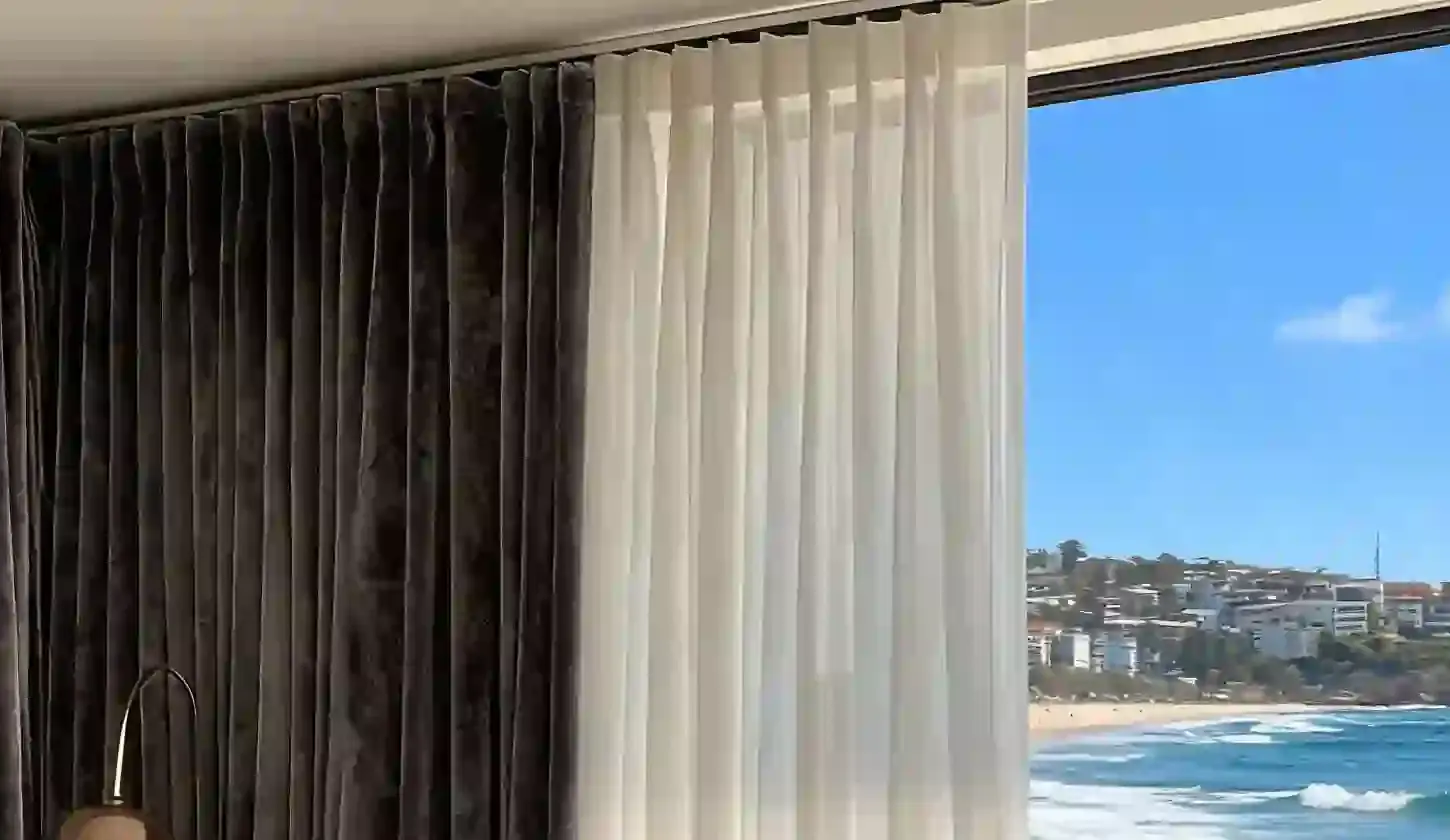
A sheer manages daylight beautifully, but many rooms need a second layer for night-time privacy, light control or insulation.
Depending on the window, this may be a lined curtain, blockout curtain, Roman blind or roller blind. Track projection, handles, stack-back and available wall space should be resolved together.
The second layer should be planned from the beginning—not added as an afterthought.Choose the complete treatment
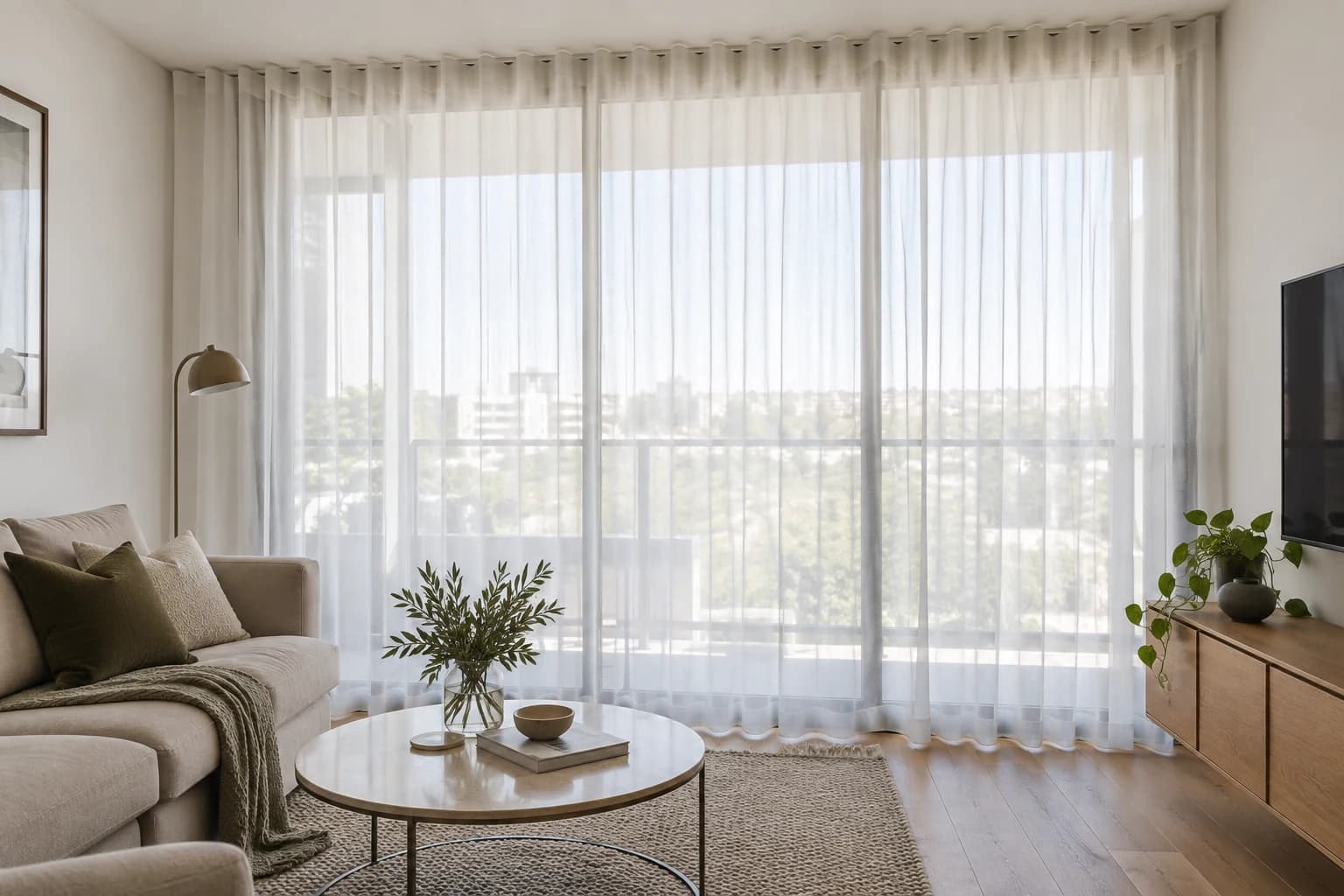
Filtered daylight, daytime screening and visual softness. Check the view and night-time privacy.
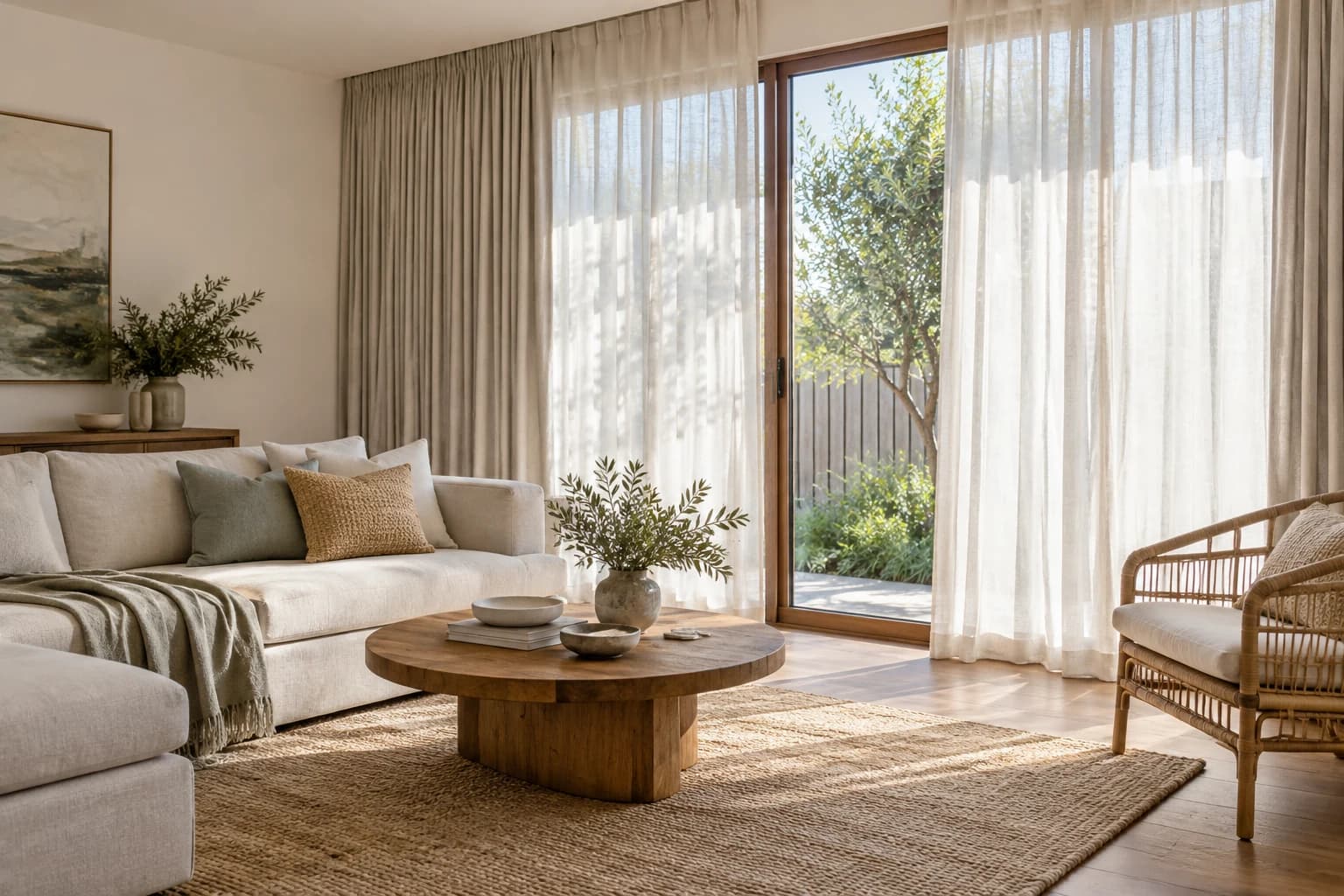
Greater light control, night privacy and a more substantial thermal window treatment.
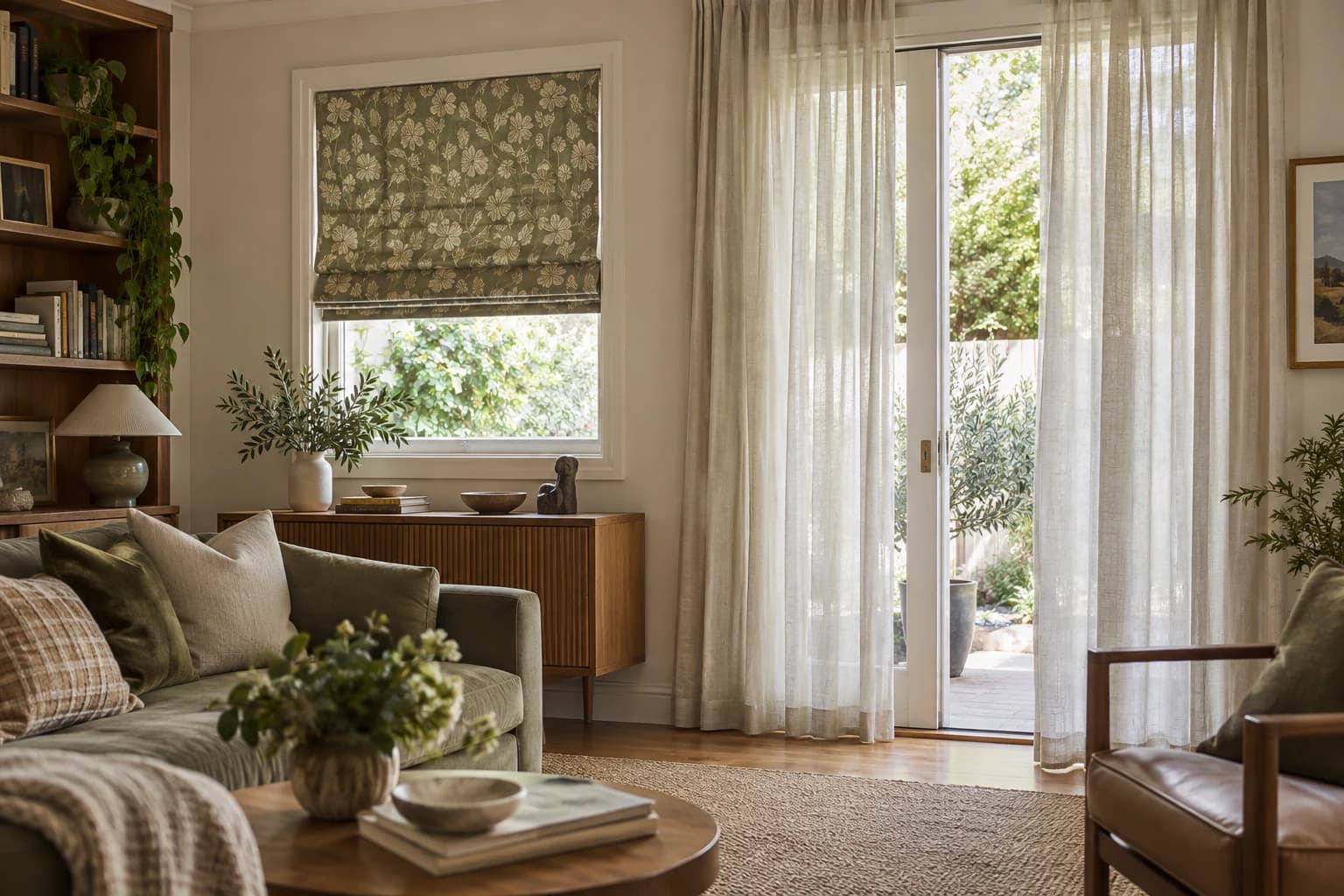
Flexible daylight with room-darkening or additional window coverage where needed.
Are sheer curtains energy efficient on their own? They can contribute to comfort, but the glazing and full treatment determine the result. For stronger thermal performance, Australian Government guidance recommends closely fitted lined curtains or blinds.
Explore Sheer Curtains
Made for the window
Heading, fullness, seams, hem, track position and finished length all influence how quietly a sheer sits within the room.
These details are resolved for the individual fabric and window rather than treated as a standard formula.
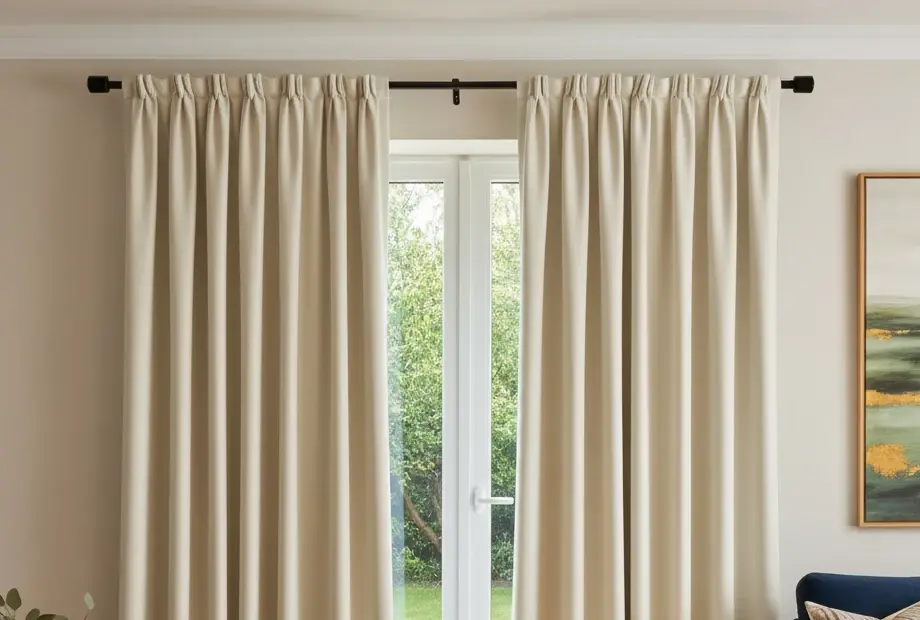
Which sheer is right for my window?
Sydney orientation, outlook, neighbouring windows and the way the room is used set the brief. Sometimes the answer is a sheer; sometimes it is a sheer plus another treatment.
Solar exposure, glare and verified UV filtering
Stack space, movement and fabric durability
Daytime screening, view-through and a night layer
View retention, sunlight and material suitability
Absorptive textiles and a softer-sounding interior
Sheer daylight with a lined or blockout second layer
Care instructions and resilience at frequently used openings
Glare, useful daylight and privacy
Questions & answers
The best sheer suits the actual window and priorities: daylight, view, daytime privacy, sun exposure, maintenance and whether a second layer is needed. A west-facing living room and a street-facing bedroom rarely call for the same specification.
They can provide useful daytime screening when it is brighter outside than inside, but the degree of privacy depends on weave, fullness, distance and light conditions. Test the fabric at the window before relying on it.
No. Some are pure linen, some are linen blends, and others use polyester or mixed fibres to create a linen-like texture with different stability, maintenance and care characteristics. We compare the appearance with the way the fabric needs to behave at the actual window.
Privacy changes with the relative light inside and outside. A sheer may provide useful screening during the day, but once the room is brighter than outdoors it should not automatically be relied upon for full privacy. Bedrooms and street-facing rooms often need a second layer.
A sheer can soften or reduce direct light depending on its weave and coverage, but it is not a guarantee against UV fading. For exposed windows, we consider orientation, fabric information and whether another solar-control layer is appropriate.
Sheers can give soft, continuous coverage across large glazing, while blinds offer more direct adjustment at individual windows. Consider balcony access, stack space, view, glare and night-time privacy; a layered combination may work best.
Yes, with the right fabric and hardware. Compare the light exposure, cleaning requirements, airflow and any salt-air conditions at the actual site rather than assuming all sheers and tracks have identical suitability.
Finished length is a design and practical decision. A contemporary sheer may finish precisely at or just above the floor, while a deliberate break or puddle creates a softer effect. Fabric movement, cleaning, doors, pets and floor variation all influence the detail.
Continue exploring
Your next step
Tell us the room, orientation, privacy requirements and what you want to improve. We can help determine whether the answer is a sheer alone, a selected performance sheer, or a layered window treatment.