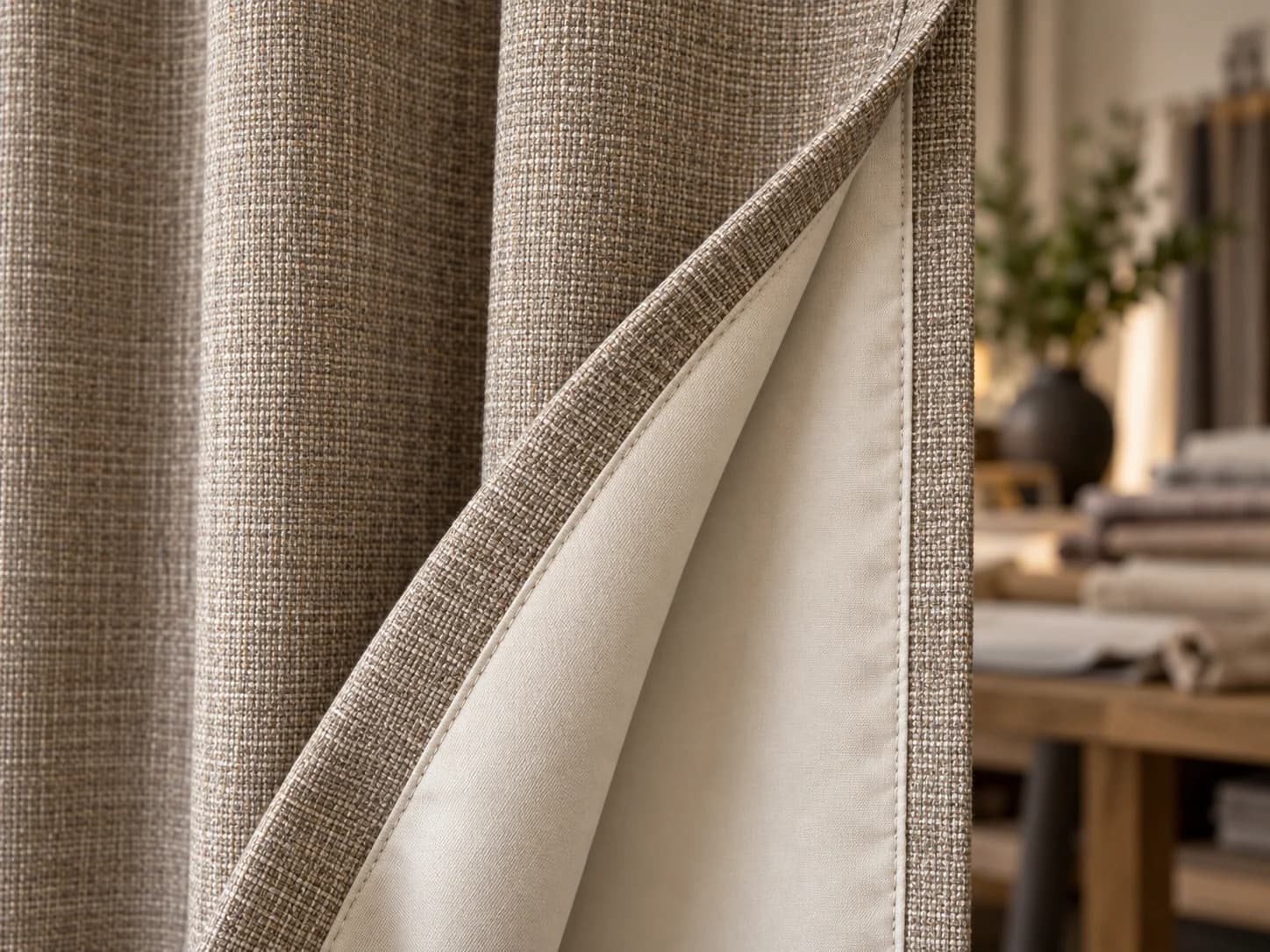
01 — Lined curtain
Decorative Fabric + Blockout Lining
Keep the decorative face fabric you love while the lining provides the principal light-control layer.
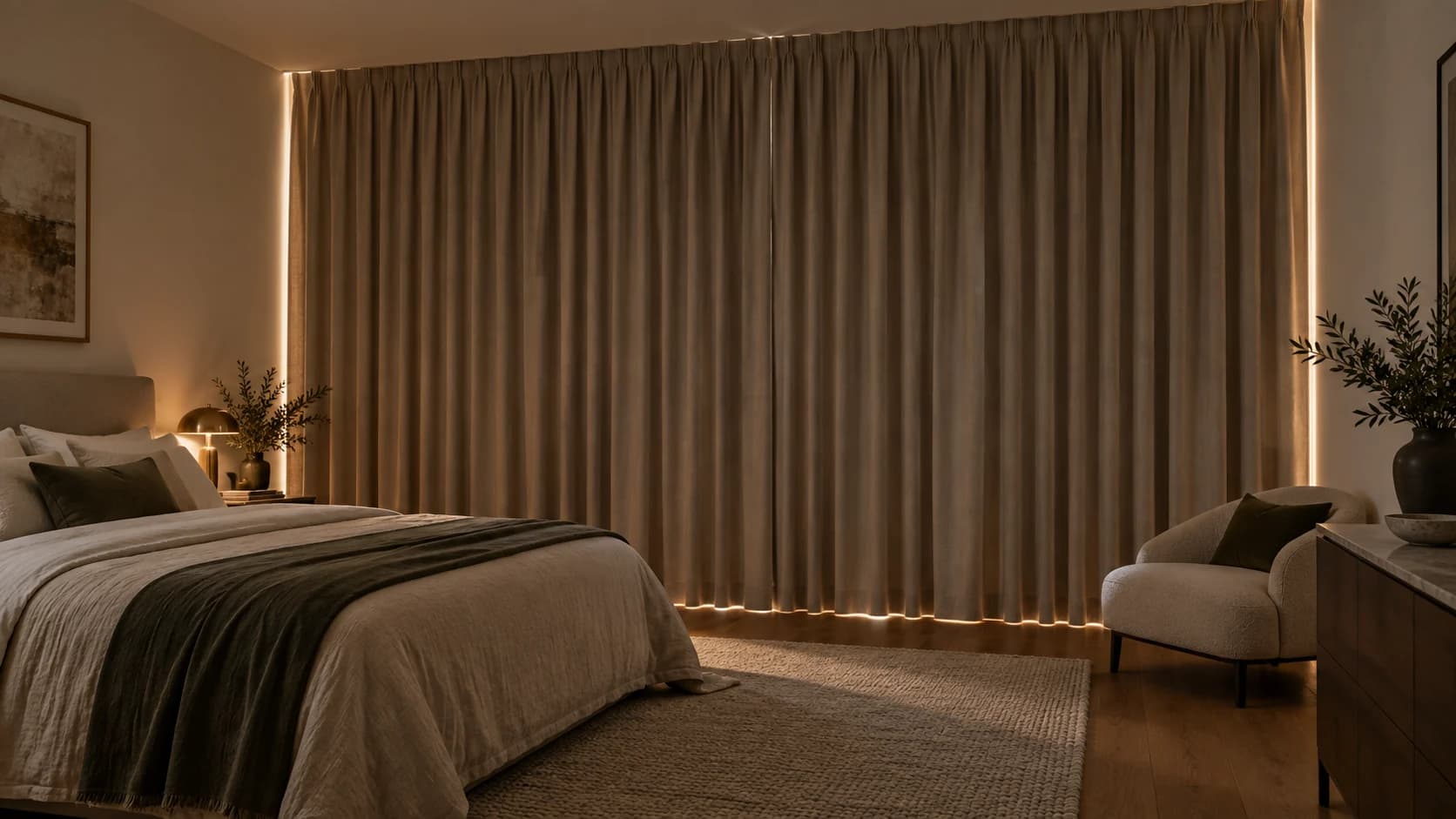
Blockout Curtains by CCBD
Blockout curtains bring privacy and greater control over light and heat to the rooms that need it most. But the finished result depends on more than the fabric alone — lining, coverage, track position and the way the curtain meets the room all matter.
Light Control
Even an excellent blockout fabric cannot stop light that travels above, below or around the curtain. Track position, side returns, centre overlap, finished length and the relationship between curtain and wall all influence how dark the room can become.
We design the treatment around the level of darkness the room actually needs.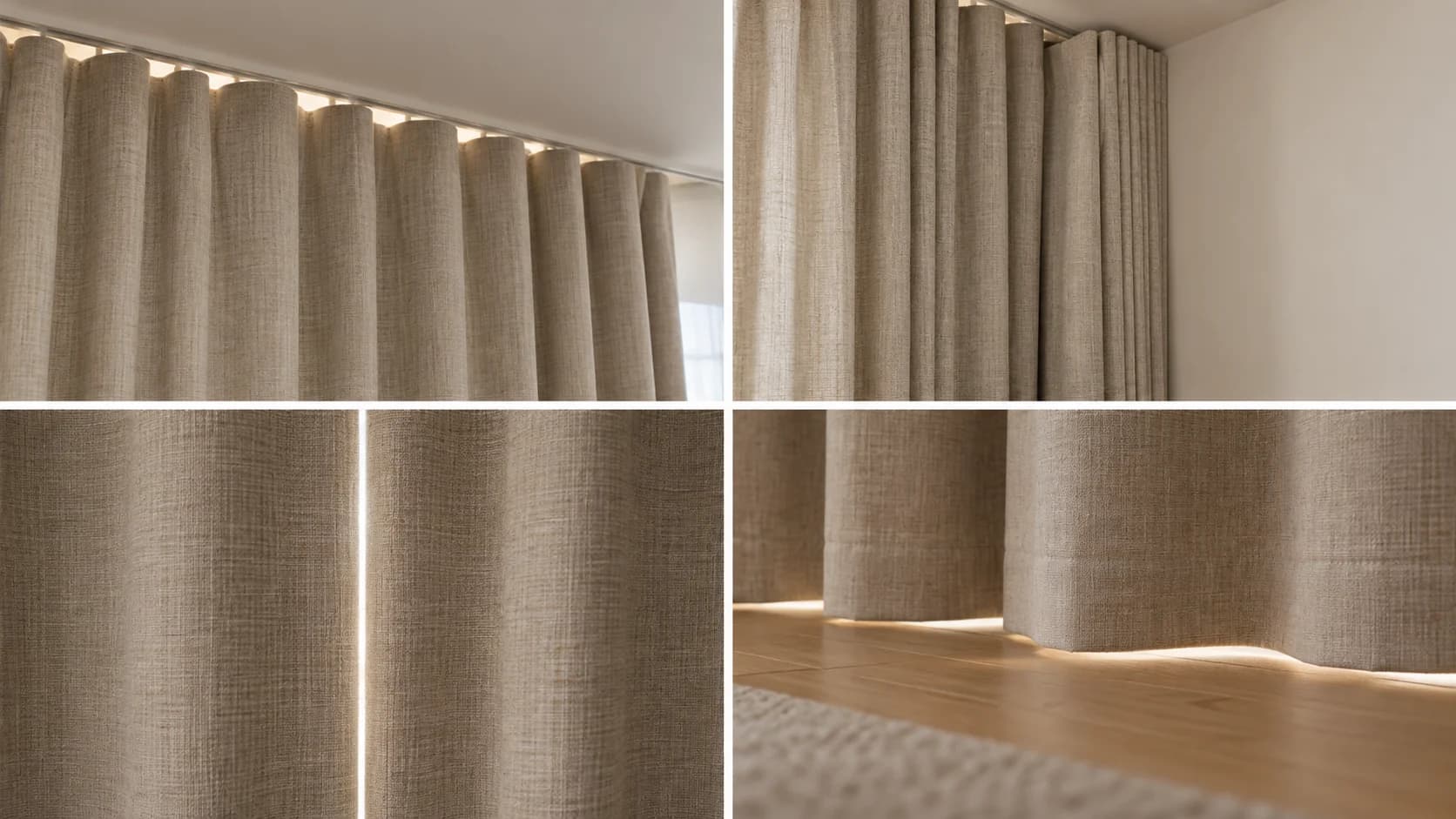
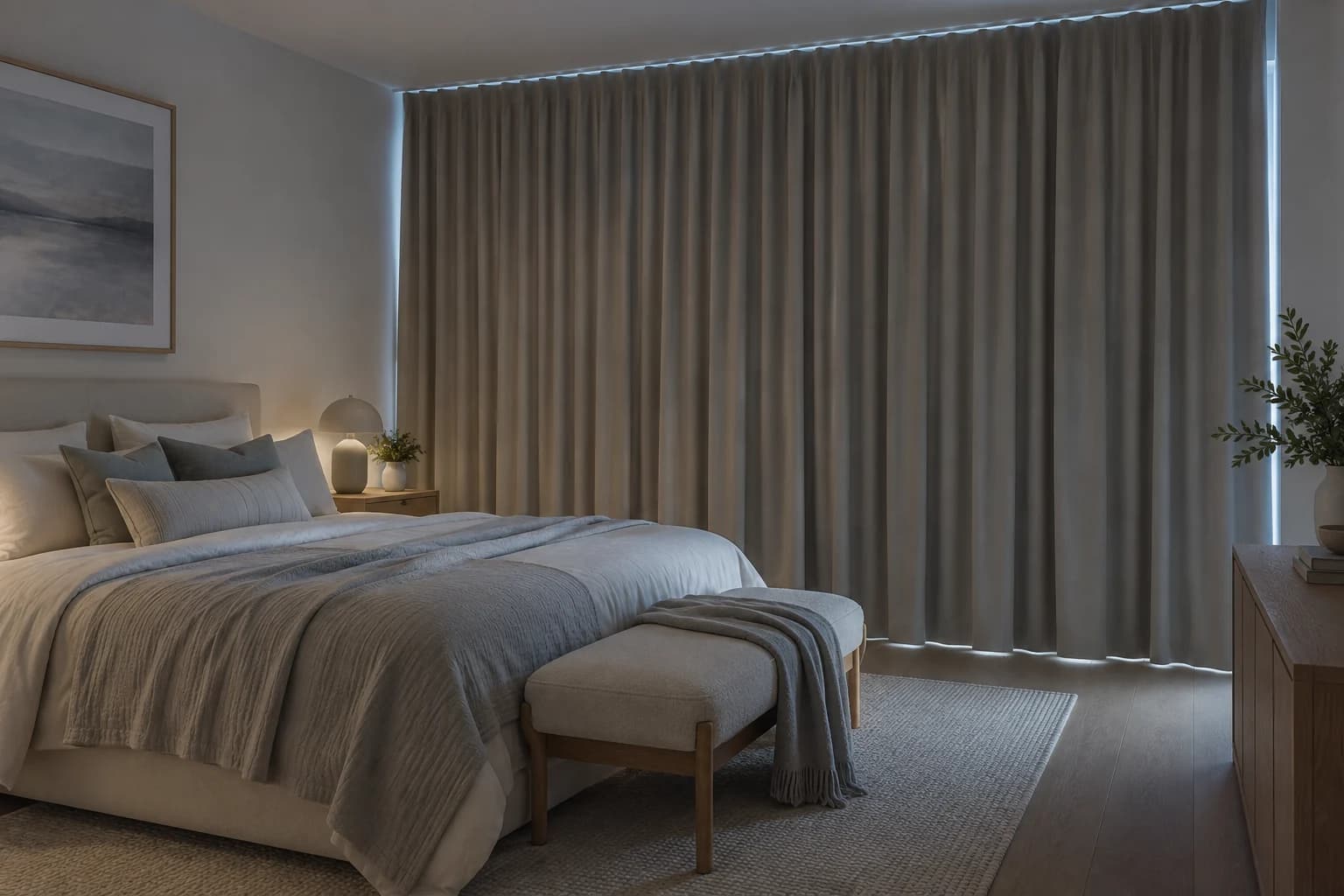
Bedrooms
For bedrooms, reducing unwanted light can make the room calmer at night and easier to keep dark when sleep extends into daylight hours. It is particularly useful for children’s rooms, shift workers and anyone sensitive to early morning light.
Where a higher level of room darkening is required, we look beyond the curtain fabric to coverage, layering and the paths light can take around the window.
Sydney Light & Heat
Sydney’s strong sun can make an exposed room uncomfortable and place sustained light on flooring, furniture and interior finishes. A well-specified blockout treatment can help reduce direct solar gain and create another layer between the room and the glass.
Orientation matters. A west-facing bedroom, north-facing living room and shaded apartment window do not need to be specified in exactly the same way.
We consider the window first — not simply the fabric label.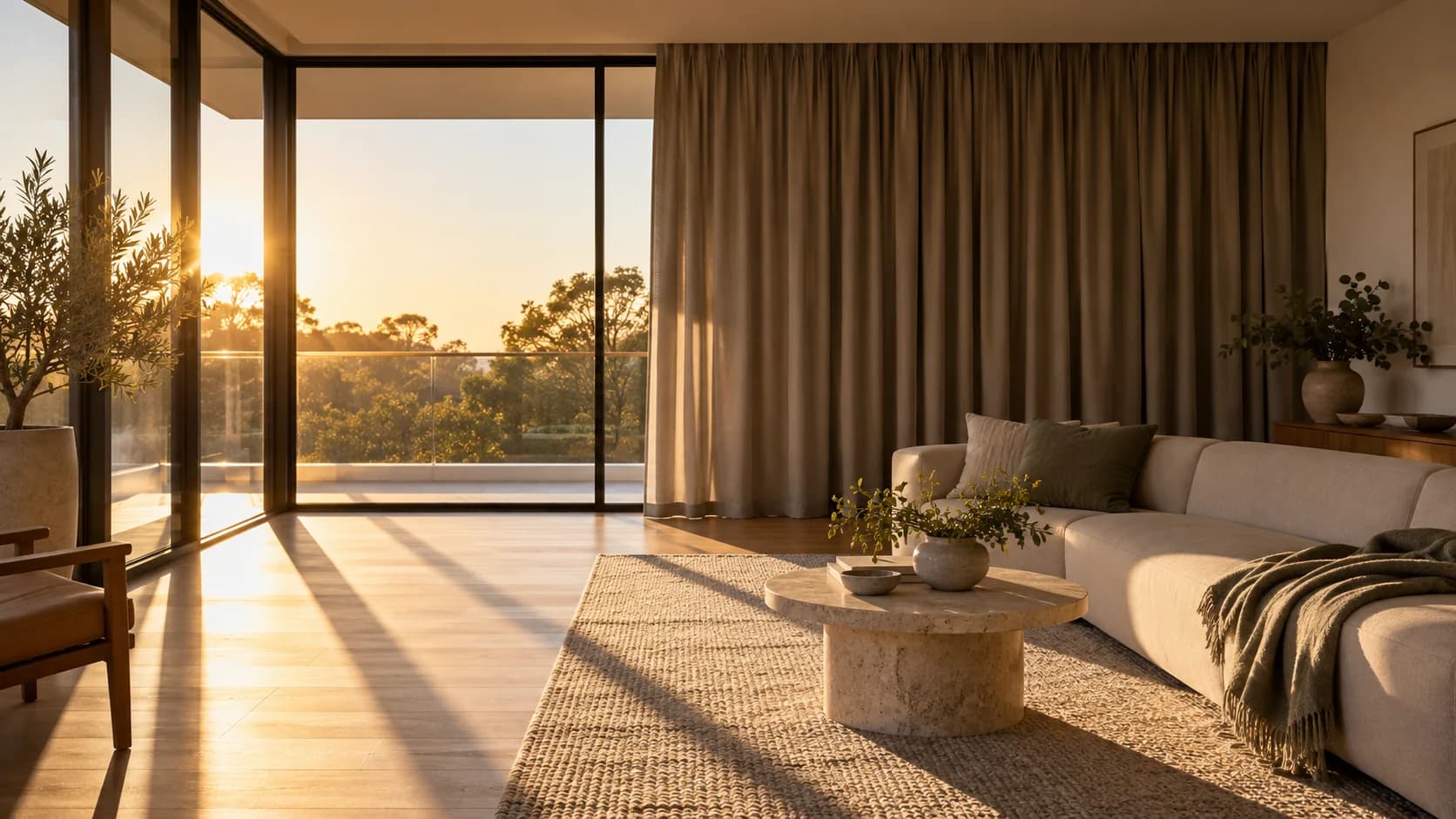
Treatment Options
01 — Lined curtain
Keep the decorative face fabric you love while the lining provides the principal light-control layer.
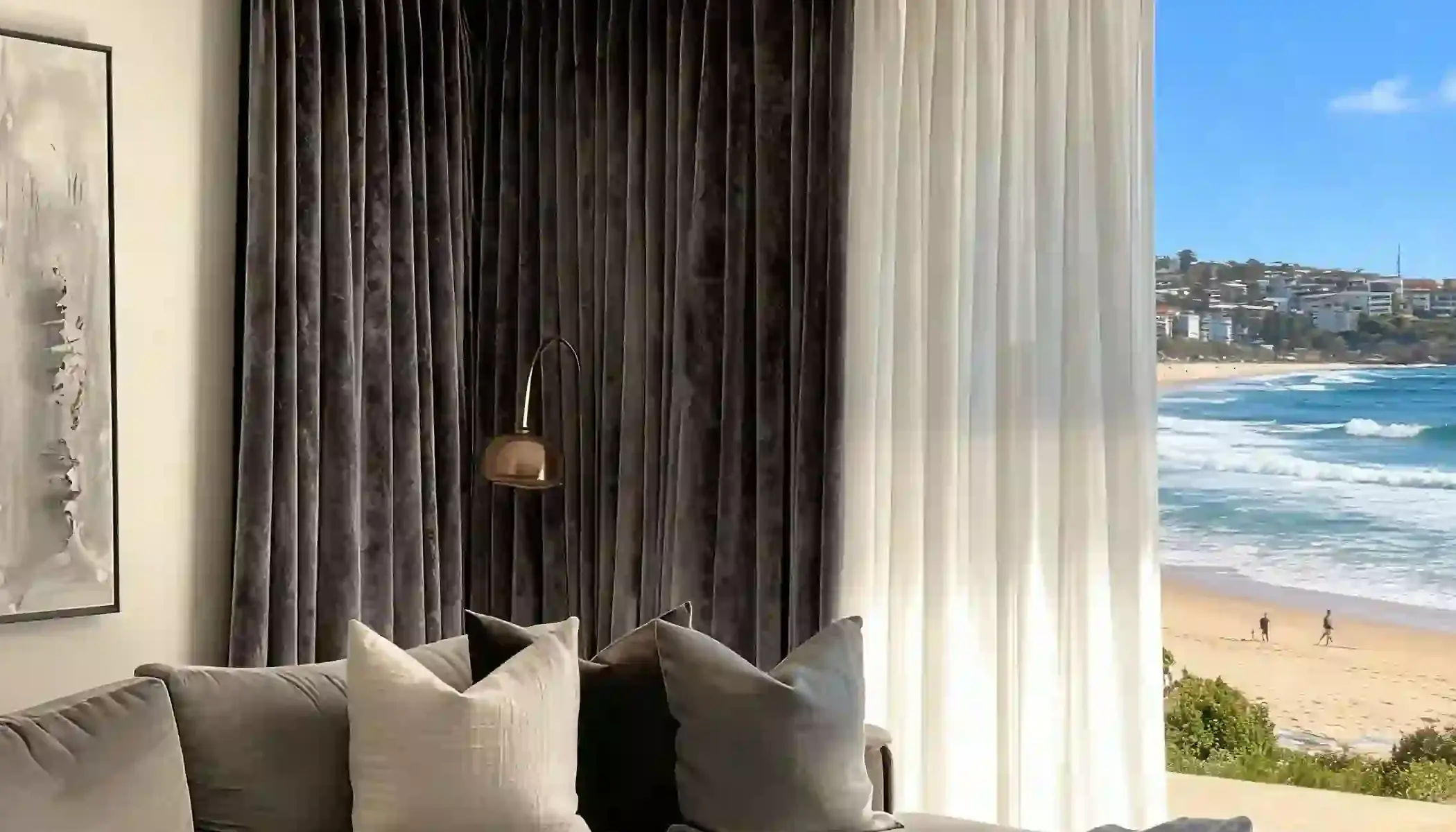
02 — Double curtain
Daytime softness and privacy from the sheer, with a separate curtain available when greater darkness is needed.
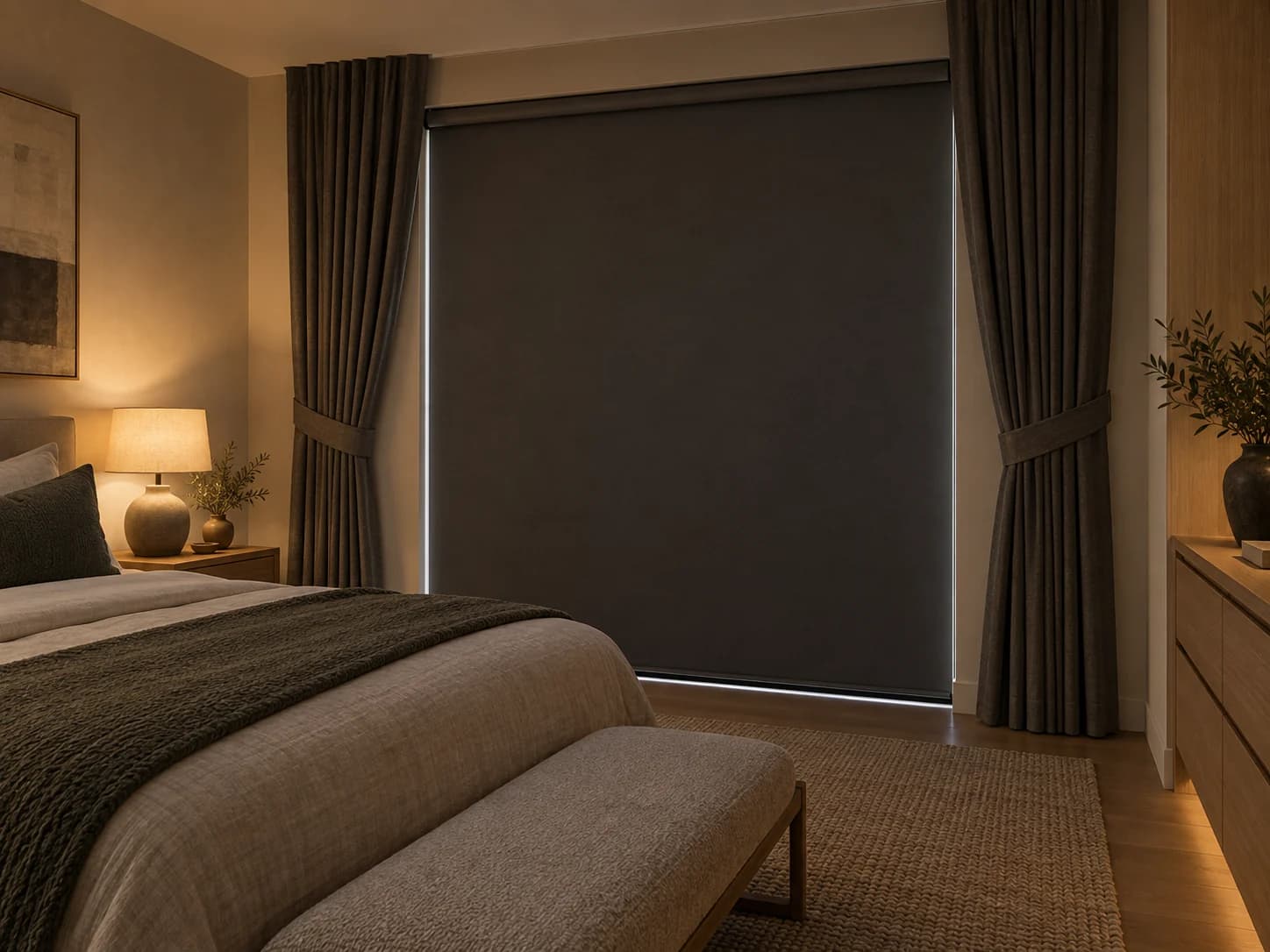
03 — Curtain + blind
Useful where another layer closer to the glass improves privacy or light control without adding a second full curtain.
The right construction depends on the room, available space, desired darkness and how you want the window to look during the day.
A Tailored Alternative
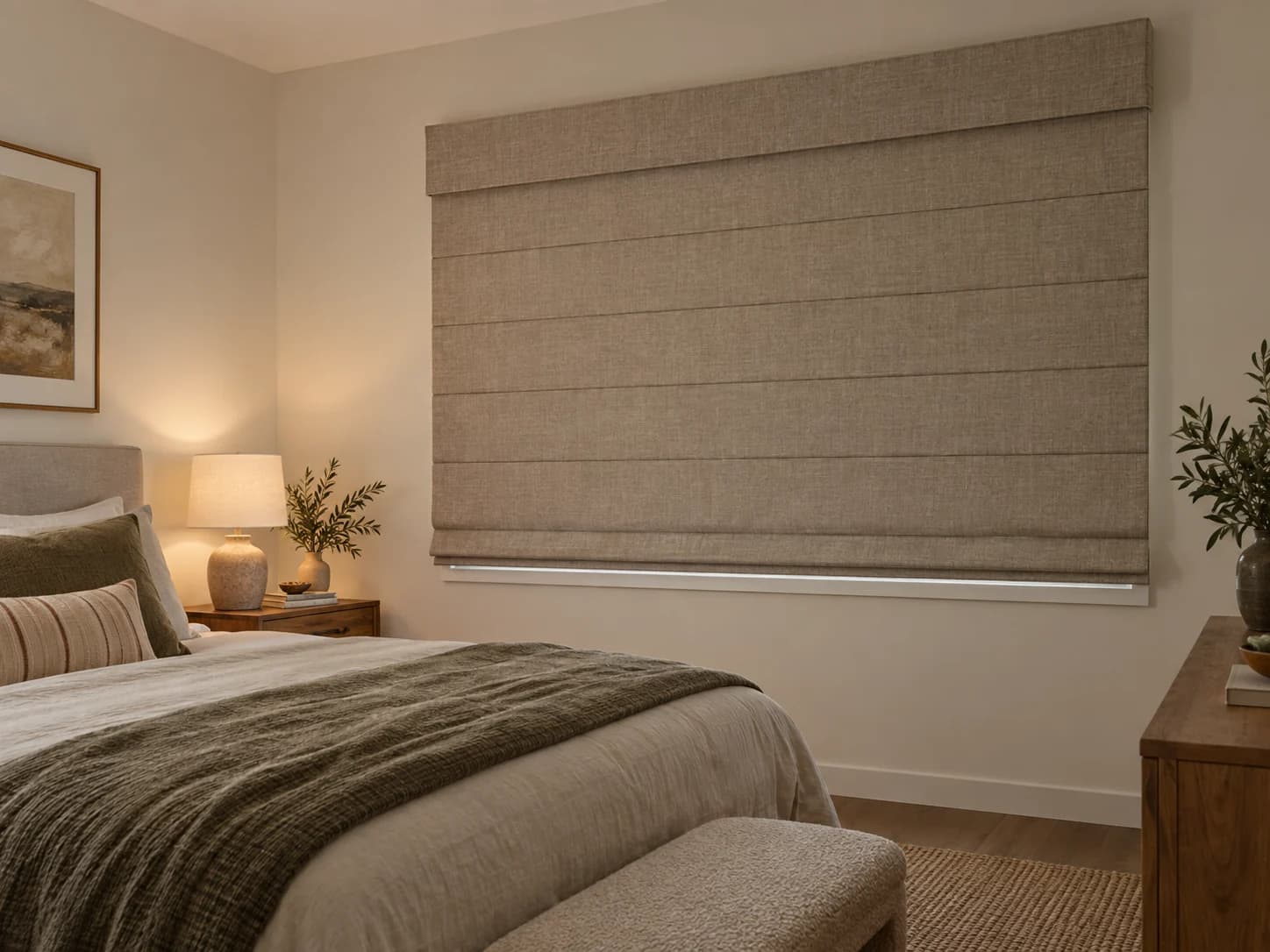
Where wall space is limited, or where the architecture suits a more tailored treatment, a lined Roman blind can provide privacy and strong light control without the visual volume of a full curtain.
Fit matters. A Roman installed inside a recess will usually allow more perimeter light than one designed with greater coverage outside the opening. The best choice depends on the window and the level of darkness required.
Explore Roman Blinds →Layered Window Furnishings
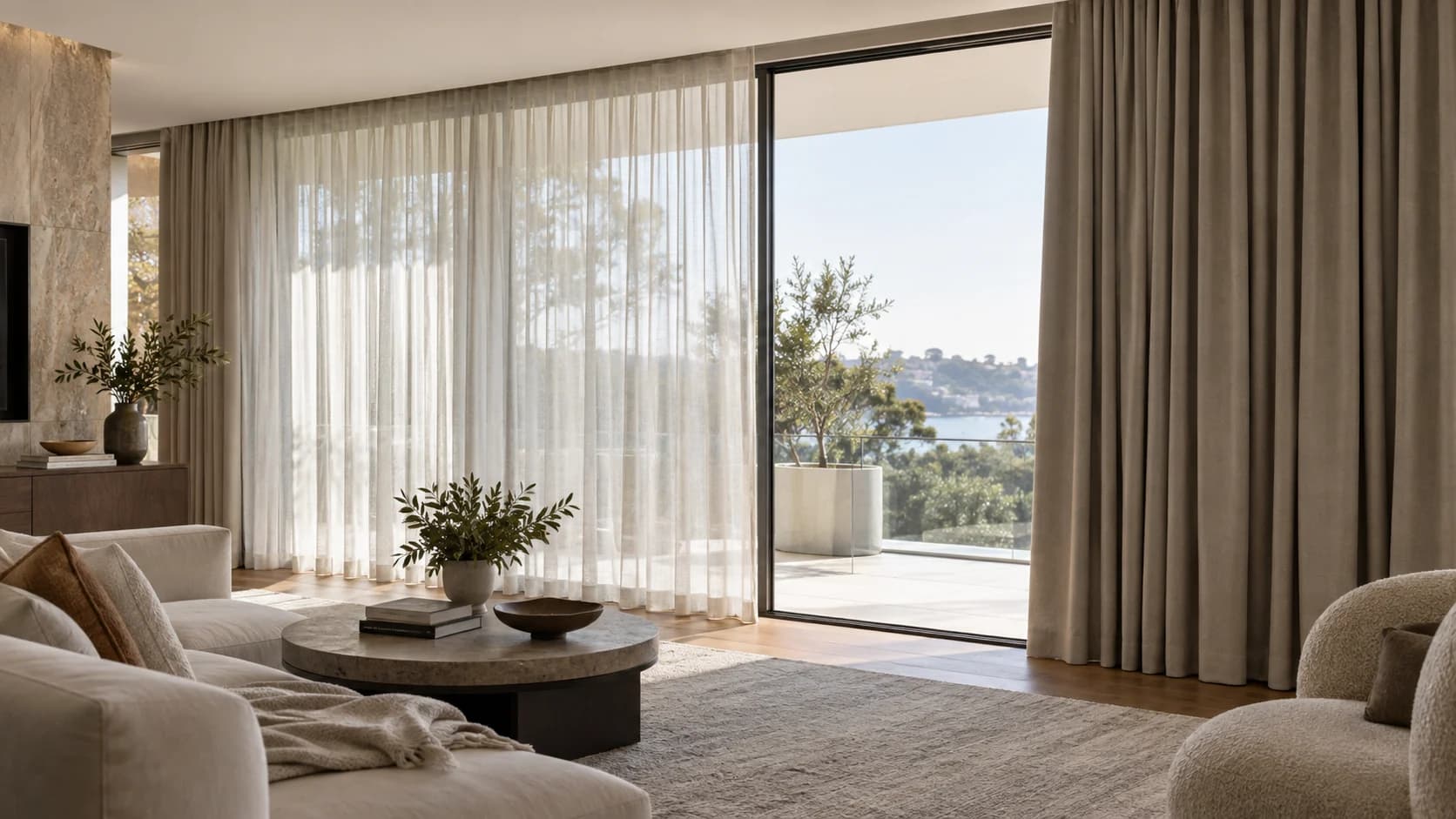
Layering allows the window to change with the day. A sheer can soften daylight and provide daytime screening, while a separate blockout curtain takes over when privacy, darkness or greater protection from direct sun is required.
Track depth, stack-back and the movement of both curtains need to be planned together.
Media & Listening Rooms
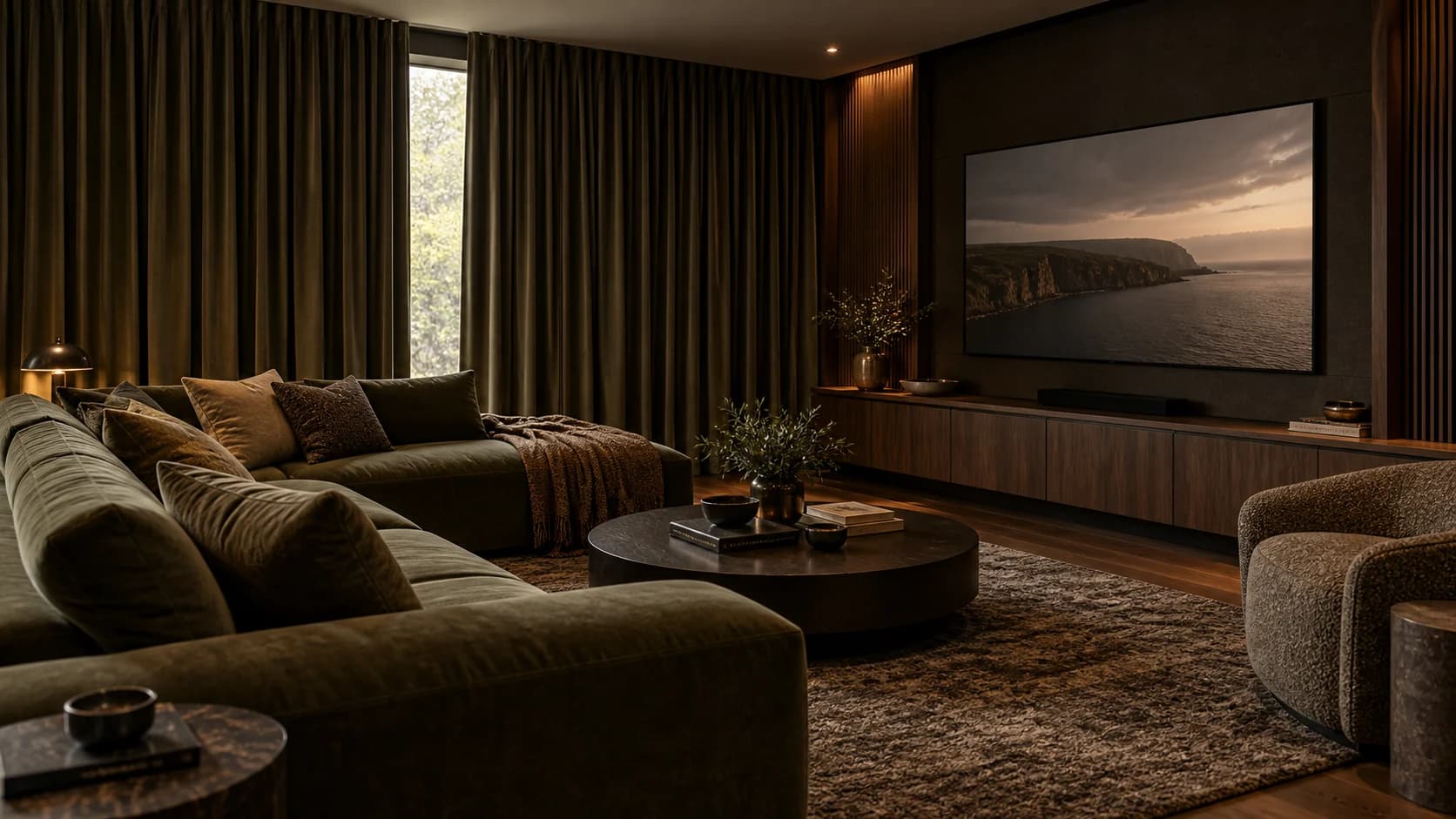
In a media room, controlling unwanted daylight is often the first requirement. Generous curtains also add a large soft textile surface to the room, which can help reduce some internal sound reflections.
Light control, sound absorption and sound isolation are different design problems. Where acoustic performance is a priority, the curtain construction and materials need to be specified for that purpose.
Fabric & Lining
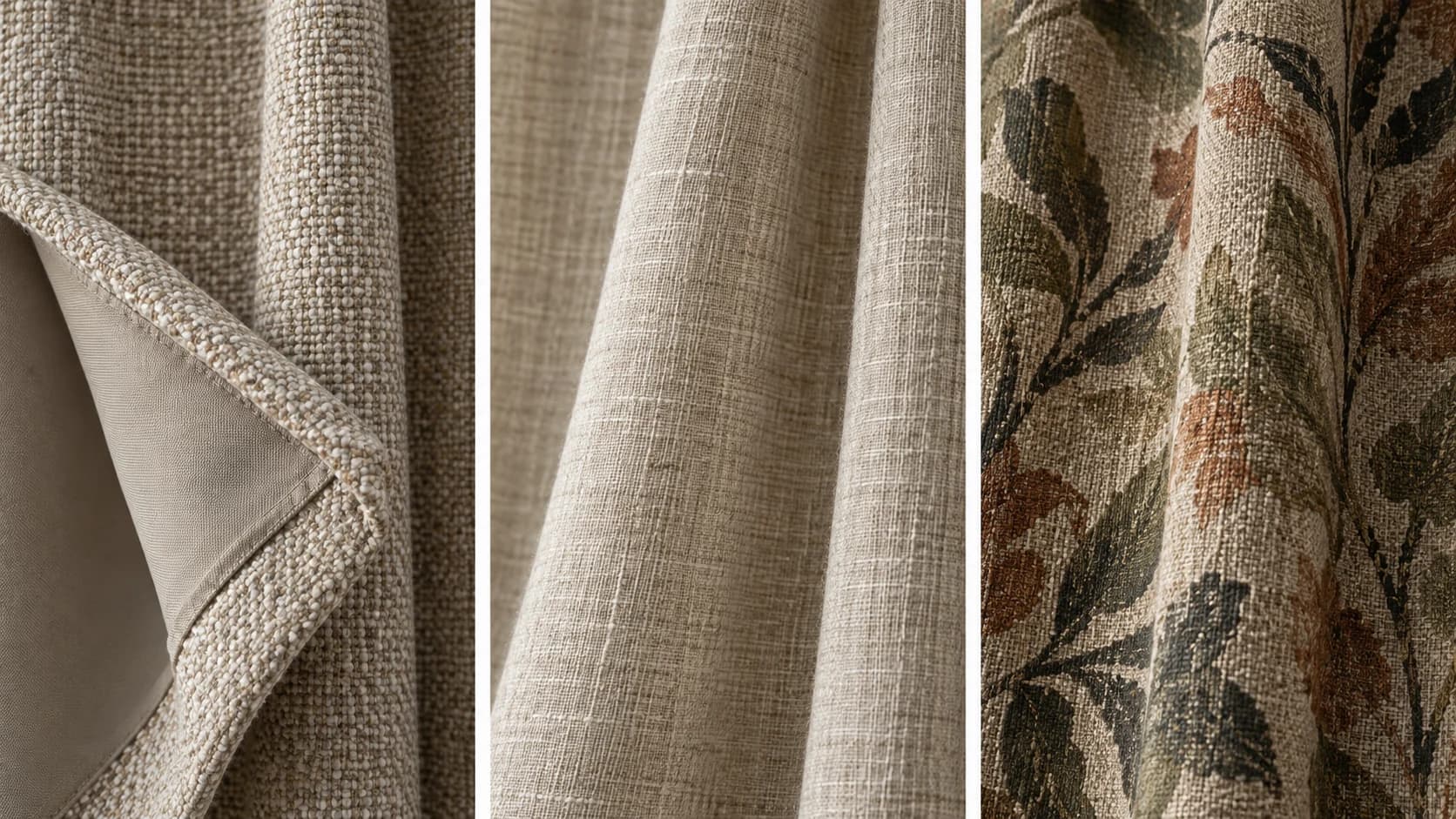
Blockout performance does not mean every room has to look heavy or dark. In many curtains, the decorative fabric and functional lining perform different jobs.
This allows colour, texture and drape to be selected for the interior while the lining contributes the required light control.
Specified by CCBD
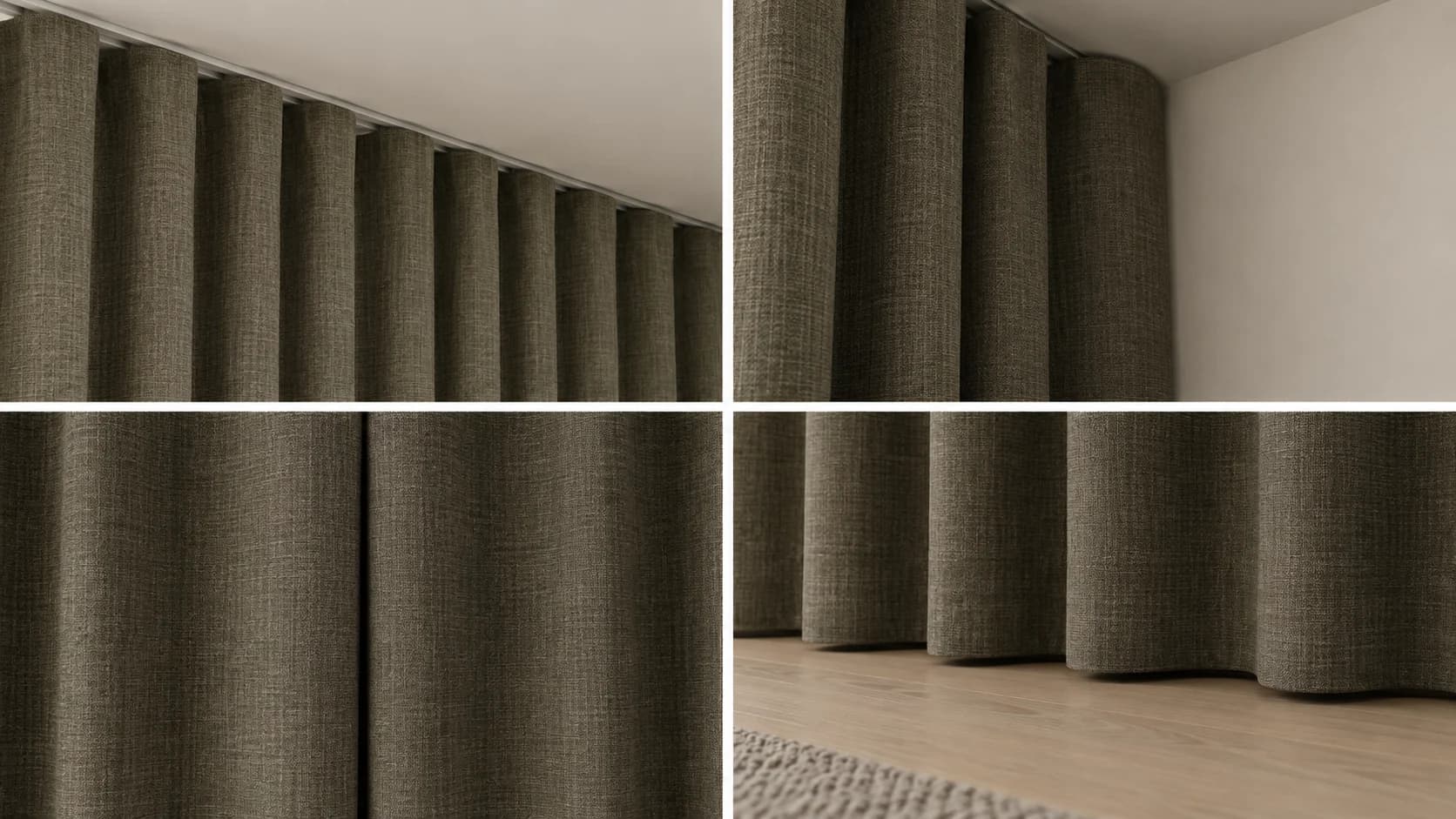
Track and ceiling relationship.
Return and wall coverage.
Overlap and meeting point.
Finished drop.
These details determine how much stray light remains once the curtain is closed. We resolve them during measurement and specification rather than leaving them to installation day.
Common Questions
The fabric can prevent light passing through it, but complete darkness also depends on light entering above, below and around the curtain. Track position, side returns, centre overlap, finished length and overall coverage are just as important. We specify these details around the darkness the room needs, while being clear that every window and building condition is different.
They can improve control of strong afternoon sunlight and add another layer between the room and the glass. The result depends on the glazing, orientation, fabric and lining, curtain coverage and the time of day, so a west-facing window should be assessed rather than treated from the fabric label alone.
A full curtain can provide broad wall coverage and a softer, more generous appearance. A Roman blind is visually compact and useful where wall or stack-back space is limited. Recess-fitted Romans usually leave more perimeter light than face-fitted treatments with greater coverage, so the window proportions and required darkness should guide the choice.
Yes. Independent sheer and blockout layers allow the window to respond differently by day and at night. The double-track depth, available stack-back, handles, doors and the movement of both curtains should be planned together before manufacture.
A well-covered blockout treatment can help reduce direct solar gain and creates another layer between the room and the glazing. Generous curtains also add a soft textile surface that can reduce some internal sound reflections. Those effects are different from tested thermal performance or sound isolation, which require product- and construction-specific assessment.
Start a Conversation
Tell us about the room, the light and what you want to change. We’ll help determine the level of blockout and the treatment that makes sense for the window.
Arrange an in-home measure and quote.
Talk with us about fabrics, styles, light, privacy and planning your window furnishings.